
Endurance racing strategy development is the systematic process of minimizing total time spent in the pit lane while maximizing overall track speed. This balance is critical because fewer pit stops directly translate to more laps completed at full race pace, which is the ultimate determinant of success in long-distance events. The three pillars of effective strategy are pit stop optimization, fuel conservation, and tire management.
Pit stop strategy determines when to trade tire performance for time lost in the pits. Fuel conservation techniques extend stint distances and can eliminate entire pit stops.
Tire management decisions, including double stinting, balance degradation against the time cost of fresh rubber. Each pillar interacts dynamically throughout the race.
- Pit stops cost 25-30 seconds; teams must weigh this against tire performance gains to decide when to pit (Source: campbellracingteam.com).
- Fuel conservation techniques like lift-and-coast, short-shifting, and drafting can extend stint distance and potentially save a full pit stop (Source: Reddit, Coach Dave Academy).
- Double stinting on the same set of tires can be faster overall if tire degradation is manageable, eliminating one pit stop (Source: campbellracingteam.com, IMSA).
How Do You Optimize Pit Stop Strategy and Stint Lengths?
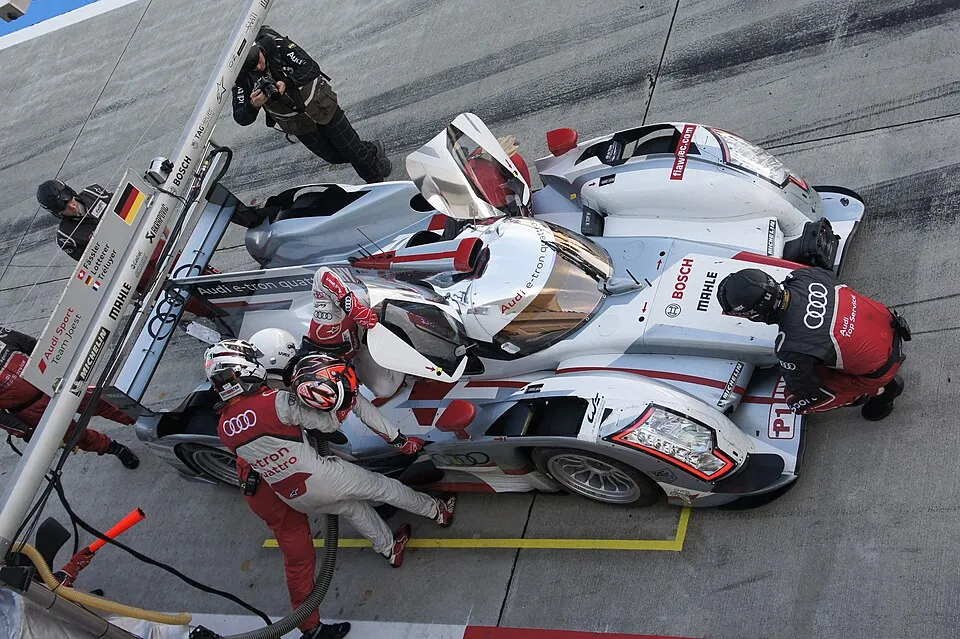
The 25-30 Second Pit Stop Cost vs. Tire Performance Gain Analysis
The decision to pit hinges on a simple cost-benefit analysis: a 25-30 second pit stop (campbellracingteam.com, 2026) versus the lap time advantage gained from fresh tires. Fresh tires typically deliver 0.5-1.5 seconds per lap in improved performance (campbellracingteam.com, 2026), but this gain diminishes as the tires wear.
Conversely, staying out on worn tires results in progressively slower lap times, often losing 0.3-0.8 seconds per lap compared to fresh rubber. The following table compares these scenarios:
| Scenario | Pit Stop Time Loss | Lap Time Gain | Net Effect |
|---|---|---|---|
| Fresh tires | 25-30 seconds | 0.5-1.5 seconds per lap | Faster initially, but must recoup stop time over remaining laps |
| Double stint (stay out) | 0 seconds | -0.3 to -0.8 seconds per lap (slower) | Slower lap times but saves full pit stop; net gain if stint extended enough |
The break-even point is reached when the cumulative gain from fresh tires exceeds the 25-30 second stop cost. For instance, with a 1 second per lap improvement, you need at least 28 laps to justify the stop. If fewer laps remain, staying out may be faster despite slower times.
Double stinting—running two stints on the same tires—can be optimal if degradation is moderate (campbellracingteam.com, IMSA, 2026). Even with a 0.5 second per lap penalty over 50 laps, the total loss is 25 seconds, essentially matching a pit stop. Therefore, if double stinting avoids an extra stop, it becomes a net gain.
Teams rely on telemetry data to monitor tire wear rates and fuel consumption in real time (campbellracingteam.com, 2026), enabling informed decisions. Mastering this analysis is a key component of advanced racing coaching at Sarah Moore Racing, where drivers learn to interpret data and apply it strategically to optimize pit windows and overall race performance.
Understanding the ‘4-in-6-Hour Rule’ and Maximum Driver Time Regulations
Endurance racing regulations strictly limit individual driver stint lengths to prevent fatigue and ensure safety. The most common rule is the ‘4-in-6-hour rule’ (YouTube, Instagram, 2026), which states that a driver cannot accumulate more than 4 hours of driving time within any rolling 6-hour period. In practice, this translates to typical stints of 50-55 minutes (YouTube, Instagram, 2026) before a driver change is required.
Series such as the IMSA WeatherTech Championship and the FIA World Endurance Championship (WEC) enforce similar limits, though exact durations may vary by class. These regulations directly shape strategy: teams must schedule pit stops not only for tires and fuel but also to swap drivers before they exceed their allotted time. Failing to comply results in severe penalties, including drive-throughs or post-race disqualification.
Consequently, strategy planners build driver change windows into the overall race plan, often aligning them with necessary tire/fuel stops to minimize total time lost. The interplay between driver time limits and mechanical needs creates a complex optimization problem where each pit stop must serve multiple purposes. For teams seeking to navigate these regulations effectively, comprehensive racing coaching resources at racing coaching provide essential guidance on compliance and strategic integration.
Fuel Conservation Techniques for Maximum Stint Distance
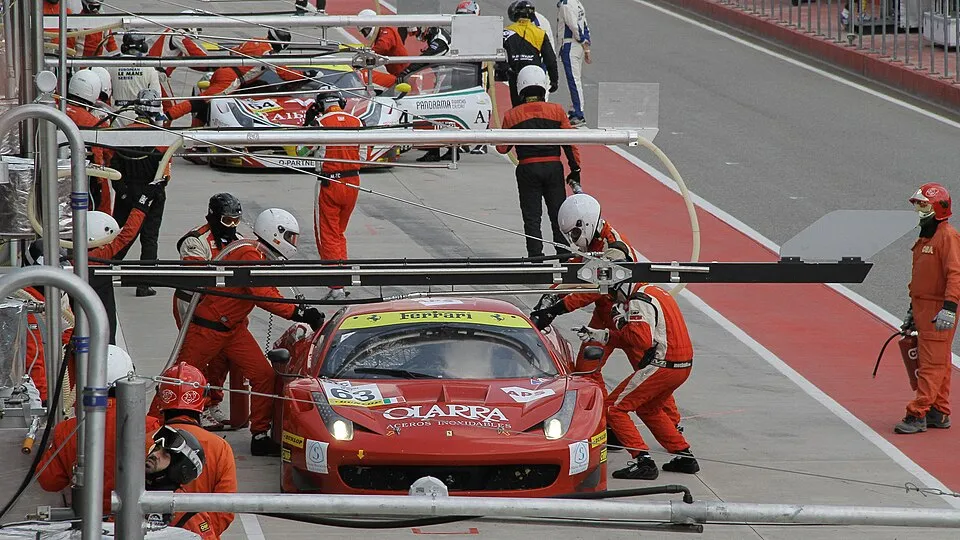
Lift and Coast, Short-Shifting, and Drafting for Fuel Savings
Extending stint distance requires deliberate fuel-saving techniques that drivers can execute without sacrificing excessive lap time. The most effective methods include (Reddit, Coach Dave Academy, 2026):
- Lift and Coast: The driver lifts off the throttle 100-200 meters before the braking zone and coasts, allowing the engine to idle while the car decelerates naturally. This technique can save 5-10% of fuel per lap with minimal impact on lap time if the coasting distance is optimized. It is most effective on circuits with long straights leading into heavy braking zones.
- Short-Shifting: Shifting to a higher gear before reaching the engine’s peak power RPM (e.g., shifting at 5000 RPM instead of 7000 RPM) reduces fuel consumption by 3-7% because the engine operates in a more efficient lower RPM range. The trade-off is slower acceleration out of corners, which must be managed to avoid losing positions.
- Drafting: Following another car closely (within 1-2 car lengths) reduces aerodynamic drag, which in turn reduces fuel consumption. On high-speed circuits, drafting can save 2-5% fuel on straights. This technique is also useful for overtaking and can be combined with lift-and-coast for additional savings.
Implementation requires practice to maintain lap time while achieving target fuel savings. Drivers must monitor fuel levels via telemetry and adjust their approach based on remaining distance and traffic. Learning these techniques is part of a broader curriculum when selecting the right racing driver coach, as expert guidance accelerates mastery and ensures proper application under race conditions.
Using Fuel-Efficient Engine Maps: When to Switch and How Much to Conserve
Modern racing engines feature adjustable electronic control unit (ECU) maps that alter fuel injection rates, ignition timing, and throttle response. A fuel-efficient engine map reduces power output—typically by 5-10% (Reddit, Coach Dave Academy, 2026)—to significantly lower fuel consumption. Teams activate these maps when they need to extend stint distance, such as after a certain number of laps or when fuel levels drop below a predetermined threshold.
For example, if a car normally consumes 3.5 liters per 100 km, switching to an eco map might reduce consumption to 3.2 liters per 100 km, representing a roughly 9% improvement. The trade-off is a lap time penalty of 0.2-0.5 seconds per lap due to reduced horsepower. However, if this penalty avoids an entire pit stop (worth 25-30 seconds), the net gain is substantial over a long stint.
Drivers must be trained to handle the reduced power, particularly on restarts or when defending positions, as throttle response may be less immediate. The decision to switch maps is often made by race engineers based on real-time fuel data and the remaining race schedule. The benefits of personalized racing coaching include helping drivers adapt to these power changes while maintaining consistent lap times and racecraft.
Tire Wear Management and Double Stinting Decisions
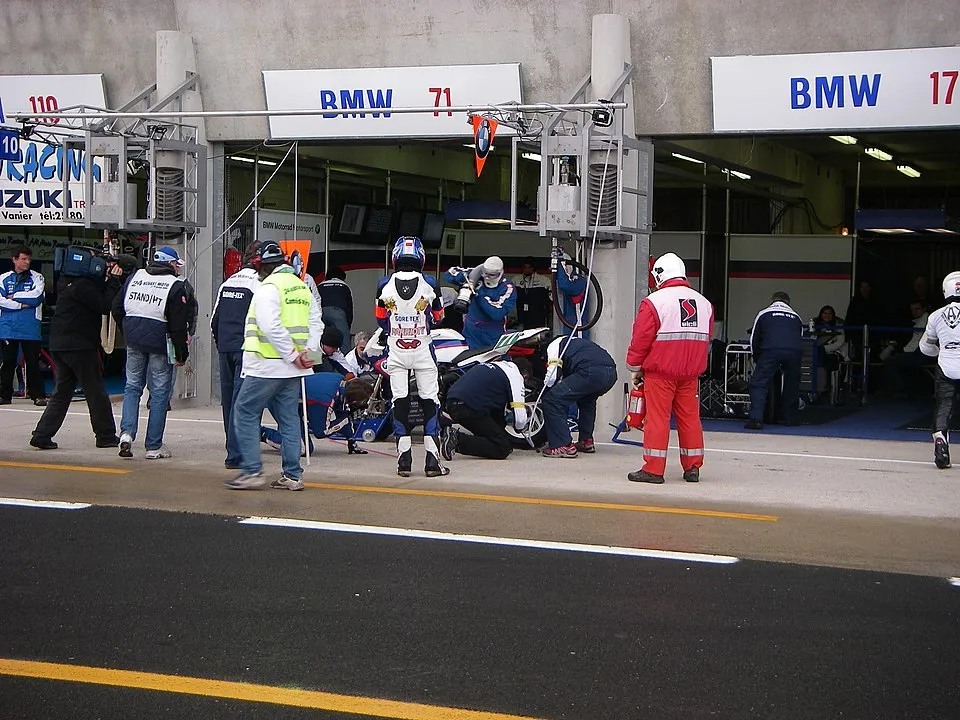
Smooth Driving Inputs and Optimized Vehicle Setups for Tire Preservation
Tire life can be extended through both driving technique and vehicle setup adjustments, making double stinting a viable strategy in many endurance races (Reddit, IMSA, Medium, 2026). Key techniques include:
- Smooth steering inputs: Avoid aggressive direction changes; use gradual steering wheel movements to maintain consistent tire contact patch and reduce mechanical scrubbing. This extends tire life by minimizing lateral forces that cause overheating and uneven wear.
- Progressive throttle application: Apply throttle smoothly without sudden surges that induce wheel spin. Wheel spin not only wastes time but also shreds the tire’s tread surface, accelerating degradation. Maintaining traction throughout corner exit preserves tire integrity.
- Gentle braking: Build brake pressure progressively rather than slamming the pedal. Abrupt braking causes lock-ups and flat spots, which not only damage tires but also create vibration and handling issues. Smooth braking helps maintain even tire temperatures and tread wear.
Vehicle setup adjustments for tire preservation:
- Increase camber: More negative camber improves cornering grip by increasing the tire’s contact patch during turns, but it can increase inner shoulder wear. The optimal setting balances cornering performance with even wear across the tread.
- Adjust tire pressures: Slightly lower pressures increase the contact patch, enhancing mechanical grip. However, pressures that are too low cause excessive sidewall flex and overheating. Teams fine-tune pressures based on track temperature and tire model to maximize life.
- Soften suspension: A softer suspension setup improves mechanical grip and reduces tire scrub, especially on bumpy circuits. It allows the tires to follow the road surface more accurately, decreasing abrasive wear.
Beyond these techniques, holistic training for racing drivers addresses the physical and mental endurance needed to maintain smooth inputs over long stints, which is essential for tire preservation in endurance events.
Brake Balance Adjustments and Assessing Tires for Double Stinting
Brake balance—the distribution of braking force between front and rear axles—directly affects tire wear (Reddit, IMSA, Medium, 2026). A front-biased brake balance increases front tire temperatures and wear, while a rear-biased balance increases rear tire wear. Teams adjust via cabin-mounted dials or during pit stops based on observed wear patterns.
If telemetry shows front overheating, reduce front bias; if rear graining, reduce rear bias. The optimal balance shifts as fuel load decreases and tires wear.
Mastering these adjustments requires understanding braking techniques; drivers who excel at trail braking and threshold braking can better manage tire temperatures through smooth modulation. Resources on braking techniques for racing offer detailed guidance.
Tire assessment for double stinting includes checking tread depth (<30% remaining requires replacement), temperature uniformity (within 10-15°C across tread), and signs of damage like graining or blistering. Pressure loss >2 psi also indicates issues. Accurate assessment relies on data acquisition tools, which should be included when budgeting for motorsports training.
If tires are in good condition, double stinting may be viable depending on remaining laps. For instance, with 40 laps left and a 27-second pit stop, even a 0.7 second per lap degradation (28 seconds total) makes double stinting borderline; if degradation is slower, it’s a clear win. Smooth cornering techniques for racing drivers help preserve tires and extend stint viability.
The most surprising insight is that double stinting can actually be faster overall despite slower lap times because it eliminates a full pit stop. Even if each lap is 0.5 seconds slower, over 50 laps that’s only 25 seconds—roughly equivalent to the time lost in a pit stop. Therefore, if double stinting avoids an extra stop, it becomes a net gain.
To implement this, conduct full-stint practice sessions with race fuel load to understand your specific car’s tire degradation curve and fuel consumption. Use data loggers to track lap time drop-off and tire temperatures across a full stint.
Then create a strategy matrix that maps stint length to tire wear and fuel usage, and practice pit stop transitions to minimize time lost during driver changes. This data-driven approach transforms endurance racing from guesswork into a precise science.
