
Beginners need racing coaching because self-taught drivers face 2-4x higher crash rates and 92% of motorcycle accidents involve riders with no formal training. Without expert guidance, new racers develop dangerous habits that lead to costly crashes and slow progress.
Professional coaching addresses three critical areas: safety risks from self-teaching, accelerated skill development, and significant financial savings compared to crash repairs. This guide examines the data behind these claims and explains why coaching is essential for anyone serious about racing.
- Self-taught racing leads to 2-4x higher crash rates for drivers with less than 2 years experience (ScienceDirect, 2022).
- Professional coaching can cut the learning curve by years and prevent the formation of dangerous bad habits (Grassroots Motorsports, 2022).
- Coaching costs $100-$500 per session, while major crash repairs can exceed $30,000—making coaching a financially smart choice (2023-2025 data).
The Dangers of Self-Taught Racing: Why Beginners Face 2-4x Higher Crash Rates

Self-taught racing carries substantial risks that many beginners underestimate. The statistics are clear: inexperienced drivers with less than two years of experience have a 2-4 times higher crash rate than those with proper training (ScienceDirect, 2022). This elevated risk stems from fundamental skill gaps that coaching systematically addresses.
Without structured guidance, beginners rely on trial and error—a method that proves both dangerous and expensive. The racing community has documented these risks extensively, with data from multiple sources confirming that formal training dramatically reduces accident rates.
Statistical Evidence: Crash Rates and Repair Costs Comparison
| Metric | Self-Taught Drivers | Coached Drivers |
|---|---|---|
| Crash Rate Multiplier | 2-4x higher (vs. experienced) | Baseline (experienced level) |
| Accident Percentage | 92% of motorcycle accidents involve self-taught riders (Hurt Report, 1981; roadguardians.org) | Significantly lower |
| Average Repair Costs | $10,000-$30,000 per major crash | Minimal (preventive investment) |
| Experience Impact | Risk drops after 3 months of proper training (PMC, 2018) | Consistent low risk |
The numbers reveal a stark reality: a single major crash costs as much as 60 to 300 coaching sessions. For beginners, this isn’t just about money—it’s about safety and sustainability.
The 92% statistic from the Hurt Report, though focused on motorcycles, directly transfers to car racing because both require precise vehicle control, balance, and spatial awareness. Self-taught riders and drivers alike develop unsafe muscle memory that’s difficult to break later.
The 92% Motorcycle Accident Statistic: A Stark Warning for All Racers
The Hurt Report’s finding that 92% of motorcycle accidents involve self-taught riders (1981; cited by roadguardians.org) serves as a powerful warning for car racers. Motorcycle riding and car racing share fundamental requirements: vehicle control, balance, weight management, and track awareness. In both disciplines, beginners who learn without professional instruction develop poor habits that become automatic responses under pressure.
These habits—such as abrupt braking, incorrect body positioning, or failure to look ahead—directly cause accidents. The data shows that self-teaching doesn’t just increase risk; it creates a cycle where unsafe techniques become ingrained, making later correction much harder. Coaching interrupts this cycle by providing immediate, correct feedback from day one.
Common Self-Taught Mistakes That Cause Crashes: Poor Braking and Wrong Lines
- Over-braking: Beginners often brake too hard and too early; braking techniques like trail braking teach progressive braking that maximizes deceleration while maintaining control. Coaching teaches progressive braking techniques that maximize deceleration while maintaining control. [P10]
- Incorrect apex selection: Choosing the wrong turning point forces drivers off-line; mastering cornering techniques ensures consistent apex identification that optimizes corner speed and safety.
-
Excess speed entering corners: Self-taught drivers frequently carry too much speed into turns, resulting in understeer or oversteer.
[P11]
Coaching establishes proper approach speeds based on track conditions and car capabilities.
- Poor weight management: Inexperienced drivers don’t understand how body weight or steering input affects car behavior. Coaches teach smooth weight transfer techniques that improve grip and predictability.
Coaching establishes proper approach speeds based on track conditions and car capabilities.
Research indicates that beginner crashes often stem from over-braking and excess speed, with risk significantly dropping after approximately three months of structured training (PMC, 2018). These errors aren’t just performance issues—they’re safety hazards that cascade into larger incidents when multiple drivers on track make similar mistakes.
How Does Professional Coaching Accelerate Your Racing Development?
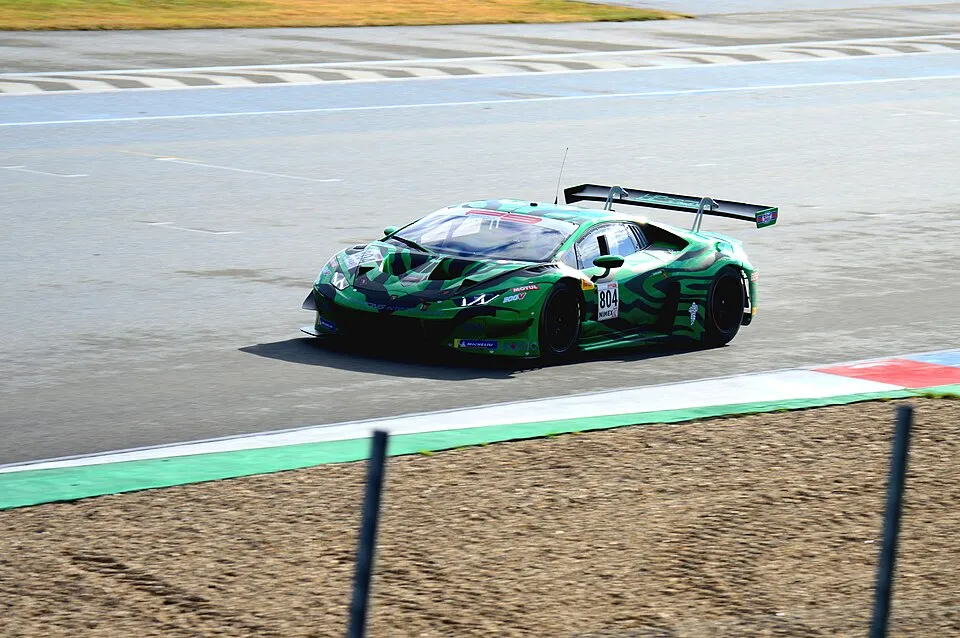
Professional coaching transforms the learning timeline by replacing guesswork with structured progression. According to Grassroots Motorsports (2022), coaching can cut the learning curve by years—a claim supported by decades of driver development programs.
Professional coaching transforms the learning timeline by replacing guesswork with structured progression. According to Grassroots Motorsports (2022), coaching can cut the learning curve by years—a claim supported by decades of driver development programs.
This acceleration happens through three mechanisms: expert-guided curriculum that eliminates trial-and-error, immediate feedback that prevents bad habit formation, and systematic skill building that addresses weaknesses before they become ingrained. Coaches like Sarah Moore of Sarah Moore Racing, who holds an ARDS Grade A instructor certification, bring professional racing experience combined with teaching methodology to create efficient learning environments.
Cutting the Learning Curve: Years of Progress in Months
The compressed learning timeline results from eliminating inefficient practice. Self-taught drivers spend months or years discovering techniques through repeated failure—a process that often embeds incorrect habits. Professional coaches provide structured curricula that sequence skills logically, ensuring each new concept builds on mastered fundamentals.
For example, a coach might break down cornering into discrete components: brake point, turn-in, apex, throttle application, and track out—mastering each before combining them. This methodical approach, used by certified instructors like Sarah Moore, accelerates skill acquisition by preventing the frustration and safety risks of unguided experimentation. Drivers who would normally take three years to reach a certain competency can achieve it in one year with consistent coaching.
Personalized Feedback: Real-Time Corrections Prevent Bad Habits
- Verbal cues during sessions: Coaches communicate adjustments in real-time, allowing immediate correction before errors become muscle memory.
- Data review after sessions: Analysis of lap times, brake pressure, and steering input identifies subtle issues drivers cannot feel themselves.
- Video analysis: Onboard footage compared to expert laps reveals visual differences in lines, braking points, and body positioning. [P18]
This multi-faceted feedback approach, a cornerstone of personalized racing coaching, prevents the plateaus that plague self-taught drivers. Radford Racing School (2025) emphasizes that coaching prevents plateaus by fixing errors early—before they solidify into habits that require extensive re-training.
[P19]The immediacy of feedback is critical; a correction given seconds after an error is far more effective than one given days later. Coaches like Sarah Moore use radio communication during track sessions to provide live guidance, creating a continuous learning loop that maximizes every lap’s value.
This multi-faceted feedback approach prevents the plateaus that plague self-taught drivers. Radford Racing School (2025) emphasizes that coaching prevents plateaus by fixing errors early—before they solidify into habits that require extensive re-training.
The immediacy of feedback is critical; a correction given seconds after an error is far more effective than one given days later. Coaches like Sarah Moore use radio communication during track sessions to provide live guidance, creating a continuous learning loop that maximizes every lap’s value.
Mastering Racecraft: Data Analysis and Track Knowledge
Beyond basic car control, coaching imparts advanced racecraft that separates competitive drivers from enthusiasts. This includes data acquisition analysis—interpreting telemetry to identify lost time—and understanding nuanced concepts like apex selection, turn-in points, and heel-toe downshifting. Coaches teach these systematically, often using tools like data loggers and video overlays.
For instance, understanding the difference between a racing apex (used for fastest lap) and a qualifying apex (used for maximum exit speed) requires expert explanation that’s rarely intuitive. Sarah Moore, as a More Than Equal coach, emphasizes these fundamentals because they create consistent, repeatable performance. Weight management techniques—how to use body weight or steering input to influence car balance—are another area where coaching provides clarity that self-analysis often misses.
Mental Preparation: Building Confidence and Focus
Racing performance depends heavily on mental state, yet this dimension is frequently overlooked by self-taught drivers. Coaching addresses psychological factors through holistic training for racing drivers, including visualization techniques, stress management protocols, and pre-race routines that build consistency. Coaches help drivers develop mental models for different scenarios—what to do when a car overlaps at turn entry, how to recover from a spin, or how to maintain focus during long races.
[P23]This mental preparation translates directly to safety and results: confident drivers make fewer errors under pressure. Sarah Moore’s role as a Racing Pride ambassador highlights the inclusive approach to mental support, ensuring all drivers—regardless of background—receive psychological tools to handle racing’s demands. The confidence gained from knowing correct procedures reduces hesitation, a major cause of accidents among beginners.
This mental preparation translates directly to safety and results: confident drivers make fewer errors under pressure. Sarah Moore’s role as a Racing Pride ambassador highlights the inclusive approach to mental support, ensuring all drivers—regardless of background—receive psychological tools to handle racing’s demands. The confidence gained from knowing correct procedures reduces hesitation, a major cause of accidents among beginners.
The Smart Financial Choice: Coaching vs. Crash Costs
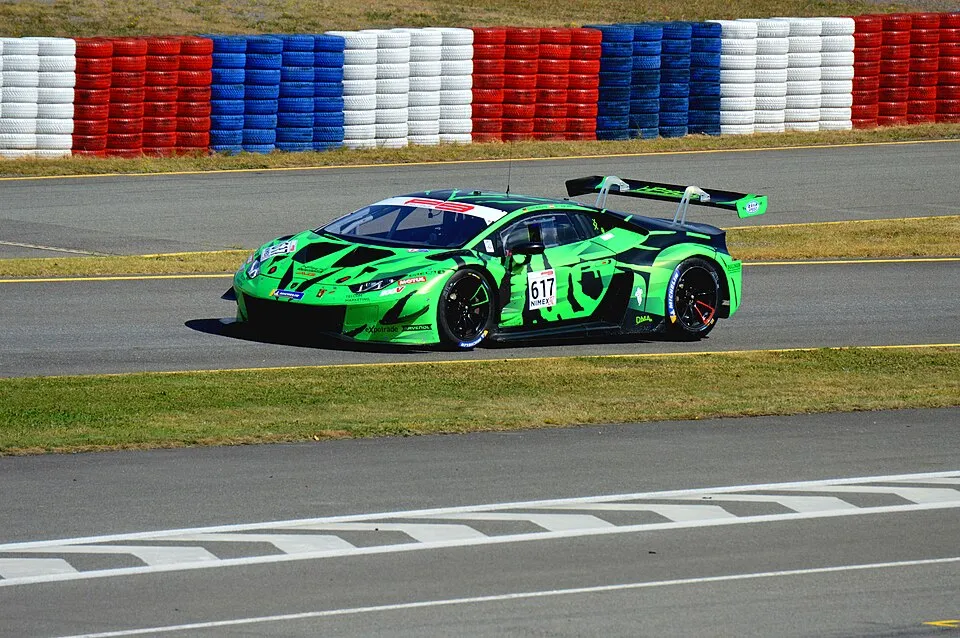
When evaluated purely as an investment, coaching demonstrates remarkable return potential.
The cost structure is straightforward: $100-$500 per coaching session versus $10,000-$30,000 for major crash repairs (Reddit/Trackdays, YouTube, 2023-2025). This isn’t hypothetical—these figures come from actual racer experiences tracking expenses.
A single avoided crash pays for dozens of coaching sessions. Beyond direct repairs, coaching also extends equipment lifespan, reduces insurance premium impacts, and minimizes lost track time due to damage. For budget-conscious beginners, this financial calculus makes coaching not just beneficial but essential.
Direct Cost Comparison: $100-$500 per Session vs. $10,000-$30,000 in Repairs
| Coaching Investment | Crash Damage Costs |
|---|---|
| $100-$500 per session (2023-2025) | $10,000-$30,000 per major amateur crash |
| $500-$2,000 for multi-session packages | Insurance premium increases (often 20-50%) |
| Group coaching discounts available | Equipment replacement (suspension, bodywork) |
| Long-term skill retention (no re-learning) | Lost track days (weeks of repair time) |
The comparison reveals that budgeting for motorsports training prioritizes coaching, as it costs less than 2% of a typical crash repair. Even premium coaching from experts like Sarah Moore represents a fraction of potential losses.
[P27]This table underscores coaching as risk management—paying a small, predictable amount to avoid catastrophic, unpredictable expenses. The financial logic holds regardless of budget level; for anyone who cannot afford a $20,000 repair bill, coaching isn’t optional—it’s mandatory insurance.
This table underscores coaching as risk management—paying a small, predictable amount to avoid catastrophic, unpredictable expenses. The financial logic holds regardless of budget level; for anyone who cannot afford a $20,000 repair bill, coaching isn’t optional—it’s mandatory insurance.
Long-Term Savings: Protecting Your Car and Your Wallet
Coaching’s financial benefits compound over a racing career. Each avoided crash preserves resale value and reduces cumulative repair spending. Consider a driver who tracks their car 10 times annually: without coaching, a 10% annual crash probability (conservative for beginners) means a major crash every 10 years on average.
With coaching reducing that probability by 70%, the expected savings exceed $15,000 over a decade—far surpassing coaching costs. Additionally, coached drivers learn to diagnose issues early, preventing minor problems from becoming major failures.
They also develop smoother driving styles that reduce tire and brake wear, further cutting ongoing expenses. The investment pays for itself after preventing just one incident.
Safer Track Days: How Coaching Reduces Club Racing Incidents
Beyond personal benefit, coaching improves safety for entire racing communities. National Safety Council data (via goaheadtakethewheel.com) shows that coaching prevents track day incidents by creating more predictable, skilled drivers. Coached participants understand flag protocols, proper passing etiquette, and car control fundamentals that reduce unexpected situations.
Organizations like SCCA and NASA actively encourage coaching because it lowers overall incident rates, making events more sustainable for organizers and safer for all participants. When a driver receives coaching, they’re not just protecting themselves—they’re contributing to a culture of safety that allows the sport to thrive. This community benefit adds intangible value to the coaching investment.
Perhaps the most surprising finding is that coaching costs less than 2% of a typical crash repair—yet it delivers comparable risk reduction. The data consistently shows that structured training prevents the errors that lead to expensive accidents. For beginners, the choice isn’t between coaching and no coaching; it’s between coaching and learning through costly mistakes.
The immediate action step is simple: book a single coaching session with a certified ARDS instructor like Sarah Moore to experience the difference professional guidance makes. Even one session can reveal critical errors and demonstrate the value of ongoing training, making it the smartest first investment in any racing career.
