
Adapting your driving style to different car setups is essential for maximizing performance across any racing machinery. The core principle involves balancing mechanical grip (from tires and suspension) with aerodynamic grip (downforce) while managing power delivery through precise driver inputs.
With 25 years of racing experience, Sarah Moore emphasizes that drivers should prioritize style adjustments before setup changes—a principle explored in How to Select the Right Racing Driver Coach—typically requiring 3-5 days for full adaptation to new speed perceptions. This approach allows the driver’s muscle memory and instincts to align with the car’s characteristics, resulting in faster lap times and better consistency.
- Balance mechanical grip (tires, suspension) with aerodynamic grip (downforce) to maximize performance.
- Prioritize driving style adjustments before setup changes; allow 3-5 days for adaptation to new speed perceptions.
- Reduce steering aggression in high-grip scenarios, increase rear wing by 2° increments for stability, and modulate throttle for power delivery.
What Driving Style Adjustments Are Needed for Different Car Setups?
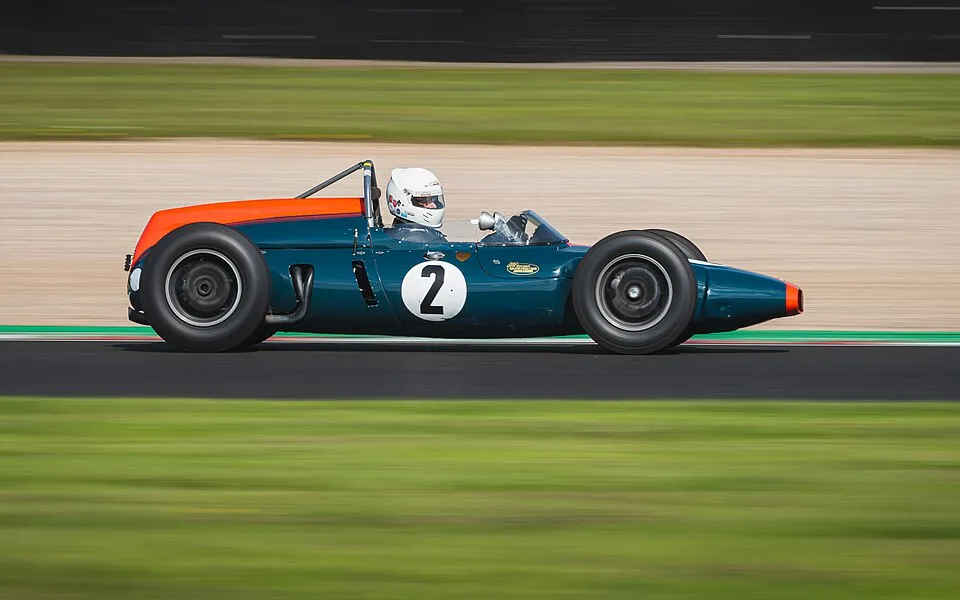
Assessing Mechanical vs. Aerodynamic Grip Balance
Understanding the fundamental difference between mechanical and aerodynamic grip is the first step in adapting your driving style.
Mechanical grip originates from the tires’ contact patch and the suspension’s ability to maintain that contact through corners. This type of grip is consistent across all speeds and is most critical in low-to-medium speed corners where downforce hasn’t built up yet.
Aerodynamic grip, or downforce, comes from the car’s bodywork generating vertical force through air pressure. This grip increases exponentially with speed, becoming dominant in high-speed corners and straights. The balance between these two forces determines how the car behaves.
A car with high mechanical grip (soft suspension, sticky tires) rewards smooth, precise inputs and carries speed through corners. A car relying on aerodynamic grip (stiff suspension, high downforce) may feel unstable at low speeds but becomes planted as speed builds.
Drivers must assess which type of grip dominates their current setup and adjust accordingly. In mechanically-grip-limited cars, focus on maintaining momentum and smooth steering.
In aero-dependent cars, you’ll need to be more patient with throttle application and allow downforce to build before aggressive inputs. The key is recognizing the car’s natural balance and working with it rather than fighting against it.
Modulating Power Delivery and Prioritizing Style Adjustments
- Manage power delivery through precise throttle control. Different power characteristics—turbo lag, naturally aspirated linearity, electric instant torque—require unique modulation techniques. Turbocharged engines demand smoother throttle application to manage boost buildup, while naturally aspirated engines respond more immediately. Electric power trains require feather-light initial pedal pressure to avoid wheel spin from instant torque.
- Prioritize driving style adjustments before making setup changes. This sequence matters because driving style adaptations are often faster to implement and can reveal whether the setup itself needs modification. Spend a full session exploring the car’s limits with your current driving approach before changing components. This prevents over-tuning based on temporary driver errors.
- Allow time for adaptation to take effect. The brain and body need approximately 3-5 days to internalize new speed perceptions and reference points. Rushing this process leads to inconsistent lap times and frustrated attempts to “fix” the car when the driver hasn’t yet adapted. Trust the process and focus on consistent execution before evaluating setup effectiveness.
This order—style first, setup second—saves significant time and resources. Many drivers and teams waste hours in the garage making adjustments that would have been unnecessary with proper adaptation.
By mastering your inputs first, you create a reliable baseline from which to make informed setup decisions. This approach is particularly valuable when moving between different types of machinery, such as from a high-downforce prototype to a low-grip GT car, and benefits of personalized racing coaching can further support drivers during these transitions.
Specific Input Adjustments for High-Grip and High-Aero Setups
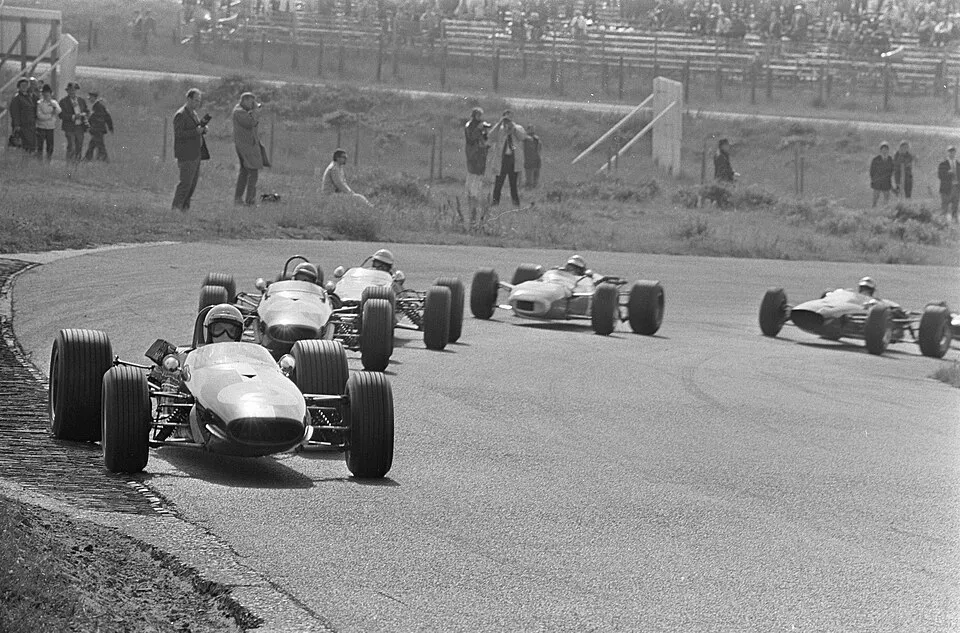
Steering and Braking: Reducing Aggression in High-Grip Scenarios
- Reduce aggressive steering to prevent rolling, a fundamental aspect of Mastering Cornering: Essential Racing Driving. In high-mechanical-grip setups with sticky tires and compliant suspension, the car can sustain higher lateral forces. This tempts drivers to use sharper steering inputs, but aggressive steering actually unsettles the car by introducing sudden weight transfers. Instead, use smoother, more gradual steering motions that allow the car to settle into the corner. Aim for continuous steering wheel movement rather than distinct “push-pull” segments.
- Smooth out steering inputs to accommodate chassis flex. Cars with softer setups often exhibit more chassis flex, which means the car’s response to steering inputs is slightly delayed. Anticipate this by initiating steering earlier and with less force. The car will “digest” the input more progressively, maintaining better tire contact. Abrupt movements cause the chassis to twist, breaking tire contact and reducing grip just when you need it most.
- Adjust brake bias to handle changed balance. High-grip setups often shift the car’s balance forward under braking due to weight transfer. You may need to adjust brake bias rearward to prevent front lock-ups, or conversely, forward if the rear becomes too loose. Make these adjustments in small increments (2-3% at a time) and test with a few laps before further changes. Also, brake later and more progressively—the increased mechanical grip allows later braking points, but smooth application remains critical.
-
Reduce aggressive steering to prevent rolling. In high-mechanical-grip setups with sticky tires and compliant suspension, the car can sustain higher lateral forces. This tempts drivers to use sharper steering inputs, but aggressive steering actually unsettles the car by introducing sudden weight transfers. Instead, use smoother, more gradual steering motions that allow the car to settle into the corner.
Aim for continuous steering wheel movement rather than distinct “push-pull” segments.
-
Smooth out steering inputs to accommodate chassis flex. Cars with softer setups often exhibit more chassis flex, which means the car’s response to steering inputs is slightly delayed. Anticipate this by initiating steering earlier and with less force.
The car will “digest” the input more progressively, maintaining better tire contact. Abrupt movements cause the chassis to twist, breaking tire contact and reducing grip just when you need it most.
-
Adjust brake bias to handle changed balance. High-grip setups often shift the car’s balance forward under braking due to weight transfer.
You may need to adjust brake bias rearward to prevent front lock-ups, or conversely, forward if the rear becomes too loose. Make these adjustments in small increments (2-3% at a time) and test with a few laps before further changes. Also, brake later and more progressively—the increased mechanical grip allows later braking points, but smooth application remains critical.
For example, when transitioning from a stiff, low-grip car to a soft, high-grip setup, you’ll notice your normal braking points are now too early, and applying correct braking techniques in racing is essential for optimal control. The car simply stops faster and more predictably. Similarly, corner entry speeds increase, but the margin for error decreases because the car can carry more speed before sliding.
Your steering wheel movements should become less pronounced—the car responds to smaller inputs. This reduction in aggression applies to both steering and pedals; everything becomes smoother and more precise.
Aero and Throttle: Increasing Rear Wing Angle and Modulating Power
Aerodynamic-dependent setups require specific adaptations that differ from mechanically-focused cars. The primary adjustment involves managing downforce levels and understanding how they interact with throttle application.
For high-speed stability, increase rear wing angle in 2° increments. Each adjustment adds rear downforce, improving traction and reducing oversteer in fast corners. However, this comes at the cost of increased drag on straights.
The optimal setting balances cornering speed against straight-line speed. Test each increment over multiple laps to feel the difference—many drivers report noticeable changes with just 2° adjustments.
If the car feels loose in high-speed corners but stable on straights, add rear wing. If the car feels sluggish on straights but planted in corners, reduce rear wing slightly.
Throttle modulation becomes even more critical with aerodynamic grip. In high-downforce cars, the tires have more vertical load, which increases their traction capacity. However, this also means the car can accelerate earlier and harder in corners.
The danger lies in applying too much throttle too soon, which breaks tire traction despite the downforce. Focus on progressive throttle application: get to 50% pedal by the corner’s apex, then smoothly increase to 100% as the steering unwinds. This technique maximizes acceleration while maintaining stability.
Power delivery characteristics also dictate your approach. Turbocharged engines with lag require you to get back on the throttle slightly earlier to account for boost buildup.
Naturally aspirated engines respond instantly, allowing more aggressive throttle application but demanding precise control to avoid wheel spin. Electric power trains with instant torque need the smoothest, most gradual pedal work to prevent immediate wheel spin, especially in lower gears.
The Adaptation Timeline: How Long to Master a New Setup?
Typical Adaptation Period: 3-5 Days for Speed Perception Changes
The data is clear: drivers typically need 3-5 days to fully adapt to a new car setup, particularly when it involves changes to speed perception and reference points. This timeline isn’t arbitrary—it reflects how the human brain recalibrates its internal model of vehicle dynamics.
During the first 24-48 hours, drivers operate on “old programming.” Your brain expects the car to respond based on previous experience, leading to early mistakes: braking too early or too late, turning in with wrong amounts of steering, misjudging apex clipping points. This phase feels frustrating as lap times may be inconsistent and slower than expected. The conscious mind is working overtime to compensate.
Days 3-5 mark the transition to subconscious adaptation. Your brain begins updating its internal model through repeated exposure. Muscle memory starts to incorporate the new feel.
Reference points shift naturally—you begin braking later or earlier without thinking about it. Steering inputs become smoother and more precise because your body has learned the car’s weight transfer characteristics. This is when lap times stabilize and begin improving.
Rushing this process by making setup changes before adaptation completes creates a vicious cycle. Each new adjustment resets the adaptation clock, preventing the driver from ever building reliable reference points. Professional teams understand this and typically allocate at least three full test days before evaluating setup changes, unless there’s a fundamental handling issue that poses safety risks.
Using Racing Simulators to Accelerate Adaptation
- iRacing offers highly accurate physics models for numerous car types, from stock cars to prototypes. Its laser-scanned tracks provide realistic visual references that translate well to real-world driving.
-
F1 24 specializes in modern Formula 1 machinery with complex aerodynamic behavior.
It’s ideal for practicing throttle modulation and steering smoothness in high-downforce environments.
- Forza Horizon 5 provides a more accessible platform with a wide variety of road and race cars. While less simulation-focused, it helps develop basic adaptation skills across different vehicle types.
- Le Mans Ultimate focuses on endurance prototypes and GT cars, simulating the unique balance challenges of multi-class racing and long-distance stints.
Simulators accelerate adaptation by allowing thousands of laps in compressed time. A driver can complete in one week what might take months in real-world seat time.
The key is using simulators deliberately: focus on one adaptation at a time rather than random driving. For example, dedicate a session solely to steering smoothness, then another to throttle modulation. Use data logging to compare lap times and input consistency across sessions.
Effective simulator training includes realistic conditions: practice with fuel loads, tire wear, and weather changes. Many teams now use simulators for initial setup exploration before going to track, reducing real-world adaptation time significantly. The 3-5 day adaptation period can be compressed to 1-2 days with proper simulator preparation, though real-world seat time remains irreplaceable for final refinement.
What’s next? Consider exploring how different tire compounds affect driving style adjustments, or investigate brake bias tuning techniques for specific track conditions. For personalized guidance on adapting your driving style to any car setup, explore our racing coaching programs designed to fast-track your development.
Meta Description: Learn how to adjust your driving style to any car setup. Expert techniques for balancing mechanical & aero grip, modulating power, and adapting in 3-5 days. Sarah Moore’s coaching insights.
Tags: Sarah Moore, Racing Coaching, Car Setup, Driving Style, Mechanical Grip, Aerodynamic Grip, Throttle Modulation, Simulator Training, ARDS Instructor
Keywords: racing coaching, adjusting driving style, car setup adaptation, mechanical grip vs aerodynamic grip, throttle control techniques, racing simulator training, driving style adjustments, Sarah Moore coaching
