
Sarah Moore, a championship-winning driver and ARDS Grade A instructor, shares her expert beginner racing driver advice on choosing your first series and car. Drawing from her own journey from karting at age 4 to winning the Ginetta Junior Championship and Britcar Endurance Championship, Moore provides practical guidance for newcomers. Her current work training young talent and promoting inclusivity through Racing Pride offers a comprehensive approach to starting your racing career.
- Begin with karting to build fundamental skills, as Sarah Moore did from age 4.
- Consider spec series like Ginetta Junior for your first car, offering affordable, competitive racing.
- Explore inclusive programs like W Series and Racing Pride for supportive environments, especially if you’re from underrepresented groups.
Sarah Moore’s Expert Advice on Selecting Your First Racing Series
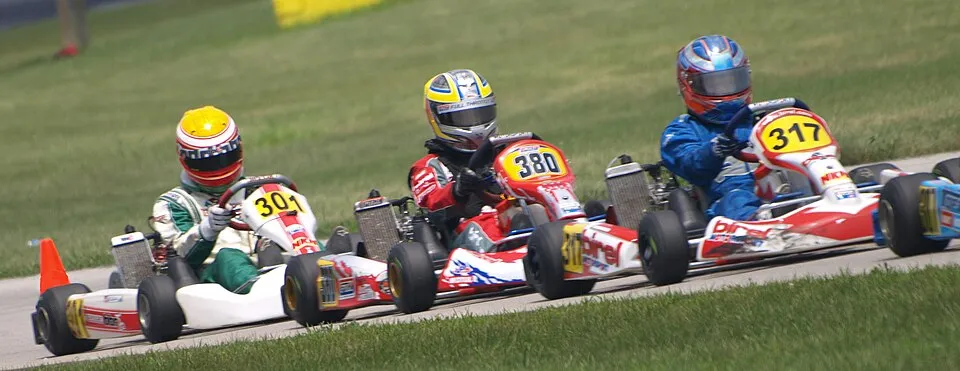
Choosing your first racing series is a critical decision that shapes your entire motorsport journey. Sarah Moore’s path from karting at age 4 to becoming the first woman to win the Ginetta Junior Championship in 2009 and the Britcar Endurance Championship in 2018 demonstrates a proven progression.
Her experience as an ARDS Grade A instructor and coach for young talent reveals that the best series for beginners balances cost, accessibility, and competitive value. The right series builds confidence while developing essential racecraft without overwhelming financial or technical demands.
Ginetta Junior Championship: A Proven Starting Point for Young Drivers
The Ginetta Junior Championship represents one of the most successful entry points into car racing for young drivers. Sarah Moore’s historic 2009 victory as the first female winner established this series as a legitimate pathway for all aspiring racers. Ginetta operates as a spec series where every driver uses identical cars, which fundamentally changes the competitive landscape.
Identical chassis and engines eliminate performance disparities, ensuring that results reflect driver skill rather than budget advantages. This design keeps costs predictable and manageable for families new to motorsport.
The series targets teenagers, typically ages 14-17, and serves as a recognized bridge from karting to professional racing. Many current professional drivers, including Formula 1 competitors, have passed through Ginetta Juniors, proving its development value.
The championship’s structure includes professional race weekends, proper paddock environments, and exposure to team dynamics—all essential experiences for serious beginners. For parents and young drivers considering car racing, Ginetta Junior offers a structured, cost-controlled environment where drivers can focus entirely on learning and improvement.
Touring Cars vs. Endurance Racing: Sarah Moore’s Success in TOCA and Britcar
Understanding the fundamental differences between racing series types helps beginners align their choice with personal strengths and preferences. Sarah Moore’s achievements in both touring cars and endurance racing provide perfect case studies. She became the first female to win a TOCA-sanctioned race, competing in the highly competitive touring car environment.
Touring car racing features short, sprint-style races—typically 15-20 minutes—with extremely close competition and frequent overtaking opportunities. This format rewards aggressive, precise driving and quick decision-making.
In contrast, endurance racing like Britcar involves longer races ranging from 60 minutes to 24-hour events. Moore’s 2018 Britcar Endurance Championship victory demonstrated mastery of this discipline. Endurance racing emphasizes consistency, reliability, and team coordination.
Drivers share cars, requiring clear communication and adaptability to different vehicle setups and conditions. The physical and mental stamina demands differ significantly from sprint racing.
Beginners should assess their natural inclinations: those who thrive on intensity and immediate feedback might prefer touring cars, while those who enjoy strategic thinking and teamwork may lean toward endurance. Both paths offer valuable skills, and many successful drivers cross between disciplines throughout their careers.
The W Series Pathway: Opportunities for Female Drivers
The W Series operated as a professional, female-only championship from 2019 to 2022, with Sarah Moore competing prominently in the inaugural season and finishing 8th overall. This series provided a unique development platform by offering free drives to selected talented women, eliminating the massive financial barriers that typically block female advancement. Races occurred alongside Formula 1 weekends, giving unprecedented exposure and experience on world-class circuits.
W Series demonstrated that women-only competitions can produce high-level racing and accelerate female progression into higher series. While the series faced financial challenges and paused operations after 2022, its impact persists through the opportunities it created and the visibility it brought to women in motorsport. For female beginners, W Series represented—and potentially could again represent—a direct pathway to professional racing without the funding obstacles that plague most young drivers.
However, Moore’s career also shows that female drivers can succeed in mixed-gender series like Ginetta Junior and Britcar. The choice between dedicated women’s series and open categories depends on individual goals, financial situation, and preference for either a targeted development environment or direct competition in the mainstream pathway.
Vehicle Selection: Sarah Moore’s Recommendations for Beginner Drivers

Vehicle selection directly impacts learning curves, costs, and long-term development. Sarah Moore’s progression from karting at age 4 through various series to professional racing informs her practical recommendations.
Her AJ Racing team in the UK provides kart hire and customer kart preparation, demonstrating her belief in accessible entry points. The fundamental principle across all her advice: start simple, master fundamentals, then progress strategically.
Karting Fundamentals: The Essential First Step
Karting remains the universally accepted foundation for all racing disciplines, and Sarah Moore’s own development began at age 4. This early start is not about professional training but about developing vehicle control, spatial awareness, and racecraft in a low-cost, high-feedback environment. Modern karting offers rental options at circuits worldwide, allowing complete beginners to experience racing without ownership commitments.
The benefits of karting as a first step are substantial. Karts provide immediate mechanical feedback—every steering input, brake application, and throttle change produces direct results.
This instant feedback loop accelerates skill development far more than car racing, where power steering, weight, and complex electronics can mask errors. Karting also teaches essential racing concepts such as mastering cornering techniques, including racing lines, braking points, overtaking, and defensive driving in a relatively safe, low-speed environment.
Moore’s AJ Racing team model—providing hire karts and preparation services—reflects the industry’s shift toward accessible entry. Beginners can spend a season in rental karts, learning fundamentals without major investment.
Once committed, purchasing a used kart and joining a local club offers the next step. This karting foundation pays dividends regardless of whether a driver later pursues formula cars, touring cars, or endurance racing.
Transitioning to Cars: Why Spec Series Like Ginetta Are Ideal
The transition from karting to cars marks a critical juncture where many beginners make costly mistakes. Sarah Moore’s success in the Ginetta Junior Championship illustrates why spec series provide the ideal first car experience.
Spec series use identical chassis, engines, and often tires across all competitors. This equality transforms racing from an equipment competition into a pure driver development exercise.
Ginetta cars, specifically the Ginetta G40 Junior model, are designed with novice drivers in mind. They feature robust construction to withstand minor contact, manageable power outputs (approximately 140 horsepower), and aerodynamic packages that teach car control without extreme speeds.
The cost structure is transparent, with teams quoting all-in season prices that include car hire, maintenance, tires, and technical support—essential for budgeting for motorsports training. This predictability prevents budget overruns that plague custom-built race cars.
Similar spec series exist globally: Formula 4 championships in various countries, the Mazda MX-5 Cup, and Porsche Carrera Cup Asia all offer entry points with standardized equipment. Beginners should prioritize series with strong technical support, clear cost structures, and reputations for developing talent rather than those emphasizing car development or customization.
Safety and Skill: The Role of ARDS-Certified Coaching
Sarah Moore’s ARDS Grade A instructor license represents the highest level of driving coaching certification in the UK, making her expertise particularly valuable for beginners seeking the benefits of personalized racing coaching. Professional coaching dramatically accelerates learning curves by identifying errors invisible to untrained observers and providing structured development plans. The ARDS (Association of Racing Driver Schools) Grade A designation requires extensive racing experience, advanced teaching qualifications, and regular reassessment.
Coaching prevents the formation of bad habits that become deeply ingrained and difficult to correct later. Self-taught drivers often develop inefficient techniques that limit performance and increase crash risk.
A certified coach observes from outside the car, providing immediate feedback on braking points, turn-in points, apex control, and throttle application—key aspects of braking techniques for racing. Video analysis and data logging enhance this process, allowing drivers to review sessions objectively.
Many racing series now require or strongly recommend coaching packages for newcomers. These packages typically include on-track instruction, classroom sessions on racecraft and vehicle dynamics, and ongoing support throughout the season. The investment in professional coaching pays dividends in faster lap times, safer driving, and greater enjoyment—reducing frustration and accelerating progression through the ranks.
Why Is F1 Academy Female Only? Understanding Women’s Racing Pathways
The question of why F1 Academy operates as a female-only series reflects broader discussions about gender inclusion in motorsport. F1 Academy, founded in 2023 by the Formula 1 Group, specifically aims to develop young female drivers with karting aptitude and provide a structured pathway to higher series like Formula 1. This female-only designation addresses systemic barriers that have historically excluded women from progressing to the highest levels of racing.
F1 Academy’s Mission: Developing Female Talent for Higher Series
F1 Academy represents a strategic investment by Formula 1 to increase female participation at the elite level. The series provides:
- Professional teams with engineering support
- Standardized cars (currently Tatuus F4-T421 chassis with Autotecnica engines)
- Reduced financial barriers compared to traditional Formula 4
- Direct links to Formula 1 teams and the F1 pyramid
- Media exposure and development programs
The series accepts up to 18 drivers annually, competing on Formula 1 support calendars. This structure mirrors successful development models in other sports, creating a dedicated pipeline for underrepresented groups.
For female beginners, F1 Academy symbolizes a future possibility—a clear route from karting to professional racing with institutional support. While not every female driver will reach F1 Academy, its existence changes the landscape by demonstrating that women’s progression is a priority for the sport’s governing bodies.
W Series: A Professional Platform for Women Racers
The W Series operated from 2019 to 2022 as a professional, female-only championship running alongside Formula 1 weekends. Sarah Moore competed in the inaugural 2019 season, finishing 8th overall, and remained a prominent figure throughout the series’ existence.
W Series offered free drives to selected drivers, eliminating the primary obstacle for most aspiring racers: funding. This model allowed talent to rise based on merit rather than financial backing.
The series used identical Tatuus F3-spec cars, providing a true driver competition. Races occurred in prestigious locations across Europe, Asia, and the Americas, giving drivers experience on iconic circuits.
While W Series faced financial difficulties leading to its suspension after 2022, its legacy includes proving that women-only series can produce exciting, competitive racing and serve as effective talent incubators. The series demonstrated that with proper structure and support, female drivers can compete at a level that prepares them for higher categories.
How Inclusive Programs Support Beginner Drivers from Underrepresented Groups
Sarah Moore’s role as a Racing Pride ambassador connects to a broader movement toward inclusion in motorsport. Racing Pride, founded in 2020, works with teams, series, and organizations to create welcoming environments for LGBTQ+ individuals. For beginners from underrepresented groups—whether women, LGBTQ+ athletes, or others—these inclusive programs provide crucial support networks.
Such programs address both cultural and practical barriers. Mentorship connects newcomers with experienced drivers who understand unique challenges. Community building reduces isolation and creates safe spaces for identity expression.
Some programs offer financial assistance, equipment access, or reduced entry fees. The psychological impact of seeing people like oneself succeeding in the sport cannot be overstated—representation matters for retention and aspiration.
Moore’s own experience as an openly LGBTQ+ driver who reached the podium at a Formula One Grand Prix weekend in 2021 provides a powerful example. Her visibility proves that motorsport can be inclusive while maintaining elite performance standards. Beginners from marginalized groups should actively seek out series and teams with established diversity programs, as these environments typically offer better support systems and reduce the risk of discrimination or exclusion.
Sarah Moore’s journey from karting to professional racing, combined with her commitment to racing coaching programs and inclusion, offers a blueprint for beginners. The most surprising insight is that choosing a series isn’t just about the cars—it’s about finding a supportive community that aligns with your identity and goals. Take action today: explore her racing coaching programs to discover which series might be your perfect starting point and receive personalized guidance on your unique path.
Frequently Asked Questions About Beginner Racing Driver Advice

Why is F1 Academy female only?
F1 Academy was founded in 2023, as part of an ambitious plan to return women to the ranks of Formula One and increase the pool of female drivers. At a basic level, it resembles a graduate programme for young female drivers who have shown an aptitude in junior levels of karting.
Is there a female F1 equivalent?
The 18-year-old is among an elite group of women breaking into motorsport, which has been dominated since its inception by two institutional powers – men and money. Robertson is taking part in F1 Academy, a female-only racing championship founded by the Formula 1 Group.
Why can't females be in F1?
The high cost of participation and an institutional lack of investment in women are largely to blame, says The Washington Post's Glynn Hill. Amna Al Qubaisi of the United Arab Emirates prepares to drive during an F1 Academy race in Singapore on Sunday.
Are there LGBTQ drivers in F1?
Only four drivers in Formula 1 history have publicly come out as LGBTQ+. Here are their stories. On July 14 2024, German and former F1 driver Ralf Schumacher made F1 history by becoming the fourth openly LGBTQ+ driver in the sport.
