
Sarah Moore, the 2018 BritCar Endurance Championship winner and Harrogate native, identifies four premier scenic drives from her hometown into the Yorkshire Dales, perfect for day trips from Harrogate, each offering distinct photographic opportunities for 2026 visitors. These routes—Malham Circuit, Wharfedale via B6160, Wensleydale & Buttertubs Pass, and the Three Peaks Area—provide access to limestone cliffs, ancient abbeys, dramatic waterfalls, and iconic engineering marvels, with practical details on car hire from £32 per day and National Park parking from £3.80.
- The Yorkshire Dales offer four premier scenic drives from Harrogate: Malham Circuit, Wharfedale (B6160), Wensleydale & Buttertubs Pass, and the Three Peaks Area.
- Photographers should target early morning light at Gordale Scar, sunset at Windskill Stones, and early summer wildflowers at Muker for optimal shots.
- Car hire in Harrogate starts at £32/day and Yorkshire Dales National Park parking costs £3.80-£7.00 (2026 rates).
What Are the 4 Premier Scenic Drives from Harrogate to the Yorkshire Dales?
Malham Circuit: Limestone Cliffs, Gorges & Tarn
- Malham Cove: This dramatic limestone cliff, formed by glacial meltwater, presents a sheer white rock face rising 80 meters. Photographers capture best results from the base at low tide (when the stream is dry) or from the top for panoramic dale views. The cove’s natural arch and limestone pavement offer intricate foreground textures.
- Gordale Scar: A breathtaking limestone gorge with 100-meter-high cliffs, where a waterfall cascades into a plunge pool. Early morning sun rays penetrate the narrow gorge, creating dramatic light and shadow play on the weathered rock. A wide-angle lens emphasizes the towering scale.
- Malham Tarn: A rare glacial lake sitting 377 meters above sea level, surrounded by limestone pavements and peatland. The reflective surface mirrors sky and surrounding fells, especially striking at dawn or dusk. The tarn’s isolation provides minimalist landscape compositions.
Together these three features create a compact circuit showcasing the Dales’ Carboniferous Limestone geology. The drive from Harrogate takes approximately 1 hour 15 minutes via the A65 and B6470, with well-signposted parking at each location. The route is suitable for most vehicles, though narrow lanes near Malham village require caution during peak season.
Wharfedale via B6160: Abbeys, Waterfalls & Villages
- Bolton Abbey: The priory ruins of a 12th-century Augustinian monastery sit beside the River Wharfe. Photographers combine architectural details with natural elements using the famous stepping stones as leading lines. The best light occurs in late afternoon when the stone glows golden.
- Linton Falls: A series of cascades on the River Wharfe, just upstream from the village of Linton. The falls are most powerful after rainfall and can be shot from the footbridge or riverbank. A slower shutter speed creates silky water effects against the dark limestone.
- Grassington: A charming cobbled village with 17th-century stone cottages and a central square. The village provides foreground interest with architectural details, while surrounding meadows offer valley backdrop. Market days (Sundays) add human element but increase crowds.
The B6160 route from Harrogate (via the A59 and A65) spans about 50 minutes of driving time. This valley drive contrasts with the Malham Circuit’s wildness, offering more developed amenities and easier access. Photographers should allocate extra time for Bolton Abbey’s extensive grounds and Grassington’s photographic streetscapes.
Wensleydale & Buttertubs Pass: Castles, Falls & Dramatic Passes
- Aysgarth Falls: A spectacular triple-tiered waterfall on the River Ure, dropping 30 meters through broadleaf woodland. The falls are powerful year-round but most dramatic after heavy rain. Multiple viewpoints exist from the riverside path; a polarizing filter reduces glare on wet rocks.
- Bolton Castle: A near-perfect medieval fortress with intact battlements and restored state rooms. The castle’s symmetrical architecture provides strong compositional lines, while the surrounding deer park offers pastoral scenes. The best exterior shots use a telephoto lens to compress the castle against the Wensleydale valley.
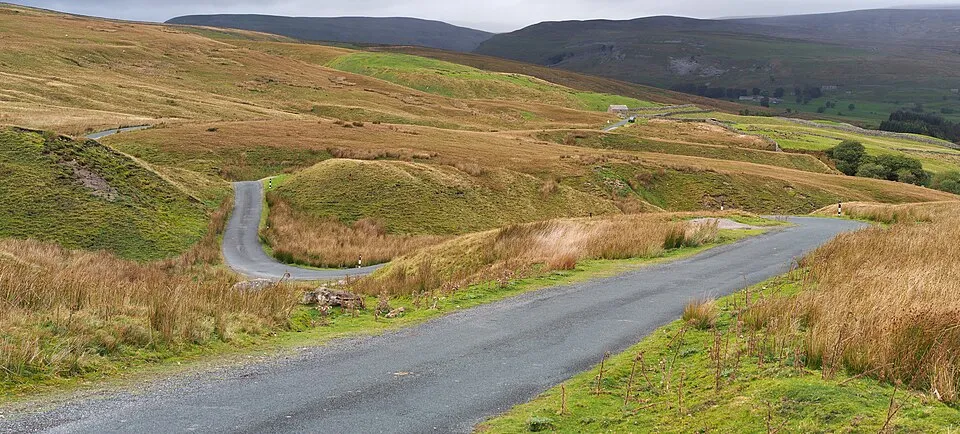
- Buttertubs Pass: A high limestone pass (1,722 feet) with deep potholes (the “butter tubs”) and vertiginous valley views. The narrow, winding road itself is a photographic subject, especially during moody weather. The summit offers sweeping panoramas toward Wensleydale and Swaledale.
This route from Harrogate (via the A6108 through Ripon and Leyburn) takes about 1 hour 30 minutes. Buttertubs Pass is the most challenging drive—narrow, with steep drops and no barriers—and frequently closes in winter or after heavy rain. Check conditions before departure; closures are common and can add significant detour time.
Three Peaks Area: Viaducts, Stones & Scar Views
-
Ribblehead Viaduct: A 19th-century railway viaduct with 24 arches spanning 400 meters across Batty Moss. The structure’s geometric repetition creates leading lines toward the peaks of Ingleborough and Whernside. Sunrise illuminates the stonework, while sunset backlights the fells.
The nearby quarry provides a lower-angle perspective.
-
Windskill Stones: A lone wind-sculpted hawthorn tree clinging to a limestone pavement on the slopes of Whernside. The tree’s silhouette against vast moorland and exposed rock is iconic.
Arrive at sunset for warm light on the stone and long shadows emphasizing textures.
-
Twisleton Scar: A dramatic limestone cliff edge with natural arches and extensive views over the Ribble valley. The scar’s curved profile makes a strong foreground element with distant peaks.
A short walk from the road access point yields multiple compositions.
The Three Peaks drive from Harrogate (via the A65 and B6255) requires about 1 hour 45 minutes. This western route is the most exposed, with weather changing rapidly.
Photographers must be prepared for sudden wind and rain. The viaduct has dedicated parking; Windskill Stones and Twisleton Scar require roadside parking with care.
Photographer’s Timing Guide: Light, Seasons & Conditions
Golden Hour Secrets: Early Morning at Gordale Scar, Sunset at Windskill Stones
Gordale Scar’s narrow gorge channels early morning sunlight (typically 6-8 AM in summer) into beams that illuminate the cliff faces and waterfall mist. This directional light creates high contrast between light and shadow, emphasizing the gorge’s depth and rock textures. Arrive before sunrise to capture the gradual light fill.
In contrast, Windskill Stones benefits from late afternoon to sunset (4-7 PM depending on season), when the western exposure bathes the limestone pavement and lone tree in warm, low-angle light. The expansive moorland views behind the tree become more atmospheric as the sun dips, with long shadows defining the pavement’s cracks. Both locations require tripods for sharpness in lower light and graduated neutral density filters to balance bright skies with darker foregrounds.
Seasonal Highlights: Summer Wildflowers at Muker & Other Meadows
Early summer (June to early July) transforms Muker’s hay meadows into a tapestry of wildflowers—including wood cranesbill, oxeye daisy, and meadow buttercup—against the backdrop of traditional stone barns. The soft floral colors complement the hard limestone scenery, ideal for landscape-with-flower foregrounds. Photographers should aim for overcast days to avoid harsh shadows on petals.
Other seasonal opportunities include autumn colors (October) along the River Wharfe near Bolton Abbey, where golden beech leaves reflect in calm water, and winter snow (December-February) on the Three Peaks, which simplifies compositions into monochrome studies of viaducts and scars against white. Spring (April-May) offers newborn lambs in pastoral scenes but fewer wildflowers.
Weather & Road Conditions: Capturing Moody Shots While Staying Safe
Moody weather—mist, rain, and storm clouds—creates atmospheric photographs with dramatic lighting and saturated colors. However, the Dales’ high passes become hazardous quickly. Buttertubs Pass, in particular, is prone to sudden whiteouts, ice, and surface water.
Always check the Yorkshire Dales National Park website for real-time road closures before departure. The park’s Twitter account (@ydnp) provides immediate updates. If a pass is closed, alternative routes like the A684 through Hawes or the B6255 via Ribblehead add 20-40 minutes but are safer.
Carry waterproof gear for both you and your camera, and never stop on narrow bends for photos. Use laybys or designated viewpoints.
Practical Planning: Car Hire, Parking & Road Logistics
Car Hire in Harrogate: 2026 Rates & Company Comparison
| Company | Starting Price (per day) | Notable Features |
|---|---|---|
| Enterprise | £32 | Wide vehicle selection including SUVs; multiple Harrogate locations; free cancellation |
| Budget | £30 | Budget-friendly compact cars; online discounts; pick-up at Harrogate railway station |
| Hertz | £35 | Premium vehicles; GPS included; 24/7 roadside assistance |
For Dales driving, a compact SUV or crossover offers the best balance of fuel efficiency and handling on narrow, sometimes uneven lanes. All three companies provide unlimited mileage within the UK, essential for covering multiple routes in a day. Book at least two weeks in advance for 2026 summer rates, which can increase by 15-20% during July and August.
Insurance packages vary; compare excess reduction options. Consider picking up your rental directly from Harrogate town centre to avoid transfer fees. For photographers, ensure the vehicle has adequate boot space for camera gear and a roof rack if carrying tripods.
Yorkshire Dales Parking Fees: 2026 National Park Rates
| Duration | Fee (2026) | Payment Methods |
|---|---|---|
| Up to 2 hours | £3.80 | Card, contactless, RingGo app |
| Over 2 hours up to 24 hours | £7.00 | Card, contactless, RingGo app |
Parking charges apply at most National Park-managed car parks, including Malham Cove, Aysgarth Falls, and Ribblehead Viaduct. Free parking exists in some villages (e.g., Grassington, Muker) but fills by 10 AM in summer. The RingGo app allows cashless payment and extension via phone, useful if shooting runs long.
Cost-saving strategy: arrive before 9 AM to secure free village spots, or park in less popular laybys (where permitted) and walk 5-10 minutes to viewpoints. Always check signage for parking restrictions—some areas prohibit overnight parking to manage visitor pressure. Budget £10-£15 daily for parking across multiple stops.
Navigating High Passes: Buttertubs Closures & Alternative Routes
Buttertubs Pass (B6270) between Hawes and Thwaite is the most frequently closed route due to snow, ice, or landslides. Closures typically occur November through March and after extreme weather. The National Park updates a dedicated road status page with live conditions.
If closed, use the A684 through Wensleydale as a longer but safer alternative, adding 30 minutes to the journey. For the Three Peaks area, the B6255 over Fleet Moss can also close; the detour via the A65 through Settle adds 40 minutes. Always download offline maps (Google Maps or OS Maps) as mobile signal is spotty in valleys.
Allow flexible timing in your itinerary—weather can change rapidly, and a closed pass may force route re-planning. Sarah Moore notes that racing taught her to “read the road and respect the conditions”—a principle that applies equally to scenic photography drives.
The most surprising finding is that Buttertubs Pass’s dramatic limestone potholes and valley views offer unique photo opportunities but require diligent closure checks. Before your trip, visit the Yorkshire Dales National Park website for the latest road status and parking updates, and consider booking a flexible car hire policy.
For a complete overview of Harrogate’s attractions, explore the Harrogate tourism guide. This focused approach ensures you capture the Dales’ beauty safely and efficiently.
