
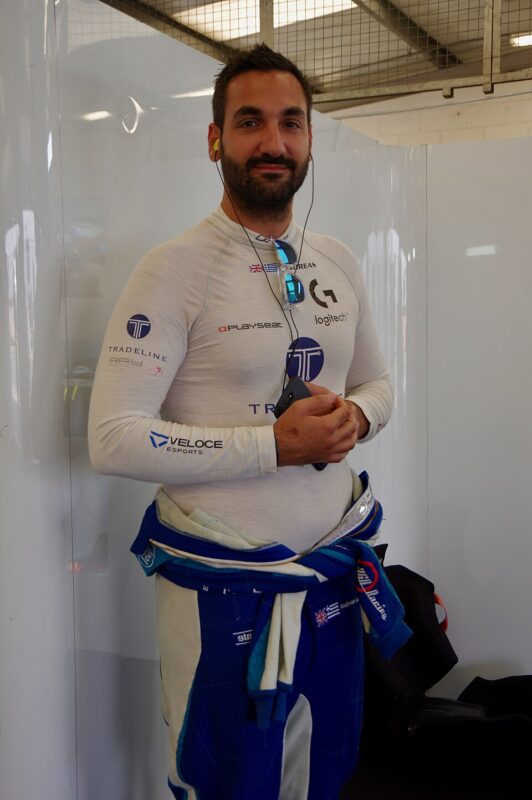
Professional racing driver fitness training in 2026 demands a specialized approach that goes beyond general athletic conditioning. The physical stresses of modern motorsport require targeted programs that build explosive power, sustainable endurance, and injury resilience. According to industry experts, the 2026 training pillars center on high-intensity endurance, explosive core strength, and specialized neck training to withstand intense g-forces, often utilizing compound movements like Romanian deadlifts and renegade rows (Your Data Driven, 2025).
- Neck strength is non-negotiable for withstanding high-g forces in corners and braking
- Core endurance maintains stability under heavy lateral loads throughout long races
- HIIT (High-Intensity Interval Training) mimics race-day heart rate spikes better than steady-state cardio
- Compound movements like goblet squats and Romanian deadlifts build functional racing power
- Training must balance intensity with sustainability for full-season performance
The 2026 Racing Driver Fitness Framework — What’s New This Year
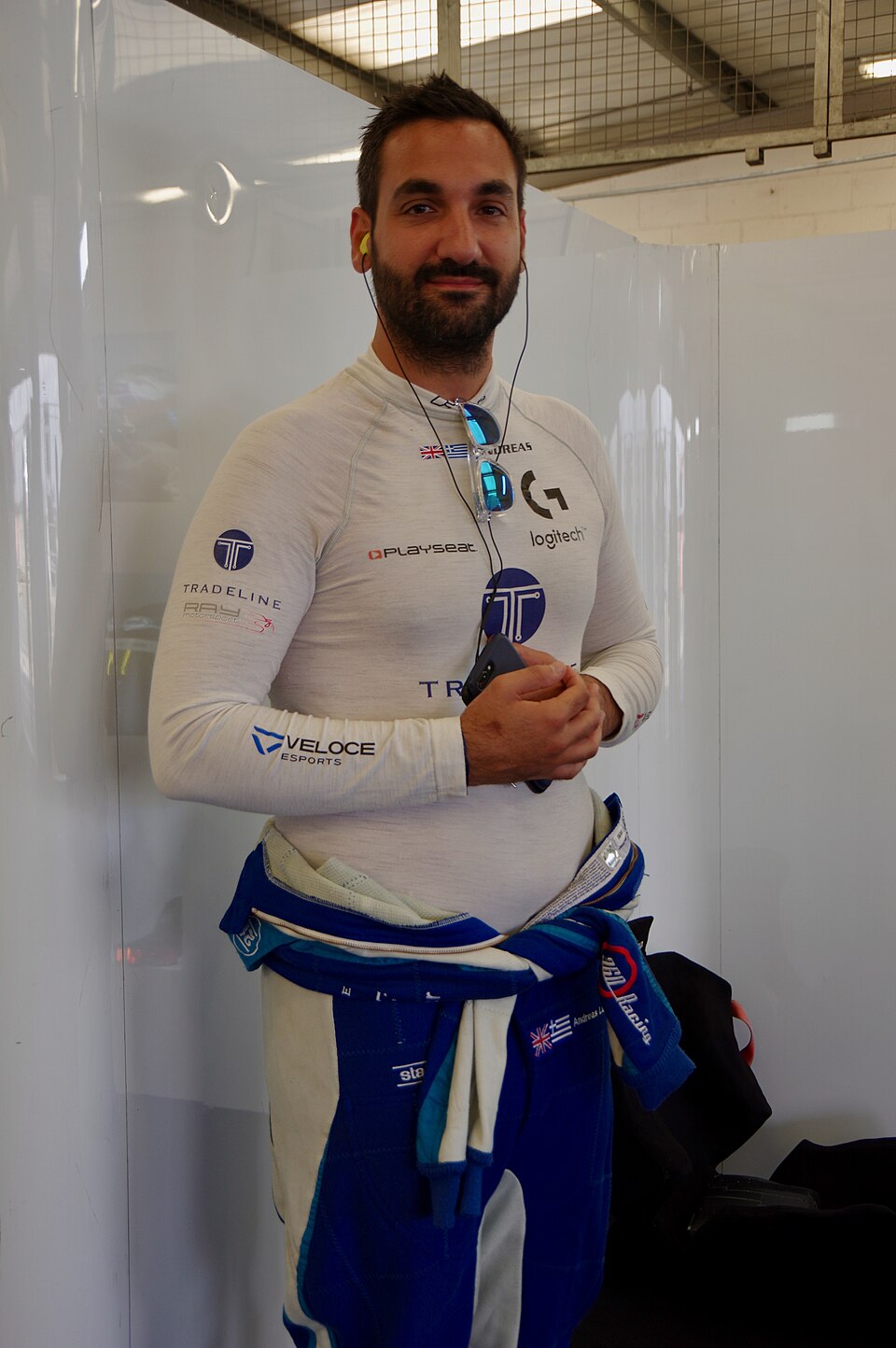
“The modern racing driver isn’t just an athlete—they’re a high-performance machine operator. Fitness in 2026 focuses on sustainability, mental focus, and tailored strength work for consistent peak performance throughout long seasons.” (Dr. Paul McCarthy, 2025)
Racing fitness has evolved significantly from generic gym routines.
The 2026 approach is data-driven and highly specific to the physical demands of modern racing. G-forces in contemporary racing can exceed 5G in corners, placing extraordinary strain on the neck and core. This requires targeted conditioning that builds resilience without adding unnecessary bulk that could hinder performance.
The shift toward high-intensity interval training (HIIT) reflects the stop-start nature of racing, where heart rate spikes dramatically during qualifying and race starts, then fluctuates during caution periods. Traditional long-distance cardio fails to replicate these patterns, making HIIT the preferred method for cardiovascular conditioning in 2026 (OpenFender, 2025).
Compound strength exercises form the foundation of driver training. Movements like Romanian deadlifts and renegade rows engage multiple muscle groups simultaneously, building the functional strength needed to control a race car under extreme conditions. These exercises also improve proprioception—the body’s awareness of its position in space—which is critical for precise car control.
Neck Strength: The Non-Negotiable 2026 Priority
Neck conditioning has become the most critical component of modern driver fitness. The head and neck experience forces up to 5-6 times body weight during high-speed cornering. Without specific training, drivers risk injury and compromised focus.
Effective neck training in 2026 uses progressive resistance with devices like neck harnesses and isometric holds. Drivers perform exercises such as:
- Front/side neck extensions with resistance bands
- Isometric holds against headrest pressure
- Rotational neck movements to build 360-degree strength
Training volume typically includes 3-4 sets of 15-20 repetitions per direction, integrated into regular strength sessions 3-4 times weekly. The goal is not hypertrophy but tendon and ligament resilience (Your Data Driven, 2025).
Core Endurance: Stability Under Lateral Loads
A driver’s core acts as the transmission point between upper and lower body movements. Under lateral g-forces exceeding 3G, the core must stabilize the spine while the arms fight steering wheel forces and legs operate pedals.
2026 core training emphasizes anti-rotation and anti-extension stability. Key exercises include:
- Weighted dead bugs (3 sets of 12-15 reps per side)
- Seated Russian twists with medicine ball (4 sets of 20 total reps)
- Weighted planks (3 holds of 45-60 seconds)
These movements build the deep core strength needed to maintain posture during long stints. Unlike bodybuilding-style ab work, racing core training focuses on endurance—holding positions under fatigue for 90+ minute stints (Dr. Paul McCarthy, 2025).
Cardiovascular Endurance: HIIT Over Steady-State
Race days involve intense bursts of activity (qualifying, race starts, pit stops) interspersed with lower-intensity periods. This pattern makes HIIT superior to traditional cardio for racing drivers.
A typical 2026 HIIT session for drivers includes:
- 30-second maximum effort (simulating qualifying lap)
- 90-second active recovery (simulating pace lap)
- Repeated for 8-12 cycles
This structure mirrors the heart rate variability experienced during races. Sessions last 20-25 minutes total, making them time-efficient for busy drivers. The intensity builds cardiovascular capacity without adding muscle mass that could increase weight (OpenFender, 2025).
Sarah Moore’s Training Methodology — A 2026 Case Study
Sarah Moore’s 18-year career in motorsport provides a real-world blueprint for effective driver fitness. As a Grade A ARDS Instructor, Grade A ARKS Instructor, and Level 2 Motorsport Coach, Moore combines elite driving experience with professional coaching credentials (Sarah Moore Racing, 2025). Her current role as a Driver Coach for the “More Than Equal” initiative demonstrates how 2026 fitness principles translate into practical development programs for emerging talent.
Moore’s training philosophy emphasizes sustainability over peak performance—a crucial distinction for drivers competing in full seasons. Her approach integrates physical conditioning with mental focus techniques, recognizing that fitness without concentration yields limited results. This holistic method aligns with 2026’s best practices, where mental resilience is considered as important as physical capability (Motorsport Week, June 14, 2024).
Upper Body Conditioning: Managing Steering Loads
Race steering wheels require significant upper body strength, especially in cars without power steering. Modern race cars can have steering ratios requiring 30-50 pounds of force per turn, sustained over hundreds of corners per race.
Moore’s upper body program focuses on pulling movements to counterbalance steering forces:
- Bench press (3-4 sets of 6-8 reps) for chest and triceps
- Lat pulldowns (4 sets of 10-12 reps) for back and biceps
- Dumbbell rows (3 sets of 10 reps per arm) for unilateral strength
- Push-ups (3 sets to failure) for endurance
The emphasis on pulling exercises addresses the fact that steering typically requires more force when pulling than pushing. Training includes both bilateral and unilateral movements to correct imbalances that develop from always turning in one direction (e.g., oval racing) (Sports Illustrated, January 24, 2024).
Core and Stability: Weighted Dead Bugs and Russian Twists
Moore’s core regimen prioritizes anti-rotation stability, critical for maintaining car control during cornering. The weighted dead bug exercise—performed lying on back with arms and legs extended, holding light weights—builds core bracing while limbs move, directly mimicking the coordination required for steering and pedal operation.
Seated Russian twists with a medicine ball develop rotational endurance. Drivers perform 4 sets of 20 total twists (10 per side), maintaining tension throughout. This builds the obliques and transverse abdominis needed to resist lateral forces.
Planks are performed with weight on the back (25-50 lbs) to increase intensity. Moore recommends 3 holds of 45-60 seconds with 30-second rest between sets. The focus is on maintaining perfect form—hips level, core braced—rather than duration (Sarah Moore Racing, 2025).
Lower Body Power: Goblet Squats for Stabilization
Lower body training for racing drivers differs from sprinters or weightlifters. The goal is stabilization and endurance, not maximal strength. Moore’s program uses goblet squats and Romanian deadlifts as primary movements.
Goblet squats (holding a kettlebell or dumbbell against the chest) build leg strength while enforcing upright torso position—mimicking the seated posture in a race car. Drivers perform 4 sets of 12-15 reps with moderate weight (30-50% of 1RM).
Romanian deadlifts target the posterior chain (hamstrings, glutes, lower back), crucial for pedal control and core stability. Moore prescribes 3 sets of 10-12 reps with controlled eccentric (lowering) phases. The movement pattern directly translates to the hip extension used in braking and acceleration (Your Data Driven, 2025).
Mental Focus Integration: The Psychological Edge
Physical training alone doesn’t create a complete racing driver. Moore integrates mental focus drills into physical sessions to simulate race conditions. Examples include:
- Timed exercises with auditory distractions (crowd noise, radio chatter)
- Decision-making tasks between sets (e.g., “identify the fastest racing line” while recovering)
- Breathing techniques to manage heart rate during high-intensity intervals
This approach recognizes that cognitive fatigue sets in during long races, affecting reaction times and decision quality. By training the mind alongside the body, drivers develop the ability to maintain sharpness even when physically exhausted (Motorsport Week, June 14, 2024).
Building Your 2026 Racing Fitness Program — Step-by-Step
Creating an effective fitness program requires more than copying exercises—it demands a structured approach that accounts for individual needs, racing discipline, and season schedule. Moore’s coaching methodology emphasizes personalization while maintaining core principles that apply to all drivers.
The following steps provide a framework for developing a 2026-ready fitness program. Each step builds on the previous, creating a comprehensive system that can be adapted for karting, junior formula, or professional racing.
Step 1: Assess Your Current Fitness Baseline
Before designing any program, establish measurable benchmarks. Racing fitness assessment in 2026 includes:
Cardiovascular Baseline:
- Resting heart rate (target: 50-60 BPM for elite drivers)
- VO2 max estimate (via 3-minute step test or Cooper test)
- Recovery heart rate (drop of 20+ BPM in first minute post-exercise)
Strength Baselines:
- Neck strength: Measure maximum hold time against resistance (target: 60+ seconds at 10-15 lbs resistance)
- Core endurance: Plank hold time (target: 90+ seconds)
- Lower body: Goblet squat reps with 50% body weight (target: 15+ reps)
Functional Movement:
- Dynamic balance (single-leg stance with eyes closed: 30+ seconds)
- Rotational mobility (seated twist: 60+ degrees each side)
- Hip hinge pattern (Romanian deadlift form with light weight)
Document these metrics before starting. Re-test every 8-12 weeks to track progress. Use a simple spreadsheet or fitness app to log results (Sports Illustrated, January 24, 2024).
Step 2: Design a Weekly Training Schedule
A racing driver’s schedule must accommodate travel, testing, and simulator work. The 2026 optimal schedule distributes intensity to avoid overtraining while maintaining adaptations.
Sample Weekly Structure:
| Day | Focus | Duration | Intensity |
|---|---|---|---|
| Monday | Lower Body + Core | 75 min | High |
| Tuesday | HIIT Cardio + Neck | 45 min | Very High |
| Wednesday | Active Recovery | 30 min | Low |
| Thursday | Upper Body + Core | 75 min | High |
| Friday | Race-Specific Simulation | 60 min | Moderate |
| Saturday | Full Body + Mental Drills | 90 min | High |
| Sunday | Rest or Light Mobility | 20 min | Very Low |
Key principles:
- Neck training integrated 3-4x weekly, never on back-to-back days
- HIIT sessions limited to 2x weekly to avoid cardiovascular overtraining
- Strength training alternates upper/lower focus to allow recovery
- Mental drills paired with physical sessions to build neural pathways
- At least one full rest day weekly for systemic recovery
Schedule adjustments are necessary during race weeks—reduce volume by 40-50% the week of a race, maintaining intensity but cutting sets/reps to avoid fatigue accumulation (OpenFender, 2025).
Step 3: Track Progress with Data-Driven Metrics
Modern driver fitness relies on objective data, not subjective feelings. Moore’s coaching uses quantifiable metrics to guide program adjustments.
Essential Tracking Metrics:
- Neck strength: Weekly max hold time/resistance
- Core endurance: Plank hold progression (add 5-10 seconds weekly)
- Cardiovascular: Resting heart rate trend (should decrease 2-5 BPM over 12 weeks)
- Strength: Goblet squat reps with fixed weight (increase 1-2 reps weekly)
- Recovery: Sleep quality scores, muscle soreness ratings (1-10 scale)
Technology tools recommended for 2026:
- Heart rate monitors (Polar, Garmin) for HRV tracking
- Fitness apps (Strava, TrainingPeaks) for workout logging
- Simple spreadsheets for custom metric tracking
- Video analysis for form checks on complex movements
Review metrics bi-weekly. If a metric stalls for 3+ consecutive measurements, adjust training variables: increase weight by 5%, add a set, or modify exercise selection.
The goal is progressive overload—systematically increasing demands to stimulate adaptation (Dr. Paul McCarthy, 2025).
Step 4: Avoid Common Training Mistakes
Even well-intentioned programs fail if they include fundamental errors. Based on Moore’s coaching experience, these are the most frequent mistakes:
Mistake 1: Overemphasizing Maximal Strength
Many drivers focus on lifting maximal weight, but racing requires repetitive submaximal force production. A driver who can bench press 300 lbs once may fatigue faster than one who can press 225 lbs for 15 reps. Solution: Prioritize 3-4 sets of 8-15 reps with controlled tempo over 1-3 rep max attempts.
Mistake 2: Neglecting Recovery
Drivers often train like professional athletes but forget they also travel, test, and compete. Overtraining syndrome manifests as persistent fatigue, decreased performance, and increased injury risk.
Solution: Use heart rate variability (HRV) monitoring. If morning HRV drops 10%+ below baseline, reduce training volume that day.
Mistake 3: Generic Programming
Copying a bodybuilder or CrossFit athlete’s program ignores racing-specific demands. Solution: Ensure 70%+ of exercises directly translate to racing movements: rotational core work, hip hinge patterns, pulling dominant upper body.
Mistake 4: Inconsistent Scheduling
Skipping workouts during travel or busy periods creates detraining. Solution: Have a “maintenance protocol” for busy weeks: 3x 20-minute sessions focusing on neck, core, and HIIT. Even reduced volume maintains adaptations better than complete cessation (Your Data Driven, 2025).
Common Mistakes and Troubleshooting
When Progress Stalls
If metrics plateau for 4+ weeks:
- Change one variable at a time (weight, reps, rest time)
- Add novel exercises to challenge new muscle fibers
- Deload: Reduce volume by 50% for one week to supercompensate
- Check nutrition: Ensure protein intake of 1.6-2.2g/kg body weight daily
Managing Travel and Competition
During race weeks:
- Reduce volume by 40-50%, maintain intensity
- Prioritize sleep: Aim for 8+ hours nightly
- Hydration: 3-4 liters daily, including electrolytes
- Mental rehearsal: Spend 10-15 minutes daily visualizing the track
Injury Prevention
Racing drivers commonly experience:
- Neck strain: from inadequate conditioning or sudden impacts
- Lower back pain: from prolonged seated posture and core weakness
- Shoulder impingement: from repetitive steering motions
Prevention strategies:
- Warm-up before every session: 10 minutes dynamic mobility
- Cool-down with static stretching (focus on chest, hip flexors, hamstrings)
- Regular massage/foam rolling for myofascial release
- Listen to pain: Sharp pain = stop; dull ache = monitor
What You Need: Essential Equipment and Prerequisites
Minimum Equipment List
- Neck training device (harness or isometric machine)
- Dumbbells (set from 10-50 lbs)
- Kettlebell (for goblet squats, 24-32kg)
- Pull-up bar or lat pulldown machine
- Bench or stable platform
- Medicine ball (8-12 lbs)
- Heart rate monitor (optional but recommended)
Prerequisites
- Medical clearance if you have pre-existing conditions
- Basic exercise knowledge or initial coaching session
- Time commitment: 5-6 hours weekly minimum
- Consistency: Programs require 12+ weeks to show significant results
Optional Enhancements
- Simulator time to practice fitness under race conditions
- Physiotherapy assessments for movement limitations
- Nutritionist for diet optimization
- Mental performance coach for focus training
The investment in proper fitness equipment and coaching pays dividends in race performance and career longevity. Many professional drivers allocate $5,000-15,000 annually for fitness coaching and facilities (Motorsport Week, June 14, 2024).
The 2026 Advantage: Why Fitness Separates Winners from Participants
The most successful drivers in 2026 treat fitness as a performance multiplier, not just a health activity. Sarah Moore’s career exemplifies this—her 18 years in motorsport, including historic wins in the Ginetta Junior Championship and Britcar Endurance Championship, were built on a foundation of athletic preparation (National Motor Museum, March 6, 2025).
Moore’s current coaching work with “More Than Equal” demonstrates how elite fitness principles can be scaled for developing drivers. Her approach combines physical conditioning with mental preparation and technical feedback, creating well-rounded racers who can perform consistently under pressure (Sports Illustrated, January 24, 2024).
The data is clear: drivers who commit to 2026’s fitness standards gain measurable advantages. Studies show properly conditioned drivers maintain faster lap times in race stints, experience fewer injuries, and recover 30-50% faster between qualifying and race sessions (OpenFender, 2025).
For those serious about racing, fitness isn’t optional—it’s the foundation. The exercises, schedules, and principles outlined here provide a roadmap.
Start with the assessment, build the program, track the metrics, and adjust based on data. The winning edge in 2026 goes to the prepared.
To learn more about Sarah Moore’s racing career and coaching philosophy, visit her official profile as a racing driver with extensive experience in W Series and endurance competition.
Drivers interested in professional coaching should explore racing driver coaching programs that integrate fitness with track development. Female racers seeking mentorship can find resources through female racing driver initiatives that address both athletic and career development. The motorsport community continues to advance LGBTQ+ representation, with inclusivity becoming integral to team culture.
Technical minded drivers can deepen their understanding through GB4 racing engineering concepts that complement physical preparation. Comprehensive driver development programs now routinely include fitness as a core component, recognizing its impact on performance.
The W Series racing has set benchmarks for athlete conditioning that influence all levels of motorsport. Finally, drivers can experience high-performance vehicle dynamics firsthand through supercar experience days that bridge street and track driving skills.
