
Selecting the right racing driver coach requires verifying three critical elements: teaching ability, data analysis proficiency, and psychological compatibility. The ideal coach combines extensive racing experience with proven coaching skills, using telemetry and video analysis to deliver specific feedback rather than generic advice. Mental development and communication fit are equally important, especially for drivers facing industry barriers.
Sarah Moore exemplifies this balance with 25 years of racing experience, 8 years of coaching instruction, and a track record that includes being the first female to win the Ginetta Junior Championship. For drivers seeking structured development, Sarah Moore Racing offers programs that integrate these core principles.
- Prioritize coaches with extensive racing AND coaching experience, not just former drivers
- Ensure they use telemetry and video analysis, not just subjective feedback
- Find a coach who adapts to your psychology and learning style
- Look for proven results with drivers at your target competition level
Essential Criteria: Experience, Teaching, and Data Analysis
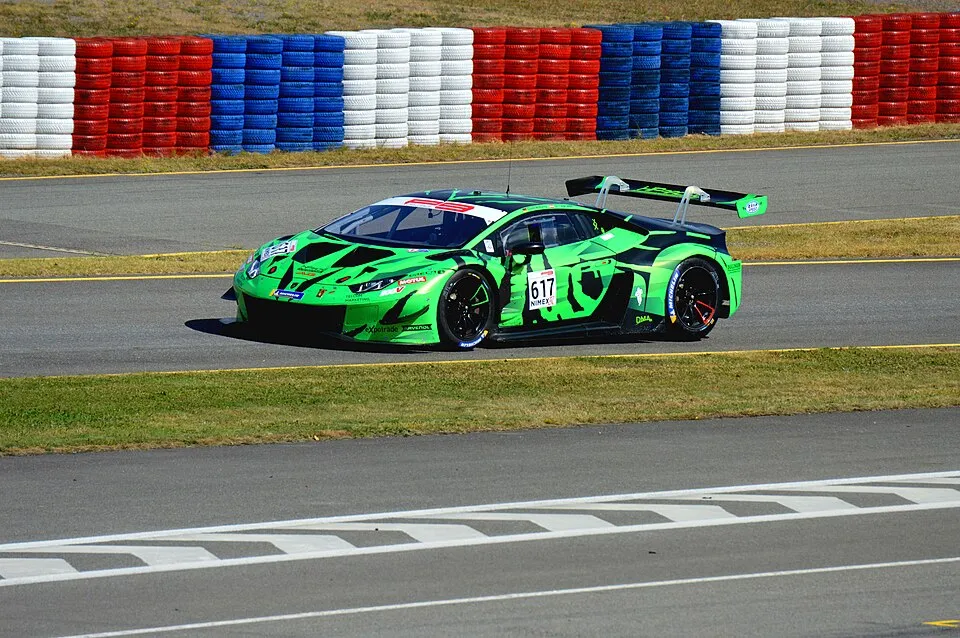
25+ years racing experience vs. 8+ years coaching experience
When evaluating a coach, distinguish between racing experience and coaching experience. Both are essential but serve different purposes.
- Racing experience provides deep understanding of vehicle dynamics, racecraft, and high-pressure decision-making. A coach with 25+ years in competitive racing—like Sarah Moore, who has competed from karting through to the W Series—has lived the challenges you’ll face. This experience helps them anticipate problems and offer solutions based on real-world scenarios, not theory.
- Coaching experience is a separate skill. Teaching requires the ability to break down complex actions, communicate effectively, and adapt to different learning styles. Sarah Moore’s 8 years of instructing and coaching demonstrate her transition from driver to educator. A coach without dedicated teaching experience may struggle to convey knowledge clearly.
- The combination creates the ideal mentor. Racing expertise ensures technical accuracy; coaching expertise ensures that knowledge transfers effectively to you. Look for coaches who have spent significant time in both arenas, not just former drivers who decided to coach without formal training.
- Benchmark numbers: While 25 years racing and 8 years coaching are not absolute minimums, they indicate a substantial depth of experience. Coaches with less time in either area may still be effective, but you should scrutinize their specific achievements and teaching methodology more carefully.
Telemetry and video analysis proficiency: beyond ‘drive faster’
Modern racing coaching relies heavily on data. Telemetry systems capture thousands of data points per second—speed, throttle position, brake pressure, steering angle, g-forces—while video records visual context. A skilled coach doesn’t just hand you raw data; they interpret it to pinpoint exactly where time is lost and how to improve.
Mental Development and Communication Fit

Tailored mental training and confidence building
Racing performance is as much mental as it is physical. A coach who ignores psychology leaves half the equation unanswered. Mental development addresses confidence under pressure, focus during long stints, resilience after mistakes, and the ability to perform consistently in high-stakes environments.
Communication style: explaining complex concepts clearly
Even the most knowledgeable coach is ineffective if they cannot communicate in a way you understand. Communication is the bridge between expertise and improvement. Look for these traits:
- Simplification of technical concepts: The coach should break down complex topics—like weight transfer, trail braking and threshold braking, or aerodynamic effects—into digestible explanations. They use analogies, visual aids, or step-by-step breakdowns rather than jargon-filled monologues.
- Adaptability to learning styles: Some drivers learn best visually (watching data graphs), others kinesthetically (feeling the car), and some verbally (hearing explanations). A flexible coach adjusts their delivery to match your preferred learning mode.
- Motivational skills: Coaching isn’t just correction; it’s encouragement. The best coaches inspire confidence, celebrate progress, and maintain positive reinforcement even during setbacks. They understand that mental state directly impacts performance.
- ‘Student’ mentality: The coach should remain a perpetual learner—open to new techniques, willing to admit when they don’t know something, and committed to staying current with evolving technologies and methodologies. This humility fosters a collaborative environment where you feel comfortable asking questions.
- Clarity under pressure: During a race weekend, instructions must be concise and unambiguous. A coach who gives vague or contradictory feedback will only add confusion. Test their communication style during an initial session: do they explain clearly? Do they listen to your concerns?
- Simplification of technical concepts: The coach should break down complex topics—like weight transfer, trail braking, or aerodynamic effects—into digestible explanations. They use analogies, visual aids, or step-by-step breakdowns rather than jargon-filled monologues.
- Adaptability to learning styles: Some drivers learn best visually (watching data graphs), others kinesthetically (feeling the car), and some verbally (hearing explanations). A flexible coach adjusts their delivery to match your preferred learning mode.
- Motivational skills: Coaching isn’t just correction; it’s encouragement.
The best coaches inspire confidence, celebrate progress, and maintain positive reinforcement even during setbacks. They understand that mental state directly impacts performance.
- ‘Student’ mentality: The coach should remain a perpetual learner—open to new techniques, willing to admit when they don’t know something, and committed to staying current with evolving technologies and methodologies. This humility fosters a collaborative environment where you feel comfortable asking questions.
- Clarity under pressure: During a race weekend, instructions must be concise and unambiguous.
A coach who gives vague or contradictory feedback will only add confusion. Test their communication style during an initial session: do they explain clearly? Do they listen to your concerns?
Why is F1 Academy female only? Understanding targeted development
F1 Academy, founded in 2023, is a female-only series designed to increase the pool of female drivers competing at the highest levels.
It functions as a graduate program for young female drivers who have shown aptitude in karting, providing a structured pathway into Formula 4 and beyond. The series addresses the historical underrepresentation of women in Formula 1 by creating a dedicated development environment.
Evaluating Coaching Programs and Proven Results
Comprehensive mentorship: race craft, prep, and video review
A coaching program that delivers results offers full-spectrum support, not just occasional track days. Holistic training for racing drivers emphasizes that comprehensive mentorship integrates technical, physical, and mental development.
- Pre-weekend preparation: Before arriving at the circuit, the coach reviews upcoming track conditions, sets specific objectives, and plans practice sessions. This ensures that track time is focused and efficient rather than reactive.
- In-depth video evaluation: Post-session video analysis is where learning solidifies. The coach and driver review onboard footage, comparing lines, braking points, and cornering speeds against reference laps, a critical step in mastering cornering techniques. Visual feedback helps drivers internalize corrections more effectively than verbal instructions alone.
- Race craft analysis: Beyond lap times, race craft involves understanding overtaking opportunities, defensive positioning, tire management, and strategic decision-making. A comprehensive coach dissects race scenarios—real or simulated—to improve tactical awareness.
- Continuous feedback loop: The best programs maintain communication between sessions, reviewing data remotely, setting homework exercises, and tracking progress over time. This creates momentum and prevents regression between track visits.
- Why full-spectrum matters: One-off coaching sessions can provide quick fixes but rarely lead to lasting improvement. Comprehensive mentorship builds habits, deepens understanding, and addresses both technical and mental aspects holistically. It’s an investment in long-term development rather than a temporary boost.
- Pre-weekend preparation: Before arriving at the circuit, the coach reviews upcoming track conditions, sets specific objectives, and plans practice sessions. This ensures that track time is focused and efficient rather than reactive.
- In-depth video evaluation: Post-session video analysis is where learning solidifies. The coach and driver review onboard footage, comparing lines, braking points, and cornering speeds against reference laps.
Visual feedback helps drivers internalize corrections more effectively than verbal instructions alone.
- Race craft analysis: Beyond lap times, race craft involves understanding overtaking opportunities, defensive positioning, tire management, and strategic decision-making. A comprehensive coach dissects race scenarios—real or simulated—to improve tactical awareness.
- Continuous feedback loop: The best programs maintain communication between sessions, reviewing data remotely, setting homework exercises, and tracking progress over time. This creates momentum and prevents regression between track visits.
- Why full-spectrum matters: One-off coaching sessions can provide quick fixes but rarely lead to lasting improvement.
Comprehensive mentorship builds habits, deepens understanding, and addresses both technical and mental aspects holistically. It’s an investment in long-term development rather than a temporary boost.
Transition support: karting to cars (Ginetta, F4)
The jump from karting to car racing is one of the most challenging transitions in motorsport. Karts offer direct mechanical feel, minimal aerodynamic influence, and a focus on pure driver skill. Cars introduce complex vehicle dynamics—weight transfer, brake bias, tire degradation, aerodynamic effects—that require a completely different approach.
Who is the female race car driver in the UK? Using role models as benchmarks
The UK has produced several notable female racing drivers who serve as benchmarks for what’s achievable with proper coaching and development. Katherine Legge, for example, has competed at the highest levels in NASCAR, IndyCar, and IMSA SportsCar Championship, demonstrating that with the right training, female drivers can succeed in diverse, competitive series. Her career path shows the importance of adaptability and continuous skill development across different vehicle types.
Proven track record: championship wins and podium finishes
A coach’s track record provides concrete evidence of their ability to develop successful drivers. When researching potential coaches, request specific data on their students’ achievements. The following table outlines key credentials to consider:
| Criterion | What to Ask For | Why It Matters |
|---|---|---|
| Championship wins | List of drivers who won titles under the coach’s guidance | Demonstrates ability to prepare drivers for peak performance over a season |
| Podium finishes | Number and level of podium results achieved by coached drivers | Shows consistent top-tier performance, not just occasional success |
| Series coached | Specific championships (e.g., Ginetta, F4, GT) where the coach has experience | Ensures familiarity with series-specific demands and regulations |
| Driver progression | Examples of drivers moving up the ladder (karting → cars → higher formulas) | Indicates the coach’s ability to build long-term development plans |
| Student feedback | Testimonials or references from current/past students | Provides insight into coaching style, communication, and results from the driver’s perspective |
One surprising finding is that the most effective coaches often possess formal coaching qualifications—such as the ARDS A Grade instructor license—separate from their racing résumé. This certification ensures they’ve been trained in pedagogy, not just driving technique. When selecting a coach, don’t assume racing success automatically translates to teaching success.
One surprising finding is that the most effective coaches often possess formal coaching qualifications—such as the ARDS A Grade instructor license—separate from their racing résumé. This certification ensures they’ve been trained in pedagogy, not just driving technique. When selecting a coach, don’t assume racing success automatically translates to teaching success.
Action step: During your first conversation, ask potential coaches to describe a specific instance where they adapted their method to accommodate a driver’s unique psychological profile or learning style. Their answer will reveal whether they practice tailored mental development, a hallmark of personalized racing coaching benefits, or rely on one-size-fits-all approaches.
- Prioritize coaches with extensive racing AND coaching experience, not just former drivers
- Ensure they use telemetry and video analysis, not just subjective feedback
- Find a coach who adapts to your psychology and learning style
- Look for proven results with drivers at your target competition level
Essential Criteria: Experience, Teaching, and Data Analysis
25+ years racing experience vs. 8+ years coaching experience
When evaluating a coach, distinguish between racing experience and coaching experience. Both are essential but serve different purposes.
- Racing experience provides deep understanding of vehicle dynamics, racecraft, and high-pressure decision-making. A coach with 25+ years in competitive racing—like Sarah Moore, who has competed from karting through to the W Series—has lived the challenges you’ll face. This experience helps them anticipate problems and offer solutions based on real-world scenarios, not theory.
- Coaching experience is a separate skill. Teaching requires the ability to break down complex actions, communicate effectively, and adapt to different learning styles. Sarah Moore’s 8 years of instructing and coaching demonstrate her transition from driver to educator. A coach without dedicated teaching experience may struggle to convey knowledge clearly.
- The combination creates the ideal mentor. Racing expertise ensures technical accuracy; coaching expertise ensures that knowledge transfers effectively to you. Look for coaches who have spent significant time in both arenas, not just former drivers who decided to coach without formal training.
- Benchmark numbers: While 25 years racing and 8 years coaching are not absolute minimums, they indicate a substantial depth of experience. Coaches with less time in either area may still be effective, but you should scrutinize their specific achievements and teaching methodology more carefully.
Telemetry and video analysis proficiency: beyond ‘drive faster’
Modern racing coaching relies heavily on data. Telemetry systems capture thousands of data points per second—speed, throttle position, brake pressure, steering angle, g-forces—while video records visual context. A skilled coach doesn’t just hand you raw data; they interpret it to pinpoint exactly where time is lost and how to improve.
Mental Development and Communication Fit
Tailored mental training and confidence building
Racing performance is as much mental as it is physical. A coach who ignores psychology leaves half the equation unanswered. Mental development addresses confidence under pressure, focus during long stints, resilience after mistakes, and the ability to perform consistently in high-stakes environments.
Communication style: explaining complex concepts clearly
Even the most knowledgeable coach is ineffective if they cannot communicate in a way you understand. Communication is the bridge between expertise and improvement. Look for these traits:
- Simplification of technical concepts: The coach should break down complex topics—like weight transfer, trail braking and threshold braking, or aerodynamic effects—into digestible explanations. They use analogies, visual aids, or step-by-step breakdowns rather than jargon-filled monologues.
- Adaptability to learning styles: Some drivers learn best visually (watching data graphs), others kinesthetically (feeling the car), and some verbally (hearing explanations). A flexible coach adjusts their delivery to match your preferred learning mode.
- Motivational skills: Coaching isn’t just correction; it’s encouragement. The best coaches inspire confidence, celebrate progress, and maintain positive reinforcement even during setbacks. They understand that mental state directly impacts performance.
- ‘Student’ mentality: The coach should remain a perpetual learner—open to new techniques, willing to admit when they don’t know something, and committed to staying current with evolving technologies and methodologies. This humility fosters a collaborative environment where you feel comfortable asking questions.
- Clarity under pressure: During a race weekend, instructions must be concise and unambiguous. A coach who gives vague or contradictory feedback will only add confusion. Test their communication style during an initial session: do they explain clearly? Do they listen to your concerns?
- Simplification of technical concepts: The coach should break down complex topics—like weight transfer, trail braking, or aerodynamic effects—into digestible explanations. They use analogies, visual aids, or step-by-step breakdowns rather than jargon-filled monologues.
- Adaptability to learning styles: Some drivers learn best visually (watching data graphs), others kinesthetically (feeling the car), and some verbally (hearing explanations). A flexible coach adjusts their delivery to match your preferred learning mode.
- Motivational skills: Coaching isn’t just correction; it’s encouragement. The best coaches inspire confidence, celebrate progress, and maintain positive reinforcement even during setbacks. They understand that mental state directly impacts performance.
- ‘Student’ mentality: The coach should remain a perpetual learner—open to new techniques, willing to admit when they don’t know something, and committed to staying current with evolving technologies and methodologies. This humility fosters a collaborative environment where you feel comfortable asking questions.
- Clarity under pressure: During a race weekend, instructions must be concise and unambiguous. A coach who gives vague or contradictory feedback will only add confusion. Test their communication style during an initial session: do they explain clearly? Do they listen to your concerns?
Why is F1 Academy female only? Understanding targeted development
F1 Academy, founded in 2023, is a female-only series designed to increase the pool of female drivers competing at the highest levels.
It functions as a graduate program for young female drivers who have shown aptitude in karting, providing a structured pathway into Formula 4 and beyond. The series addresses the historical underrepresentation of women in Formula 1 by creating a dedicated development environment.
Evaluating Coaching Programs and Proven Results
Comprehensive mentorship: race craft, prep, and video review
A coaching program that delivers results offers full-spectrum support, not just occasional track days. Holistic training for racing drivers emphasizes that comprehensive mentorship integrates technical, physical, and mental development.
- Pre-weekend preparation: Before arriving at the circuit, the coach reviews upcoming track conditions, sets specific objectives, and may provide a first track day checklist to ensure focused and efficient practice sessions.
- In-depth video evaluation: Post-session video analysis is where learning solidifies. The coach and driver review onboard footage, comparing lines, braking points, and cornering speeds against reference laps. Visual feedback helps drivers internalize corrections more effectively than verbal instructions alone.
- Race craft analysis: Beyond lap times, race craft involves understanding overtaking opportunities, defensive positioning, tire management, and strategic decision-making. A comprehensive coach dissects race scenarios—real or simulated—to improve tactical awareness.
- Continuous feedback loop: The best programs maintain communication between sessions, reviewing data remotely, setting homework exercises, and tracking progress over time. This creates momentum and prevents regression between track visits.
- Why full-spectrum matters: One-off coaching sessions can provide quick fixes but rarely lead to lasting improvement. Comprehensive mentorship builds habits, deepens understanding, and addresses both technical and mental aspects holistically. It’s an investment in long-term development rather than a temporary boost.
- Pre-weekend preparation: Before arriving at the circuit, the coach reviews upcoming track conditions, sets specific objectives, and plans practice sessions. This ensures that track time is focused and efficient rather than reactive.
- In-depth video evaluation: Post-session video analysis is where learning solidifies. The coach and driver review onboard footage, comparing lines, braking points, and cornering speeds against reference laps. Visual feedback helps drivers internalize corrections more effectively than verbal instructions alone.
- Race craft analysis: Beyond lap times, race craft involves understanding overtaking opportunities, defensive positioning, tire management, and strategic decision-making. A comprehensive coach dissects race scenarios—real or simulated—to improve tactical awareness.
- Continuous feedback loop: The best programs maintain communication between sessions, reviewing data remotely, setting homework exercises, and tracking progress over time. This creates momentum and prevents regression between track visits.
- Why full-spectrum matters: One-off coaching sessions can provide quick fixes but rarely lead to lasting improvement. Comprehensive mentorship builds habits, deepens understanding, and addresses both technical and mental aspects holistically. It’s an investment in long-term development rather than a temporary boost.
Transition support: karting to cars (Ginetta, F4)
The jump from karting to car racing is one of the most challenging transitions in motorsport. Karts offer direct mechanical feel, minimal aerodynamic influence, and a focus on pure driver skill. Cars introduce complex vehicle dynamics—weight transfer, brake bias, tire degradation, aerodynamic effects—that require a completely different approach.
Who is the female race car driver in the UK? Using role models as benchmarks
The UK has produced several notable female racing drivers who serve as benchmarks for what’s achievable with proper coaching and development. Katherine Legge, for example, has competed at the highest levels in NASCAR, IndyCar, and IMSA SportsCar Championship, demonstrating that with the right training, female drivers can succeed in diverse, competitive series. Her career path shows the importance of adaptability and continuous skill development across different vehicle types.
Proven track record: championship wins and podium finishes
A coach’s track record provides concrete evidence of their ability to develop successful drivers. When researching potential coaches, request specific data on their students’ achievements. The following table outlines key credentials to consider:
| Criterion | What to Ask For | Why It Matters |
|---|---|---|
| Championship wins | List of drivers who won titles under the coach’s guidance | Demonstrates ability to prepare drivers for peak performance over a season |
| Podium finishes | Number and level of podium results achieved by coached drivers | Shows consistent top-tier performance, not just occasional success |
| Series coached | Specific championships (e.g., Ginetta, F4, GT) where the coach has experience | Ensures familiarity with series-specific demands and regulations |
| Driver progression | Examples of drivers moving up the ladder (karting → cars → higher formulas) | Indicates the coach’s ability to build long-term development plans |
| Student feedback | Testimonials or references from current/past students | Provides insight into coaching style, communication, and results from the driver’s perspective |
