
The Great Yorkshire Show, founded in 1837 by the Yorkshire Agricultural Society, is England’s premier agricultural event with a history spanning nearly two centuries. It has evolved from a travelling exhibition into a permanent Harrogate institution, drawing over 140,000 visitors annually to celebrate rural life, livestock, and farming heritage. The show’s journey reflects Yorkshire’s agricultural identity, marked by royal recognition, wartime resilience, and modern adaptation, with the 2026 event tickets scheduled for sale in November 2025.
- The show has been held annually since 1838, except during WWI (1915-1919), WWII, and the 2020 COVID-19 pandemic.
- It transitioned from a travelling event across Yorkshire towns to a permanent Harrogate home in 1951 after purchasing the showground for £16,500 in 1950.
- Today, the Great Yorkshire Show attracts over 140,000 visitors annually and continues under the patronage of King Charles III, with the 2026 show tickets on sale from November 2025.
Origins and Early Years: 1837-1900
1837 Founding: Yorkshire Agricultural Society’s Agricultural Mission
- Founding Year & Organization: The Yorkshire Agricultural Society (YAS) established the show in 1837 (Source: Wikipedia, YAS Media Centre).
- Core Mission: The society’s exact aim was to “hold an Annual Meeting for the Exhibition of Farming Stock, Implements &c., and for the General Promotion of Agriculture” (Source: Wikipedia).
- Agricultural Focus: This mission statement explicitly prioritized farming and agricultural improvement, setting a precedent that continues to define the show’s identity.
- Long-Term Vision: The founders intended an annual event to drive progress in Yorkshire’s farming communities through competition and display.
The society’s founding mission centered purely on agricultural advancement. By specifying “Farming Stock, Implements” and “General Promotion of Agriculture,” they created a blueprint that emphasized practical farming innovation over entertainment.
This focus ensured the show remained relevant to its core audience—farmers and landowners—for generations. The inclusion of “&c.” (et cetera) allowed for gradual expansion into related rural pursuits while maintaining agricultural roots as the primary driver.
1838 Inaugural Show: Fulford’s Barrack Yard Success
- Location: The first show took place in 1838 at the Barrack Yard in Fulford, near York (Source: Wikipedia, YAS Media Centre).
- Immediate Popularity: The event was considered an overwhelming success, attracting such large crowds that police intervention was required to manage the attendance (Source: Wikipedia, YAS Media Centre).
- Validation of Concept: This strong public response proved the viability of an annual agricultural exhibition and secured the show’s future from its very beginning.
- Setting a Pattern: The need for crowd control indicated the show’s appeal extended beyond just the farming community to the general public.
The inaugural show’s success, despite its modest location, was critical. The police intervention detail reveals the event exceeded all expectations for attendance, demonstrating a latent public appetite for agricultural displays.
This early validation gave the Yorkshire Agricultural Society the confidence and momentum to continue the event annually. The choice of Fulford, near York, also established a pattern of holding the show in significant regional locations accessible to Yorkshire’s population.
Early Milestones Timeline: 1837-1861
| Year | Event | Significance |
|---|---|---|
| 1837 | Yorkshire Agricultural Society founded | Created the organizing body with a clear agricultural mission |
| 1838 | First show held at Fulford | Launched the event with overwhelming public response |
| 1843 | Show becomes known as ‘Great Yorkshire Show’ | Earned the “Great” title by popular acclaim, reflecting growing prestige |
| 1861 | Queen Victoria attends the show | Gained royal recognition, elevating national status |
The period from 1837 to 1861 shows rapid institutional growth. Within just six years of its founding, the show acquired the “Great” designation through popular usage, not formal decree, indicating its embedded status in Yorkshire culture.
The timeline culminates with Queen Victoria’s attendance in 1861, a pivotal moment that transformed the show from a regional agricultural meet into an event of national significance. This 24-year span established the core traditions of annual occurrence, public engagement, and elite recognition that still define the event.
Queen Victoria’s 1861 Royal Visit and Its Impact
Queen Victoria’s personal attendance in 1861 was a watershed moment. Royal patronage provided instant legitimacy and national publicity, attracting attention from beyond Yorkshire’s agricultural circles. This visit set a precedent for future royal involvement, creating a tradition of monarchy associating with the show that continues with King Charles III today.
The event’s ability to secure such high-profile attendance early in its history demonstrated its importance to the establishment and cemented its role as a key fixture in the English social and agricultural calendar. Sources like Yorkshire-dales.com and the Love Travelling Blog specifically highlight this visit as a key historical milestone.
How Did the Great Yorkshire Show Transition from Traveling to Permanent?
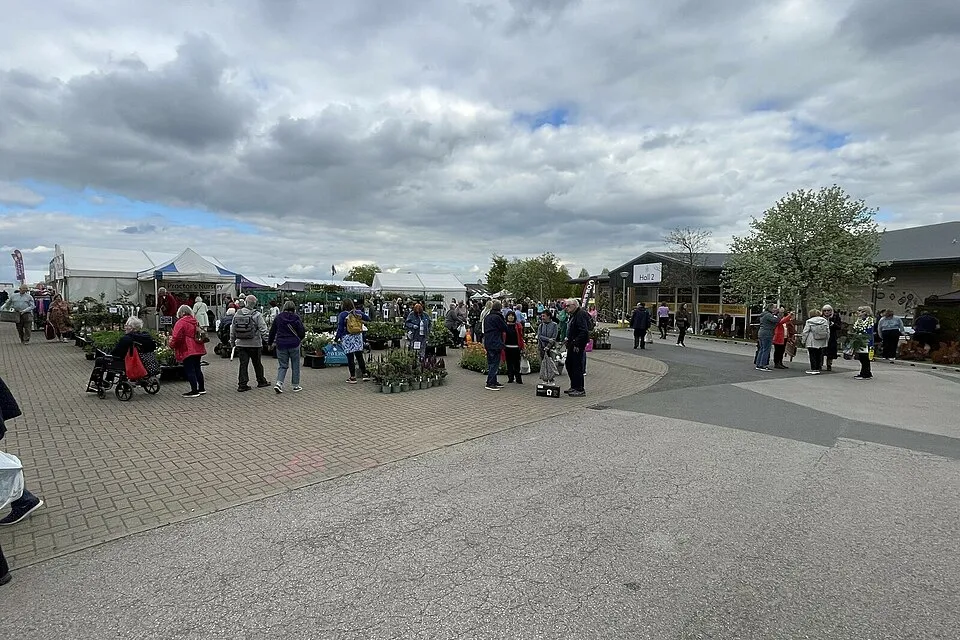
The Peripatetic Era: 1838-1950 Across Yorkshire
For 112 years, the show operated as a peripatetic (travelling) event, moving annually between towns across Yorkshire. The Yorkshire Agricultural Society deliberately adopted this mobile format to engage different regional audiences and ensure the show belonged to all of Yorkshire, not just one city. This approach required immense logistical effort each year—re-establishing facilities, attracting local exhibitors, and managing transport in an era before modern highways.
The benefits included widespread community involvement and the show’s deep integration into Yorkshire’s regional identity. However, the constant relocation limited long-term infrastructure investment and created annual uncertainty for planning. This era defined the show’s character as a truly county-wide institution, with each host town adding its own local flavour to the event.
Key Host Locations: Leeds, Northallerton, and Kingston upon Hull
- Leeds: Hosted the show multiple times during the peripatetic era, leveraging its status as Yorkshire’s largest industrial city to draw massive crowds and urban interest in rural traditions (Source: Wikipedia, Westfieldnewsfocus.wordpress.com).
- Northallerton: Served as a host town, representing the North Riding of Yorkshire and engaging the agricultural communities of the northern dales (Source: Wikipedia, Westfieldnewsfocus.wordpress.com).
- Kingston upon Hull: Another key location for the travelling show, bringing the event to the East Riding and highlighting the Humber region’s agricultural contributions (Source: Wikipedia, Westfieldnewsfocus.wordpress.com).
These three locations illustrate the show’s commitment to geographic diversity. Leeds connected the show to industrial wealth and urban consumers. Northallerton anchored it in the traditional farming dales.
Kingston upon Hull represented the fertile plains of the East Riding and the importance of port trade for agricultural exports. The rotation prevented any single town from monopolizing the event and allowed different facets of Yorkshire’s agricultural economy to be showcased in their respective heartlands. This mobile tradition made the Great Yorkshire Show a truly county-wide celebration for over a century.
1950 Strategic Purchase: Harrogate Showground for £16,500
The decision to purchase a permanent site in 1950 for £16,500 marked the end of the peripatetic era. This investment by the Yorkshire Agricultural Society represented a major financial commitment in post-war Britain. Harrogate was chosen likely for its established reputation as a spa town, home to Turkish Baths Harrogate, with excellent transport links (rail and road), existing hotel infrastructure to accommodate visitors, and ample flat land suitable for a large showground.
The purchase allowed for permanent, improved facilities—from grandstands to animal pens—that could be enhanced year after year. Moving to a fixed location in 1951 enabled the show to grow systematically, adding permanent buildings and attractions that would have been impractical in a yearly temporary setup. This strategic shift transformed the show from an annual migration into a permanent institution with a true home, catalyzing its development into the massive event it is today.
Royal Patronage, Cancellations, and Modern Success
Royal Patronage Timeline: From Queen Victoria to King Charles III
| Monarch | Role | Years | Significance |
|---|---|---|---|
| Queen Victoria | Attended as Sovereign | 1861 (single visit) | First royal attendance, provided national legitimacy and prestige |
| Queen Elizabeth II | Patron | 1952–1997 | 45-year patronage symbolizing stability and continuity through modernisation |
| King Charles III | Patron | 1997–present | Continues the royal connection, now with his known interest in farming and environment |
Royal patronage has been a constant thread of prestige. Queen Victoria’s single visit in 1861 was a transformative honor. Queen Elizabeth II’s lengthy 45-year patronage provided a stable, recognizable link to the monarchy through decades of social change.
King Charles III’s succession maintained this unbroken chain, and his personal interest in agriculture and sustainable farming brings a contemporary relevance to the role. This continuous royal association distinguishes the Great Yorkshire Show from many other regional events and reinforces its status as a national institution of enduring importance.
Wartime Cancellations: WWI and WWII
The show has cancelled operations during major national crises, demonstrating its alignment with the country’s wider fortunes. During World War I, the show was suspended from 1915 to 1919, as resources and attention were fully directed to the war effort. Similarly, the entire duration of World War II saw the showground likely repurposed for military use or civilian needs like food production.
These cancellations were not merely logistical but patriotic necessities. Each resumption after the wars—in 1919 and post-1945—was a powerful symbol of recovery and a return to normalcy.
The show’s ability to restart and thrive after these total interruptions speaks to its deep cultural resonance and the Yorkshire Agricultural Society’s resilience. These breaks in the annual sequence make the show’s continuous run since 1946 even more significant.
COVID-19 Pandemic: 2020 Cancellation and Recovery
The 2020 cancellation due to the COVID-19 pandemic was the first full cancellation since the World Wars, breaking a 75-year continuous run. This modern disruption forced the Yorkshire Agricultural Society to adapt rapidly. While the research data does not specify virtual events, the show’s recovery in subsequent years involved implementing new safety protocols, likely modifying crowd flows and ticketing.
The swift return to operation in 2021 and beyond showcased the event’s organisational flexibility and the public’s strong desire to return to this cornerstone of rural life. The pandemic tested the show’s model of dense crowds and physical exhibits, and its successful navigation of this challenge confirmed its essential role in the community and its capacity for innovation under pressure.
Modern Success: Over 140,000 Visitors and 2026 Plans
- Annual Attendance: The show consistently draws over 140,000 visitors each year, making it one of England’s largest agricultural events (Source: Pre-collected data, Wikipedia).
- Organizing Body: It remains under the stewardship of the Yorkshire Agricultural Society (YAS), ensuring its founding agricultural mission endures (Source: Pre-collected data, Wikipedia).
- 2026 Ticket Sales: Tickets for the 2026 show will go on sale in November 2025, with further details announced in January 2026 (Source: Pre-collected data). [P28]
- Economic & Cultural Impact: These numbers indicate the show’s massive contemporary significance as a major economic driver for Harrogate, supporting local businesses like Harrogate’s best boutiques and restaurants, and a vital celebration of British farming for a broad public audience.
The statistic of over 140,000 annual visitors places the Great Yorkshire Show among the UK’s premier outdoor events. This scale, combined with the involvement of over 8,500 animals, creates a unique spectacle that blends serious agricultural competition with major public entertainment.
The advance ticket system, solidified after the pandemic, manages this volume and ensures a quality experience. The 2026 timeline shows a well-established planning cycle, with ticket sales beginning a full eight months before the July event.
For visitors interested in experiencing this living history and exploring Harrogate tourism, planning ahead is essential. Those exploring Harrogate tourism will find the show to be the region’s flagship event, embodying centuries of tradition in a single four-day festival.
The show’s most surprising quality is its remarkable resilience. It has survived two world wars, a global pandemic, and a fundamental shift from a travelling fair to a permanent mega-event. This continuity connects today’s 140,000 visitors directly back to the crowds that overwhelmed police at Fulford in 1838.
The thread of agricultural promotion, woven by the Yorkshire Agricultural Society in 1837, remains unbroken. Plan your visit to the 2026 Great Yorkshire Show; tickets go on sale November 2025, and early booking ensures you experience this living piece of Yorkshire heritage.
