
The heel-and-toe technique is a performance driving method that combines braking and downshifting with rev-matching to maintain car stability during high-speed corner entry. This advanced skill is essential for racers driving manual transmission vehicles, allowing smooth gear changes while braking aggressively. According to the Rocky Mountain Region Porsche Club, most drivers need 2-3 hours of conscious practice to master the basic movement and sequence.
In 2026, the technique remains critical for club racing, track days, and historic racing where electronic aids are absent, making it a valuable differentiator for competitive drivers. Many racing coaching programs integrate this technique into their curriculum.
- The heel-and-toe technique requires 2-3 hours of conscious practice to master the basic movement and sequence (Source: Rocky Mountain Region Porsche Club).
- Proper execution prevents rear-wheel lockup, drivetrain shock, and maintains car stability during aggressive braking.
- The technique remains essential for club racing, track days, and historic racing despite being obsolete in modern F1.
- Common errors include incorrect rev matching, brake pressure inconsistency, and premature clutch release (Source: Research Notes – Data & Stats).
How to Execute the Heel-and-Toe Technique: The 5-Step Process
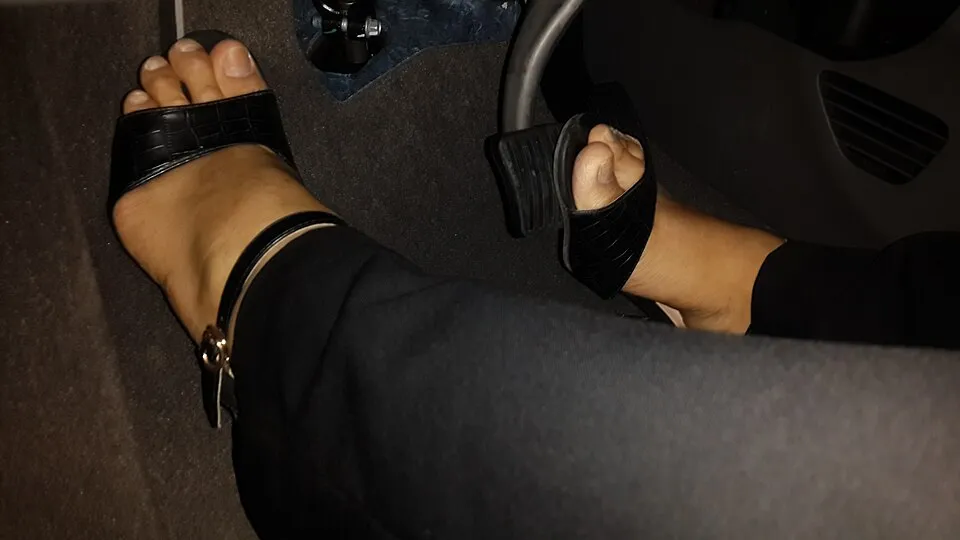
The 5-Step Sequence: Brake, Clutch, Downshift, Blip, Release
Heel-and-toe is an easy skill to learn, but it takes some conscious practice – 2-3 hours should do it – to get the movement and the sequence right.
The exact sequence, as outlined by DRIVER61, is:
- Brake: Begin braking with the toe of your right foot, applying steady pressure to slow the car.
- Clutch: Dip the clutch with your left foot to disengage the engine from the transmission.
- Downshift: Downshift into the lower gear using the gear stick.
- Blip: While maintaining brake pressure, blip the throttle with the heel or side of your right foot to raise engine RPM.
- Release: Release the clutch smoothly to engage the gear, matching engine revs to wheel speed.
The goal is to synchronize engine speed with the wheel speed in the lower gear, preventing drivetrain shock. As Driver61 explains, the RPM difference can be as high as 8,000 to 10,000 rpm, requiring a precise throttle blip.
The technique is used before entry into a turn while under braking, preparing the transmission for optimal acceleration out of the corner (Hooked On Driving, 2010). This technique is a staple in professional racing coaching programs that teach fundamental car control skills.
Foot Position and Pedal Control: Ball of Foot on Brake, Heel/Side for Throttle
Proper foot position is crucial for executing heel-and-toe effectively. The key details are:
- Ball of foot on brake: The ball of the right foot stays on the brake pedal for consistent pressure.
- Heel/side for throttle: The heel or side of the same foot pivots to blip the throttle without lifting off the brake.
- Left foot operates the clutch independently, allowing smooth engagement and disengagement.
- Smooth pivot: The foot rocks in a smooth arc, maintaining brake pressure throughout the blip.
By braking with the ball of the foot and ‘blipping’ the throttle with the heel/side of the foot, the driver matches engine speed to the lower gear (AI Overview – Technical Application). This coordination prevents rear-wheel lockup and maintains stability during aggressive braking, key elements of trail braking and threshold braking (Research Notes). The left foot’s clutch action must be firm yet smooth to avoid jerking the drivetrain.
Rev-Matching: The Core Principle of Synchronizing Engine and Wheel Speed
Rev-matching is the cornerstone of heel-and-toe downshifting. It ensures that the engine speed matches the wheel speed in the lower gear, preventing drivetrain shock and maintaining traction (AI Overview – Technical Application). The RPM difference between gears can be substantial; as Driver61 notes, drivers need to bridge a gap of 8,000 to 10,000 rpm during a downshift.
If revs are too low, engine braking can lock the rear wheels. If too high, wheel spin and loss of traction occur.
Proper execution keeps the car stable during aggressive braking and cornering (Research Notes). Therefore, achieving precise rev-matching is the fundamental goal of the technique.
When to Use Heel-and-Toe: High-Speed Corner Entry in Manual Vehicles
Heel-and-toe shifting is used before entry into a turn while a vehicle is under braking, preparing the transmission to be in the appropriate gear for acceleration out of the corner (Hooked On Driving, 2010). The technique is critical for manual transmission racing, high-performance track days, and rallying. As of early 2026, it remains essential in club racing, track days, and historic racing where electronic aids are absent, despite being obsolete in modern F1 due to paddle-shift systems (AI Overview – 2026 Current Trends).
In these contexts, mastery of heel-and-toe is a valuable differentiator for drivers seeking to maximize performance without relying on automated technologies. Understanding cornering techniques for racing drivers is essential, as heel-and-toe directly impacts corner entry speed and stability.
What Are the Most Common Heel-and-Toe Errors and How Do You Fix Them?
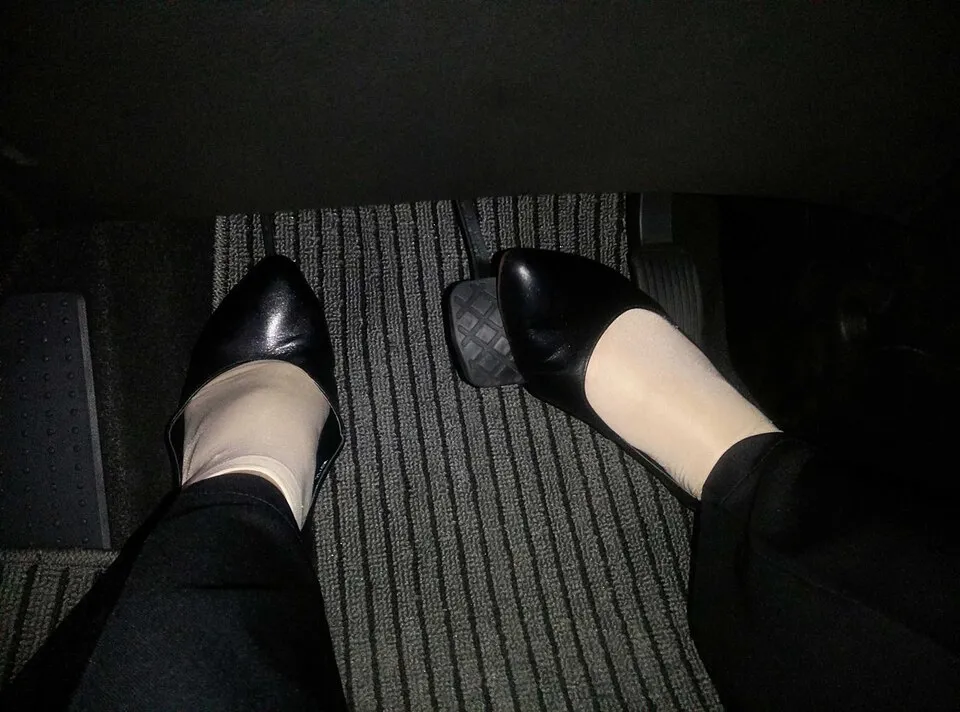
Rev Matching and Brake Pressure Errors
Common Error Rate: New drivers frequently make mistakes with rev matching, brake pressure consistency, and timing of clutch release.
These errors directly impact car stability during corner entry. The following table outlines common mistakes, their consequences, and correction tips:
| Error Type | Common Mistake | Consequence | Correction Tip | |
|---|---|---|---|---|
| Rev Matching: Too little throttle | Insufficient throttle blip | Engine braking that can lock the rear wheels | Blip throttle to achieve correct RPM increase (8,000-10,000 rpm) | |
| Rev Matching: Too much throttle | Excessive throttle blip | Wheel spin and loss of traction | Practice to find precise throttle amount for smooth rev match | |
| Brake Pressure: Inconsistent pressure | Varying brake force during blip | Unsettles car balance, causes understeer or oversteer | Maintain steady brake pressure while blipping throttle |
Maintaining steady brake pressure while blipping the throttle is essential for stability (AI Overview – Stability & Control). These errors often stem from poor foot coordination and can be corrected through deliberate practice. To address these issues, many drivers benefit from selecting the right racing driver coach who can provide personalized feedback on brake control and rev matching.
Clutch Timing and Foot Positioning Errors
Clutch timing and foot positioning are equally critical. The clutch must release at the exact moment revs match, and the foot must pivot smoothly without lifting off the brake.
| Error Type | Common Mistake | Consequence | Correction Tip | |
|---|---|---|---|---|
| Clutch Timing: Releasing too early | Releasing clutch before revs match | Jerking and drivetrain shock | Wait until engine revs match wheel speed before releasing | |
| Clutch Timing: Releasing too late | Delaying clutch release after rev match | Disrupts flow, missed shifts or acceleration loss | Release clutch smoothly immediately after rev match | |
| Foot Positioning: Poor pivot | Difficulty blipping throttle without lifting off brake | Inconsistent blip, loss of brake pressure | Practice smooth pivot motion, keep ball of foot on brake | |
| Foot Positioning: Looking down at pedals | Focusing on feet instead of track | Reduces track awareness, dangerous at high speed | Look ahead, develop muscle memory through practice |
Focusing on the pedals instead of looking ahead is a critical mental error that reduces track awareness (Research Notes – Data & Stats). The foot must pivot smoothly from brake to throttle without lifting off the brake pedal (AI Overview – Technical Application). This mental aspect underscores the need for holistic training for racing drivers that develops visual skills and situational awareness.
Heel-and-Toe Practice Drills: A Progressive Training Plan
Stationary Exercises: Building Muscle Memory Without Moving
Practice drills include stationary exercises, parking lot circles, daily driving practice, slow-down pivots, and progressive speed training.
Stationary exercises are the first step: practice the foot movements while parked, focusing on the sequence and smooth transitions. This allows concentration on the mechanics without the complexity of driving. According to the Rocky Mountain Region Porsche Club, heel-and-toe is an easy skill to learn, but it takes some conscious practice – 2-3 hours should do it – to get the movement and the sequence right.
Start with 15-minute daily sessions to build muscle memory. While self-practice is valuable, personalized racing coaching can accelerate learning by providing immediate feedback on footwork and sequence.
Parking Lot Circles: Low-Speed Coordination Practice
Parking lot circles are the next progression: drive in circles at low speed to practice the technique in motion. This adds car control while still being safe. Focus on maintaining consistent brake pressure and smooth throttle blips during each downshift.
Hagerty suggests taking the skill to the open road after mastering the stationary blip, as low-speed practice builds coordination before higher speeds. Find an empty parking lot and drive in clockwise circles, downshifting at consistent points to develop rhythm.
Daily Driving Integration: Practicing in Normal Traffic
Incorporate heel-and-toe into daily driving by using it when slowing for intersections or stoplights. This low-pressure environment helps transfer the skill from controlled practice to real-world scenarios. Consistent practice in normal traffic builds proficiency and makes the technique second nature.
The technique remains a cornerstone of driver training schools and is considered an essential skill for mastering advanced driving simulators (AI Overview – Training & Simulation). For example, when approaching a red light, downshift from 4th to 2nd using heel-and-toe to smooth the deceleration.
Progressive Speed Training: From Slow Pivots to Track Speeds
The final stage is progressive speed training: practice at higher speeds on track or in controlled environments. Drills like slow-down pivots help master the technique at racing speeds. Build up gradually to full track speeds to prepare for actual racing conditions.
In 2026, club racing and track days increasingly value this manual skill as a differentiator, as electronic aids are often prohibited (AI Overview – 2026 Current Trends). However, track time and coaching come at a cost, so effective budgeting for motorsports training is crucial for drivers investing in skill development.
The most surprising finding is that heel-and-toe is experiencing a resurgence in club racing and simulators despite being obsolete in F1, making it a valuable differentiator for drivers in 2026. This manual skill separates competitive drivers who can extract maximum performance without electronic aids. To start mastering it, begin with 15 minutes of stationary exercises daily, focusing on smooth foot transitions and precise throttle blips.
Once comfortable, progress to parking lot circles at low speed. Consistent practice will build the muscle memory needed for track days and races.
