
Building a professional-grade motorsports training space at home is no longer a luxury reserved for elite drivers. In 2026, a complete home motorsports training setup can be assembled for under $1000 by combining an affordable sim rig, targeted fitness equipment, and simple mental drills.
This budget-friendly approach allows aspiring racers to develop critical skills between track sessions, maintain physical conditioning, and sharpen reaction times without requiring a six-figure investment. The following step-by-step guide outlines exactly how to allocate funds, select equipment, and optimize limited space for maximum training effectiveness.
- A complete home motorsports training setup costs around $1000: $500 for a sim rig, $300 for fitness gear, and under $200 for mental tools or accessories.
- Entry-level sim rigs like the Apevie SP Cockpit ($499) offer viable force feedback and accuracy for serious training in 2026.
- Essential fitness equipment includes resistance bands, adjustable dumbbells, and a power tower (~$300) to build G-force resilience and core strength.
For personalized guidance, explore racing coaching to complement your home setup.
The $1000 Home Motorsports Training Setup: Budget and Planning
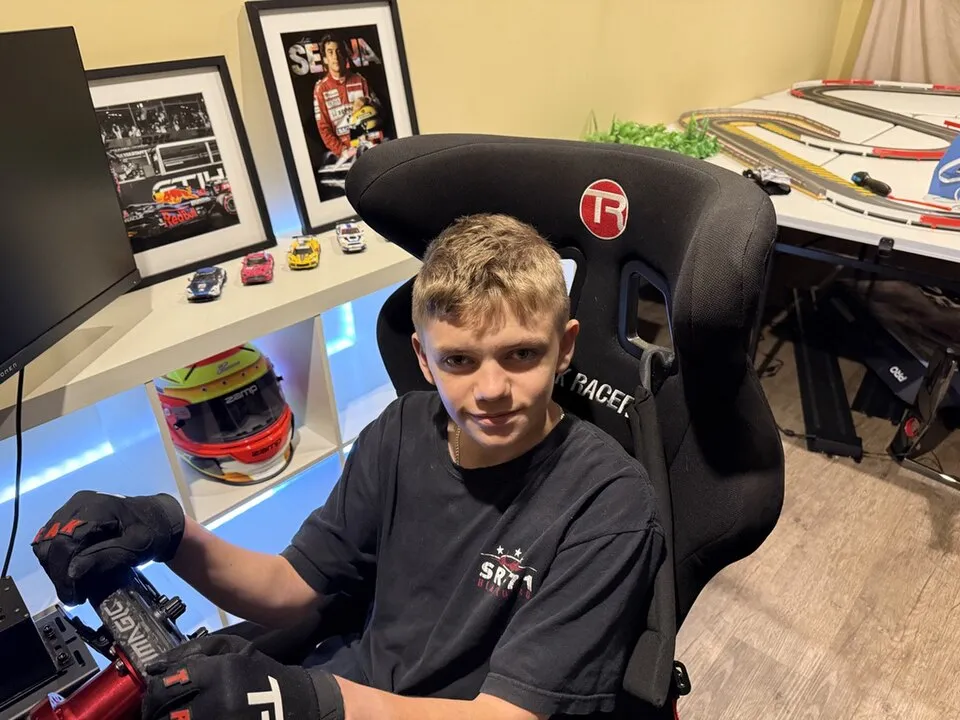
Step 1: Plan your budget and space to maximize training value without overspending. A $1000 total investment divided across sim, fitness, and mental components delivers a balanced home setup.
Budget Breakdown: Sim Rig $500, Fitness $300, Total Under $1000
The $1000 total splits cleanly across training domains:
- Sim Racing Rig ($500): Includes a basic wheel, pedals, and a foldable cockpit like the Apevie SP Cockpit. This entry-level package provides force feedback and pedal accuracy sufficient for serious lap time improvement.
- Fitness Equipment ($300): Covers resistance bands, adjustable dumbbells (REP QuickDraw range), and a power tower (Eizen Link, ~$300). These items build core stability, neck strength, and explosive power needed to withstand high G-forces.
- Mental Training ($0-$100): Often integrated into sim software like iRacing, which includes reaction-based challenges. Optional add-ons like reaction balls or light trainers cost under $50 but are not strictly necessary if sim time is consistent.
To get the most out of this investment, consider benefits of personalized racing coaching that can tailor your home routine to track-specific needs.
Space Optimization: Setting Up in Small Apartments and Garages
Limited space should never prevent serious training. These five actionable tips maximize any environment:
- Use a foldable sim rig like the Apevie SP Cockpit that collapses quickly for storage under beds or in closets.
- Mount the wheel to a desk or wall instead of a full cockpit; many entry-level wheels include desk clamps.
- Store fitness gear in compact containers or under beds; resistance bands and adjustable dumbbells take minimal space.
- Choose multi-functional equipment like a power tower that combines multiple exercises, reducing footprint.
- Mount monitors on walls and use shelves for accessories, keeping floor area clear.
For additional space-saving strategies, explore racing coaching resources that often include setup layouts for small areas.
Mental Training Integration: Using Sim Racing for Reaction Drills
Mental conditioning is often overlooked but is seamlessly built into sim racing. The fast-paced decision-making required in simulators like iRacing inherently improves reaction time and situational awareness. For additional focus, drivers can incorporate reaction balls (under $20) or light-based trainers (under $50) for 10-minute daily drills.
Consistency matters more than equipment: dedicating 30 minutes, three times per week to deliberate reaction practice yields measurable cognitive gains. The sim itself becomes a mental gym, eliminating the need for expensive standalone tools. This holistic approach aligns with holistic training for racing drivers principles that integrate mental and physical preparation.
What Are the Best Entry-Level Sim Racing Rigs in 2026?
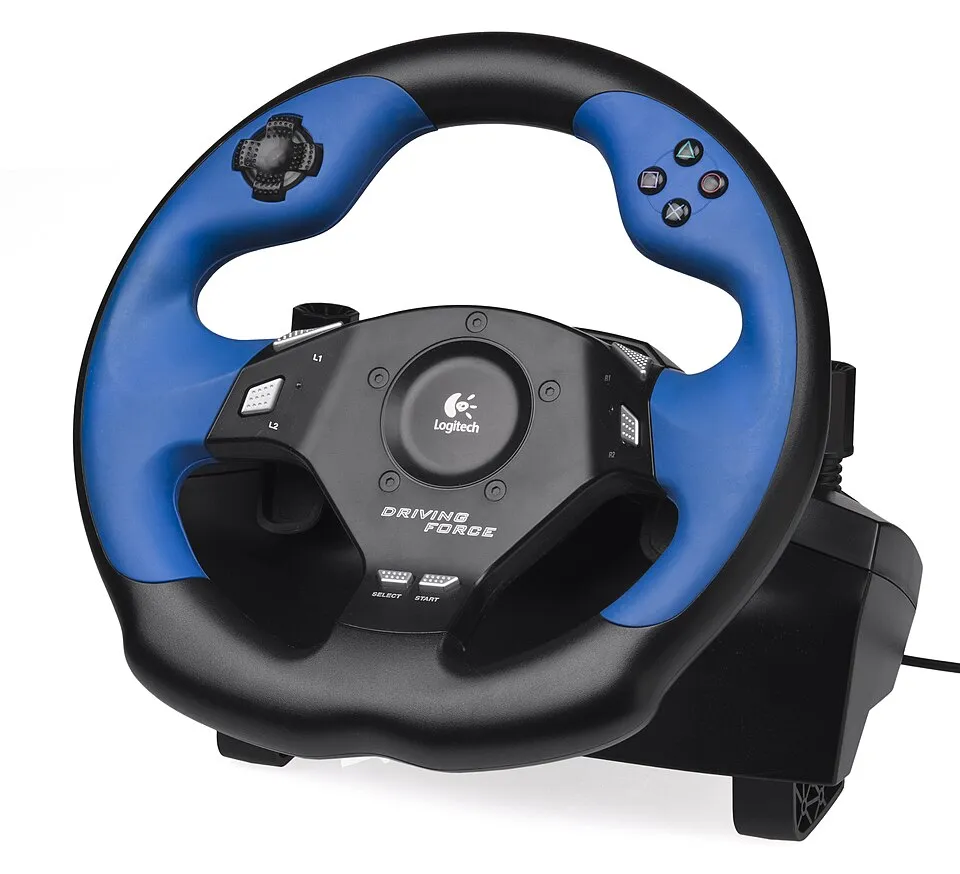
Step 2: Select a sim rig that matches your budget and space constraints. Entry-level options in 2026 offer surprising capability, making serious home training accessible.
Entry-Level Sim Rigs Under $500: Apevie SP Cockpit at $499
The Apevie SP Cockpit stands out as the top budget pick in 2026:
- Price: $499 (simraceauthority.com, 2026)
- Design: Fully foldable for compact storage; ideal for apartments.
- Compatibility: Works with popular wheels from Logitech and Thrustmaster.
- Adjustability: Pedal mount adjusts for different leg lengths; wheel angle customizable.
- Stability: Rigid construction prevents flex during aggressive steering.
While basic wheel/pedal sets without a cockpit can be cheaper ($200-$300), they lack immersion and consistent mounting, leading to poorer technique transfer. The Apevie SP Cockpit provides a stable platform that closely mimics a real car’s geometry, making it the smartest starting point for serious drivers. Use this rig to practice cornering techniques for racing drivers at home.
Mid-Range Setups ($500-$1500): Next Level Racing F-GT and Combos
| Model | Price Range (GBP/USD) | Key Features | Best For |
|---|---|---|---|
| Next Level Racing F-GT | £400-£600 (~$500-$750) | Modular design, easy assembly, compatible with all major wheels | Beginners seeking upgradeability |
| Next Level Racing GTtrack | £600-£1000 (~$750-$1250) | Premium aluminum frame, extreme rigidity, full adjustability | Dedicated sim racers targeting competition |
These rigs represent the sweet spot where quality and value intersect. The F-GT’s modularity allows gradual upgrades, while the GTtrack’s aluminum construction eliminates flex entirely.
Both significantly outlast entry-level plastic rigs and support advanced accessories like hydraulic brake mods. When upgrading your setup, also consider selecting the right racing driver coach to guide your progression.
Why $500 Rigs Are Viable in 2026: Technology Advances
Recent improvements in motor torque, pedal sensor resolution, and frame materials mean entry-level rigs now provide training fidelity that was impossible five years ago. According to 2026 reviews on simracingsetup.com, a $500 budget rig delivers accurate force feedback and consistent pedal response, enabling drivers to practice trail braking, throttle control, and steering precision effectively. This contrasts sharply with professional setups costing $24,000 to $50,000 (simcoaches.com, March 2026), which primarily offer premium materials and extreme adjustability rather than fundamental skill advantages.
For most drivers, a $500 rig suffices until reaching professional licensure; the marginal returns on pro equipment simply do not justify the cost for home training. These affordable rigs are also excellent for mastering braking techniques like trail braking in a controlled environment.
Fitness Gear for Home Motorsports Training: Essential Equipment for G-Forces
Step 3: Build physical resilience with targeted fitness equipment that develops G-force tolerance, core strength, and cardiovascular endurance—all within a $300 budget.
Core and Neck Strength: Resistance Bands and Adjustable Dumbbells
Neck and core stability are non-negotiable for withstanding cornering forces. This equipment delivers:
- Resistance bands ($15-$30): For neck isometrics and rotational core work.
- Adjustable dumbbells (REP QuickDraw, $150-$250): For weighted planks and Russian twists.
- Kettlebells ($50-$100): For dynamic core stability.
Sample routine (3 sets, 3x per week): neck extensions 15 reps with band, Russian twists 20 reps with 10lb dumbbell, plank 1 minute hold, band-resisted steering motions 12 reps per side. For a comprehensive fitness plan, refer to budgeting for motorsports training in 2026 to allocate funds effectively.
Cardiovascular Endurance: Concept2 RowErg for Full-Body Conditioning
Rowing is arguably the best cardio exercise for race drivers. It engages the legs, core, back, and arms in a low-impact motion that builds aerobic capacity without joint stress—critical for endurance racing. The Concept2 RowErg ($900-$1200 new, often $500-$700 used) offers precise metrics (watts, split times) and near-indestructible construction.
A typical driver program includes 3 weekly sessions of 20-30 minutes at moderate intensity (18-22 strokes per minute). According to garagegymreviews.com (2026), the Concept2’s durability and data tracking make it a one-time purchase that lasts a decade, justifying its place in a budget setup despite higher upfront cost.
Power Development: Eizen Link Power Tower at $300
Explosive upper-body and core power aids in steering precision, braking stability, and overall car control. The Eizen Link Power Tower (~$300) consolidates multiple strength exercises into a single footprint: pull-ups, dips, and leg raises.
Perform 2-3 sessions weekly with 3 sets of 8-12 reps for each movement. The power tower’s versatility makes it a cornerstone of driver fitness, replacing several separate machines while occupying minimal space.
Many drivers overlook that sim racing also provides mental conditioning, making it a dual-purpose tool that improves both reaction time and decision-making under pressure. Start this week by purchasing the Apevie SP Cockpit ($499) and a set of resistance bands ($25), then dedicate 30 minutes daily to sim laps and core exercises. This simple launch sequence builds momentum and delivers immediate skill gains without overwhelming your budget or schedule.
