Overtaking in modern racing demands precision, not aggression. Success hinges on data analysis, exact braking points, smooth throttle control, and aerodynamic mastery. Sarah Moore, the first woman to win the Ginetta Junior Championship (2009) and the 2018 Britcar Endurance Championship, teaches that safe overtaking combines technical skill with mental fortitude.
Her coaching, shaped by competing in the W Series (2019-2022) and holding an ARDS A Grade Instructor certification, emphasizes using telemetry to find optimal braking moments, applying throttle finesse, and leveraging slipstreams while ignoring distractions. These strategies help drivers execute passes consistently and safely. Her racing coaching programs integrate these elements for developing drivers.
- Modern overtaking prioritizes precision over aggression—using telemetry data to identify exact braking moments
- Aerodynamic mastery through slipstreaming and corner placement minimizes dirty air effects
- Mental preparation to ignore distractions is as crucial as technical skill
- Sarah Moore applies her 2009 Ginetta Junior and 2018 Britcar Endurance Championship experience to coaching
Data-Driven Braking and Throttle Control
Telemetry Analysis: Finding the Exact Braking Point
Telemetry data transforms braking from guesswork into a precise science. Modern race cars are equipped with data loggers that capture brake pressure, pedal travel, deceleration curves, and speed at thousands of points per second. Sarah Moore instructs her students to analyze this wealth of information to pinpoint the exact braking moment for each corner.
By comparing lap data, drivers can see where braking a fraction later or with different pressure yields faster times. Moore’s coaching often reveals improvements of 0.3 to 0.5 seconds per lap purely from optimizing braking. For instance, telemetry might show that braking 2 meters later at a particular corner, while maintaining a smoother brake release, results in higher mid-corner speed and a stronger exit.
This data-driven approach eliminates reliance on instinct, which can vary under pressure. Moore’s ARDS A Grade Instructor certification ensures she teaches these technical methods with authority, having mastered them during her championship campaigns. Drivers learn to treat braking as a repeatable, measurable action rather than an intuitive guess.
They practice until the braking point becomes second nature, using data to refine their technique continuously. This consistency is crucial for setting up overtakes, as arriving at the correct corner entry speed and position determines whether a pass can be executed. Additionally, telemetry helps drivers understand how brake bias adjustments affect handling, allowing them to tailor the car’s behavior to specific tracks.
Moore’s emphasis on data has helped many drivers transition from karting to formula cars with greater confidence and speed. Telemetry analysis also complements braking techniques like trail braking, covered in braking techniques for racing. Investing in telemetry systems for data analysis is a key budget consideration, as explained in budgeting for motorsports training.
Throttle Finesse: Maintaining Corner Speed Without Aggression
Throttle control is where many drivers lose time during overtaking maneuvers. Aggressive throttle application can cause wheel spin, upset the car’s balance, and waste precious momentum. Sarah Moore teaches that smooth, progressive throttle use is essential for maintaining corner speed and setting up a pass.
This delicate car control involves applying power gradually as the car reaches the apex, ensuring the tires remain in their optimal slip angle without being overwhelmed. A key technique is trail braking—keeping some brake pressure while turning—which helps drivers carry more speed through corners by balancing weight transfer. Moore’s coaching, which spans from karting to formula cars, focuses on this finesse over brute force.
For example, a driver learning to overtake on a tight corner might practice modulating throttle to avoid understeer, preserving exit speed for the straight ahead. Such subtlety reduces tire wear and the risk of mistakes. In modern racing, where margins are measured in tenths of a second, this throttle management can be the difference between a successful overtake and a missed opportunity.
Moore also stresses the importance of smooth throttle application on corner exit, where abrupt inputs can cause oversteer and loss of control. By practicing progressive throttle control in various conditions, drivers develop the muscle memory needed to execute overtakes confidently. Her approach integrates data analysis as well; drivers review throttle position graphs to identify abrupt inputs and work on smoothing them out.
This holistic focus on throttle finesse is a cornerstone of Moore’s coaching philosophy. Personalized coaching tailors these techniques to individual drivers, as outlined in the benefits of personalized racing coaching.
How Do Aerodynamics Enable Successful Overtakes?
Slipstreaming on Straights: Gaining 15-25 km/h Without Extra Power
Slipstreaming, or drafting, is a fundamental aerodynamic technique in racing where a following car exploits the reduced air resistance behind a leading car to gain speed. This can provide a significant advantage on straights without requiring extra engine power. Effective slipstreaming depends on several key factors:
- Following Distance: Stay 1-2 car lengths behind the leader to maximize aerodynamic tow while maintaining a safe buffer.
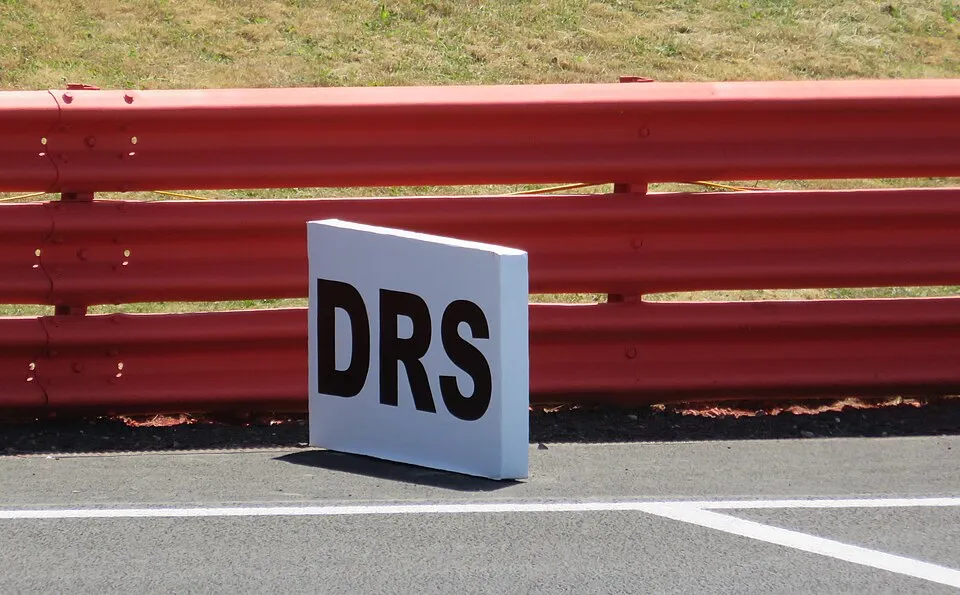
- Timing the Move: Begin the overtake at the end of a straight or in a designated activation zone (like DRS zones in Formula 1) to capitalize on the maximum speed differential.
- Exiting the Tow: Pull out of the slipstream at the optimal moment to maintain momentum through the next corner without losing stability due to sudden air turbulence.
- Speed Gain: Proper slipstreaming can add 15-25 km/h to your top speed on straights, according to aerodynamic studies.
Sarah Moore leveraged these techniques during her W Series campaigns from 2019 to 2022, where close racing and slipstreaming battles were frequent. She teaches drivers to calculate the exact exit point from the tow based on track layout and car behavior, turning aerodynamic advantages into successful passes. It’s worth noting that in Formula 1, the Drag Reduction System (DRS) provided a controlled slipstream effect, but DRS is set to be removed for the 2026 season and replaced with active aerodynamics.
This change will make natural slipstreaming skills even more critical for overtaking. Moore’s coaching emphasizes that slipstreaming is not just about following closely; it requires understanding how the car’s aerodynamics interact with the turbulent air and adjusting driving style accordingly.
Drivers learn to anticipate when the tow will be most effective and how to position their car to maximize the benefit while minimizing risk. Drivers seeking structured racing coaching programs can develop these skills through dedicated training.
Corner Placement: Minimizing Dirty Air Impact on Handling
While slipstreaming helps on straights, corner placement is vital for maintaining handling when following another car. The turbulent air, or dirty air, from the leading car disrupts the flow over the following car’s aerodynamic surfaces, particularly reducing front wing downforce.
This can increase understeer and make cornering slower and more unpredictable. To combat this, drivers use specific corner placement strategies:
- Late Apex Strategy: When following, turn later than usual to avoid the worst of the dirty air, allowing the car to stay more stable through the corner.
- Outside Line Preference: If the leader is on the inside, positioning your car on the outside can often provide cleaner air and better handling.
- Multi-Class Adjustments: In endurance races like the Britcar Endurance Championship, where different car classes share the track, strategic corner placement helps avoid turbulent air from slower prototypes, which can be especially disruptive.
- Dirty Air Effects: Research shows that turbulent air can reduce front wing downforce by up to 30%, significantly affecting cornering performance.
Sarah Moore’s victory in the 2018 Britcar Endurance Championship required mastering these corner placement techniques, particularly when navigating through multi-class traffic. Her coaching emphasizes reading the track and adjusting the racing line to minimize time spent in dirty air. This might involve taking a slightly wider line on corner entry or altering the apex point to stay in cleaner air.
By preserving handling and speed, drivers can set up overtakes more effectively, especially in the braking zones that follow corners. Moore also teaches drivers to anticipate where dirty air will be most severe, such as immediately after a long straight where the leader’s wake is strongest.
Understanding these aerodynamic principles allows drivers to make informed decisions about when to attack and when to bide their time, ultimately leading to more successful overtaking maneuvers. Proper corner placement relates to cornering techniques detailed in cornering techniques for racing drivers.
Mental Fortitude: Handling Pressure and Ignoring Distractions
Building Focus: Ignoring Paddock Negativity and External Noise
Overtaking moments are high-pressure situations where external noise can derail concentration and lead to mistakes. Sarah Moore, who has faced paddock negativity throughout her career, stresses the importance of mental preparation to block out distractions. As an outspoken LGBTQ+ advocate and the first openly LGBTQ+ driver to podium at an F1 Grand Prix weekend in 2021, Moore developed exceptional mental resilience in the face of scrutiny.
She teaches drivers to establish pre-race routines that center the mind, such as visualization of successful overtakes and breathing exercises to maintain calm. Focusing solely on one’s own performance, rather than engaging with negative commentary or distractions from other teams, is critical. Moore’s own journey to becoming a champion required immense mental toughness, and she instills this in her students through structured mental skills training.
This includes mindfulness practices to stay present during the race and techniques to filter out irrelevant stimuli. For example, drivers learn to use a simple mantra or focus point to reset their concentration after a setback. By ignoring the paddock’s noise, drivers can channel all energy into the precise car control and strategic thinking needed for a successful pass.
This mental fortitude allows them to execute overtakes with clarity even when the stakes are highest, turning potential distractions into non-factors. Moore’s coaching integrates these mental exercises with on-track practice, creating well-rounded racers equipped to handle the psychological demands of modern competition. Holistic training that includes mental skills is essential, as covered in holistic training for racing drivers.
Pressure Management in Critical Overtaking Moments
When an overtaking opportunity arises, the pressure to execute can be overwhelming, leading to rushed decisions and errors. Sarah Moore, appointed as a coach for the More Than Equal driver development program in January 2024, teaches specific pressure management techniques that complement technical skill. One key method is process-oriented thinking: breaking down the overtake into individual steps (braking point, turn-in, throttle application) to focus on execution rather than outcome.
This reduces anxiety and improves consistency. Breathing control, such as rhythmic inhales and exhales, helps maintain physiological calm and prevents tension from affecting car control. Moore also emphasizes learning from failed attempts, viewing them as data points rather than failures.
In her coaching with More Than Equal, she integrates mental skills training with technical development, recognizing that success in modern racing depends on both. Drivers learn to embrace pressure as part of the challenge, using it to sharpen focus rather than induce panic. For instance, a driver might practice overtaking in low-pressure simulations to build confidence before applying the skills in competition.
This holistic approach, combining mental resilience with data-driven technique, prepares drivers to seize overtaking opportunities when they appear. Moore’s own experience in high-stakes races, from the W Series to endurance events, informs her teaching, providing real-world examples of managing pressure effectively. By developing these mental tools, drivers can maintain composure and make precise decisions during critical overtaking moments.
Selecting a coach who integrates mental training is vital; see how to select a racing driver coach for guidance.
The most surprising insight is that telemetry analysis can reveal braking point improvements of 0.3-0.5 seconds, which often makes the difference between a successful overtake and a failed one. Action step: On your next track session, record telemetry and compare your braking points to a reference lap—aim to shave at least 0.2 seconds by adjusting your braking marker and practice consistently.
