Racing teams win or lose in milliseconds, and success depends on perfect collaboration between drivers, engineers, and pit crews working as one unit. In 2026, this collaboration is more critical than ever as teams face unprecedented technological changes and regulatory shifts that demand both human excellence and AI-driven strategy.
- Modern racing teams succeed through high-stakes collaboration, rapid communication, and deep mutual trust between all members
- 2026 brings AI integration and manufacturer partnerships that are reshaping team strategies and operational efficiency
- Operational excellence requires real-time data analysis, clear roles, and strategic flexibility with multiple contingency plans
How Racing Teams Collaborate and Communicate for Success
Racing team dynamics in 2026 hinge on three critical pillars: trust, communication, and adaptability. Teams that master these elements consistently outperform those relying solely on individual talent or technological superiority.
Building Trust and Psychological Safety in High-Pressure Environments
The foundation of any successful racing team is psychological safety—a “safe and supportive” environment where team members can perform at their peak without fear of reprisal. In the high-pressure world of motorsport, where decisions must be made in milliseconds, trust becomes the ultimate competitive advantage.
Teams that foster open dialogue and mutual respect see significantly better performance outcomes. When drivers trust their engineers, they can push harder knowing their feedback will be heard and acted upon. When pit crews trust each other, they can execute tire changes in under two seconds without hesitation or second-guessing.
This psychological safety extends beyond just feeling comfortable—it enables the kind of rapid, honest communication that separates winning teams from the rest. A driver can admit a mistake without fear, an engineer can challenge a strategy without causing offense, and the entire team can adapt to changing conditions without internal conflict.
Real-Time Communication and Operational Precision
Racing teams operate on a communication protocol that would be the envy of any military unit. Information flows “short, sharp, and instantly understood” between all team members, covering everything from car performance metrics to tire wear rates and fuel consumption.
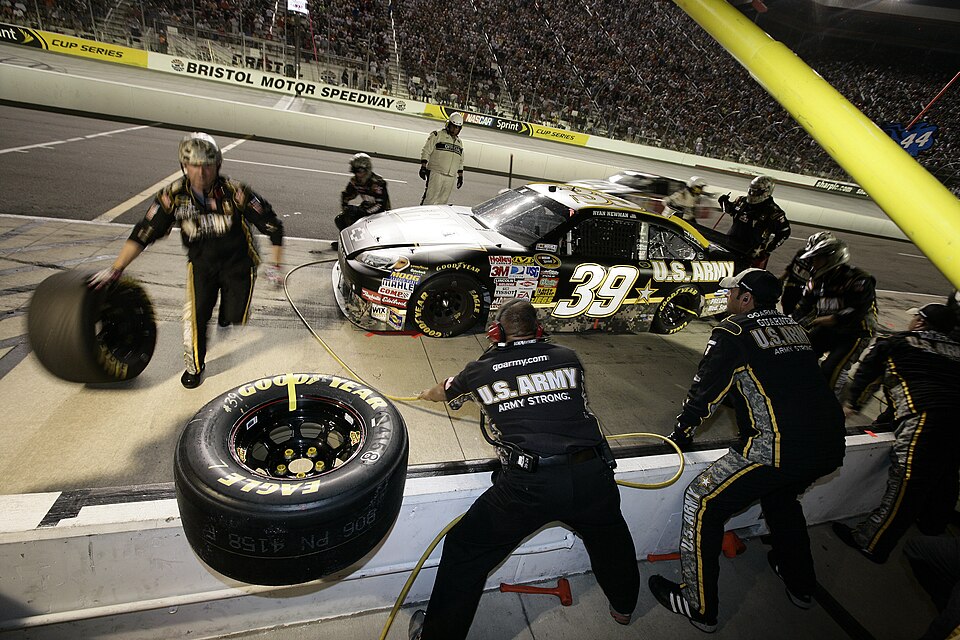
The pit crew exemplifies this operational precision. Each member has a clearly defined role, and their movements are choreographed down to the millisecond.
A typical pit stop involves seven crew members working in perfect synchronization—four for tires, two for the jack, and one for the fuel rig (where applicable). The difference between a 1.8-second stop and a 2.2-second stop can mean losing multiple positions on track.
Data-driven decision making during races has become increasingly sophisticated. Teams monitor hundreds of data points in real-time, from tire temperatures to aerodynamic efficiency, allowing them to make strategic adjustments on the fly. This information must be processed and communicated instantly, as conditions on track can change dramatically in seconds.
Strategic Flexibility and Multiple Contingency Planning
The most successful racing teams in 2026 are those that prepare for every possible scenario. This means having Plan A, B, and C ready to deploy at a moment’s notice, whether that’s adapting to sudden weather changes, responding to competitor strategies, or dealing with unexpected mechanical issues — racing driver.
Teams invest countless hours in rehearsal and preparation, running through various scenarios to ensure they can respond effectively to any situation. This preparation extends beyond just technical readiness—it includes developing a positive team culture that embraces change and values every contributor.
The ability to pivot strategies mid-race has become a crucial differentiator. When rain suddenly appears on a dry track, teams that can quickly switch to wet-weather setups and strategies often gain significant advantages over those that hesitate or lack preparation.
2026 Racing Team Technology and Strategic Partnerships
The 2026 season marks a watershed moment for racing team dynamics, with AI integration and manufacturer partnerships fundamentally reshaping how teams operate and compete.
AI Integration in Race Strategy and Simulation
Artificial Intelligence has moved from experimental tool to essential team member in 2026. Teams are leveraging AI to process vast amounts of data, run thousands of race scenarios in real-time, and optimize complex systems that would be impossible for humans to manage alone.
AI systems now handle energy management for hybrid power units, calculating the most efficient power deployment strategies across entire race distances. They optimize active aerodynamics, adjusting wing angles and other components in real-time based on track position, weather conditions, and competitor behavior.
The simulation capabilities have expanded dramatically. Where teams once ran a few hundred race scenarios before an event, AI systems can now simulate thousands of permutations, accounting for variables like tire degradation, fuel consumption, and even the probability of safety car deployments. This allows teams to develop strategies that are statistically optimized for success.
Real-time decision support has become invaluable during races. AI systems can process information faster than any human team, suggesting optimal pit stop windows, tire strategies, and even defensive or offensive driving tactics based on the current race state.
Manufacturer-Team Partnerships and Power Unit Development
The landscape of racing team partnerships has evolved significantly in 2026, with new “works” partnerships forming between auto manufacturers and racing teams. These collaborations represent a fundamental shift in how teams access technology and resources.
Red Bull Racing’s partnership with Ford Powertrains exemplifies this trend, providing the team with cutting-edge engine technology and development resources. Similarly, Aston Martin Aramco’s collaboration with Honda brings together automotive expertise and racing heritage to create a formidable technical partnership.
These manufacturer alliances offer teams access to resources and technology that would be prohibitively expensive to develop independently. They also create new dynamics within teams, as engineers from different organizations must learn to collaborate effectively across corporate boundaries.
The technical support provided by these partnerships extends beyond just power units. Teams gain access to advanced simulation tools, wind tunnel facilities, and even manufacturing capabilities that significantly enhance their competitive potential.
Tech-Driven Efficiency and Advanced Logistics
Behind the scenes, racing teams are adopting advanced technologies and robotics to improve logistics and crew efficiency. Williams Racing’s partnership with Atlassian has introduced sophisticated project management and collaboration tools that streamline operations across the entire organization.
Genesis Magma Racing’s adoption of Boston Dynamics robots for certain operational tasks demonstrates how automation is entering the racing world. These robots handle repetitive tasks, allowing human crew members to focus on more complex and strategic activities.
Advanced technologies are also improving logistics and supply chain management. Teams now use sophisticated tracking systems to ensure that every component, from tiny electronic sensors to massive aerodynamic parts, arrives exactly when and where needed. This level of efficiency reduces errors and ensures that teams can operate at maximum effectiveness during race weekends.
Operational Excellence and Strategic Flexibility in Modern Racing

While technology provides powerful tools, the human elements of racing team dynamics remain irreplaceable. The teams that succeed in 2026 are those that combine technological sophistication with operational excellence and strategic flexibility.
Data Analysis and Performance Optimization
The analytical processes that separate winning teams from the rest have become increasingly sophisticated. Pre-race and post-race analysis now involves machine learning algorithms that can identify patterns and opportunities that human analysts might miss.
The search for “crucial tenths” of a second has become more scientific than ever. Teams use advanced analytics to identify where small improvements can yield significant performance gains, whether that’s optimizing pit stop procedures, fine-tuning aerodynamic setups, or refining driver techniques.
Clear Roles and Team Structure for Maximum Efficiency
Well-defined responsibilities are essential for racing team success. Each team member knows exactly what they need to do and when they need to do it, creating a seamless operation where everyone works in perfect harmony.
The pit crew coordination exemplifies this structure. Each member has a specific role, and their movements are choreographed down to the millisecond. This level of organization prevents errors and ensures that every operation, from tire changes to wing adjustments, happens with maximum efficiency.
Driver-engineer communication protocols have also become more sophisticated. Clear channels of communication ensure that drivers can provide feedback quickly and that engineers can respond with appropriate adjustments. This two-way communication is essential for optimizing car performance throughout race weekends.
Cultural Adaptation and Embracing Change
The human element remains crucial in racing team success. A positive team culture that embraces change and values every contributor can make the difference between a good season and a championship-winning one.
Teams that foster this kind of culture see reduced errors, improved morale, and better overall performance. When every team member feels valued and understands how their contribution fits into the larger picture, they’re more likely to go above and beyond when challenges arise.
This cultural adaptation extends to how teams handle setbacks and failures. Rather than placing blame, successful teams use these experiences as learning opportunities, analyzing what went wrong and developing strategies to prevent similar issues in the future.
The ability to maintain morale during challenging seasons has become increasingly important. Teams that can keep their members motivated and focused, even when results aren’t coming, often emerge stronger when conditions improve.
The Winning Formula for 2026
The most successful racing teams in 2026 will be those that master both the technological and human aspects of team dynamics. While AI and advanced technology provide powerful tools for optimization and strategy, the human elements of trust, communication, and adaptability remain the ultimate competitive advantages.
Teams that can combine cutting-edge AI-driven strategy with strong psychological safety and clear operational structures will dominate the 2026 season. The winning formula isn’t just about having the best technology or the most talented individuals—it’s about creating an environment where both can thrive together.
Racing teams looking to improve their dynamics should conduct quarterly trust-building exercises combined with AI strategy workshops to ensure both elements evolve together. This balanced approach to team development will be the hallmark of championship-winning organizations in 2026 and beyond.
