
The W Series is a free-to-enter, all-female single-seater racing championship that uses identical Tatuus F3 T-318 cars to focus purely on driver talent. Launched in 2019, this unique format eliminates financial barriers and provides a clear pathway for female drivers to reach Formula 1.
- The W Series uses identical cars and is free-to-enter to eliminate financial barriers
- Race weekends feature Friday practice/qualifying and Saturday 30-minute races
- The series aims to provide a pathway for female drivers to reach Formula 1
- Sarah Moore became first openly LGBTQ+ driver on F1 podium in 2021
What Makes the W Series Format Unique?
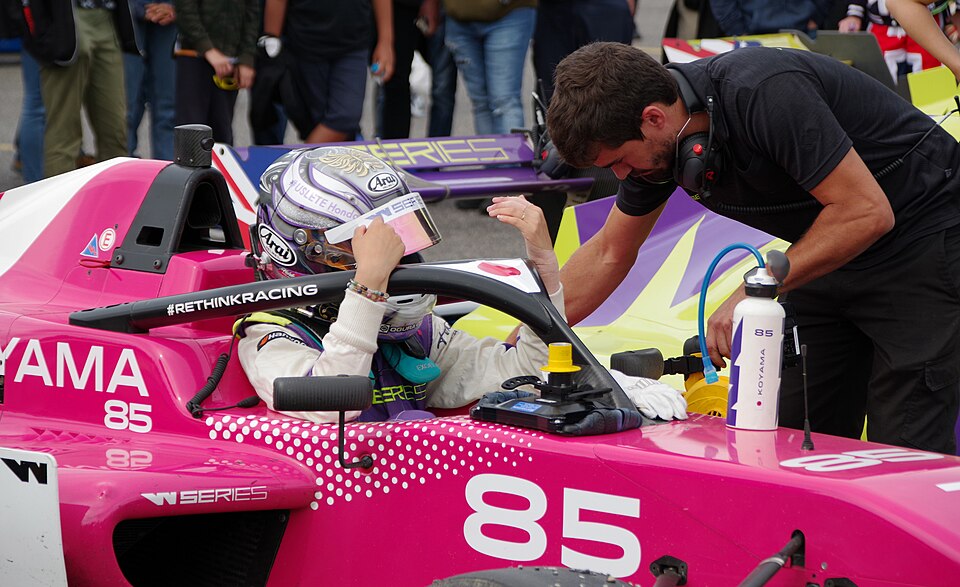
The W Series stands apart from traditional racing series through its revolutionary approach to accessibility and competition. Unlike conventional motorsport where team budgets and car performance often determine success, the W Series levels the playing field completely.
Free-to-Enter Championship Using Identical Cars
The W Series operates on a free-to-enter model, removing the massive financial barriers that typically prevent talented drivers from advancing in motorsport. All competitors race in identical Tatuus F3 T-318 cars, ensuring that success depends entirely on driver skill rather than team resources or car specifications.
This identical equipment approach means every driver has the same car maintained by the series, creating a pure competition environment. The series provides all necessary equipment, including helmets, suits, and race gear, further eliminating costs that often force talented drivers out of the sport.
30-Minute Practice, Qualifying, and Race Structure
The W Series format features a streamlined 30-minute practice session followed by a 30-minute qualifying session on Friday. This structure allows drivers to familiarize themselves with the track and set competitive lap times that determine the starting grid for Saturday’s race.
Saturday races last 30 minutes, creating intense, focused competition where strategy and driver skill are paramount. The top-10 finishers score points, with the winner receiving 25 points, second place 18 points, and so on down to 1 point for tenth position. This points system mirrors Formula 1, providing a familiar framework for drivers aspiring to reach the highest levels of motorsport.
How W Series Race Weekends Work
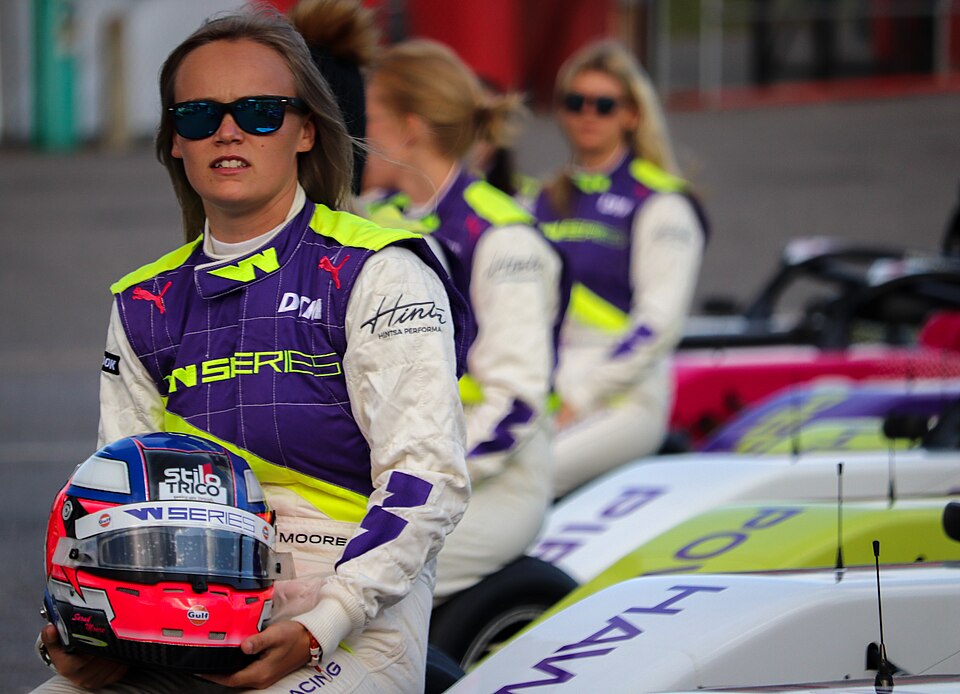
Understanding the race weekend structure is essential for appreciating how the W Series operates as a professional championship. The format is designed to maximize competition while maintaining efficiency and excitement.
Friday Practice and Qualifying Sessions
Friday begins with a 30-minute practice session where drivers can test different racing lines, experiment with braking points, and fine-tune their approach to the circuit. This session is crucial for understanding track conditions, which can vary significantly between different venues and weather conditions — racing driver.
Following practice, the 30-minute qualifying session determines the starting grid for Saturday’s race. Drivers push their cars to the limit, attempting to set the fastest single lap time.
The qualifying format is straightforward: the driver with the fastest lap starts first, followed by the next fastest, and so on. This creates a merit-based starting order where the fastest qualifier earns the best chance at victory.
Saturday Race Format and Scoring
Saturday features the main event: a 30-minute race where drivers compete for both victory and championship points. The race format emphasizes pure racing ability, as all cars are identical and maintained to the same specifications. This means that qualifying position, race craft, and strategic decision-making become the primary factors determining race outcomes.
The point system rewards the top-10 finishers, creating multiple opportunities for drivers to score throughout the season. This structure encourages consistent performance and strategic racing, as even drivers who don’t win can accumulate valuable points that contribute to the championship standings.
Support Events to Formula 1 Races
W Series races typically take place as support events to Formula 1 Grand Prix weekends, providing maximum exposure and creating a clear pathway to the pinnacle of motorsport. This positioning allows W Series drivers to compete on the same tracks as their F1 counterparts, gaining valuable experience on world-class circuits.
The support event status also means W Series races benefit from the massive crowds and media attention that surround F1 events. This exposure is crucial for driver development, as it provides experience performing under the intense pressure and scrutiny that comes with racing at the highest levels.
W Series Purpose and Impact
The W Series was created with a specific mission: to eliminate the financial and opportunity barriers that have historically prevented women from reaching the highest levels of motorsport. This purpose-driven approach has already begun to reshape the landscape of professional racing.
Eliminating Financial Barriers in Motorsport
Traditional motorsport requires enormous financial investment, with costs for cars, equipment, travel, and team personnel often running into millions of dollars. The W Series removes these barriers by providing everything needed for competition at no cost to the drivers. This free-to-enter model means that talent, rather than financial resources, becomes the determining factor for success.
The series also covers travel expenses, accommodation, and all race-related costs, allowing drivers to focus entirely on their performance. This comprehensive support system addresses the economic inequalities that have historically limited women’s participation in motorsport, where the high costs often prevent talented female drivers from advancing beyond early career stages.
Sarah Moore’s Historic Achievements and Role
British driver Sarah Moore has been a trailblazer in the W Series, becoming the first female winner of a TOCA-sanctioned race and the first woman to win a junior mixed-gender national-level series in the UK. Her achievements demonstrate the level of talent that exists among female drivers when given the opportunity to compete on equal terms.
In 2021, Moore achieved a historic milestone as the first openly LGBTQ+ driver to stand on a podium at a Formula One Grand Prix weekend, finishing second in the W Series opener in Austria. This achievement represents how the W Series is breaking barriers beyond just gender, promoting inclusion and diversity in motorsport. Moore serves as a Racing Pride ambassador, using her platform to promote inclusion and inspire the next generation of diverse racing talent.
The W Series has already produced multiple champions and race winners, with drivers like Alice Powell and Jamie Chadwick demonstrating that women can compete at the highest levels when given equal opportunities. The series continues to provide a crucial stepping stone for female drivers aiming to reach Formula 1, where no woman has raced competitively since the 1970s.
The impact of the W Series extends beyond just the drivers competing. By providing a professional platform for women in motorsport, the series is changing perceptions about female racing talent and creating role models for young girls interested in pursuing careers in motorsport. The visibility and success of W Series drivers are gradually breaking down the stereotypes that have historically limited women’s participation in professional racing.
Frequently Asked Questions About W Series Racing Format
How much do W Series drivers get paid?
The first W Series champion receives $500,000 in prize money, with $250,000 for second place and $125,000 for third. Prize money is awarded to every driver who competes in the series, supporting female racers financially while they develop their careers in motorsport.
Why was the W Series cancelled?
The W Series was cancelled after the Singapore round in 2022. The remaining three races, including one at Circuit of the Americas and a double-header at Autódromo Hermanos Rodríguez, were cancelled a week later due to financial and operational challenges facing the championship.
Is formula 4 mixed-gender?
Yes, Formula 4 is a mixed-gender championship where male and female drivers compete together. In fact, female participation in mixed-gender F4 series increased by over 29%, with 57 female drivers contesting at least one round in a mixed-gender F4 series, the highest number ever recorded.
