
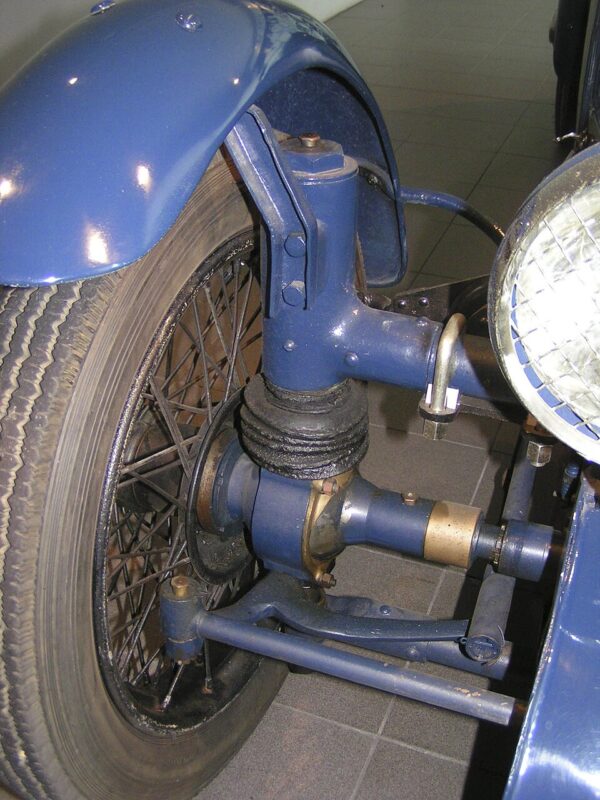
Race car suspension design prioritizes maximizing tire grip, controlling weight transfer, and maintaining consistent geometry. Unlike passenger car suspensions that focus on comfort, race suspensions are engineered for performance, keeping tires in their optimal operating range. This guide covers three core areas: suspension geometry (camber, caster, toe, anti-geometry), spring and damper tuning, and practical adjustments for optimal handling.
Understanding these principles is essential for any professional racing engineer or driver. At Sarah Moore Racing, these fundamentals are central to our driver coaching and engineering programs.
- Race car suspension prioritizes tire grip and weight transfer control over comfort, distinguishing it from passenger vehicle systems. (Source: Research Key Points)
- Negative camber (-2° to -3° or more) is critical for maximizing cornering grip by keeping the tire contact patch flatter during turns. (Racecar Engineering)
- Damper adjustments (low-speed/high-speed compression/rebound) directly manage weight transfer speed and handling balance. (Penske Racing Shocks)
Suspension Geometry: Key Principles for Maximum Grip
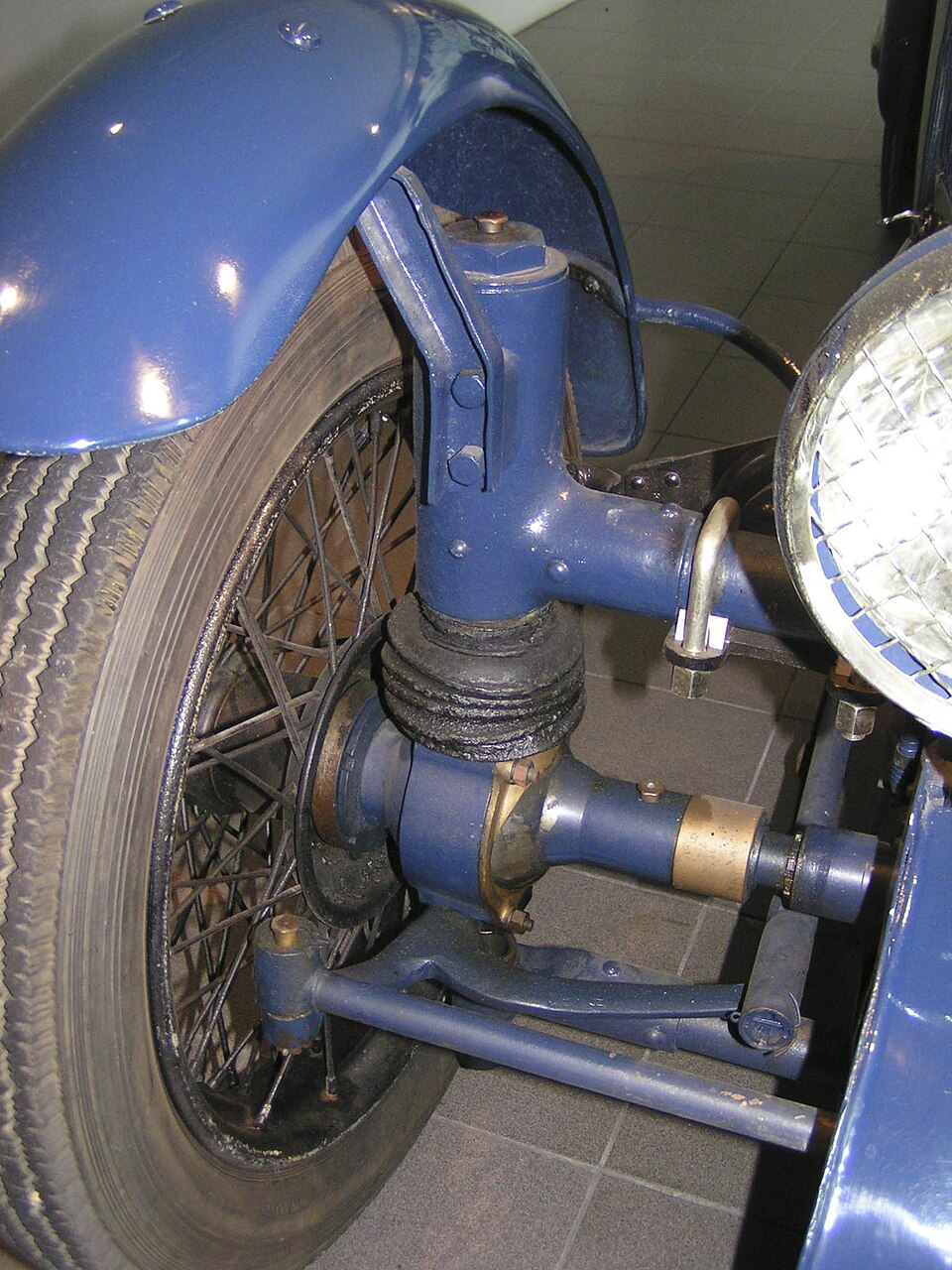
Suspension geometry defines how the wheels move relative to the chassis, directly affecting tire contact and grip. Key adjustments include camber, caster, toe, and anti-geometry, each influencing cornering, braking, and acceleration performance.
Proper geometry ensures tires remain flat on the track surface through all phases of cornering, maximizing mechanical grip. These principles are foundational for professional racing engineering and are taught in advanced driver coaching programs.
Camber Angles: Maximizing Cornering Contact Patch
Camber refers to the angle of the wheel relative to vertical when viewed from the front. Negative camber means the top of the wheel tilts inward.
In race cars, negative camber is used extensively to maximize cornering grip. The typical range is -2° to -3° or even more, depending on the series and track characteristics.
The reason for negative camber is to counteract body roll. During cornering, the car’s body rolls outward, causing the wheels to tilt outward as well. This reduces the tire’s contact patch on the track.
By setting negative camber, the wheel is pre-tilted inward so that when the body rolls, the tire’s contact patch becomes flatter, maintaining more even pressure across the tread. This maximizes the tire’s grip during cornering.
Passenger cars typically use very little negative camber (often 0° to -1°) because they prioritize straight-line stability, even tire wear, and braking performance. Race cars, however, sacrifice some straight-line grip for cornering advantage. The optimal camber setting depends on the track’s cornering radius, surface roughness, and tire compound.
For example, high-downforce circuits may use more negative camber than superspeedways. Softer compounds may tolerate more negative camber before overheating. For a detailed look at how Pirelli manages tire allocation in Formula 1, see formula 1 tire compound strategy.
It’s important to note that excessive negative camber can cause increased wear on the inner shoulder of the tire and reduce straight-line traction. Therefore, teams use tire temperature monitoring to ensure even heat distribution across the tread, indicating proper camber. According to Racecar Engineering, negative camber settings of -2° to -3° are common in many touring car and GT categories, while open-wheel cars may use up to -4°.
In practice, camber is adjusted in conjunction with toe and spring rates to achieve a balanced setup. For instance, more negative camber may require slight adjustments to toe to maintain stability. This interconnectedness highlights why suspension tuning is a holistic process.
Caster Settings: Steering Stability and Camber Gain
Caster is the angle of the steering axis relative to vertical when viewed from the side. Positive caster means the steering axis tilts rearward at the top, similar to the caster wheels on a shopping cart.
This design provides a self-centering torque because the tire’s contact patch trails behind the steering axis. The result is improved high-speed stability and better straight-line tracking.
In addition to stability, positive caster increases negative camber gain. Camber gain refers to how much the wheel’s camber changes as the steering wheel is turned. With positive caster, as you steer, the wheel gains additional negative camber.
This is beneficial because during cornering, the outer wheel needs more negative camber to counteract body roll. The camber gain from caster automatically provides that extra negative camber when steering, enhancing cornering grip without requiring excessive static negative camber.
However, there are trade-offs. More caster increases steering effort, especially at low speeds, and can cause bump steer if the suspension geometry isn’t properly matched.
Excessive caster may also lead to uneven tire wear. Typical race car settings range from 5° to 8° of positive caster, though some series may use higher values for specific handling characteristics.
It’s important to balance caster with other geometry settings. For example, a high caster setting may require adjustments to toe to maintain straight-line stability. Teams often use caster in combination with anti-geometry to fine-tune the car’s behavior under braking and acceleration.
According to OnAllCylinders, positive caster is a key factor in achieving a predictable and stable steering response, which is critical for drivers pushing the limits in professional racing.
Toe Configuration: Balancing Response and Braking Stability
Toe refers to the angle of the wheels relative to each other when viewed from above. Toe-in means the front of the wheels point toward each other; toe-out means they point away. In race car setup, front toe-out is commonly used to enhance steering response and promote Ackerman steering geometry.
Toe-out makes the car more responsive to steering inputs because the wheels are already angled slightly toward the direction of the turn. This reduces the effort needed to initiate a turn and improves turn-in precision.
Additionally, toe-out encourages Ackerman geometry, where the inner wheel turns more sharply than the outer wheel during cornering. This reduces tire scrub and improves cornering efficiency, especially on tight circuits.
However, front toe-out can cause instability under braking. When braking, weight transfers forward, and the front tires experience high forces. Toe-out can cause the wheels to fight each other, leading to a twitchy or unpredictable feeling.
It may also increase the risk of lock-up because the tires are not aligned straight ahead. Therefore, the amount of toe-out must be carefully balanced; typical values range from 0.1° to 0.3° per side.
Track conditions influence toe settings. On bumpy circuits, more toe-in may be used to stabilize the car, as it tends to straighten the wheels over irregularities. On smooth, high-speed tracks, a slight toe-out can improve responsiveness without compromising stability.
According to research from the University of Southern Queensland, toe configuration is a critical factor in achieving the desired balance between steering response and braking stability. Teams often adjust toe based on driver feedback and tire wear patterns.
Anti-Geometry: Counteracting Brake and Acceleration Forces
Anti-geometry includes anti-dive and anti-squat, which are suspension design features that counteract the car’s natural tendency to dip at the front during braking and squat at the rear during acceleration.
Anti-dive is achieved by designing the front suspension’s instant center (the point where the control arms appear to intersect when viewed from the side) to be above the ground. During braking, the forces push the front of the car downward. Anti-dive geometry resists this movement, reducing the amount of front suspension compression.
This helps maintain a more consistent front aerodynamic platform and reduces the forward weight transfer, which can affect brake bias. Anti-dive is particularly important in high-downforce cars where aerodynamic stability is critical.
Anti-squat works similarly at the rear. By aligning the rear suspension’s instant center with the driveshaft angle (or using specific linkage geometry), the rear suspension resists squatting under power.
This keeps the rear more stable, maintains traction, and reduces the change in rear aerodynamic downforce. Anti-squat is essential in high-torque applications, such as cars with powerful hybrid power units.
Both anti-dive and anti-squat help maintain more consistent suspension geometry and weight distribution during dynamic maneuvers. This ensures the tires remain in better contact with the road, improving grip and predictability. However, these geometries also affect the car’s roll center and must be balanced with other setup parameters.
According to Behrent’s and various engineering resources, anti-geometry is a fundamental aspect of race car suspension design, especially in series with high braking and acceleration forces. In Formula 1, the 2026 technical regulations specify constraints on suspension mounting points, which influence anti-geometry design. For more details, see formula 1 technical regulations 2026.
Spring Rates: Finding the Balance Between Grip and Responsiveness

Spring rates determine how much the suspension compresses under load, directly influencing weight transfer and body roll. Stiffer springs reduce roll and improve responsiveness but can compromise traction on uneven surfaces. Softer springs increase compliance but may allow excessive body movement.
The optimal spring rate depends on track surface, tire characteristics, and vehicle weight distribution. A common philosophy is to use the softest springs that prevent bottoming out, relying on dampers and anti-roll bars for fine-tuning. These concepts are integral to professional racing expertise and are applied in our engineering programs.
Stiffness Trade-offs: Body Roll vs. Traction Loss
According to Penske Racing Shocks and the University of Benghazi, stiffer springs reduce body roll and improve responsiveness, but too stiff can lead to traction loss. The trade-offs can be summarized as follows:
-
Benefits of Stiffer Springs:
- Reduced body roll, leading to more predictable handling and less suspension geometry change during cornering.
- Improved responsiveness, as the car reacts more quickly to driver inputs, which is crucial for hybrid power units with instant torque delivery (see formula 1 power unit technology 2026).
- Lower center of gravity effect due to less suspension travel.
- Better control of weight transfer, allowing for more aggressive cornering.
-
Drawbacks of Excessive Stiffness:
- Increased sensitivity to track irregularities, causing loss of traction on bumps or curbs.
- Higher tire wear, especially on rough surfaces.
- Potential for bottoming out if spring travel is insufficient.
- Reduced driver comfort and increased fatigue (though less critical in racing).
- May require stiffer dampers, which can further reduce compliance.
The optimal spring rate is the softest setting that prevents bottoming out while maintaining adequate control, and it must be matched to the tire’s characteristics and the track’s smoothness. Teams often conduct extensive testing to find this balance, considering factors such as spring rates, damper settings, and anti-roll bar stiffness. This philosophy is supported by the National Motorsport Academy as a best practice for achieving optimal mechanical grip.
Corner Weighting: Achieving Optimal Balance
Corner weighting is the process of adjusting spring preloads or using adjustable components to distribute the car’s weight evenly across all four tires when the car is stationary but with driver, fuel, and other consumables on board. The goal is to achieve a balanced weight distribution, often close to 50/50 front/rear, or as required by the car’s design and the track’s characteristics.
Balanced weight distribution ensures each tire carries a similar load, leading to even tire wear and predictable handling. If one corner is significantly heavier, that tire will be more prone to overheating and losing grip, while the lighter tire may not be fully utilized. This imbalance can cause the car to handle differently in left versus right corners, a phenomenon known as cross-weight imbalance.
The corner weighting process involves placing the car on a set of precision scales and measuring the load on each wheel. Adjustments are then made by changing spring preloads, adding ballast, or modifying ride heights.
Teams often aim for a specific cross-weight (the sum of the left-front and right-rear loads versus right-front and left-rear) to ensure the car turns equally well in both directions. A perfectly balanced car will have equal cross-weights.
Under the Formula 1 budget cap, teams must be strategic with suspension development, making corner weighting a cost-effective tuning method that yields significant performance gains without expensive hardware changes. For more on how financial regulations affect technical development, see formula 1 budget cap financial fair play.
Regular corner weighting checks are essential, as changes in fuel load, tire wear, or component replacement can alter the balance. It’s a fundamental practice in professional racing engineering that directly impacts tire longevity and lap time consistency.
How to Tune Dampers for Optimal Weight Transfer and Handling?
Dampers (shock absorbers) control the speed of suspension movement, managing how quickly weight transfers during cornering, braking, and acceleration. By adjusting compression and rebound settings, engineers can fine-tune handling balance, improve tire contact, and enhance driver control.
Modern dampers offer separate low-speed and high-speed adjustments for precise tuning across different track conditions. Proper damper tuning is essential for translating spring rates into consistent grip and for managing the dynamic behavior of the car.
Dual-Stage Dampers: Low-Speed vs. High-Speed Adjustments
Modern race dampers are often dual-stage, meaning they have separate adjustment circuits for low-speed and high-speed damping. This allows engineers to independently control the damper’s response to large, slow movements and small, rapid movements.
Low-speed damping refers to the damping forces during large suspension strokes, such as body roll in corners, brake dive, and acceleration squat. Adjusting low-speed compression affects how quickly the suspension compresses under these loads; a stiffer setting reduces body roll and weight transfer, making the car feel more planted.
Low-speed rebound controls how the suspension extends after compression; it influences how the car regains traction after a bump or during corner exit. Too soft rebound can cause the suspension to extend too quickly, leading to instability; too stiff can cause the tire to lose contact.
High-speed damping deals with small, rapid suspension movements, like those encountered over bumps, curbs, or surface imperfections. High-speed compression determines how the tire reacts to these small impacts; a slightly softer setting allows the tire to follow the road surface better, maintaining contact. High-speed rebound helps the tire recover after a small bump, preventing it from bouncing.
The ability to tune these separately is crucial because the requirements for controlling body roll (low-speed) differ from those for maintaining tire contact over rough surfaces (high-speed). For example, a smooth track may use stiffer high-speed compression to maximize responsiveness, while a bumpy circuit requires softer settings to keep the tires planted.
In sprint race formats, where tire management is critical due to shorter stints and higher intensity, damper settings are often adjusted to reduce tire wear and maintain consistent lap times. For more on how sprint races affect strategy, see formula 1 sprint race format impact.
According to Penske Racing Shocks, understanding and utilizing dual-stage damping is a hallmark of professional racing engineering.
Correcting Understeer and Oversteer: A Quick Reference Table
| Handling Issue | Recommended Adjustment | Expected Effect |
|---|---|---|
| Understeer (front tires lose grip, car pushes wide) | Soften front sway bar or increase front rebound damping | Reduces front tire load, promotes more balanced grip, and improves turn-in |
| Oversteer (rear tires lose grip, car rotates) | Soften rear sway bar | Reduces rear tire load, stabilizes rear, and reduces excessive rotation |
Understeer occurs when the front tires exceed their grip limit before the rear, causing the car to turn less than intended. Softening the front sway bar reduces the load on the outer front tire during cornering, allowing it to generate more grip. Increasing front rebound damping helps control weight transfer to the front, improving stability.
Oversteer is the opposite: the rear tires lose grip first, causing the car to rotate. Softening the rear sway bar reduces the load on the outer rear tire, making it less likely to break away. These adjustments are often the first step in fine-tuning handling balance before making more complex changes to springs or geometry.
According to Gexhaust, these simple sway bar and rebound modifications can quickly address handling imbalances during a race weekend.
One surprising finding is that suspension adjustments are deeply interconnected; changing camber affects tire wear, handling balance, and even optimal spring rates. For example, increasing negative camber improves cornering grip but can increase inner shoulder wear and may require toe or damping adjustments to maintain stability.
Action step: Measure your current camber and adjust to -2.5° as a starting point, then track test and fine-tune based on driver feedback and tire temperature readings. Use a tire pyrometer to check temperature distribution across the tread; even temperatures indicate proper camber.
Also perform corner weighting regularly to ensure balanced weight distribution. For insights on how suspension durability impacts pit stop strategies in NASCAR, see NASCAR pit stop strategies.
