Racing flags are the critical communication system in motorsports, conveying safety and status information to drivers. In 2026, digital panels are officially recognized as equivalent to physical flags. The core flags include green (track clear), yellow (caution), red (stop), and checkered (race end).
Understanding these flags is essential for driver safety and race strategy. This guide covers all flag meanings, 2026 updates like the Bearman Rule and Code 60, and how drivers and teams respond.
Proper flag recognition can prevent accidents and penalties, making it a fundamental aspect of professional racing. This racing knowledge understanding racing flags is vital for anyone involved in the sport, from junior series to top-tier professional racing.
- Racing flags remain the primary safety communication system in 2026, now supplemented by official digital panels (formula1.com).
- The 2026 Bearman Rule invalidates any lap completed after a red flag, impacting qualifying and race strategy (f1i.com).
- Ignoring blue flags results in drive-through penalties, while ignoring black flags leads to disqualification (formula1.com, hendrickmotorsports.com).
- Code 60 imposes a strict 60 kph speed limit during severe incidents, indicated by a purple flag or panel with a white ’60’ circle.
- Yellow flag compliance now requires drivers to prove they slowed sufficiently; in qualifying, drivers must abandon their lap (formula1.com).
What Are the Core Racing Flags and Their Meanings?
Green Flag: Track Clear and Racing Resumes
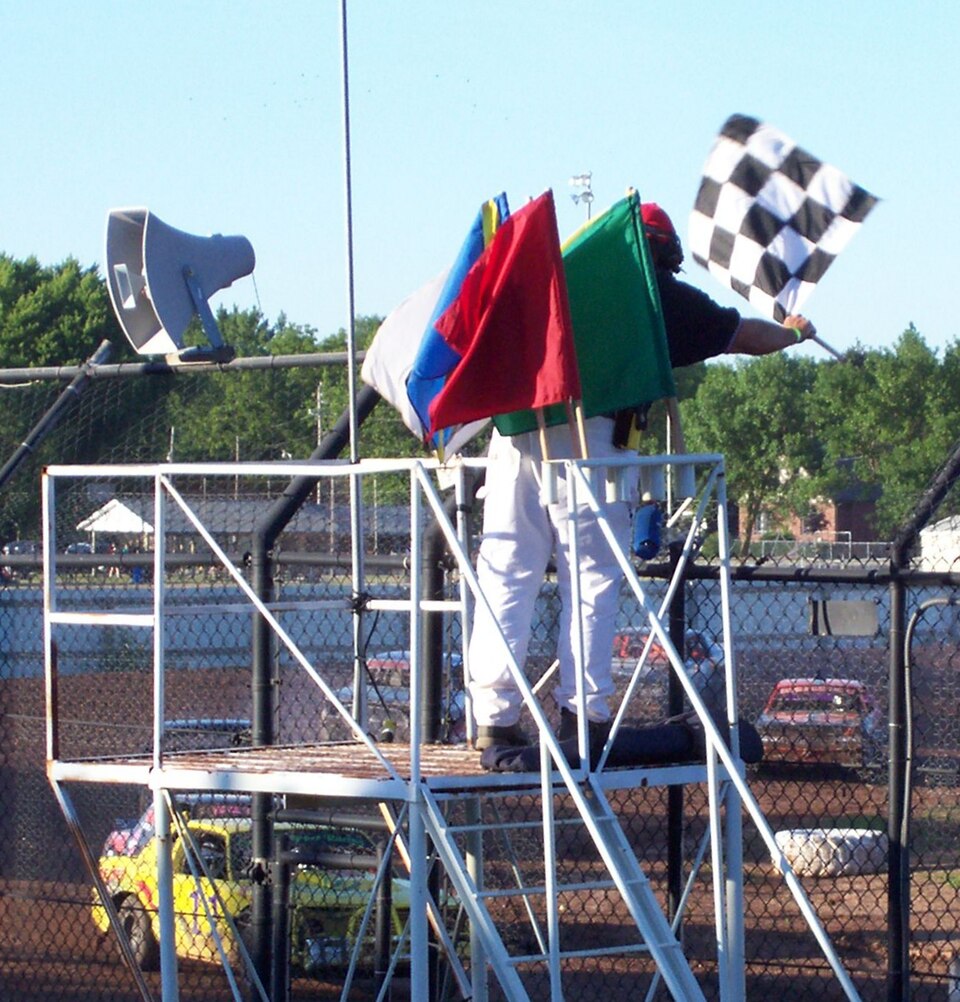
- Definition: A green flag signifies that the racing track is clear of hazards and conditions are safe for normal racing (formula1.com).
- Start Signal: It is used to start a race, practice session, or qualifying session. At the start, the green flag is waved by the starter at the start-finish line.
- Restart Signal: After a caution period (yellow flag), the green flag indicates that racing is resuming. Drivers may accelerate and overtake once again.
- Driver Responsibility: Upon seeing the green flag, drivers must immediately resume racing speeds, but they must still adhere to track limits and other regulations.
- Digital Integration: In 2026, digital panels around the track display a green light with equal authority, ensuring drivers receive the signal even if the physical flag is not visible.
- Strategic Considerations: Teams often use the green flag restart to implement strategic moves, such as overtaking on the inside line or defending positions. Tire temperature and fuel load are critical factors in deciding when to push.
The green flag is the most straightforward signal in racing, but its proper interpretation is crucial. Drivers must balance the urgency to gain positions with the need to avoid unnecessary risks immediately after the flag is shown. Teams often strategize about when to push hard after a restart, considering tire temperatures and fuel loads.
Tire compound selection plays a key role in these strategies (see Formula 1 tire compound strategy). In 2026, with digital panels now official, drivers must also monitor these electronic displays for the green signal, especially on circuits where physical flags might be obscured. Failure to recognize the green flag promptly can result in lost positions or penalties for not respecting the restart.
Moreover, drivers must be aware of track conditions after a restart, as tires may be cold and grip low, increasing the risk of incidents if they accelerate too aggressively. The green flag also signals the end of a formation lap in some series, so drivers must be prepared for the sudden increase in pace.
Yellow Flags: Single Waved vs Double Waved
- Single Waved Yellow: Indicates a hazard on or near the track (silverstone.co.uk, formula1.com). Drivers must slow down, no overtaking is allowed, and they must be prepared for changes in direction or track conditions.
-
Double Waved Yellow: Indicates increased danger, with a hazard blocking the track and marshals present (formula1.com).
Drivers must significantly reduce speed, no overtaking, and be prepared to stop if necessary.
- Speed Reduction: Under single yellow, drivers should reduce speed enough to avoid an incident if a stopped car is ahead. Under double yellow, speed must be reduced to a level where the driver can stop immediately if needed.
- Overtaking Prohibition: Both single and double waved yellows prohibit overtaking. However, double yellow imposes stricter speed requirements.
-
Local vs.
Full-Course Caution:
Single yellow typically covers a local zone, while double yellow may indicate a larger sector or the entire track if conditions are severe.
Distinguishing between single and double waved yellows is critical for driver safety. A single waved yellow warns of a potential hazard that drivers might navigate around with caution.
A double waved yellow signals that the track is obstructed and marshals are working, requiring drivers to be ready to stop. In 2026, the requirement to prove sufficient slowing under yellow adds pressure on drivers to demonstrate compliance via telemetry. In qualifying, any yellow flag means the driver must abandon their lap, as any lap completed under yellow is invalid under the Bearman Rule.
This encourages drivers to slow down immediately rather than risk completing a fast lap that will be nullified. Stewards now use detailed telemetry data to verify speed reductions, a technology also used in power unit monitoring (see Formula 1 power unit technology). Drivers must also be aware that double waved yellows often indicate a more severe hazard, such as a car blocking the track or marshals on the circuit, requiring a more significant speed reduction.
The distinction between local and full-course yellows is important; a single yellow may cover only a specific corner, while a double yellow could extend across multiple sectors. Some series also use a yellow flag with a red stripe to indicate oil or fluid on the track, further complicating the driver’s response.
Red Flag: Session Stopped and Bearman Rule Impact
- Red Flag Meaning: A red flag indicates a serious incident, severe weather, or a blocked track that requires immediate cessation of racing (formula1.com, hendrickmotorsports.com).
- Driver Procedure: Upon seeing the red flag, drivers must immediately cease racing, reduce speed significantly, and return slowly to the pit lane. They must follow the directions of marshals and not overtake.
- Bearman Rule (2026): Any lap completed after a red flag is first displayed is invalid (f1i.com, formula1.com). This applies to both qualifying and the race. Drivers must be aware that if a red flag comes out during their lap, that lap will not count.
- Strategic Impact: The Bearman Rule changes qualifying strategy. Drivers may push harder early in the lap, knowing that if a red flag appears, they will lose that lap. It also affects race strategy, as drivers might conserve fuel or tires before a potential red flag.
- Session Resumption: After a red flag, the session may resume with a restart procedure, often with a formation lap and a rolling start or standing start depending on the series.
- Communication with Team: During a red flag, drivers may communicate with their team via radio to receive updates on the situation and expected restart time.
The red flag is the most severe flag, halting all on-track activity.
The 2026 Bearman Rule, named after driver Oliver Bearman, adds a critical strategic layer: any lap completed after the red flag’s first display is void. This means drivers in qualifying must now decide whether to abort a lap if they see a red flag, as continuing would waste time and tires. In races, the rule prevents drivers from gaining an advantage by completing a lap after a serious incident.
Teams must now factor in the possibility of red flags when planning pit stops and tire changes. The rule emphasizes safety over competition, ensuring that drivers do not take unnecessary risks when a serious hazard exists.
The Bearman Rule affects both qualifying and race sessions, including sprint races which have distinct formats (see Formula 1 sprint race format). Additionally, red flags can disrupt fuel strategies, as cars must return to pits and may not be able to refuel under certain conditions, adding another layer of complexity to team planning.
Checkered Flag: Race Conclusion Protocol
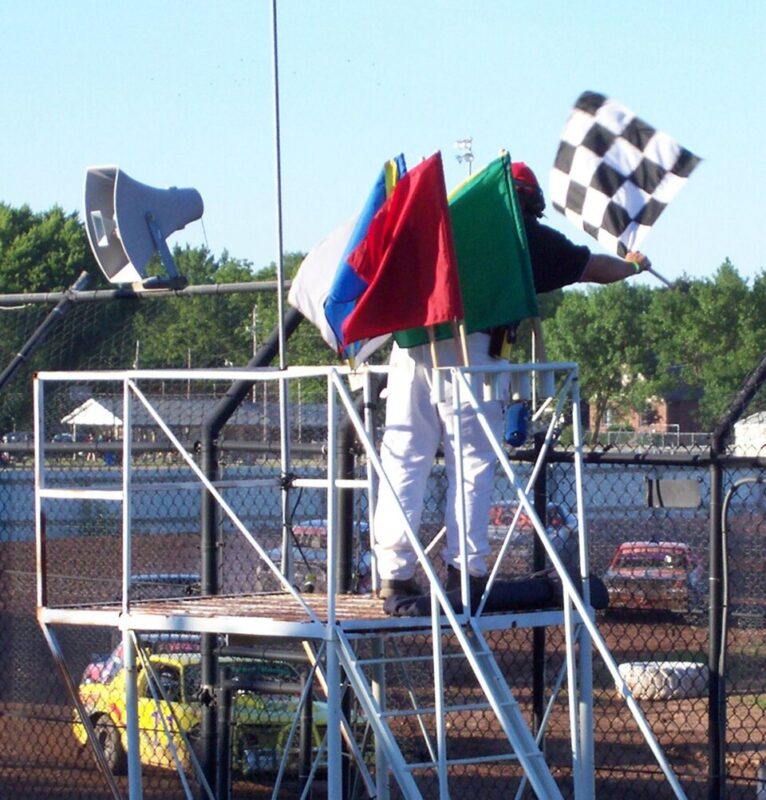
- Checkered Flag Meaning: The checkered flag signifies the end of a session or race (formula1.com). It is a black and white checkered pattern.
- End of Race: In a race, the checkered flag is waved at the start-finish line as the leader completes the final lap, indicating the race is over.
- End of Session: In practice and qualifying, the checkered flag may be shown to indicate the end of the session, especially if it ends early due to weather or incidents.
- Driver Action: Upon seeing the checkered flag, drivers must slow down and return to the pits. They should not continue racing and must follow any post-session procedures.
- Halfway Point (NASCAR): In NASCAR, two checkered flags may be displayed at the halfway point of a race, but this is not standard in other series.
The checkered flag is the iconic symbol of race completion. Drivers must immediately slow down and head to the pits, as continuing at racing speeds after the checkered flag can result in penalties.
In Formula 1, the checkered flag is shown at the end of the final lap, and the race officially ends when the leader crosses the line. In NASCAR, the two-checkered flag at halfway is a tradition that signals the race is halfway completed, but the race continues. Understanding the checkered flag protocol is essential to avoid post-race penalties and to ensure a safe conclusion to the event.
Some series also use a checkered flag to indicate the end of a qualifying session, meaning drivers must abandon any flying laps and return to pits. Failure to heed the checkered flag can lead to disqualification or fines, especially if a driver continues to race and causes an incident after the session has ended.
2026 Flag Rule Updates: Digital Panels, Code 60, and Compliance
Digital Flag Panels Now Official
In 2026, the FIA officially recognized digital flag panels as equivalent to traditional physical flags (formula1.com). This change means that the electronic lights installed around the track, which display colored signals, have the same authority as a marshal waving a flag. The integration of digital panels improves visibility, especially in poor weather conditions or on circuits where certain flag stations are not easily visible to drivers.
It also allows for more consistent signaling, as digital panels can be synchronized and controlled centrally. For drivers, this means they must now monitor both physical flags and digital displays simultaneously, adding another element to their situational awareness. Teams have adapted by integrating digital panel data into their communication systems, ensuring drivers receive immediate alerts when a flag is displayed digitally.
This technological advancement reflects the broader trend of digitalization in motorsport, enhancing safety without sacrificing the traditional flag system’s reliability. This change is part of the broader technical updates for 2026, which are detailed in the Formula 1 technical regulations guide. The shift to digital also supports the use of data analytics, as each panel activation can be logged and reviewed for accuracy and timing, reducing human error in flag communication.
Yellow Flag Compliance: Proving Slowed Sufficiently
Starting in 2026, drivers must be able to prove they slowed sufficiently under yellow flag conditions (formula1.com). This new requirement addresses previous inconsistencies where drivers might claim they slowed but telemetry showed otherwise. Stewards now use detailed telemetry data to verify that drivers reduced speed by an appropriate margin when a yellow flag was displayed.
In qualifying sessions, the rule is even stricter: drivers must abandon their lap immediately upon seeing a yellow flag. Any lap completed under yellow is invalid, as per the Bearman Rule extension. This change forces drivers to prioritize safety over lap times, as attempting to complete a fast lap under yellow risks both penalty and lap invalidation.
The impact on driver decision-making is significant; they must now react instantly to yellow flags, even if it means sacrificing a potentially good lap. Teams have responded by training drivers to recognize yellow flags earlier and by developing strategies that account for potential yellow interruptions during qualifying.
The verification process often involves comparing the driver’s speed in the yellow zone to their speed in the previous green-flag lap, ensuring a meaningful reduction. This rule also applies during races, where drivers must demonstrate they lifted off the throttle and did not maintain racing speed through a yellow zone.
Code 60 vs Regular Yellow: Speed Limit Comparison
| Aspect | Regular Yellow | Code 60 |
|---|---|---|
| Speed limit | No specific speed limit, but drivers must slow down significantly and be prepared to stop. | Strict 60 kph speed limit enforced. |
| Flag/panel indication | Waved yellow flag or yellow flashing lights. | Purple flag or panel with a white ’60’ circle. |
| Enforcement method | Stewards review telemetry and driver behavior; penalties for non-compliance. | Automatic speed monitoring via track sensors; immediate penalties for exceeding 60 kph. |
| Typical scenario | Local hazard on or near track, such as a stranded car or debris. | Severe incident requiring extensive recovery, often with marshals on track blocking multiple corners. |
Code 60 represents a stricter protocol than the regular yellow flag, imposing a mandatory speed limit of 60 kilometers per hour.
This is used in severe incidents where marshals are working on track and the risk of collision is high. The purple flag or digital panel with a white ’60’ circle clearly communicates this requirement. Unlike regular yellow, where drivers have discretion on how much to slow down, Code 60 demands exact compliance, monitored by track sensors.
This reduces ambiguity and enhances safety during major recoveries. The introduction of Code 60 in recent years, now formalized in 2026 regulations, reflects the FIA’s emphasis on precise speed control in high-risk situations. Drivers must be particularly vigilant for Code 60 signals, as exceeding the speed limit even slightly can result in severe penalties, including race bans.
Code 60 is often used in conjunction with a double yellow flag, but the speed limit is the primary enforcement mechanism. Some series also use a Code 60 to manage slow zones during events like the 24 Hours of Le Mans, where specific track sections require reduced speed for extended periods.
The Bearman Rule: Invalidating Laps After Red Flag
The Bearman Rule, introduced by the FIA in 2026, stipulates that any lap completed after a red flag is first displayed is invalid (f1i.com, formula1.com). This rule applies to both qualifying and the race. It is named after Oliver Bearman, whose incident in 2025 highlighted the need for clearer guidelines on lap validity during red flags.
Under the rule, if a red flag emerges while a driver is on a flying lap, that lap will not count toward their qualifying time. In races, any lap completed after the red flag is shown is removed from the total, affecting fuel calculations and strategy. The strategic implications are profound: drivers in qualifying must now decide whether to push for a fast lap early, risking a red flag that would waste the lap, or to conserve resources.
Teams must also adjust their race strategies, as a red flag can nullify a lap that included a pit stop or tire change, requiring careful planning. The Bearman Rule underscores the primacy of safety, ensuring that drivers do not attempt to complete laps in dangerous conditions.
It also interacts with other rules, such as the requirement to abandon a lap under yellow, creating a complex decision matrix for drivers during qualifying sessions. The rule has been praised for preventing drivers from taking undue risks when a serious incident occurs, but it has also sparked debate about its impact on qualifying excitement.
Specialized Flags and Penalty Consequences

Blue Flags: Yielding to Faster Lapping Cars
- Blue Flag Meaning: A blue flag indicates that a faster car is attempting to lap the driver (bestflag.com). The driver must allow the faster vehicle to pass at the earliest safe opportunity.
- When Shown: Blue flags are typically shown to drivers who are one or more laps down, to inform them that the race leader or a faster car is approaching.
- Penalty for Ignoring: Ignoring three consecutive blue flags results in a penalty, usually a drive-through penalty or a time penalty added to the driver’s total (formula1.com).
- Blue Flag with Yellow Stripe (NASCAR): In NASCAR, a blue flag with a yellow stripe indicates that leaders or lead-lap cars are approaching. Drivers should move over or drive with courtesy to allow passage (hendrickmotorsports.com).
- Strategic Consideration: Drivers must balance yielding to faster cars with maintaining their own race pace. Deliberately ignoring blue flags to hold up opponents can lead to severe penalties.
Blue flags are essential for maintaining race flow and preventing faster cars from losing time due to slower traffic. The requirement to yield within a specified number of laps is strictly enforced. In Formula 1, stewards monitor blue flag compliance closely, and penalties are common for violations.
The blue flag with yellow stripe in NASCAR serves a similar purpose but is more of a courtesy signal, as NASCAR does not have a strict three-strike rule. However, ignoring it can still lead to penalties if deemed unsportsmanlike. Drivers must be aware of the different interpretations across series to avoid infractions.
In some series, blue flags are also used to indicate that a car is about to be lapped by the race leader, and the slower car must not impede the leader’s progress. The enforcement of blue flags has become more rigorous with the advent of digital tracking systems, allowing stewards to precisely monitor when a driver first saw the flag and when they yielded.
Black/Orange Flag: Mechanical Issues Requiring Pit Stop
- Black/Orange Flag Meaning: The black flag with an orange disc (often called the “meatball” flag) indicates that a car has a serious mechanical problem or damage that poses a danger to others (formula1.com).
- Required Action: The driver must immediately return to the pit garage for repairs. The car is not allowed to continue racing until the issue is fixed and the car is reinspected.
- Consequence of Ignoring: Ignoring the black/orange flag leads to disqualification from the race (hendrickmotorsports.com). The driver may also face additional sanctions.
-
Black Flag with White Number: A black flag with a white number identifies a specific driver who must pit, usually due to an infraction or failing to meet minimum speed requirements.
Failure to comply can also result in disqualification.
- Black Flag Alone: A plain black flag signifies disqualification. The driver must exit the track immediately and return to the pits.
The black/orange flag is a serious warning that a car is potentially hazardous. Unlike the black flag that disqualifies a driver for behavioral issues, the black/orange flag is about mechanical safety. Teams often monitor their cars’ telemetry to detect issues before the flag is shown, but if the flag is displayed, immediate pit entry is mandatory.
The disqualification penalty for ignoring it underscores the importance of safety. In NASCAR, similar flags exist, but the black flag with orange disc is not used; instead, they have a black flag with a white cross for mechanical issues? Actually, from research, NASCAR uses red with yellow stripe for pit road closed, etc.
But the black/orange is more F1. I’ll stick to the facts given.
The black/orange flag is often displayed when a car has a loose bodywork, fluid leak, or other damage that could endanger other competitors. Teams may also receive a black/orange flag if their car fails to meet technical regulations during post-race inspections, though that typically results in disqualification after the race.
NASCAR-Specific Flag Variations
- Blue with Yellow Stripe: Indicates that leaders or lead-lap cars are approaching. Drivers should yield or drive courteously to allow passage (hendrickmotorsports.com).
-
Red with Yellow Stripe: Signals that pit road is closed.
This flag is withdrawn when all cars are lined up behind the pace car and caution conditions commence.
- Two Checkered Flags: Displayed at the halfway point of a race, signifying that the event has reached its midpoint. This is a tradition unique to NASCAR.
- Green-White-Checkered Finish: If a caution occurs in the final two laps, NASCAR may attempt a two-lap green flag finish. This involves up to three attempts if further cautions occur, ensuring a competitive finish under green conditions.
- Other NASCAR Flags: NASCAR also uses standard red, yellow, and green flags, but with some variations in meaning compared to international series.
NASCAR’s flag system includes unique variations that reflect its oval racing culture. The blue with yellow stripe is a courtesy signal rather than a mandatory yield, but ignoring it can still lead to penalties if it impedes leaders. The red with yellow stripe for pit road closure is critical during cautions, as violating it can result in severe penalties.
The green-white-checkered finish adds excitement by ensuring a green-flag finish, but it can also extend the race beyond its scheduled distance. These nuances require drivers and teams to be specifically trained for NASCAR events, as flag meanings can differ from those in Formula 1 or other series. NASCAR’s pit stop strategies are heavily influenced by these flag conditions (see NASCAR pit stop strategies).
For example, the green-white-checkered finish often forces teams to adjust their fuel calculations and tire choices, as the race may end under green after a late caution. The two-checkered flag at halfway is largely ceremonial but still requires drivers to acknowledge the session’s progress.
Penalty Escalation: From Time Penalties to Disqualification
Flag violations are penalized based on severity and series regulations. In Formula 1, ignoring a blue flag typically results in a drive-through penalty or a time penalty added to the driver’s race time (formula1.com). Repeated offenses can lead to grid penalties or additional sanctions.
Ignoring a black flag, which orders a driver to pit or disqualified, results in immediate disqualification (hendrickmotorsports.com). The stewards enforce these penalties during the race, and teams have the right to appeal through the FIA’s judicial system. In NASCAR, penalties for flag violations are similarly strict, with penalties ranging from pass-through penalties to disqualification, depending on the infraction.
The escalation ensures that drivers take flag signals seriously, as the consequences can significantly impact championship points and race results. Teams often train drivers extensively on flag protocols to avoid such penalties, recognizing that a single violation can cost a victory or championship contention. Penalties for flag violations can impact championship points, similar to how financial penalties under the budget cap affect team standings (see Formula 1 budget cap).
The appeals process varies by series but generally involves a review of telemetry and marshal reports. In some cases, penalties may be reduced if the driver can demonstrate extenuating circumstances, such as a technical failure that prevented them from seeing the flag.
Most surprising finding: Digital panels now have equal status to physical flags, fundamentally changing how drivers must monitor track conditions. This technological shift requires drivers to split their attention between traditional flag stations and electronic displays, especially on modern circuits. Action step: Review your team’s flag recognition protocol to ensure digital panels are integrated into your communication system and drivers are trained to respond to them instantly.
Conduct regular drills to simulate digital flag scenarios and update your telemetry monitoring to include digital panel signals. This proactive approach will enhance safety and competitive compliance in the 2026 season and beyond. This knowledge is vital for anyone involved in professional racing, from drivers to engineers (see professional racing guide).
