
Sarah Moore’s 18-year professional racing career is defined by historic firsts: she became the first female to win the Ginetta Junior Championship in 2009 and the first woman to win the Britcar Endurance Championship overall in 2018. Her deep, practical racing knowledge comes from competing under various sanctioning bodies, including TOCA and the FIA, giving her a firsthand understanding of how race control procedures function in practice. This article examines how her on-track experience translates into a masterclass in navigating stewards’ decisions, incident investigations, and penalty protocols—knowledge she now passes on as an ARDS Grade A instructor and coach.
- Sarah Moore’s 18-year professional racing career includes historic firsts (first female Ginetta Junior champion, first woman to win Britcar Endurance) that required deep understanding of race control procedures across different series.
- As an ARDS Grade A instructor and More Than Equal coach, she actively teaches racing regulations, incident management, and penalty navigation to emerging drivers.
- Her 2021 podium at the British Grand Prix support race demonstrates how top drivers must excel under the intense scrutiny of F1-level race control.
How Does Sarah Moore’s Racing Knowledge Inform Her Understanding of Race Control Procedures?
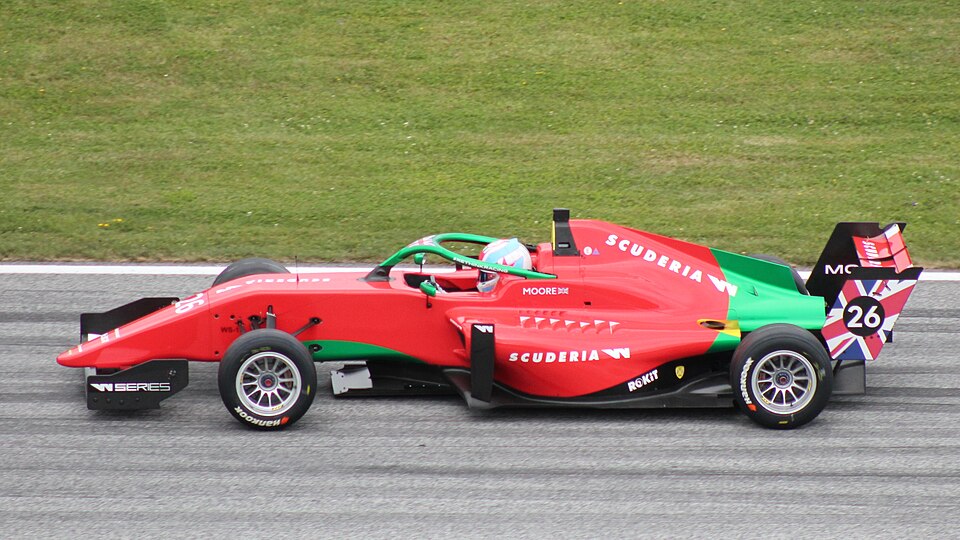
Sarah Moore’s expertise in race control procedures is not theoretical; it is forged from thousands of racing laps across multiple disciplines. Competing in series governed by different rulebooks—from the TOCA-sanctioned Ginetta Junior Championship to the FIA-aligned W Series and the complex endurance format of Britcar—required her to internalize distinct procedural frameworks.
Her success proves that mastering race control protocols is as critical as driving skill for any professional racer. This section details how her earliest and most demanding victories were achieved through procedural excellence.
2009 Ginetta Junior Championship: First Female Winner in TOCA-Sanctioned Racing
- Historic Achievement: In 2009, Sarah Moore became the first female to win the Ginetta Junior Championship, a junior mixed-gender national-level series in the UK (source: nationalmotormuseum.org.uk, 2025).
- Sanctioning Body Significance: This victory made her the first female to win a TOCA-sanctioned race. TOCA (The Organisation for the Touring Car Championship) is the primary governing body for UK touring car series, establishing strict sporting and technical regulations.
- Early Mastery of Procedures: Success in this highly competitive, single-make series from a young age required meticulous adherence to race control procedures. Drivers must consistently navigate track limit enforcement, penalty points systems, and post-race incident investigations. Moore’s championship was built on clean, consistent racing that avoided stewards’ penalties.
- Foundation for Professional Racing: The Ginetta Junior Championship serves as a critical proving ground. Its procedures mirror those in higher formulas, teaching drivers how to contest results, understand sporting codes, and communicate with race officials under pressure.
Winning this series demonstrated Moore’s ability to perform within a rigid regulatory structure.
The TOCA framework emphasizes consistent compliance, and a champion must rarely, if ever, invoke the right to appeal a penalty. This early discipline laid the groundwork for her later endurance and single-seater successes, where procedural infractions are equally costly.
2018 Britcar Endurance Championship: Overall Victory in a Demanding Endurance Format
The Britcar Endurance Championship presents a far more complex procedural landscape than sprint racing. Races last 2-4 hours, involving mandatory driver changes, minimum and maximum stint times, and specific fuel/tyre regulations.
Race control procedures here are multifaceted, monitoring not just on-track conduct but also precise compliance with pit lane protocols and driver rotation schedules. A time penalty for a procedural breach—such as an early driver change or exceeding maximum stint time—can ruin a race strategy.
Sarah Moore’s overall victory in 2018 as the first woman highlighted her team’s procedural expertise. Winning an endurance championship requires flawless execution of the sporting regulations over an entire season.
This includes navigating incident investigations during the race, where stewards may impose drive-through penalties for contact or track limits violations that disrupt the delicate strategy. Moore’s consistency under this intricate system showcases a comprehensive understanding of race control that goes beyond pure pace—it is about operational perfection under the constant scrutiny of officials.
Pioneering Female Driver: Navigating Race Control in Male-Dominated Series
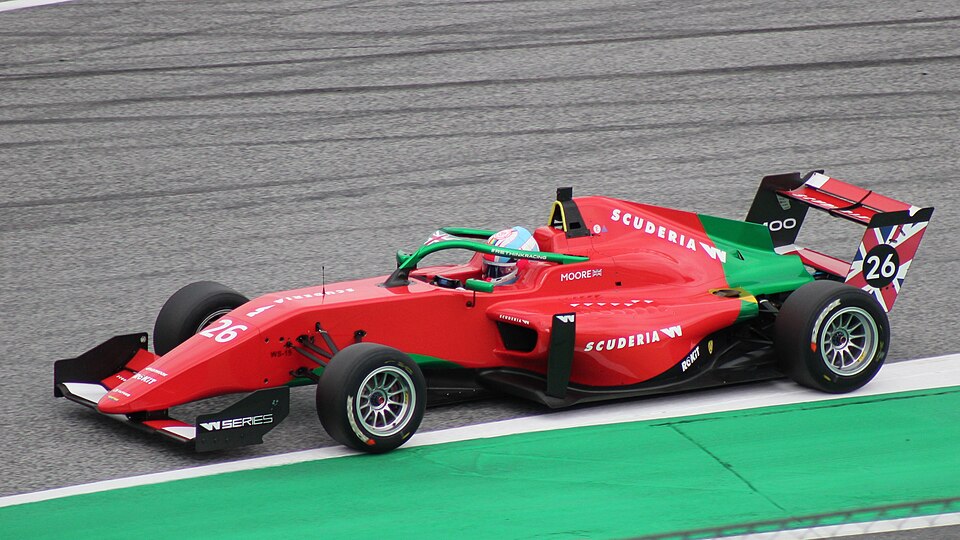
As a pioneering woman in a historically male-dominated sport, Sarah Moore’s interactions with race control carried an additional layer of visibility. Her career demonstrates that procedural knowledge is a powerful tool for ensuring fair treatment and building credibility. In series where she was often the only woman, any perceived procedural misstep could be magnified.
Conversely, a impeccable disciplinary record became a statement of professionalism. Her journey through W Series and her milestone F1 support race podium illustrate how top drivers must combine speed with a sophisticated grasp of stewarding.
W Series 2019-2022: Consistent Performance Under Professional Stewards
| Year | Final Championship Position | Notable Results |
|---|---|---|
| 2019 (Inaugural) | 8th | Multiple podium finishes |
| 2020 | Season cancelled due to pandemic | N/A |
| 2021 | 5th | Race win at Spielberg |
| 2022 | 11th | Multiple top-5 finishes |
The W Series operated under a strict FIA sporting code, employing professional stewards and deploying the same incident investigation protocols as Formula 1. For a driver, this means every on-track incident is reviewed, and penalties—from time additions to grid drops—are applied consistently based on video evidence and steward deliberation.
Moore’s ability to secure multiple race wins and a best championship finish of 5th in 2021 while maintaining a clean record speaks to her ability to race hard but fairly within the boundaries set by race control. Her 8th place in the highly competitive inaugural 2019 season established her as a driver who could deliver results without attracting negative stewarding attention, a crucial reputation in any series.
2021 British Grand Prix Podium: Historic LGBTQ+ Milestone Under F1 Scrutiny
The 2021 British Grand Prix support race at Silverstone represented the pinnacle of scrutiny for Sarah Moore. As the first openly LGBTQ+ driver to stand on a Formula 1 Grand Prix weekend podium, she did so under the full operational framework of F1 race control.
The procedures at an F1 event are the most rigorous in motorsport: real-time stewarding panels, extensive radio communication with drivers, and post-race investigations that can alter final results days later. The pressure is immense, with every move analyzed by millions.
Moore’s podium finish was a testament to her ability to perform flawlessly under this microscope. It required not only race-winning pace but an absolute mastery of the unspoken rules and explicit regulations that govern such high-profile events.
A single avoidable incident or procedural error—like an unsafe release in the pits or a track limits violation—would have overshadowed the historic nature of her achievement. Her conduct that weekend demonstrated that procedural intelligence is inseparable from competitive success at the highest levels of professional racing.
Racing Pride Ambassador: Championing Inclusive Race Control Environments
Sarah Moore’s role as a Racing Pride ambassador connects directly to the integrity of race control procedures. Inclusive environments ensure that all drivers are subject to the same procedural standards and receive equitable treatment from stewards.
A non-inclusive environment can create unconscious bias in incident investigation or penalty severity, undermining the core principle of fair competition. Moore’s advocacy promotes systems where decisions are based solely on the sporting code, not on a driver’s identity.
The impact is tangible. Series with strong inclusion initiatives, like those supported by Racing Pride, see higher driver trust in race control decisions. This leads to fewer appeals, better acceptance of penalties, and a healthier sporting culture.
Conversely, environments where drivers from underrepresented groups feel unfairly targeted or ignored by procedures suffer from reputational damage and internal conflict. Moore’s work champions the idea that true professionalism in race control means impartial application of the rules to every competitor, a standard that elevates the entire series.
Coaching the Future: Teaching Race Control Procedures to Next-Gen Drivers
Sarah Moore’s current focus on coaching represents the formal transfer of her procedural knowledge. Her certifications and roles allow her to teach the next generation not just how to drive fast, but how to navigate the complex ecosystem of race control that defines a sustainable career. This education is critical; many talented drivers falter not due to lack of speed, but due to repeated procedural errors—track limits, pit lane infringements, or poor incident management—that accumulate penalties and damage relationships with officials.
ARDS Grade A Instructor: Certified Expertise in Racing Regulations and Safety
- Highest Certification: The ARDS (Association of Racing Drivers Schools) Grade A instructor certification is the highest level offered in the UK. It requires candidates to demonstrate exceptional driving skill, a comprehensive understanding of the FIA and national sporting codes, and the ability to teach advanced car control and racecraft (source: sarahmooreracing.com).
-
Curriculum Scope: Grade A instructors are qualified to teach all aspects of race control procedures.
This includes detailed instruction on track limits as defined by series-specific regulations, the process and consequences of penalty application (drive-throughs, time penalties, grid drops), and safety protocols like the use of safety cars and virtual safety cars.
- Assessment Rigor: The certification process involves rigorous written exams on the FIA International Sporting Code and practical assessments where candidates must demonstrate correct procedures in simulated race scenarios, including incident response and communication with race control.
-
Application: Moore uses this certification to coach drivers privately and for Open Track Events and Supercar Driving Experience days.
In these settings, she teaches enthusiasts and aspiring professionals the procedural boundaries of track days and racing, emphasizing that understanding the rules is as important as lap time.
Holding an ARDS Grade A license means Moore is an authority on the very regulations that govern race control.
She can deconstruct complex stewarding decisions for her students, explaining the “why” behind penalties and how to avoid them. This moves coaching beyond instinct to a structured, rule-based approach.
More Than Equal and Elite Motorsport: Developing Drivers’ Procedural Knowledge Since 2024
Since 2024, Sarah Moore has integrated her procedural expertise into two key development roles. With the More Than Equal programme, she coaches female drivers, a group historically underrepresented in formal regulatory education. Here, she focuses on building their confidence and competence in dealing with race control, ensuring they can advocate for themselves professionally and avoid the pitfalls that can derail a career.
Simultaneously, her engineering and coaching role with Elite Motorsport in the GB4 Championship blends technical analysis with procedural teaching. The GB4 Championship is a competitive UK single-seater series with strict technical regulations and sporting codes. Moore works with young talents, analyzing data not just for speed but for compliance—identifying moments where a driver might have exceeded track limits or executed an unsafe overtake.
She integrates the technical engineering perspective (car setup, tyre management) with the procedural reality (how stewards will view a specific move). This holistic approach produces drivers who are complete racers, equally adept at extracting car performance and navigating the stewarding environment.
The most surprising insight from Sarah Moore’s career is how deeply racing knowledge intertwines with race control procedures. Her pioneering wins were not just about being the fastest; they were about being the most procedurally flawless. Her transition to coaching, backed by the prestigious ARDS Grade A certification, formalizes this expertise.
For any aspiring driver, the lesson is clear: mastering the rulebook is a non-negotiable component of professional racing. The specific action step is to seek out coaching from ARDS-certified instructors who can translate stewarding decisions into actionable driving improvements, building the procedural resilience that defines champions.
