
Formula 1 racing strategy in 2026 is undergoing a significant transformation, with women occupying influential roles that directly shape race-winning decisions. Hannah Schmitz serves as Head of Race Strategy for the dominant Red Bull Racing team, a position of immense responsibility where data analysis and real-time tactical calls determine podium finishes.
Her impact is formally recognized at the Australian Grand Prix, where Turn 6 is named in her honor. Simultaneously, former driver Sarah Moore is developing the next generation of strategic talent as a coach with More Than Equal, focusing on the strategic thinking and racecraft essential for modern F1 success.
- Women are increasingly occupying senior strategy roles in F1, exemplified by Hannah Schmitz as Red Bull’s Head of Race Strategy, with Turn 6 at the Australian GP named in her honor.
- Sarah Moore’s coaching with More Than Equal focuses on developing strategic thinking in female drivers, aiming to produce the first female F1 champion.
- Sarah Moore’s historic achievements, including being the first female winner of the Britcar Endurance Championship (2018), demonstrate the strategic acumen needed for success in professional racing.
How Women Are Redefining Formula 1 Racing Strategy in 2026
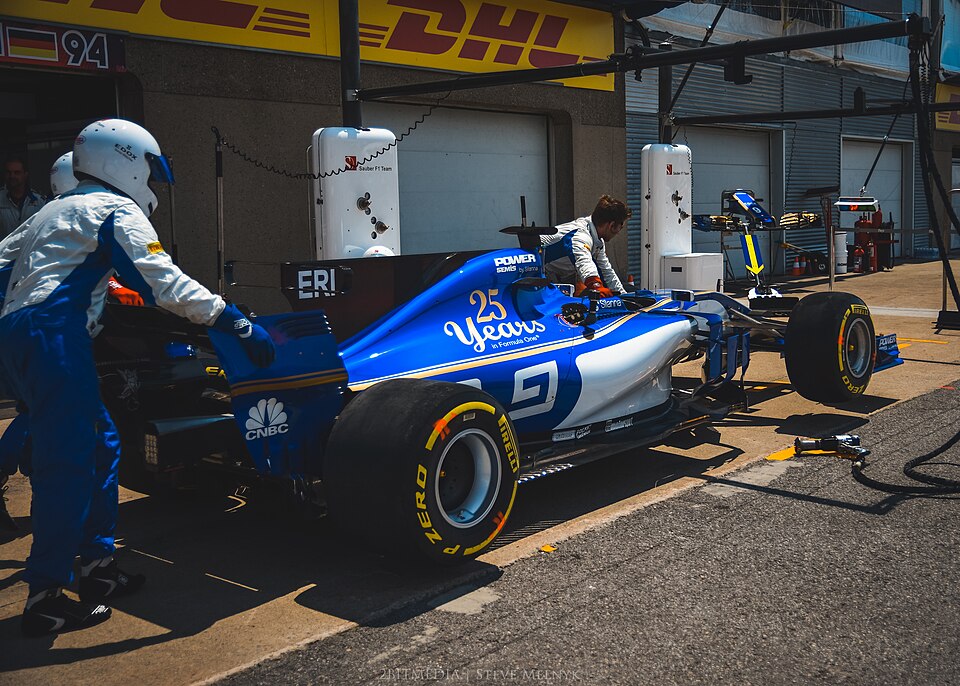
Hannah Schmitz: Leading Red Bull’s Race Strategy in 2026
Hannah Schmitz holds the pivotal role of Head of Race Strategy for Red Bull Racing, the team that has dominated recent Formula 1 championships. In this capacity, she leads the team of strategists who analyze live telemetry, tire degradation models, and competitor positions to make split-second calls on pit stop timing, tire compound selection, and driver instructions. Her work is the epitome of 2026 F1 strategy, shaped by 2026 technical regulations updates, where milliseconds gained through optimal decision-making can secure race victories.
The significance of her contribution was formally celebrated when Turn 6 at the Melbourne Grand Prix Circuit was named after her in 2025, a permanent honor recognizing her strategic mastery on that critical corner. This naming underscores how strategy roles, once behind-the-scenes, are now central to F1’s narrative and success.
Can Females Compete in Formula 1 Racing? The Strategic Advantage
- Adaptability and Consistency: Sarah Moore’s career, highlighted by her being the first and only female to win the Ginetta Junior Championship, showcases an ability to perform consistently across varying conditions—a core strategic skill for managing tire wear and race pace over a Grand Prix distance.
- Racecraft Under Pressure: Her achievement as the first female to win a TOCA-sanctioned race demonstrates precise racecraft, the ability to execute overtakes and defend positions—a direct translation to the strategic management of on-track battles that define F1 races.
- Mental Resilience: Making history as the first openly LGBTQ+ driver to podium at a Formula One Grand Prix race weekend in 2021 required exceptional mental fortitude to handle the pressure of a high-profile weekend, mirroring the stress of making a high-stakes strategy call that affects a team’s championship points.
- Data-Driven Decision Making: Modern F1 strategy is built on data interpretation. Moore’s transition from driver to coach and engineer with More Than Equal indicates a mindset aligned with analyzing performance data to optimize outcomes, a non-negotiable skill for any strategist in 2026.
- Long-Term Development Focus: Her work coaching young drivers emphasizes nurturing strategic thinking over pure speed, which is exactly what F1 teams need: drivers who can execute multi-lap strategies and adapt to evolving race conditions.
These attributes directly address the demands of 2026 F1, where strategy is less about instinct and more about predictive analytics, resource management (like the new power unit regulations), and seamless driver execution of complex plans.
Sarah Moore’s Racing Milestones: Building Strategic Expertise
Has a Woman Ever Driven in Formula 1? Understanding the Roles
No woman has started a Formula 1 Grand Prix race in the modern era, with the last being Lella Lombardi in 1976. However, women’s contributions to F1 strategy and success are profound and multifaceted.
Sarah Moore’s podium at a Formula One Grand Prix race weekend in 2021, achieved in a support series, demonstrates that female drivers can compete at the highest echelons of motorsport on the same tracks and under similar pressure. More directly, Hannah Schmitz’s role as Head of Race Strategy for Red Bull Racing proves that women are making the critical tactical decisions that determine race outcomes from the pit wall. These distinct paths—driver and strategist—both feed into the strategic ecosystem of F1.
Moore’s experience as a driver gives her unique insight into what strategies are feasible from the cockpit, while Schmitz’s analytical role shapes the plans executed by drivers. Together, they illustrate that influencing F1 strategy does not require a seat in the car; it requires deep expertise, which women are now cultivating in both domains.
Historic Firsts: The Achievements That Define a Trailblazer
- First female winner of the Britcar Endurance Championship (2018): Endurance racing strategy revolves around consistency, fuel management, and driver change efficiency. Winning this championship required Moore to master long-run pace and team coordination, skills directly transferable to managing a Grand Prix’s tire compounds and fuel loads.
- First openly LGBTQ+ driver to podium at a Formula One Grand Prix race weekend (2021): Achieving this in the high-pressure environment of an F1 support race, under global scrutiny, highlights the mental resilience needed to execute a race strategy flawlessly when it matters most.
- First female racing driver to win a TOCA-sanctioned race: TOCA (Touring Car Association) series are known for close, physical racing. Winning here proves excellence in racecraft—making strategic overtakes and defending positions—a microcosm of the tactical battles that define F1 race strategy.
-
First to win a junior mixed-gender, national-level series in the UK: This refers to her 2009 Ginetta Junior Championship win.
Succeeding against male competitors from a young age required not just speed but intelligent racecraft and the ability to adapt strategy mid-race, foundational skills for any top-tier strategist or driver.
- First and only female to win the Ginetta Junior Championship: This singular achievement in a highly competitive series underscores a pattern of strategic thinking and execution that has defined her entire career, from junior formulae to endurance racing.
Each “first” represents a different strategic challenge—from pure racecraft to endurance management to performing under unique pressures—collectively building a profile of strategic intelligence that Moore now imparts as a coach.
How Does More Than Equal Coach the Next Generation of F1 Strategists?
Driver Development Programme: Identifying Strategic Talent
- Primary Goal: The programme aims to systematically identify and develop female drivers with the potential to reach Formula 1, with the explicit long-term objective of nurturing the first female F1 champion.
- Sarah Moore’s Role: As a driver coach, Moore leverages her historic career—including her Ginetta Junior and Britcar titles—to mentor young female racers. Her role extends beyond teaching car control; it involves cultivating the strategic mindset required for modern racing.
- Talent Identification: The programme scouts for drivers who demonstrate not just raw speed but also intelligent racecraft, consistency, and the ability to learn from data—attributes Moore exemplifies. This focus on strategic aptitude aligns with what F1 teams seek in drivers who can execute complex race strategies.
- Holistic Development: Coaching covers racecraft, strategic decision-making (like tire management and overtake timing), and mental resilience. This mirrors the multi-faceted preparation needed to handle the strategic complexities of a 2026 F1 race, where driver input on tire feel and traffic management is critical to the team’s overall plan.
- Creating a Pipeline: By developing drivers with strong strategic foundations, More Than Equal aims to feed talent into F1 and other top series, changing the demographic landscape of the sport’s driver grid and, by extension, the pool of future strategists who often come from driving backgrounds.
Sarah Moore’s Coaching Philosophy: Strategic Thinking on Track
Sarah Moore’s coaching philosophy is rooted in translating her own strategic racing experience into teachable principles for the next generation. She focuses on moving drivers beyond simply “pushing for position” to understanding the holistic race as a strategic puzzle. This involves teaching drivers to analyze their own performance data, understand tire degradation curves, and communicate effectively with engineers—skills that are the bedrock of F1 strategy.
Her work with More Than Equal emphasizes that strategic thinking is not just for pit wall engineers; it is a driver’s essential toolkit. Moore instructs drivers to think several laps ahead, managing resource (tires, brakes, battery energy) with a focus on tire compound strategy and allocation to position themselves for a decisive move later in the race.
This approach directly mirrors the data-driven, long-term planning that defines a winning F1 strategy. By instilling this mindset early, she helps build drivers who can be active participants in their own race strategy, a quality highly valued by F1 teams in 2026.
The most surprising insight is that women are already architecting race-winning strategies in F1’s highest echelons, with Hannah Schmitz’s role at Red Bull being a prime example, yet their representation remains strikingly low. To support this shift, one actionable step is to engage with and promote initiatives like Sarah Moore Racing and More Than Equal, which are systematically developing female talent with the strategic acumen needed for top-level motorsport. As the 2026 season approaches, integrating this diverse strategic intelligence will be key to unlocking new levels of performance and competitive innovation in Formula 1.
Frequently Asked Questions About Formula 1 Racing Strategy 2026
Can females race in F1 with men?
Yes, women are allowed to compete in Formula 1. This equality enables women to contribute to strategy discussions, including the 2026 redefinition of racing strategy, as covered in the article's first section.
Has F1 ever had a female driver?
Since 1950, five women have entered F1 races, but only two qualified and started. This historical context highlights the progress toward women now redefining strategy in 2026, per the article.
Does Bianca Bustamante still race?
Bianca Bustamante signed to race in Eurocup-3 with Palou Motorsport in 2026. Her continued career exemplifies the pipeline of female talent being coached for strategic roles, as detailed in the More Than Equal section.
Why is Bianca Bustamante so popular?
Bianca Bustamante is a self-starting F1 Academy driver praised by drivers like Esteban Ocon, starting racing at age five. Her popularity stems from demonstrating strategic acumen, aligning with the article's theme of women redefining F1 strategy.
