
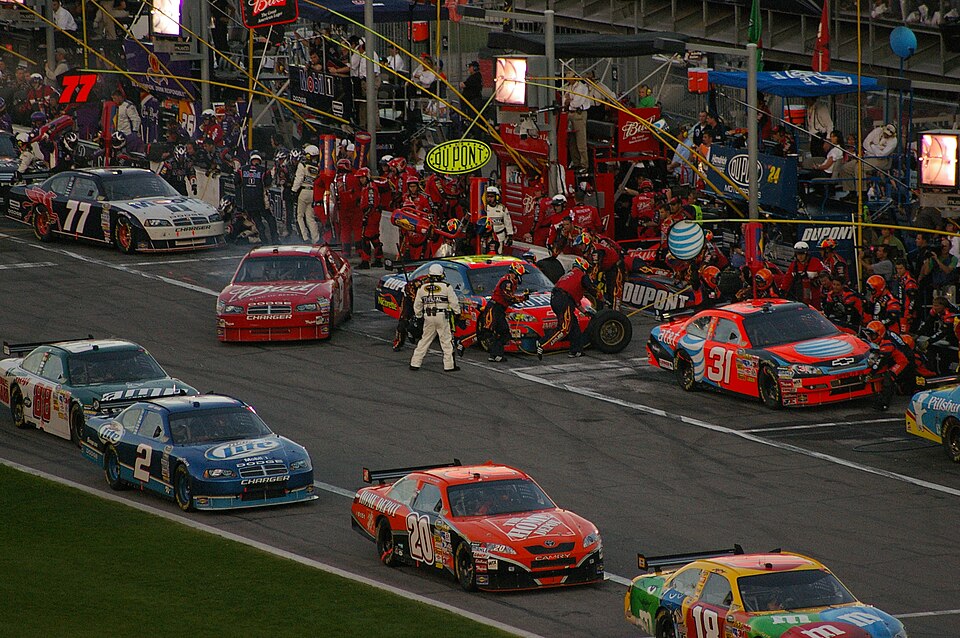
In 2026, NASCAR pit road speed limits typically range from 35 to 55 mph at most tracks, with Atlanta Motor Speedway being the exception, featuring dual zones of 90 mph on entry and 45 mph in the pit area under green flag conditions. These limits are enforced through electronic timing loops positioned at the entry and exit yellow lines, measuring the average speed of each car. Drivers are allowed a tolerance of approximately 5 mph over the posted limit before a penalty is assessed.
The rules, implemented in April 1991 following the tragic death of crew member Mike Rich at the 1990 Atlanta Journal 500, have since eliminated fatalities from speeding cars on pit road. This guide explains how these limits are determined, the technology behind enforcement, the penalties for violations, and the techniques drivers use to navigate pit road both efficiently and safely.
- NASCAR pit road speed limits in 2026 range from 35 to 55 mph at most tracks, with Atlanta featuring dual zones (90 mph entry, 45 mph pit area).
- Enforcement uses electronic timing loops; drivers rely on tachometers and dashboard lights (yellow=approach, red=over) with a ~5 mph tolerance before penalty.
- Speeding results in a pass-through penalty; since 1991, no crew fatalities have occurred from speeding cars.
What Are the NASCAR Pit Road Speed Limits and How Are They Enforced?
How Speed Limits Are Set: Track-Specific Limits from NASCAR’s 2026 Racetrack Specifications
NASCAR establishes pit road speed limits for each event based on the 2026 Racetrack Specifications published by Jayski.com. These specifications are updated annually and reflect the unique characteristics of each track. For the 2026 season, the typical speed limit ranges from 35 to 55 mph, depending on the track’s size and configuration.
All tracks use a single, uniform limit across the entire pit road, with one notable exception: Atlanta Motor Speedway, which employs a dual-zone system. The specifications detail the exact speed limit for each race, ensuring teams have clear guidelines before arriving at the track.
The limits are determined by NASCAR in consultation with track officials, considering factors such as pit road length, number of pit stalls, and surrounding infrastructure. Teams rely on these documents for pre-race preparation, and the limits are communicated to drivers during the pre-race meeting.
Enforcement Technology: Electronic Timing Loops and Driver Tools
- Electronic timing loops: NASCAR uses electronic timing loops embedded in the pit road surface at the entry and exit yellow lines. These loops measure the time it takes for a car to travel between them, calculating the average speed. There are no pit road-specific speed limiters or dedicated speedometers in the cars; enforcement is purely based on these timing measurements (Buildingspeed.org, 2009/2021; NBC Sports, Jun 9, 2022).
-
Driver tools: Since cars lack speedometers for pit road, drivers rely on tachometers to monitor engine revolutions per minute (RPM). Each track has a specific RPM target that corresponds to the pit speed limit. Dashboard lights provide visual cues: a yellow light indicates the driver is approaching the limit, while a red light signals they have exceeded it.
Additionally, drivers often select second gear to naturally limit speed through engine braking, as second gear typically keeps the car within the required range (same sources).
- Average speed measurement: The key metric is the average speed between the entry and exit timing loops. Drivers must maintain a consistent speed throughout; rapid acceleration and deceleration can still result in an average over the limit (Jayski.com, Jan 23, 2026).
This system requires drivers to have precise control over their vehicle’s speed, as any fluctuation can affect the average. The absence of automated limiters places the responsibility on the driver to adhere to the limit using the feedback from their dashboard and training. NASCAR’s approach differs from Formula 1’s technical regulations, which include more sophisticated electronic aids for speed control, but the simplicity of timing loops ensures fairness and reliability across all teams.
The 5 MPH Tolerance: How Drivers Maximize Speed Without Penalty
- Tolerance window: NASCAR allows drivers to exceed the posted pit road speed limit by approximately 5 mph before a penalty is triggered. For example, if the limit is 55 mph, drivers can travel up to 60 mph without penalty (Buildingspeed.org, Mar 17, 2021).
-
RPM-based exploitation: Drivers maximize their speed within this tolerance by carefully monitoring their tachometer RPMs.
Each track’s limit corresponds to a specific RPM reading, which teams calculate during practice. By maintaining an RPM just below the threshold that would trigger the 5 mph overage, drivers can gain valuable time without risking a penalty (NASCAR.com; AI Overview).
- Strategic advantage: This tolerance window is a critical element of pit road strategy, as even a small speed advantage can save several seconds over a pit stop, potentially affecting race position (same sources).
The tolerance system acknowledges the difficulty of maintaining an exact speed and provides a small buffer. However, drivers must be cautious, as exceeding the tolerance by even 1 mph can result in a penalty.
Teams often use data from previous races and practice sessions to determine the optimal RPM for each track. While tire compound strategy in Formula 1 adds complexity to pit stops, NASCAR teams focus on consistent speed execution within this narrow window.
Special Cases: Atlanta’s Dual Zones and Pit Road Closure Signals
| Feature | Standard Tracks | Atlanta Motor Speedway |
|---|---|---|
| Speed Limit Structure | Single uniform limit (35-55 mph) across entire pit road | Dual zones: 90 mph on entry, 45 mph in pit area under green |
| Enforcement | Average speed between entry/exit yellow lines | Same, with separate timing for each zone |
| Purpose | Simpler enforcement, consistent speed | Faster entry while protecting crew safety in pit area |
Atlanta’s unique configuration requires drivers to transition quickly between zones, demanding precise braking after the high-speed entry. Additionally, pit road closure is signaled by a red light at the commitment line. When this light is on, drivers must not enter pit road.
An exception exists for drivers who enter pit road to avoid an accident; in such cases, they must maintain a low speed for the entire length of pit road (NASCAR.com Feb 21, 2026; Jayski PDF Jan 16, 2026; Jayski.com Jan 23, 2026). This system ensures that even during emergencies, safety is prioritized.
What Penalties Result from Pit Road Speeding?
Pass-Through Penalty: The Standard Consequence
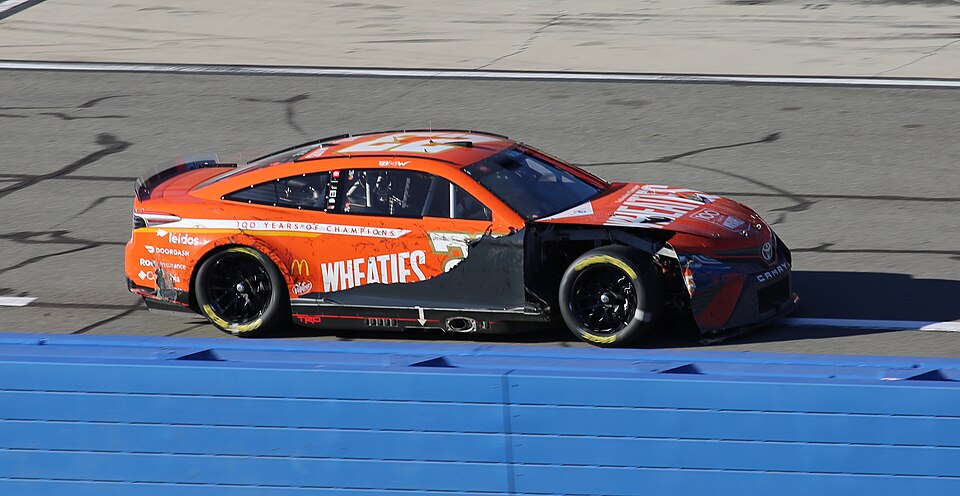
- Definition: A pass-through penalty requires the offending car to drive through the pit road at the designated speed limit without receiving any service. The car then rejoins the race at the rear of the field or in its original position, depending on the timing (Jayski.com Rule 8.8.5, Jan 2026; NASCAR RULES PDF, Jan 16, 2026).
- Enforcement: This penalty is imposed for any violation of the pit road speed limit, regardless of how much the driver exceeded the limit. Even being 1 mph over can result in a pass-through.
- Impact: The penalty costs valuable track position and time, often eliminating any advantage gained from speeding. Teams must strategize around the likelihood of such penalties when deciding how aggressively to push the speed limit.
The pass-through penalty is the standard consequence for speeding, designed to be a significant deterrent. Since the car must complete the pass-through under green flag conditions, it can occur at a critical moment in the race, further exacerbating the loss of position. The impact of such penalties is significant, similar to how Formula 1’s sprint race format can change race dynamics by altering pit stop opportunities.
Speeding During a Penalty: Additional Sanctions
If a driver is already serving a pass-through penalty and is caught speeding again during that pass-through, additional sanctions may be applied. These can include a second pass-through penalty or even a lap penalty, depending on the severity and recurrence. The cumulative nature of these penalties means that drivers must be especially cautious when serving their initial penalty, as any further infraction will compound the time loss.
This rule ensures that drivers do not attempt to “double down” on risk while already penalized (Jayski.com Rule 8.8.5, Jan 2026; NASCAR RULES PDF, Jan 16, 2026). The strict enforcement underscores NASCAR’s commitment to pit road safety.
Historical Impact: Zero Crew Fatalities Since 1991 Rule Implementation
The introduction of pit road speed limits in April 1991 was a direct response to the tragic death of pit crew member Mike Rich during the 1990 Atlanta Journal 500. Rich was killed when driver Ricky Rudd’s car, which had been speeding on pit road, struck Bill Elliott’s pit crew. This incident underscored the urgent need for safety measures.
Since the implementation of the speed limits and enforcement system, there have been zero fatalities from speeding cars on pit road, demonstrating the effectiveness of these rules in protecting crew members (Frontstretch Jun 24, 2025; NASCAR.com Apr 13, 2015). The primary purpose of the speed limits is to enhance safety for the dozens of crew members working in the pits during each stop. Safety improvements also involve financial investments, with Formula 1’s budget cap ensuring teams allocate resources to safety initiatives, but NASCAR’s pit road rules stand as a standalone success story.
How Do Drivers Navigate Pit Road Efficiently and Safely?
RPM Monitoring and Gear Selection: Using Tachometers and Second Gear
- Tachometer monitoring: Drivers constantly watch their tachometer to ensure the engine RPM matches the target value for the pit speed limit. This RPM is determined during practice and communicated by the team. By keeping the RPM within a narrow band, drivers can maintain speed within the tolerance window (Buildingspeed.org, 2009/2021; NBC Sports, Jun 9, 2022).
- Dashboard lights: The dashboard provides visual alerts: a yellow light indicates the driver is approaching the speed limit, while a red light warns of exceeding it. These lights help drivers make quick adjustments without taking eyes off the track for too long.
- Second gear usage: Many drivers select second gear when entering pit road. Second gear has a lower top speed and provides engine braking, which helps naturally limit speed without constant braking. This technique reduces the risk of accidentally exceeding the limit and simplifies speed management (same sources).
Combining these techniques allows drivers to maximize their speed while staying within the allowed tolerance. The use of second gear is particularly common because it limits the car’s maximum speed and provides a consistent feel, reducing the need for frequent braking.
These techniques are fundamental to effective pit stop strategies, which can gain or lose multiple positions during a race. Mastering them requires practice and a deep understanding of the car’s behavior.
Precision Entry and Exit: Navigating Yellow Lines and Traffic
Entering and exiting pit road requires precise timing and spatial awareness. Drivers must cross the entry yellow line at the correct speed and angle to avoid invalidating the timing measurement. They must also navigate around other cars entering or exiting the pits, as well as avoid pit crews working in their stalls.
This demands a balance between speed and safety: pushing the limit to save time while ensuring not to collide with other vehicles or personnel. The average speed measurement means that drivers must maintain a consistent speed from entry to exit, making smooth acceleration and braking essential (NASCAR.com; AI Overview).
Any deviation, such as braking too hard or accelerating too quickly, can skew the average and trigger a penalty. Drivers often rehearse these maneuvers in simulation to build muscle memory.
Single-File Protocol Under Yellow Flag Conditions
Under yellow flag conditions, pit road operates in a single-file order. This means cars must enter and exit in the sequence they arrive, without passing. This protocol reduces the risk of accidents by eliminating competition for space on pit road.
It also ensures an orderly flow, allowing crews to work safely without worrying about cars arriving unexpectedly from behind. The single-file rule is enforced by officials and monitored via the pit road cameras.
Drivers must be patient and follow the car ahead closely but without tailgating, as any incident could result in penalties (NASCAR.com; AI Overview). This protocol is common across many series, including during Formula 1’s sprint race format, to maintain order and safety during caution periods.
The most surprising aspect of NASCAR pit road rules is the deliberate 5 mph tolerance that drivers exploit to gain time, coupled with the remarkable safety record: zero crew fatalities from speeding cars since the rules’ inception in 1991. This demonstrates how well-calibrated the system is. For drivers, the actionable step is to study the 2026 Racetrack Specifications for their specific track to know the exact speed limit and corresponding RPM.
Then, practice RPM-based speed control in simulation or during team testing to master the tolerance window without crossing the line. Additionally, exploring resources on professional racing, such as those at Sarah Moore Racing, can provide further insights into driver development and safety. Understanding these rules is essential for any driver aiming to compete at the highest levels, whether in NASCAR or other series like Formula 1, which has its own technical regulations and power unit technologies.
