
NASCAR’s short track racing demands specific car adjustments to balance acceleration, braking, and cornering on tight circuits. While the 2026 season introduces a 750-horsepower package for ovals under 1.5 miles, the core principles of maximizing mechanical grip remain constant. Professional driver and coach Sarah Moore emphasizes that understanding these setup fundamentals is crucial for any driver aiming to compete at a high level.
- Short track NASCAR setups prioritize mechanical grip over aerodynamic downforce due to reduced speeds and frequent cornering (Source: Wikipedia – Racing setup).
- Suspension tuning focuses on softer spring rates to enhance tire contact and traction on bumpy, low-speed circuits (Source: Wikipedia – Racing setup).
- Gear ratios are numerically lower (shorter) to accelerate quickly out of tight corners, accepting reduced top speed (Source: motorsport.nda.ac.uk).
- Right-front tire management is critical; patience on corner entry prevents excessive wear that ruins lap times.
- Brake bias is adjusted rearward (around 55-58%) to help stabilize the car under heavy braking into tight corners (Source: operationsports.com).
2026 NASCAR Short Track Package: Power and Aerodynamics Changes
750 Horsepower Increase for Short Tracks: Impact on Acceleration
- Power increase: The 2026 NASCAR Cup Series short track package raises horsepower from 670 HP to 750 HP for all ovals measuring 1.5 miles or less.
- Acceleration focus: This 80-horsepower boost is designed to create more passing opportunities by rewarding drivers who manage tire wear effectively (Source: NASCAR.com).
- Gearing adjustments: Teams must install lower (numerically higher) gear ratios to convert the extra power into usable acceleration out of short corners without overwhelming the tires.
- Brake bias shift: With increased acceleration forces, brake bias is adjusted rearward to approximately 55-58% to help stabilize the car during heavy braking into tight corners (Source: operationsports.com).
The horsepower increase fundamentally changes the acceleration profile. On short tracks like Martinsville or Bristol, the ability to launch out of corners is paramount. The extra power can cause wheel spin if gear ratios are not shortened appropriately.
This means the final drive ratio and individual transmission gears become more critical than on superspeedways. Drivers will feel a stronger push from the rear of the car on corner exit, requiring precise throttle control. The brake bias adjustment helps counteract the tendency for the car to become loose (oversteer) under heavy braking when more power is suddenly applied on exit.
Low Downforce Configuration on Short Tracks: 3-Inch Spoiler and A-Post Flaps
For 2026, NASCAR mandates a low downforce aerodynamic package for short tracks. The key changes include a reduced 3-inch rear spoiler height (down from higher configurations), fewer diffuser strakes, and the mandatory introduction of A-post flaps.
These flaps are designed to prevent the car’s nose from lifting excessively during a spin, improving safety. The collective effect is a significant reduction in overall downforce.
With less aerodynamic grip, the car becomes more dependent on mechanical grip from the suspension and tires. Drivers describe this feeling as a “wrestling match” where the car is less forgiving of mistakes (Source: speedsport.com). The reduced downforce means the car slides more in corners, requiring constant steering input and precise car placement.
This setup shift rewards driver skill and consistency over aerodynamic perfection. The car’s balance becomes more sensitive to changes in track temperature and rubber buildup, demanding frequent small adjustments during a race weekend.
Optimizing Car Setup: Suspension, Gearing, and Tire Management
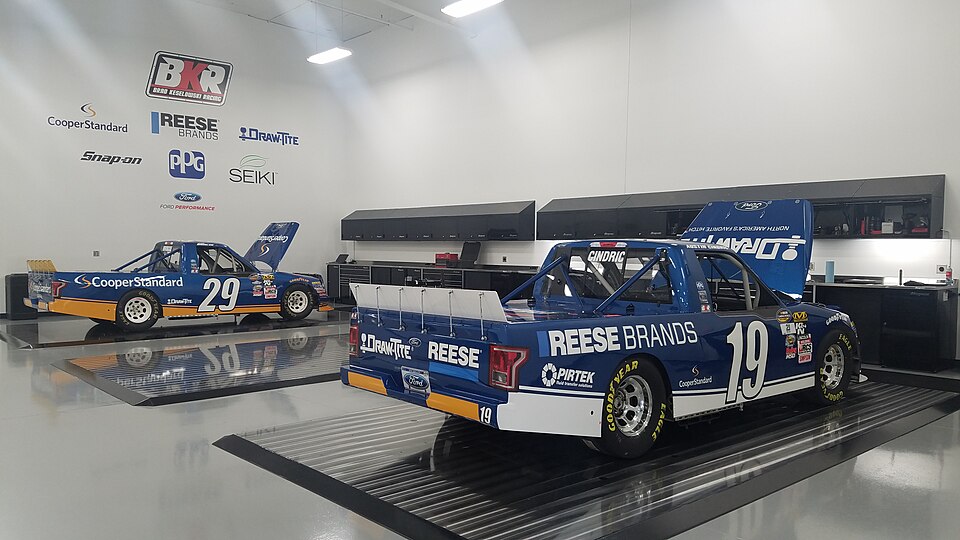
Suspension Tuning for Short Tracks: Softer Springs and Mechanical Grip
| Setup Parameter | Short Track Recommendation | Intermediate Track Comparison |
|---|---|---|
| Spring Rates (Front/Rear) | Softer (lower numerical value) | Stiffer for high-speed stability |
| Primary Focus | Mechanical Grip | Aerodynamic Grip |
| Suspension Travel | More travel to absorb bumps | Less travel, flatter ride |
| Rear Suspension Role | Maximize power-down traction on exit | Stability in high-speed corners |
The shift to lower downforce in 2026 amplifies the need for optimal mechanical grip. On short tracks, the car spends more time in lower-speed corners where aerodynamic forces are minimal. Therefore, suspension settings become the primary tool for generating cornering speed.
Teams will run softer spring rates, particularly on the front end, to help the tires maintain better contact with an often-bumpy track surface. The independent rear suspension (IRS) on the Next Gen car is crucial here; it allows engineers to independently tune the rear suspension geometry to maximize traction as the driver applies power. This helps put the increased 750 horsepower down effectively without excessive wheel spin.
Gear Ratios for Short Track Corners: Lower Ratios for Acceleration
- Transmission: The 5-speed sequential transaxle remains standard, but the individual gear ratios are changed for short tracks.
- Ratio selection: “Lower” or “shorter” ratios (higher numerical values) are used. This means the engine revs higher in each gear, keeping it in its optimal power band for acceleration.
- Trade-off: Shorter ratios sacrifice top speed, which is acceptable on short tracks where the maximum speed is limited by track length (Source: motorsport.nda.ac.uk).
- Throttle modulation: These ratios require more precise throttle control to avoid wheel spin on corner exit, especially with the 750 HP increase (Source: motorsport.nda.ac.uk).
Choosing gear ratios is one of the most impactful setup decisions for short tracks.
The goal is to have the car “pull” strongly out of every corner without needing to shift. For a track like Martinsville, where the corners are tight and the straights are short, the car might only reach 4th gear. Engineers will often select a 4th gear ratio that is the same or very close to the 5th gear ratio used on intermediate tracks.
This keeps the engine in the sweet spot of the power curve. The final drive ratio (the “ring and pinion”) is also changed to complement these transmission gears. The entire package must be simulated and tested to ensure the car accelerates rapidly but does not hit the rev limiter before the end of a straight.
Tire Management on High-Wear Short Tracks: Right-Front Stress
- Goodyear’s role: For 2026, Goodyear is producing tire compounds specifically designed to have higher wear (falloff) to improve racing quality and create strategy variance.
- Right-front focus: On short tracks, the right-front tire endures the most stress due to heavy braking into corners and the initial turn-in.
-
Patience is key: Drivers must be gentle on corner entry.
Aggressive turn-in “burns” the right-front tire, causing a significant loss of grip later in a run.
- ‘Comers & goers’: The predicted tire falloff can exceed 4 seconds per fuel run. Drivers who preserve their tires early in a stint will gain substantial time in the final laps, a phenomenon known as “comers and goers”.
Tire management separates good drivers from great ones on short tracks. The combination of high horsepower and high-wear tires means a driver’s style directly impacts performance. The most common mistake is attacking corner entry too hard.
This slides the right-front tire across the track surface, overheating the tread and causing graining. Once grained, the tire loses mechanical grip for the remainder of the run.
The correct approach is to turn the car with a smooth, progressive input, accepting a slightly slower corner entry to preserve the tire for a faster corner exit and subsequent laps. This discipline is especially important with the 750 HP package, as more power on exit further stresses the already-worn right-front tire.
Sarah Moore: A Professional Driver’s Perspective on Short Track Racing
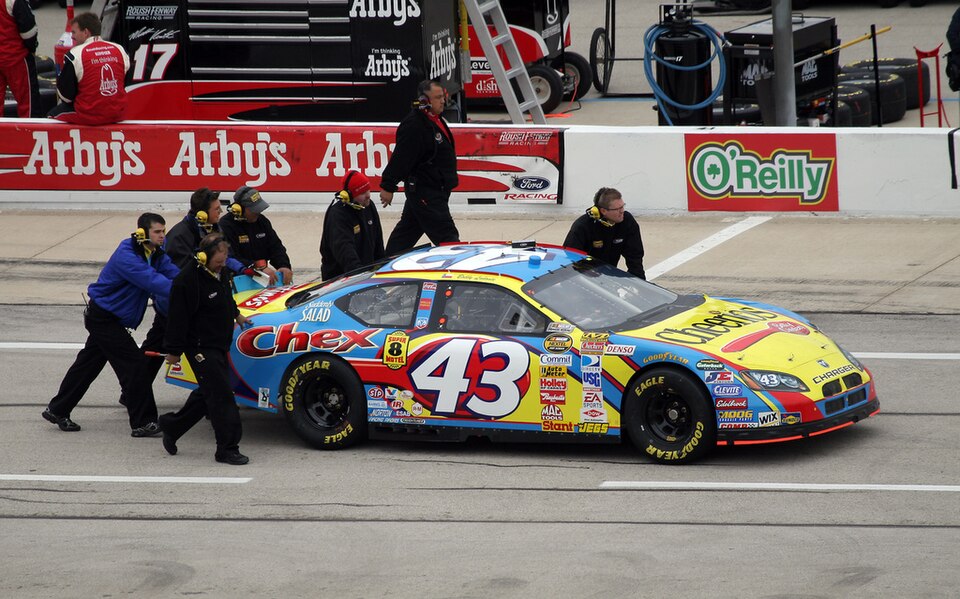
NASCAR Short Track Setup: Who Is the British Female Driver?
It is important to clarify that Sarah Moore is not a NASCAR driver. She is an accomplished British professional racing driver with a career spanning 18 years across multiple disciplines, including karting, GT4, and endurance racing.
Her expertise in car setup and driver development comes from her roles as an A-level driving instructor (ARDS Grade A) and a dedicated driver coach (Source: business context). Moore works with the More Than Equal programme, focusing on training young talent and optimizing car performance for individual drivers. While her competitive record is in series like the W Series and BritCar Endurance Championship, her deep understanding of vehicle dynamics and the principles of extracting speed from a race car—especially on challenging, technical tracks—makes her insights on setup philosophy highly relevant to any form of circuit racing, including the specific challenges of short track competition.
NASCAR Car Setup for Short Tracks: Sarah Moore’s Racing Projects
- Career longevity: Sarah Moore has been competing in motorsport for 18 years, progressing from karting at age 4 through various car racing categories.
- W Series competitor: She was a full-time driver in the W Series from 2019 to 2022, achieving multiple race wins and securing a championship title.
- Endurance & GT4: Her experience includes the BritCar Endurance Championship and GT4 South European Series, which demand robust car setup for long runs and varied conditions.
- Team ownership: Moore owns and operates AJ Racing, an all-female owner-driver kart team that openly recruits and provides kart preparation services.
- Driver coaching: Her current primary focus is driver coaching through the More Than Equal programme, where she applies her ARDS Grade A instructor certification to develop young drivers (Source: business context, AIO).
Moore’s diverse background provides a unique lens on car setup.
Her transition from single-seater formula cars (like in the W Series) to tin-top GT and endurance machinery required her to adapt to different weight distributions, tire characteristics, and suspension behaviors. This experience is directly transferable to understanding how a heavy, high-power stock car like a NASCAR Cup machine behaves on a short track. Her work as a coach means she constantly analyzes how a driver’s input interacts with the car’s setup, a critical skill for extracting maximum performance on tracks where traffic and tight corners limit clean laps.
The most surprising insight from the 2026 short track package is how it deliberately reduces aerodynamic dependency. By cutting downforce and increasing horsepower, NASCAR is creating a “wrestling match” that prioritizes driver skill and consistent car placement over aerodynamic perfection. This is a return to a more raw, mechanical form of racing where setup changes have a more direct and dramatic effect on handling.
For teams and drivers, the immediate actionable step is to dedicate extra pre-season testing time specifically to short tracks. This testing must focus on experimenting with softer spring rates and a wider range of gear ratio combinations to understand the new balance between 750 horsepower and mechanical grip. The data gathered from these sessions will be invaluable for the first short track races of the season.
Frequently Asked Questions About NASCAR Car Setup For Short Tracks
What projects has Sarah Moore worked on?
The Agency. The Six Triple Eight. Venom: The Last Dance.
Citadel. No Time To Die. Last Christmas.
The Aeronauts. Holmes and Watson.
Is Sarah Moore still married?
Sarah Moore is known for Home Greek Home (2023), Cash in the Spare Room (2020) and Money for Nothing (2015). She has been married to Pete Smith since June 2, 2001.
Where is Sarah Moore's Greek home?
Whilst on Skiathos we visited the beautiful “Home Greek Home” of Sarah Moore. totally idyllic 💙 Its location is in the old town of narrow winding cobbled lanes, a feast for the eye around every corner 😍
