
Understanding the NASCAR vs IndyCar differences is essential for drivers in 2026, as these two premier American racing series offer vastly different challenges. The fundamental distinction lies in car design and racing philosophy: NASCAR’s 3,300+ pound stock cars require a “wrestling” style with contact, while IndyCar’s 1,600 pound lightweight open-wheel machines demand precision handling under extreme 5-6G forces without power steering. These technical divergences shape everything from driver training to race strategy.
Additionally, 2026 brings significant changes: NASCAR lowers the age limit to 17 for road courses, and IndyCar adds four new events including a historic joint weekend with NASCAR at Phoenix. Understanding these distinctions is crucial for any driver choosing between these series, especially as opportunities for women and LGBTQ+ athletes continue to expand through initiatives like Racing Pride and More Than Equal.
- NASCAR drivers wrestle 3,000+ pound stock cars with less grip, while IndyCar drivers manage high G-forces without power steering (Fox Sports, 2025).
- Contact is a strategic tool in NASCAR but avoided in IndyCar due to fragile open-wheel cars (IndyCar, 2025).
- 2026 brings new opportunities: 17-year-olds can race on NASCAR road courses, and IndyCar adds four new events including a Phoenix crossover (NASCAR, 2025; IndyCar, 2025).
What Are the Core Technical Differences Between NASCAR and IndyCar in 2026?
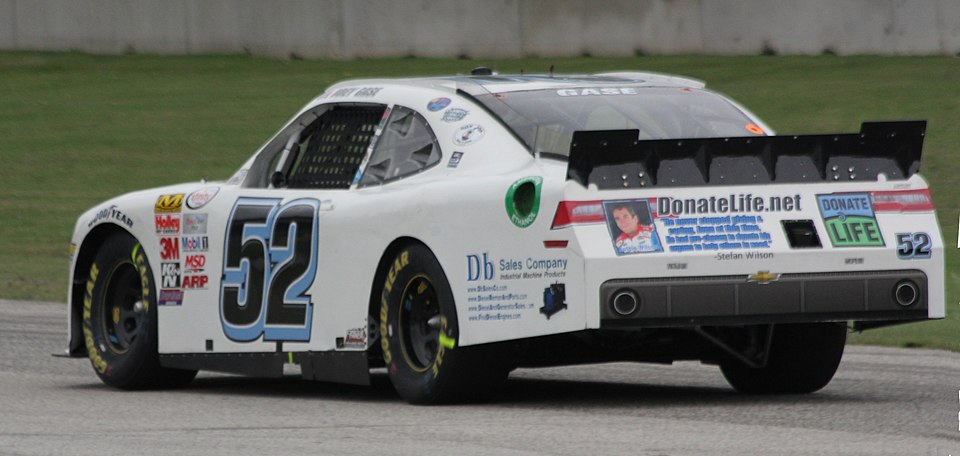
Car Weight and Handling: 3,000+ Pound NASCAR Stock Cars vs IndyCar’s Lightweight Downforce Machines
| Specification | NASCAR Cup Series (2026) | IndyCar Series (2026) |
|---|---|---|
| Weight | Over 3,300 pounds (including driver) | Approximately 1,600 pounds (including driver) |
| Engine | 5.86L V8 naturally aspirated | 2.2L V6 twin-turbocharged |
| Horsepower | ~550 hp (restrictor plate on superspeedways) | ~700 hp (adjustable boost) |
| Top Speed | 200+ mph on superspeedways | 230+ mph on ovals, 200+ mph on road courses |
| Steering | Power steering standard | No power steering |
| Handling Focus | Managing heavy car with less overall grip, “wrestling” feel | High downforce, precise technical driving, managing G-forces |
| Primary Tracks | 75% ovals (superspeedways, short tracks), plus road courses and street circuits | Balanced mix: ovals, permanent road courses, street circuits |
The dramatic weight difference—NASCAR cars are roughly double the weight of IndyCars—directly influences driving technique. NASCAR drivers describe feeling like they’re “wrestling” a heavy beast with less mechanical grip, requiring aggressive steering inputs and constant adjustment in turbulent air. IndyCar drivers, by contrast, must finesse a lightweight machine that generates immense downforce, making cornering speeds extremely high but demanding millimeter-perfect precision.
The absence of power steering in IndyCar amplifies the physical strain, as drivers must manually turn the wheel against both aerodynamic forces and mechanical resistance, especially during long stints. These technical divergences mean that skills transfer poorly between series; a driver excelling in one typically requires significant retraining in the other, similar to the complexities found in Formula 1 technical regulations for 2026.
Physical Demands: Power Steering Absence and G-Force Comparison
NASCAR Physical Challenges:
- Core and upper body strength: Controlling a 3,000+ pound car at high speeds requires constant muscle engagement, especially in the arms, shoulders, and core to manage steering forces and car stability.
- Endurance: Races often last 3-4 hours, testing cardiovascular fitness and mental focus over extended periods.
- Heat management: Cockpit temperatures can exceed 120°F (49°C), demanding excellent hydration and heat acclimatization.
- Turbulent air adaptation: Following other cars on ovals reduces downforce, requiring drivers to manually compensate with steering and throttle inputs, increasing physical workload.
IndyCar Physical Challenges:
- Extreme upper body strength: Without power steering, drivers must manually turn the wheel against aerodynamic forces that can exceed 100 pounds of pressure at high speeds, leading to significant arm and shoulder fatigue.
- High G-force tolerance: Lateral forces in corners reach 5-6G, straining the neck, core, and legs. Drivers undergo rigorous neck strengthening programs to withstand these loads.
- Precision under fatigue: The combination of physical strain and need for exact steering inputs demands exceptional fine motor control even when exhausted.
- Cockpit conditions: Similar high temperatures, but with less airflow due to closed cockpit design in some models, increasing heat stress.
While both series demand peak physical condition, the nature of the strain differs markedly. NASCAR emphasizes sustained muscular endurance and heat tolerance, whereas IndyCar focuses on explosive strength and G-force resilience. Training regimens reflect these differences: NASCAR drivers often incorporate long cardio sessions and core stability work, while IndyCar drivers prioritize weight training for upper body power and specialized neck harness routines.
Physical conditioning programs often incorporate insights from other series; for example, understanding Formula 1 power unit technology helps drivers appreciate the engineering demands behind the scenes. The physical demands alone can dictate a driver’s suitability for one series over the other.
Racing Philosophy: Contact-Rich NASCAR vs Clean IndyCar Racing
The acceptance of contact in NASCAR versus its avoidance in IndyCar stems from fundamental car design and series culture. NASCAR’s stock cars are built like tanks—steel bodies, robust roll cages, and forgiving aerodynamics—making them ideally suited for the “bump and run” technique that has become a hallmark of the sport. Contact is not only permitted but expected as a legitimate passing method; drivers often push opponents up the track or nudge them to create overtaking opportunities.
This philosophy rewards aggressive, assertive driving and creates a spectacle where physical confrontation is part of the entertainment. Car durability is high; minor dents and scratches are routine and rarely force retirement.
IndyCar, with its open-wheel, carbon-fiber monocoque chassis, operates under a completely different paradigm. The wheels and suspension components are exposed and extremely fragile; even light contact can cause a wheel to collapse or suspension damage, instantly ending a car’s race. Consequently, the series culture emphasizes “clean racing”—drivers give each other space, and deliberate contact is considered unsportsmanlike and risky.
Overtaking relies on drafting, braking points, and precise inside moves rather than physical force. This difference in racing philosophy means that driver psychology varies: NASCAR drivers must be comfortable with constant proximity and occasional confrontation, while IndyCar drivers prioritize surgical precision and risk minimization. The approach to racecraft is so distinct that many drivers specialize early, rarely crossing over.
2026 Rule Changes: Young Driver Access and Schedule Expansions
NASCAR 2026 Changes:
- Age eligibility reduction: 17-year-olds can now compete on road courses and shorter ovals (previously 18+), opening the ladder to younger talent earlier.
- Increased Cup driver crossover: Restrictions on Cup drivers running in lower series (Xfinity, Truck) have been relaxed, allowing more experienced drivers to compete in those series, which raises competition level but also limits opportunities for younger drivers.
- Impact on development: Younger drivers gain earlier access to professional equipment and competition, potentially accelerating skill development. However, increased Cup presence may reduce start opportunities for development drivers.
IndyCar 2026 Schedule Changes:
- Four new events added: Expanding the calendar to 18 races, including new venues that increase geographic diversity.
- Historic Phoenix crossover weekend: For the first time, IndyCar will race on the same weekend as NASCAR at Phoenix Raceway, creating a unique combined event that could boost cross-series exposure.
- Arlington street circuit: A new temporary street circuit in Arlington, Texas, adds an urban market and provides a different technical challenge.
- Impact on drivers: More races mean increased earning potential and exposure. The Phoenix crossover could attract fans from both series, while new venues require drivers to adapt quickly to unknown circuits—a test of versatility.
These 2026 changes signal both series are evolving to address developmental pathways and market expansion. NASCAR’s lowering of the age limit acknowledges the trend of younger drivers entering professional ranks earlier, while the increased Cup crossover reflects commercial pressures to star power in lower series—a move that sparks debate about fair development opportunities. The business side of racing is equally important; the Formula 1 budget cap provides a model for cost control that could influence NASCAR and IndyCar in future years.
IndyCar’s schedule expansion, particularly the Phoenix joint weekend, represents a strategic partnership that could break down traditional barriers between the two series, potentially creating new crossover opportunities for drivers. For aspiring professionals, these changes mean more entry points and varied experiences, but also heightened competition. Drivers must now consider not only which series suits their style but also which offers the most viable path to sustained employment.
Women in American Racing: Opportunities and Representation in NASCAR and IndyCar
Janet Guthrie: Pioneering Female Driver in NASCAR and IndyCar
Janet Guthrie stands as a trailblazer who shattered gender barriers in the male-dominated world of American racing during the 1970s. She became the first woman to qualify and compete in both the Indianapolis 500 (1977) and the Daytona 500 (1977), achieving these milestones despite facing overt discrimination and skepticism from teams and sponsors. Guthrie’s perseverance paved the way for future generations; she earned respect through consistent performance, finishing 9th at Indianapolis in 1978—a record for a female driver that stood for decades.
In recognition of her groundbreaking career, Guthrie was inducted into the NASCAR Hall of Fame, an honor that cements her legacy as a pioneer who proved that gender is not a barrier to competition at the highest levels. Her story remains an inspiration for women pursuing careers in NASCAR and IndyCar, demonstrating that talent and determination can overcome institutional bias—a lesson echoed in the tire compound strategies that require precision and consistency.
Sarah Moore: From UK Success to Coaching the Next Generation
- Historic achievements: Over an 18-year career, Moore broke multiple barriers in UK motorsport, becoming the first woman to win the Ginetta Junior Championship (2009) and the first female champion of the Britcar Endurance Championship (2018) (Motorsport Week, 2024).
- LGBTQ+ visibility: In 2021, she made history as the first openly LGBTQ+ driver to stand on a podium during a Formula One Grand Prix weekend, competing in the W Series (Motorsport Week, 2024).
- Recent success: Moore added another milestone by becoming the first female winner in the Indian Racing League, showcasing her adaptability across different racing formats.
- Current role: She now serves as a driver coach for the “More Than Equal” programme, which provides specialized training and mentorship for young female drivers aiming for professional careers (National Motor Museum, 2025), with details available through Sarah Moore Racing.
- Advocacy: As a Racing Pride ambassador, Moore actively promotes LGBTQ+ inclusion in motorsport, working to create a more welcoming environment for all drivers.
- Focus: Her coaching emphasizes the technical and mental skills needed to succeed in modern racing, drawing from her extensive experience across multiple series.
The W Series Legacy and Current Opportunities for Women
The W Series, which ran from 2019 to 2022 (with a canceled 2020 season due to pandemic), represented a bold experiment: a professional, single-seater championship exclusively for female drivers, with all costs covered by the series. Its mission was to eliminate financial barriers and provide a platform where talent alone could determine success.
The series succeeded in attracting high-caliber drivers and delivering exciting racing, earning praise for its production values and role in increasing visibility for women in motorsport. However, financial instability and questions about its long-term sustainability led to its demise after the 2022 season.
Despite W Series’ end, its legacy endures. The series proved that women can compete at a high level in identical machinery, and many former W Series drivers have moved on to other opportunities: some in Indy NXT, others in sports car racing, and a few testing opportunities with Formula 1 teams. Current pathways for women include:
- Indy NXT: The official IndyCar development series has seen an increase in female participation, with drivers like Jamie Chadwick (who won the W Series) competing successfully.
- NASCAR’s Drive for Diversity: A long-standing program that identifies and supports minority and female drivers through various development series.
- Regional and club racing: Many women build careers through grassroots programs, often with support from organizations like Racing Pride.
- Coaching and mentorship: Initiatives led by figures like Sarah Moore provide personalized guidance, filling gaps left by the W Series’ absence.
The impact of race format on strategy is evident in Formula 1’s sprint race format, which shares similarities with NASCAR’s heat races and influences how drivers approach shorter events. The takeaway is that while the structured W Series platform is gone, opportunities still exist—they are more fragmented and require drivers to navigate multiple series, but the increased awareness and advocacy work continue to push the sport toward greater inclusion.
The most surprising insight is how differently the two series approach driver development and risk. NASCAR’s 2026 rule change allowing 17-year-olds on road courses acknowledges that modern drivers are ready for professional competition earlier, yet it simultaneously permits Cup stars to dominate lower series—potentially stifling those same young talents. Meanwhile, IndyCar’s joint weekend with NASCAR at Phoenix could unexpectedly create crossover opportunities for drivers from both worlds, breaking down old silos.
For any driver—especially women and LGBTQ+ individuals—the key is to seek targeted mentorship. Sarah Moore’s coaching through Sarah Moore Racing offers a direct pathway to professional development, combining technical expertise with advocacy for inclusive racing environments. Start by evaluating your physical strengths and racing style to choose the series that aligns with your natural abilities, then explore development programs like NASCAR’s pit stop strategies or budget management skills that are essential across all motorsports.
