
Heel-and-toe downshifting is a manual transmission technique that combines braking and throttle control to match engine RPMs during corner entry, preventing wheel lock and ensuring smooth transitions. This advanced driving method is essential for performance driving, allowing racers to brake late while simultaneously preparing the engine for the lower gear. By synchronizing engine speed with road speed, drivers maintain stability through corners and achieve faster exits.
It involves coordinated footwork using both pedals with the right foot while operating the clutch with the left. For any driver seeking to improve lap times in professional racing, heel-and-toe downshifting is a fundamental skill that must be practiced and perfected.
- The technique uses coordinated footwork: left foot operates the clutch while the right foot controls both brake (ball of foot) and throttle (heel/side).
- Rev-matching prevents ‘compression locking’ of driven wheels, which can cause instability or oversteer if RPMs aren’t synchronized.
- Practice begins at low speeds or stoplights and can even be done stationary to build muscle memory before track use.
How to Heel-and-Toe Downshift: The Complete 6-Step Technique
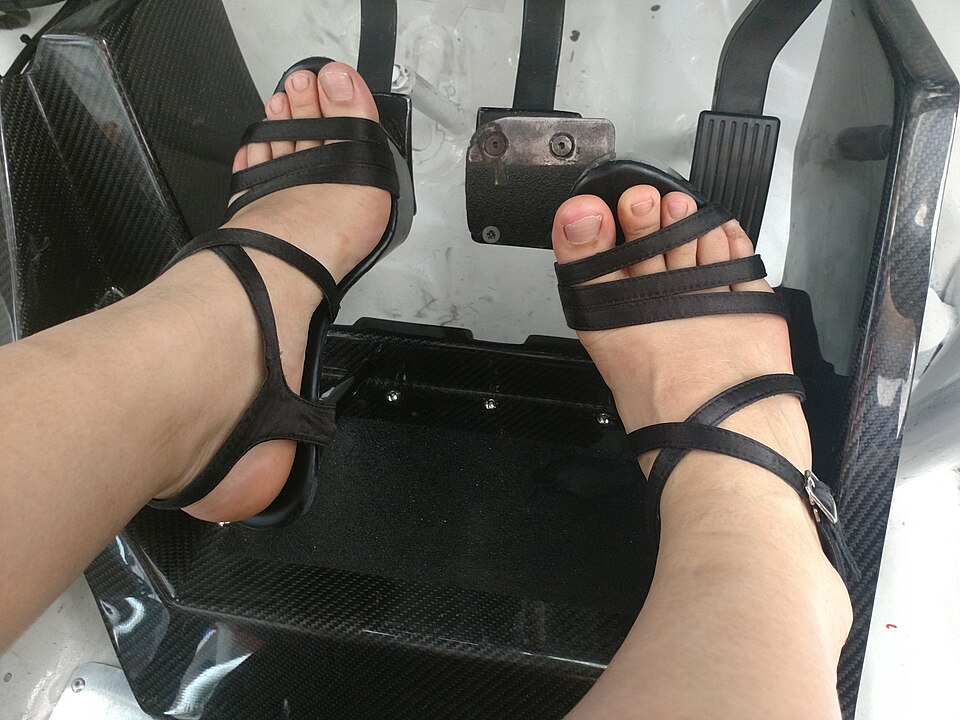
Foot Positioning: Left Foot Clutch, Right Foot Dual Control
The foundation of heel-and-toe downshifting lies in precise foot positioning. The left foot operates the clutch pedal, fully depressing it during gear changes. The right foot performs a dual role: it must simultaneously control braking and throttle input.
Typically, the ball of the right foot applies steady pressure to the brake pedal, while the heel or the outer edge of the foot pivots to “blip” the accelerator. This coordination allows the driver to maintain braking force while raising engine RPMs. According to the National Auto Sport Association (2021), modern vehicles require pivoting the foot from brake to throttle, unlike pre-WW2 cars where the accelerator was centrally located and could be pressed with the toe while braking with the heel.
Mastering this footwork is the first step in executing smooth downshifts under braking. The pedals must be positioned close enough to allow this movement without stretching or awkward angles. Some performance vehicles adjust pedal heights to facilitate heel-and-toe technique.
Drivers should ensure their seating position allows adequate leverage and comfort for extended use. Consistency in foot placement builds muscle memory, which is critical under high-speed racing conditions where every millisecond counts.
The Six-Step Execution Sequence
The heel-and-toe downshift follows a precise six-step sequence. Each step must be performed smoothly and in order:
- Initiate Braking: As you approach the corner, begin braking using the ball of your right foot. Maintain consistent braking pressure to slow the vehicle predictably. This step starts the process while the car is still straight.
- Depress Clutch: Fully press the clutch pedal with your left foot. This disengages the engine from the transmission, allowing gear selection without grinding.
- Shift to Lower Gear: While the clutch is depressed and you are still braking, move the gear shifter into the desired lower gear. Keep the shifter movement deliberate and accurate.
- Blip the Throttle: With the clutch still down, use your heel or the side of your right foot to quickly tap the accelerator pedal. This action raises the engine’s RPMs to match the speed of the lower gear. The blip should be sharp but controlled.
- Release Clutch: Smoothly release the clutch pedal. The engine RPMs should now be synchronized with the road speed for the lower gear, resulting in a smooth transition without jerking.
- Continue Braking or Accelerate: Release the throttle and either continue braking as needed or begin accelerating out of the corner.
According to driving instructors from HP Academy and NASA Speed News Magazine, practicing these steps in order at low speeds builds the necessary muscle memory for high-performance driving. With practice, these steps become a single fluid motion, allowing drivers to downshift smoothly while braking at the limit. This technique is particularly important in modern power unit technology where maintaining rev range is critical for turbo response.
Rev Matching: Preventing Wheel Lock and Instability
The core purpose of heel-and-toe downshifting is rev matching—synchronizing engine RPMs with the road speed of the lower gear. This synchronization prevents the car from becoming unsettled due to sudden engine braking. If the RPMs are too low when the clutch is released, the engine acts as a brake, forcing the driven wheels to slow abruptly.
This phenomenon, known as “compression locking,” can cause wheel lock or severe instability, especially during corner entry when traction is already limited. In extreme cases, it leads to oversteer and loss of control. By blipping the throttle during the downshift, the driver raises the RPMs to the appropriate level, ensuring a seamless clutch engagement.
This not only maintains vehicle stability but also allows for a smoother, faster exit from the corner, as the engine is already in the optimal power band. As noted by Car and Driver and Top Gear, rev matching is a hallmark of skilled racing drivers and is critical for consistent lap times. Additionally, smooth rev matching preserves tire compound integrity by preventing sudden torque shocks that could degrade grip.
Practice Strategies: Building Muscle Memory for Mastery
Start Slow: Low-Speed and Stationary Drills
Developing muscle memory for heel-and-toe downshifting begins with low-speed practice. Beginners should:
- Practice at Stoplights: During normal street driving, use red lights as opportunities to simulate the technique. With the car stationary, depress the clutch, shift to neutral, then blip the throttle while holding the brake with the ball of your foot. This builds the foot coordination without moving.
- Stationary Drills: While parked, practice the foot movements without the car running. Focus on pivoting the right foot from brake to throttle smoothly while operating the clutch with the left foot. Repetition creates neural pathways.
- Low-Speed Driving: Start at speeds under 30 mph in a safe, empty parking lot. Perform the full sequence while braking gently. Expect initial jerks; consistency improves with repetition.
- Gradual Progression: Only increase speed and braking force once the motion feels natural. Rushing leads to bad habits.
According to Edmunds and Blayze.io, these slow-speed drills are essential for building the muscle memory required for track use. The goal is to make the movement automatic, so attention can focus on braking points and racing lines. These foundational skills translate directly to sprint race formats where precision is paramount.
Pedal Setup: Optimizing Footwork Ergonomics
Proper pedal positioning is crucial for effective heel-and-toe downshifting. The brake and accelerator pedals must be close enough horizontally to allow the right foot to reach both without stretching. Vertically, the pedals should be at similar heights when the brake is depressed; many performance cars have adjustable pedals or aftermarket extensions to achieve this.
If the brake pedal is significantly higher than the throttle, the foot must pivot excessively, making smooth blipping difficult. Drivers should adjust their seating position to ensure full pedal travel is possible with proper leg bend. Consistency in pedal setup reduces fatigue and improves precision.
Remember, the objective is smooth transitions—jerky movements upset the car’s balance. As GTPlanet and Pelican Parts advise, spend time adjusting your cockpit before focusing on technique; ergonomics are foundational to mastery.
Some drivers even use heel-and-toe specific pedal covers or modifications to enhance control. This attention to detail becomes even more important under budget cap constraints where extensive cockpit modifications may be limited.
Track vs. Street: Where to Practice Effectively
Both track and street environments offer unique benefits and challenges for practicing heel-and-toe downshifting. The following comparison helps drivers choose where to focus their training:
| Aspect | Track Practice | Street Practice |
|---|---|---|
| Environment | Closed circuit, high speeds, no traffic | Public roads, traffic, lower speeds |
| Benefits | Realistic braking zones, corner entry speeds, full gear range | Safe low-speed learning, integrates into daily driving, no track fees |
| Drawbacks | Initial lap time decrease, risk of error at speed, requires track access | Limited to stop-and-go situations, cannot simulate full cornering loads |
| Best For | Intermediate to advanced learners refining technique | Beginners building foundational muscle memory |
Instructors from NASA Speed News Magazine recommend starting on the street to build basics, then transitioning to track for fine-tuning. Track practice inevitably causes a temporary drop in lap times as the driver focuses on technique over speed, but this investment pays off in faster, more consistent laps—similar to how NASCAR pit stop strategies require meticulous practice to achieve perfection.
Why Is Rev Matching Critical for Racing Performance?
Engine RPM and Road Speed Synchronization
Rev matching is the process of aligning the engine’s revolutions per minute (RPM) with the road speed of the vehicle after a downshift. When downshifting to a lower gear, the engine speed must increase proportionally to maintain the same road speed. For example, if a car is traveling at 60 mph in 4th gear at 3000 RPM, downshifting to 3rd gear would require the engine to rev higher, perhaps to 4000 RPM, to match the road speed.
Heel-and-toe downshifting achieves this by blipping the throttle while the clutch is disengaged, raising the RPMs before re-engaging the clutch. This synchronization results in a smooth, seamless shift without jolting the drivetrain. A smooth transition keeps the car balanced, which is especially important during corner entry when tires are already working to maintain grip.
Furthermore, having the engine in the correct rev range ensures maximum power is available the instant the driver accelerates out of the corner. According to Car and Driver, this can shave valuable tenths of a second from lap times by eliminating delay between throttle application and power delivery. In turbocharged cars, maintaining revs also keeps turbine speeds up, reducing turbo lag—a key factor in modern technical regulations.
Consequences of Poor Rev Matching: Instability and Oversteer
Failing to match engine RPMs during a downshift has serious consequences for vehicle stability and control:
- Compression Locking: When the clutch is released with RPMs too low for the lower gear, the engine acts as a brake, forcing the driven wheels to decelerate rapidly. This can cause the wheels to lock or skid, particularly on slippery surfaces.
- Drivetrain Jolt: A significant mismatch creates a violent shock through the transmission and driveline, which unsettles the car’s balance.
- Instability: The sudden change in deceleration can upset the car’s handling, making it unpredictable during corner entry.
- Oversteer: In rear-wheel-drive vehicles, compression locking can cause the rear wheels to lose traction, leading to oversteer and potential spin.
- Loss of Time: Even if the car remains controllable, the jolt disrupts momentum and forces the driver to correct, costing precious lap time.
As noted by Top Gear and NASA Speed News Magazine, avoiding these issues through proper rev matching is what separates professional racers from amateurs. The technique is not just about smoothness—it’s about safety and performance.
One of the most surprising aspects of heel-and-toe downshifting is that it can be practiced anywhere, even at a complete stop. Drivers can simulate the footwork motions while parked to build muscle memory without any risk. This accessibility makes the technique achievable for any manual transmission owner, not just those with track access.
Start today: at your next stoplight, try the heel-and-toe motion with the car stationary first, then at low speeds. Focus on smooth, consistent blips rather than speed.
With consistent practice, you’ll develop the coordination needed for smooth, fast cornering on the track. Remember, the key is repetition—muscle memory takes hundreds of repetitions to form.
