
Mastering high-banked NASCAR oval tracks requires precise throttle control to manage heavy downforce and maintain consistent speeds throughout the lap. These techniques separate drivers in professional racing from amateurs on America’s most challenging speedways. Oval racing demands a unique approach compared to road courses, where heavy braking is common.
On high-banked tracks, the steep angles create immense downforce, making throttle finesse critical. Without proper technique, drivers lose time through speed fluctuations and poor line selection. This guide covers the essential methods used by top NASCAR competitors in professional racing to dominate oval circuits.
- Throttle management is paramount on ovals: unlike road courses, oval racing focuses on maintaining consistent speed rather than heavy braking (Source: PlanetF1).
- Banking provides a force multiplier: the steep angle presses the car down harder, offering extra traction for higher speeds (Source: Business Insider).
- Drafting and side-drafting are key strategic tools: using the wake of other cars reduces air resistance, while side-drafting can disrupt a competitor’s spoiler.
Mastering Throttle Control on NASCAR Oval Tracks
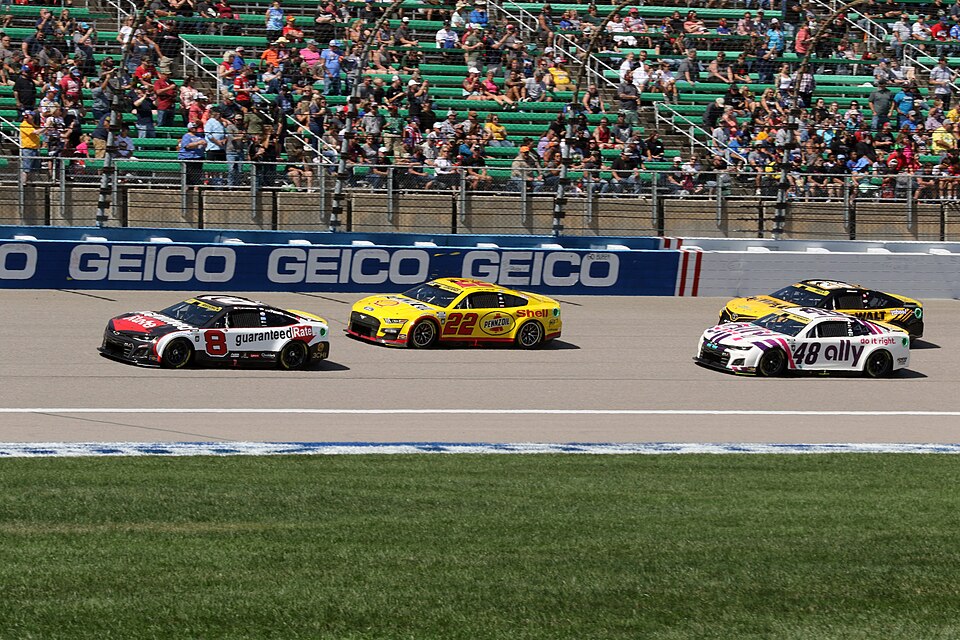
Precise throttle control forms the foundation of successful oval racing. Unlike road courses where drivers brake heavily for corners, NASCAR oval tracks require smooth, consistent acceleration to manage heavy downforce generated by steep banking.
The relationship between throttle position and car stability becomes critical at speeds exceeding 200 mph on superspeedways. Small throttle inputs create large stability changes due to the aerodynamic forces pressing the car onto the track surface.
Precise Throttle Control for Heavy Downforce Management
High-banked NASCAR ovals generate substantial downforce that pushes cars onto the track surface. This downforce increases with banking angle, requiring drivers to modulate the throttle with exceptional precision. Banking increases downforce, making throttle management more critical for maintaining control at high speeds.
Drivers must avoid abrupt throttle applications that could break rear tire traction or cause oversteer. The goal is smooth input that maintains car balance through corners and onto straights.
On tracks like Talladega or Daytona, where banking reaches 33 degrees, throttle sensitivity becomes a primary factor for lap time consistency. Professional drivers practice throttle control drills to develop muscle memory for these demands.
Maintaining Consistent Speeds to Prevent Time Loss
Consistent speed ranks as the most important factor on oval tracks. Keeping constant speeds prevents time loss that accumulates over a 500-lap race. Speed fluctuations cost significant time through several mechanisms:
- Lap time inconsistency: Varying speeds by just 2-3 mph per lap can cost 0.5-1.0 seconds per lap, multiplying to several seconds over a race distance.
- Apex misses: Missing an apex on an oval causes significant speed loss because the driver must slow more than necessary, then accelerate longer to regain speed.
- Tire wear: Speed variations increase tire scrub and wear, degrading handling in later stints.
- Fuel efficiency: Inconsistent speeds burn more fuel, potentially forcing extra pit stops and affecting pit stop strategies.
- Lap time inconsistency: Varying speeds by just 2-3 mph per lap can cost 0.5-1.0 seconds per lap, multiplying to several seconds over a race distance.
- Apex misses: Missing an apex on an oval causes significant speed loss because the driver must slow more than necessary, then accelerate longer to regain speed.
- Tire wear: Speed variations increase tire scrub and wear, degrading handling in later stints.
- Fuel efficiency: Inconsistent speeds burn more fuel, potentially forcing extra pit stops.
Oval racing is less about heavy braking and more about maintaining speed throughout all laps. The ideal lap shows minimal speed variation, with smooth transitions through corners. This requires precise throttle control and accurate braking points, though braking is much lighter than on road courses.
Why Oval Racing Requires Less Braking Than Road Courses
Oval racing demands dramatically less braking than road courses due to track design and racing philosophy. The comparison reveals fundamental differences:
Oval Racing: Minimal braking, primarily for entering corners or adjusting position. The goal is to keep speed as consistent as possible throughout all laps. Banking allows cars to carry much higher speeds through corners without heavy deceleration.
Road Course Racing: Heavy, repeated braking from high speeds into tight corners. Speed varies dramatically throughout the lap, from 200+ mph on straights to 40-60 mph in hairpins.
Banking enables higher speeds without braking because the track surface itself helps turn the car. On a 30-degree bank, the car’s weight and centrifugal force work together to maintain traction through corners.
Drivers use only light brake pressure to settle the car before turning, then immediately return to throttle. This approach preserves momentum and tire temperature, both critical for oval performance.
How Does Banking Optimization Improve Oval Track Performance?
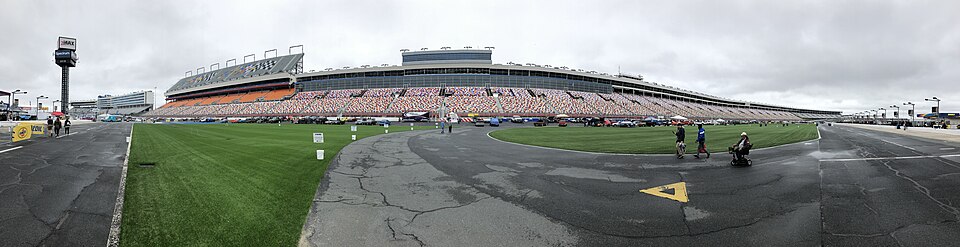
Banking optimization represents one of the most misunderstood aspects of oval racing. The steep angles of NASCAR tracks provide a significant mechanical advantage that skilled drivers exploit.
Banking acts as a force multiplier, assisting with both speed and safety. Understanding this physics principle transforms how drivers approach every corner.
Banking as a Force Multiplier: The Physics of Traction
The steep angle of banked turns creates a force multiplication effect that enables higher speeds. The physics works through normal force: the banking angle presses the car down harder onto the track surface, providing extra traction beyond what the car’s aerodynamic downforce alone generates. This enables higher speeds on banked turns versus flat tracks because the tires can handle greater lateral forces before losing grip.
A 30-degree banking can increase effective grip by 50% or more compared to a flat surface. This force multiplier effect means drivers can enter corners 10-15 mph faster than on flat tracks while maintaining control.
The banking essentially turns part of the car’s forward momentum into downforce, creating a safety buffer that allows for error correction at high speeds. Business Insider explains this phenomenon clearly: the steep angle allows the car to press down harder, providing extra traction that enables higher speeds compared to a flat track.
Finding the Optimal High Line on Banked Turns
The “high line” on banked ovals refers to the optimal racing path that maximizes speed through corners. Hitting precise lines is a key technique that separates elite drivers.
The high line typically runs higher up on the banking than drivers initially assume, using the steep angle to maintain momentum. Key principles include:
- Entry point: Start wide on entry to maximize corner radius, reducing steering angle needed.
- Apex selection: Hit the apex later and higher on the banking than on flat tracks, using the slope to carry speed.
- Mid-corner: Maintain a wide arc that keeps the car on the steepest part of the banking where possible.
- Exit: Drift down to the low side only when necessary to straighten the car for acceleration.
Consistency and apex management are critical because missing the optimal line on an oval costs more time than on road courses. The high line must be exact within inches, as banking angles change subtly around the track. Drivers use reference points like grandstand sections or sponsor banners to locate the precise path.
Comparing Steep vs. Moderate Banking Angles
Different NASCAR tracks feature varying banking angles that require distinct driving approaches. Steep banking provides more force multiplication but demands greater precision.
Moderate banking offers less mechanical advantage but allows more margin for error. The comparison table below outlines key differences:
| Track Type | Banking Angle | Speed Potential | Traction Level | Driving Approach |
|---|---|---|---|---|
| Superspeedways | 30-33 degrees (Daytona, Talladega) | 200-210+ mph | Very high | Extreme precision required; minimal steering input; focus on throttle control and drafting |
| Intermediate Tracks | 14-24 degrees (Charlotte, Texas) | 180-195 mph | High | Balance of speed and handling; more steering input; technical cornering required |
| Short Tracks | 8-17 degrees (Bristol, Martinsville) | 100-130 mph | Moderate | Aggressive braking and acceleration; closer racing; more physical driving |
Steep banking tracks like Daytona and Talladega enable the highest speeds but offer the smallest margin for error. A 1-foot deviation from the optimal line can cost 0.2-0.3 seconds per lap.
Moderate banking tracks allow slightly more flexibility in line selection but require more traditional cornering technique. Different tracks have different banking angles affecting driving technique, so drivers must adapt their approach for each circuit.
Drafting and Side-Drafting: Strategic Overtaking on Ovals
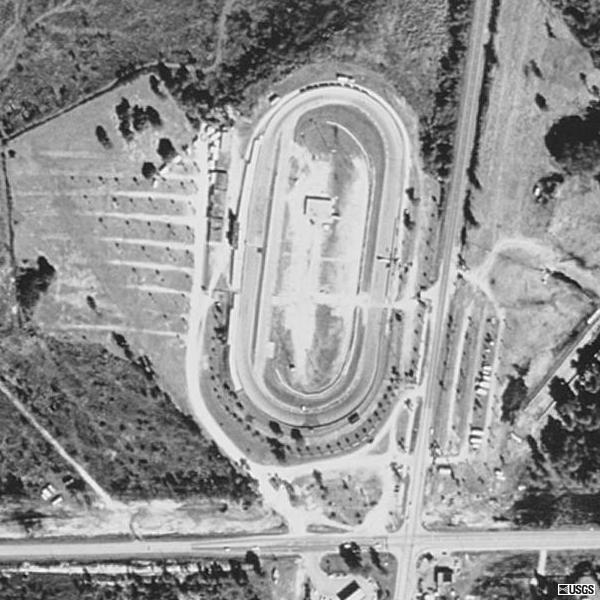
Drafting and side-drafting constitute the primary overtaking methods on oval tracks, where aerodynamic efficiency determines race outcomes. These techniques allow drivers to gain positions without mechanical braking, which would waste momentum.
On superspeedways, drafting can provide speed advantages of 5-15 mph on straights, making it essential for competition. The strategic use of these methods separates winners from mid-pack finishers.
Drafting Basics: Reducing Air Resistance for Speed
Drafting involves following closely behind another car to exploit reduced aerodynamic drag in its slipstream. The lead car creates a wake of disturbed air that reduces air resistance for the trailing car. This allows the trailing car to achieve higher speeds with the same throttle input or maintain speed with less throttle.
Drafting uses the wake of the car in front to reduce air resistance, creating a tangible speed advantage on straights. The effect becomes dramatic at NASCAR’s high speeds: at 200 mph, a trailing car can gain 2-5 mph simply by tucking into the slipstream. This speed advantage translates to the ability to pass on straights where the car would otherwise be outmatched.
Drafting also provides fuel savings of approximately 3-5% due to reduced aerodynamic drag, extending stint lengths. On ovals with long straights like Talladega’s 3,000-foot front stretch, drafting is not optional—it’s mandatory for competitiveness.
Side-Drafting on Straights: Disrupting Competitor’s Spoiler
Side-drafting represents a more aggressive application of aerodynamic warfare on ovals. This technique involves positioning the car alongside another vehicle on straights to disrupt airflow over their rear spoiler.
Side-drafting on straights can disrupt the air over a competitor’s spoiler, slowing them down slightly while increasing downforce for the side-drafter. The effects manifest through several mechanisms:
- Spoiler disruption: The side-drafter’s turbulent air reduces the effectiveness of the lead car’s rear spoiler, decreasing its downforce by 5-10%.
- Increased drag on opponent: The disturbed air creates additional drag for the car being side-drafted.
- Downforce gain for side-drafter: The trailing car experiences slightly increased downforce from the turbulent air mass, improving cornering ability.
- Psychological pressure: Side-drafting forces the opponent to adjust their driving line or risk losing control.
Side-drafting is used in close racing to gain position, particularly on superspeedways where aerodynamic effects dominate. The technique requires courage because running side-by-side at 200+ mph reduces margin for error. Master side-drafters like Dale Earnhardt Jr. and Brad Keselowski built reputations on this skill.
When to Use Drafting vs. Side-Drafting
The decision between drafting and side-drafting depends on race context, track position, and lap count. Both techniques are essential on superspeedways where aerodynamic effects dominate. The comparison below outlines when to employ each strategy:
Drafting scenarios: Use drafting when following a faster car to gain speed for a pass on the next straight. Ideal for conserving tires and fuel while waiting for the right moment. Most effective when you are 1-2 car lengths behind the lead car, within the “drafting zone” where slipstream benefits maximize.
Side-drafting scenarios: Use side-drafting when you need to pass immediately or disrupt a competitor’s momentum. Effective for breaking away from a draft pack or defending against a challenger. Requires being nearly alongside the other car, which increases risk of contact.
Decision factors:
- Track position: Leaders cannot draft; they must defend using side-drafting and blocking. Chasers have more drafting options.
- Lap count: Early in a run, drafting conserves resources. Late in a stint or race, side-drafting becomes more aggressive.
- Corner types approaching: If a handling-sensitive corner follows, side-drafting to disrupt an opponent’s rhythm may be worth the risk.
- Pack density: In large packs (20+ cars), side-drafting triggers chain reactions that can cause multi-car wrecks—use cautiously.
Drafting is used to gain speed on straights through cooperative slipstreaming. Side-drafting is used to pass or defend by creating aerodynamic disruption. masters of both techniques can control race outcomes on superspeedways.
The most surprising insight from NASCAR oval techniques is how banking acts as a force multiplier—the steep track angle literally presses the car down harder, creating extra traction that enables speeds 20-30% higher than flat tracks could support. This physics principle means banking isn’t just about safety; it’s a fundamental performance enhancer that changes every driving decision. For drivers looking to improve immediately, focus on consistent throttle control during oval track sessions.
Practice maintaining the same speed through all four corners for ten consecutive laps, using data logging to verify consistency. This single skill forms the foundation for all advanced oval techniques, from drafting to line selection.
