
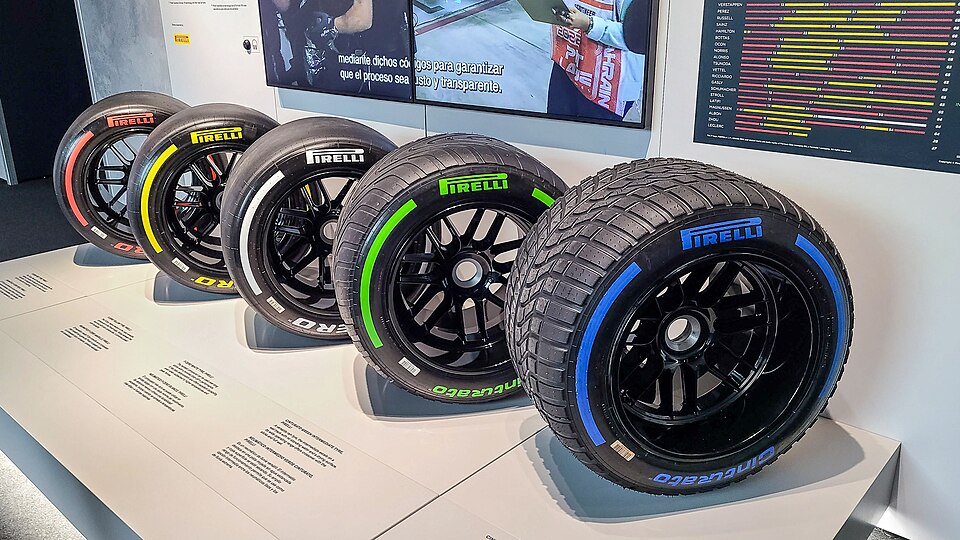
Formula 1 racing relies on a sophisticated tire strategy orchestrated by sole supplier Pirelli. For each Grand Prix, Pirelli selects three dry slick compounds from a range spanning C1 (hardest) to C5 (softest), each color-coded: Soft (red sidewall), Medium (yellow), Hard (white). These compounds balance grip and durability, with softer options offering maximum traction but faster degradation.
For wet conditions, Intermediate (green) and Full Wet (blue) tires provide essential water dispersion. Understanding this tire ecosystem is crucial for teams and fans alike, especially in the context of Sarah Moore Racing where strategy decisions can determine podium positions.
- Pirelli has been the exclusive F1 tire supplier since 2011, providing a range of 6 slick compounds (C1-C5/C6 variants) with three selected per race based on track characteristics.
- Tire colors are relative: the softest of the three chosen compounds is red (Soft), the middle is yellow (Medium), and the hardest is white (Hard); green (Intermediate) and blue (Full Wet) are for wet conditions.
- F1 rules mandate using at least two different compounds in dry races, with strict allocation limits: 13 dry slick sets, 4 intermediate sets, and 2 full wet sets per driver per weekend.
What Are the Pirelli F1 Tire Compounds and Their Color Coding?
The Pirelli Compound Range: C1 to C5 and Selection for Each Grand Prix
Pirelli manufactures a comprehensive palette of six dry-weather slick compounds, designated C1 through C6 (with C6 being the ultra-soft variant). However, for any given Grand Prix, only three specific compounds are selected from this range to match the circuit’s unique demands. The selection process considers asphalt abrasiveness, expected temperatures, and the track’s inherent wear characteristics.
For highly abrasive circuits such as Spa-Francorchamps or Suzuka, where tire degradation is accelerated, Pirelli typically nominates harder compounds (lower C numbers like C1, C2, or C3) to withstand the punishing surface. Conversely, smoother street circuits like Monaco or low-abrasion tracks favor softer compounds (higher C numbers like C4 or C5) to maximize grip. This adaptive approach ensures competitive racing by preventing excessively rapid tire wear while maintaining performance differentiation between compounds.
The absolute hardness scale remains constant: C1 represents the hardest, most durable compound, while C5 (and the now-retired C6) offers the softest, most grippy but shortest-lived rubber. Pirelli’s selection process is part of a comprehensive tire compound strategy that aims to balance competition and safety, often in collaboration with the FIA (Pirelli, 2026).
Color Coding System: Red, Yellow, White — Relative Designations per Race
The color-coding system in Formula 1 is designed for quick visual identification, but it operates on a relative rather than absolute scale. For each Grand Prix, Pirelli assigns three dry compounds from the C1-C5 range, and these are labeled based on their position within that specific trio:
- Red (Soft): The softest compound among the three selected for the race weekend, regardless of its absolute C number. The red sidewall indicates the highest grip but fastest degradation. In a race where Pirelli chooses C2, C3, and C4, the C4 becomes the Soft (red), even though C4 is not the softest possible compound overall.
- Yellow (Medium): The middle compound in terms of hardness among the three chosen. It offers a balance between grip and durability, making it a versatile option for various stint lengths. The yellow sidewall provides a clear visual identifier for drivers and fans.
- White (Hard): The hardest and most durable of the three selected compounds. The white sidewall signifies the longest-lasting tire, ideal for long stints or high-wear conditions, though it may sacrifice some ultimate lap time compared to softer options.
- Green (Intermediate): Designed for damp or light rain conditions, the Intermediate tire features a green sidewall. It has a tread pattern that can handle light moisture while still providing reasonable grip on a drying track.
- Blue (Full Wet): The Full Wet tire, marked by a blue sidewall, is engineered for heavy rain. Its deep grooves effectively displace large volumes of water to prevent aquaplaning, making it essential for very wet conditions.
This relative system means that the “Soft” tire at one circuit could be harder than the “Hard” tire at another, depending on the track’s needs. Understanding this nuance is essential for interpreting tire strategies across different races. The specifications and performance requirements for Intermediate and Full Wet tires are detailed in the 2026 F1 technical regulations.
Wet Weather Tires: Intermediate and Full Wet Compounds
Intermediate Tires (Green): For Damp and Light Rain Conditions
- Purpose: Intermediate tires are designed for conditions where the track surface is damp or experiencing light rain. They provide a crucial bridge between dry slicks and full wets, offering grip when the circuit is partially wet but not flooded.
- Tread Design: These tires feature a moderate tread pattern with grooves that can channel away light water while maintaining enough rubber contact for dry-line performance. The green sidewall offers instant recognition.
- Performance Window: Intermediates operate effectively in temperatures between approximately 20°C and 40°C, with optimal performance when the track is damp but not saturated. They warm up relatively quickly, allowing drivers to push soon after fitting.
- Strategic Use: Teams typically switch to intermediates when light rain begins or when a drying track still has damp patches. They are often used in the early stages of a race that starts wet but is expected to dry, or during brief showers on an otherwise dry circuit. The decision to pit for intermediates involves careful calculation of time loss versus gained lap times.
- Degradation: While intermediates are more durable than full wets in light conditions, they still experience significant wear if used on a drying track. As the circuit dries, their performance drops rapidly, often by 0.5-1.0 seconds per lap, making timely switching back to slicks critical.
- Allocation: Each driver receives 4 sets of Intermediate tires for a standard Grand Prix weekend, providing enough flexibility for multiple changes if weather conditions fluctuate. This allocation is separate from the 13 dry slick sets and 2 full wet sets.
Full Wet Tires (Blue): Heavy Rain and Aquaplaning Prevention
- Purpose: Full Wet tires are engineered for severe weather conditions involving heavy rain and standing water. Their primary function is to prevent aquaplaning by efficiently displacing large volumes of water from the track surface.
- Tread Design: These tires feature extremely deep, wide grooves that can channel up to 60 liters of water per second at high speed. The blue sidewall distinguishes them from other compounds. The aggressive tread pattern maximizes water evacuation but reduces rubber contact with the road, resulting in lower dry grip.
- Performance Characteristics: Full Wets are designed to operate in temperatures ranging from 10°C to 30°C. They warm up more slowly than intermediates due to reduced rubber surface area, requiring careful management during formation laps and early race phases.
- Strategic Use: Teams deploy Full Wets when the track is heavily saturated, typically during downpours or when visibility is severely compromised. They are essential for safety, as driving on intermediates in such conditions risks loss of control due to aquaplaning. The decision to use Full Wets is often made by race control, who may mandate their use in extreme weather.
- Allocation: Each driver is allocated only 2 sets of Full Wet tires per weekend, reflecting their specialized nature and the expectation that they will be used only in genuinely wet conditions. This limited supply forces teams to be judicious in their deployment.
- Degradation and Wear: Full Wets are constructed from softer rubber compounds to enhance grip in wet conditions, which means they wear more quickly if used on a drying track. Teams must monitor their condition closely and switch back to intermediates or slicks as soon as the track dries sufficiently to avoid unnecessary wear.
F1 Tire Strategy, Rules, and 2026 Updates
Tire Rules and Allocation: Mandatory Compounds and Set Limits
| Parameter | Value | Notes |
|---|---|---|
| Dry Slick Sets per Weekend | 13 | Composed of: 2 Hard, 3 Medium, 8 Soft (standard allocation) |
| Intermediate Sets per Weekend | 4 | For damp or light rain conditions |
| Full Wet Sets per Weekend | 2 | For heavy rain; limited supply encourages careful use |
| Optimal Operating Temperature | ~100°C | Peak performance window; tires lose grip below or above this range |
| Tire Blanket Pre-heat | 100°C | Tires are pre-heated in blankets to bring them into optimal temperature range before installation |
| Mandatory Compound Usage | At least 2 different compounds in dry race | Forces at least one pit stop; prevents single-compound strategies |
| 2026 Front Tire Width Reduction | 25mm | Narrower front tires reduce mechanical grip, increasing importance of aerodynamic downforce |
| 2026 Rear Tire Width Reduction | 30mm | Combined with front reduction, total tire width decreases, affecting car balance and tire management |
| 2026 Available Slick Compounds | 5 | Range C1-C5 (C6 dropped); still three selected per race but from a slightly narrower range |
These allocation rules fundamentally shape race strategy. The mandatory use of at least two compounds ensures that pit stops are inevitable, creating strategic diversity. Limited tire sets force teams to carefully manage their resources across practice, qualifying, and the race.
The 2026 reductions in tire width, combined with a five-compound range (down from six), are designed to increase the performance gap between compounds, encouraging varied stint lengths and pit stop strategies. Tire management becomes even more critical as narrower tires may have different degradation characteristics, requiring drivers to adapt their driving style to preserve rubber. Teams must also consider the sprint race format, which alters tire allocations and adds another strategic layer.
Strategic Factors: Track Abrasion, Temperature, and Weather
Track abrasion is a primary factor: circuits with rough asphalt, such as Spa-Francorchamps or Silverstone, cause accelerated tire wear, pushing teams toward harder compounds that can endure the punishing surface. Conversely, smooth street circuits like Monte Carlo allow for softer compounds that deliver superior grip without excessive degradation.
Temperature also plays a crucial role; higher track temperatures increase rubber degradation, reducing stint lengths across all compounds. Teams monitor track temperature throughout the weekend to fine-tune their choices. Drivers may adjust power unit settings to manage tire temperatures, a technique detailed in Formula 1 power unit technology (Formula1.com, 2025).
Weather is the most volatile element: sudden rain can flip a race’s strategy entirely, forcing rapid switches to Intermediate or Full Wet tires. The mandatory use of at least two dry compounds in a race means that even in perfect conditions, teams must plan at least one pit stop. Under the budget cap, teams cannot afford to waste tires, making efficient management paramount (FIA, 2026).
Approximate degradation rates vary widely by track, but as a general guideline, Soft compounds may last 10-15 laps before significant performance drop, while Hard compounds can stretch to 30 laps or more. While F1 emphasizes compound selection, NASCAR pit stop strategies often focus on tire wear and fuel management in a different regulatory environment. In professional racing, engineers use sophisticated models to predict tire behavior and optimize strategy.
The most counterintuitive aspect of F1 tires is that the color coding is entirely relative. The red Soft tire at one Grand Prix could be harder than the white Hard tire at another, depending on Pirelli’s selection for that specific circuit. This means fans must always check which three compounds are assigned for each race to understand the true performance hierarchy.
To deepen your appreciation of F1 strategy, watch a race and note the color of each driver’s tires after their pit stops. Count how many laps they complete on each compound before pitting again.
You’ll quickly see patterns: drivers on Soft tires often pit earlier due to degradation, while those on Hard compounds can extend stints. This simple observation reveals the tactical chess match between teams, all centered on maximizing the performance of the chosen rubber.
