
Formula E, the FIA’s all-electric single-seater racing championship, was conceived in 2011 and held its inaugural race in Beijing on September 13, 2014. The series was created to promote sustainable electric mobility and showcase the performance potential of electric vehicles in urban environments.
By racing on city streets, Formula E brings motorsport excitement to iconic locations while accelerating global electric vehicle adoption. What started as a napkin sketch has evolved into a technologically advanced, globally recognized racing series that proves electric performance can rival traditional motorsport.
- The series was born from a 2011 Paris dinner between Alejandro Agag and Jean Todt, with the first race won by Lucas di Grassi after a dramatic final-lap incident.
- Four car generations have evolved performance from 150kW to 350kW race power, with regeneration capacity reaching 600kW in Gen3.
- Sustainability is core to Formula E, using recycled materials in tires and designing net-zero carbon cars.
The Birth of Formula E: From Napkin Sketch to Beijing Debut (2011-2014)
The vision for Formula E emerged from a single dinner meeting that would change motorsport forever. On March 3, 2011, Alejandro Agag and Jean Todt sat down in Paris and sketched the foundational ideas for an all-electric racing championship on a napkin. Their concept was simple yet revolutionary: host races in the heart of major cities to demonstrate electric vehicle performance in front of massive public audiences.
This approach would directly combat range anxiety and show that EVs could deliver both excitement and practicality. The early vision focused on city-center circuits like Beijing, Monaco, and New York, transforming urban landscapes into racetracks.
The napkin sketch represented more than just a racing series—it was a blueprint for sustainable urban mobility. This grassroots origin story highlights how a casual conversation between a visionary entrepreneur and a motorsport regulator sparked a global movement.
Alejandro Agag brought entrepreneurial drive as founder and chairman, while Jean Todt, then President of the Fédération Internationale de l’Automobile (FIA), provided essential regulatory backing and motorsport credibility. Their complementary skills turned a sketch into a concrete plan. Early financial and strategic support from partners like Julius Baer was crucial for securing the initial funding and corporate buy-in needed to launch an entirely new championship.
This partnership demonstrated that electric racing required both sporting governance and business innovation to succeed. The collaboration between Agag’s startup mentality and Todt’s institutional authority created a unique model that blended motorsport tradition with disruptive technology. Within three years, this partnership had built the organizational framework, technical regulations, and commercial agreements necessary for a global series.
The inaugural race took place on September 13, 2014, in Beijing, China, with the circuit constructed near the iconic “Bird’s Nest” Olympic Stadium. Hosting the first race in a major global city was symbolic—it placed electric racing directly in front of a massive public audience and media spotlight. The three-year development from concept to reality required building the first Formula E car, the Spark-Renault SRT 01E, establishing team partnerships, and designing temporary street circuits that could handle international single-seater racing.
The Beijing race served as both a sporting event and a public demonstration of electric vehicle capability, attracting hundreds of thousands of spectators and millions of television viewers and enhancing the fan experience. This city-center model became a Formula E signature, differentiating it from traditional circuits and aligning perfectly with its mission to promote EV adoption in urban environments where most driving occurs.
The first race ended with dramatic unpredictability when Lucas di Grassi inherited the lead after a final-lap incident between competing drivers. Di Grassi’s victory was historic—he became the inaugural Formula E race winner amid chaos that perfectly encapsulated the series’ early unpredictability and excitement. The final-lap drama underscored that electric racing could deliver the same edge-of-your-seat moments as traditional motorsport, while also highlighting the technical challenges of a new championship.
This unpredictable start set the tone for Formula E’s early seasons, where reliability issues and close racing created a unique competitive environment. Di Grassi’s win from the chaos symbolized the series’ willingness to embrace the unexpected and its focus on entertainment value alongside technological progress.
Formula E’s Technological Evolution: From Gen1 to Gen3 Evo
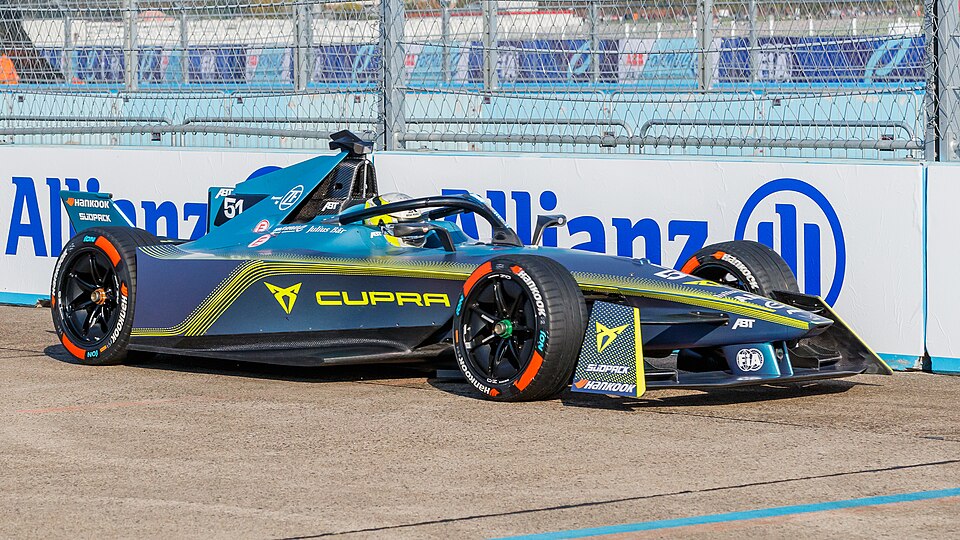
Formula E’s car generations reflect a relentless pursuit of higher performance, greater efficiency, and deeper sustainability. Each generation has pushed boundaries in power output, energy regeneration, and design innovation. The progression from Gen1 to Gen3 Evo represents one of the fastest technological development cycles in motorsport history, with significant leaps occurring every few seasons.
This rapid evolution is driven by Formula E’s dual mandate: to serve as a competitive racing series and to act as a testbed for electric vehicle technology that eventually filters into consumer EVs. The cars have transformed from proof-of-concept racers to machines that outperform many traditional combustion-engine counterparts in acceleration and energy management.
Car Generations Compared: Gen1 to Gen3 Evo
| Generation | Seasons | Race Power (kW) | Qualifying Power (kW) | Key Innovations |
|---|---|---|---|---|
| Gen1 | 1-4 | 150 | 200 | Proved electric viability; mid-season battery upgrade enabled 50% better energy regeneration and eliminated mid-race car swaps |
| Gen2 | 5-8 | 200 | 250 | Increased range and speed; introduced halo safety device and Attack Mode |
| Gen3 | 9-10 | 350 | Not specified | 600kW regeneration; removed rear hydraulic brakes; 60kg lighter |
| Gen3 Evo | 11+ | 350 | Not specified | All-wheel drive for qualifying and Attack Mode; 0-60mph in 1.82s; enhanced aerodynamics |
The table reveals a clear upward trajectory in power and efficiency. Race power jumped from 150kW in Gen1 to 350kW in Gen3—a 133% increase that fundamentally altered the cars’ performance envelope. The introduction of Attack Mode in Gen2 added a strategic power boost element, while Gen3’s removal of rear hydraulic brakes represented a bold engineering shift toward full regenerative braking.
The most recent Gen3 Evo iteration introduces all-wheel drive for qualifying and Attack Mode, further closing the performance gap with traditional high-speed racing series. This progression shows Formula E’s commitment to continuous improvement, with each generation addressing limitations of the previous while introducing new technical challenges for teams to solve.
Power and Performance: The 150kW to 350kW Leap
- Gen1: 150kW race power
- Gen2: 200kW race power
- Gen3: 350kW race power
The 133% increase in race power from Gen1 to Gen3 transformed Formula E from a cautious city racer into a serious performance machine. This leap means cars now achieve top speeds exceeding 320 km/h (200 mph), compared to Gen1’s 225 km/h limit. The power surge resulted from advancements in battery energy density, motor efficiency, and thermal management systems.
For context, Gen3’s 350kW output approaches the power levels of some Formula 1 power units, though total vehicle performance differs due to weight and aerodynamic regulations. This dramatic power increase has made races faster and more demanding, requiring drivers to manage greater acceleration forces and teams to develop more sophisticated cooling solutions. The performance evolution demonstrates how rapidly electric propulsion technology has matured within a single decade.
Regeneration Breakthrough: 600kW Energy Recovery
Energy regeneration represents the most significant efficiency leap in Formula E’s history. Gen1 introduced regenerative braking with a mid-season battery upgrade that improved energy recapture by 50%. This early system allowed drivers to recover some energy during deceleration but was limited in scope.
Gen3 revolutionized this with a 600kW regeneration capacity—the highest in any racing series. This system can recover up to 40% of the energy used during a race, effectively extending the car’s usable range and reducing battery stress. The technology works by using both front and rear motors as generators during braking, with the Gen3 car notably eliminating rear hydraulic brakes entirely.
This means all deceleration is handled regeneratively, maximizing energy recapture while simplifying the braking system. For race strategy, this allows drivers to be more aggressive with braking points, knowing they are simultaneously recharging the battery. The 600kW system also reduces the need for conservative energy management, enabling closer racing and more overtaking opportunities.
Sustainability: Recycled Tires and Net-Zero Carbon Design
Formula E’s sustainability initiatives extend beyond zero-emission racing to the entire car lifecycle. The Gen3 and Gen3 Evo tires are manufactured with 35% recycled materials, reducing the environmental footprint of consumables. More significantly, the cars are designed with a net-zero carbon goal, encompassing manufacturing, operations, and end-of-life recycling.
This holistic approach considers embedded carbon in materials, logistics emissions, and energy consumption during races. The series uses renewable energy to charge all cars at events, and carbon offset programs address remaining emissions. These measures matter because they set a benchmark for sustainable motorsport and demonstrate that high-performance racing need not conflict with environmental responsibility.
As consumer EVs become mainstream, Formula E’s focus on circular economy principles—like recycled tires and net-zero design—provides a roadmap for the entire automotive industry. The series proves that sustainability can be integrated at the core of vehicle design without compromising performance, influencing both racing and road car development.
The most surprising finding is that Formula E achieved such high performance—350kW power, 600kW regeneration, 0-60mph in 1.82 seconds—while maintaining rigorous sustainability standards. This combination of excitement and eco-friendliness redefines what racing can be. For readers interested in seeing these innovations in action, watching a current Formula E race or visiting the official FIA Formula E website provides a direct look at how electric technology is evolving at the cutting edge.
Formula E’s history demonstrates that electric racing can thrive commercially and competitively while advancing sustainable mobility. The series’ growth from a Paris dinner conversation to a world racing championship with manufacturer involvement proves that visionary partnerships and continuous innovation can disrupt established industries. As battery technology improves and more automakers commit to electrification, Formula E will likely remain the premier testing ground for EV performance, offering lessons that extend far beyond the racetrack.
