
In 2026, every 10kg of extra fuel costs a team 0.25 to 0.40 seconds per lap, a penalty that compounds over a race distance and can decide podium positions. Fuel strategy is the comprehensive plan for managing fuel loads, consumption rates, and pit stop timing to maximize race performance.
It balances car weight, lap times, tire wear, and refueling efficiency across world racing series like Formula 1, NASCAR, and endurance racing. Mastery of fuel strategy separates winning teams from mid-field competitors.
- 10kg of fuel adds 0.3s/lap in F1, forcing teams to balance weight against speed (themotorsportmetrics.com, 2026).
- Short-fueling 5-15kg light at the start can gain early tire and speed advantages (Red Bull Racing, 2024).
- Lift-and-coast and short-shifting techniques save 10-30% fuel during races (medium.com/formula1-tech, 2025).
The Performance Impact of Fuel Weight: Why Every Kilogram Counts
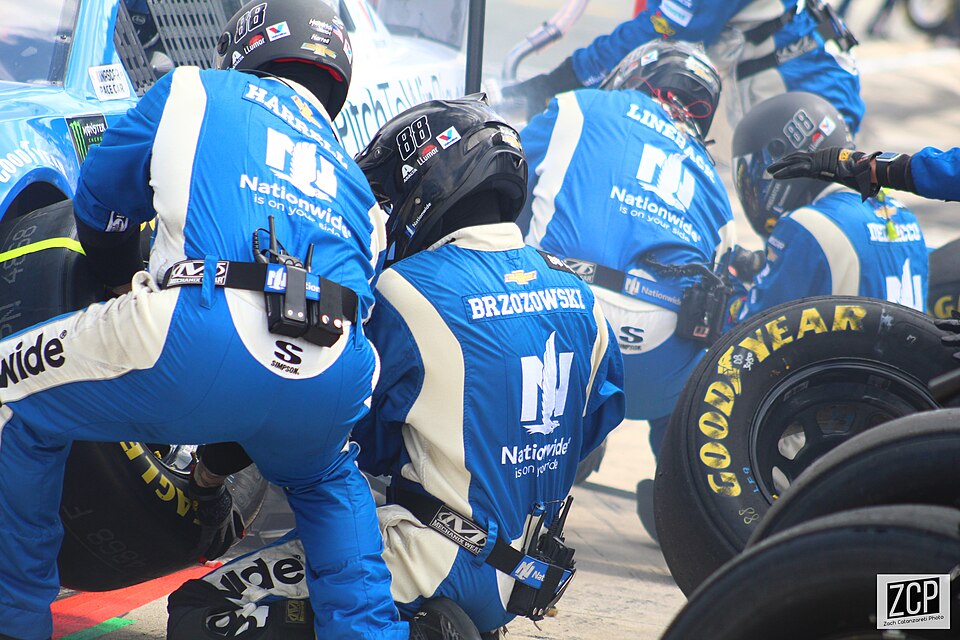
Fuel weight directly influences lap time, tire degradation, and car handling. Teams must calculate the optimal fuel load to start with, weighing the trade-offs between a heavier car that requires fewer pit stops and a lighter car that is faster on track but needs more frequent refueling.
The physics are straightforward: more mass means slower acceleration and higher cornering forces, which increase tire wear. In 2026, with fuel efficiency a paramount concern across all series, understanding this weight penalty is the foundation of any successful race strategy.
10kg Extra Fuel = 0.3s/Lap Time Penalty
- 0.25-0.40 seconds per lap: Every additional 10kg of fuel slows a Formula 1 car by this margin (themotorsportmetrics.com, 2026).
- ~0.3s/lap in F1: A commonly cited average from recent telemetry analysis (youtube.com/shorts/m4ZJ3Bh7DRk, 2026).
This penalty is not linear but consistent enough for strategic modeling. Over a 60-lap race, carrying 20kg extra fuel would cost approximately 6 seconds per lap, accumulating to a 360-second (6-minute) deficit. Such a gap is insurmountable without other cars pitting.
The penalty forces teams to minimize starting fuel loads, even if it means an extra pit stop. The strategy becomes a mathematical equation: can the time saved on track with a lighter car outweigh the time lost during an additional pit stop? This calculation drives the core of pre-race planning.
F1’s 100kg Fuel Cap and Strategic Trade-offs
Formula 1 regulations mandate a maximum fuel allowance of 100kg per race (redbullracing.com, 2020; still relevant in 2024-2026). This fixed cap creates a strategic dilemma: teams must distribute this fuel across the race distance. Starting with a full 100kg load means the car is heaviest at the beginning, resulting in slower lap times and increased tire wear.
Alternatively, starting with less fuel (e.g., 85-90kg) allows for a lighter, faster car initially but necessitates a pit stop to take on the remaining fuel later. The choice impacts tire management—a heavier car degrades tires faster, potentially forcing an earlier stop regardless of fuel level. Teams must simulate both scenarios, factoring in predicted safety car periods and the performance differential between old and new tires.
Fuel Weight’s Ripple Effect on Tire Wear and Handling
The weight of fuel affects more than just straight-line speed. A heavier car increases vertical load on tires, accelerating degradation, especially in high-corners like those at Monaco or Spa. This forces teams to consider tire compound choices and stint lengths in tandem with fuel loads.
Short-fueling—starting 5-15kg below the maximum possible load—provides a tangible early-race advantage. The car is nimbler, tires last longer, and lap times are lower.
Teams employing this tactic plan to recover the fuel deficit later through efficient driving techniques (like lift-and-coast) or by timing a pit stop when the track is clear, minimizing the time lost to rivals who started heavier. The ripple effect connects fuel strategy directly to tire strategy, making them inseparable in race planning.
How Do Teams Optimize Fuel Loads and Adjust in Real-Time?
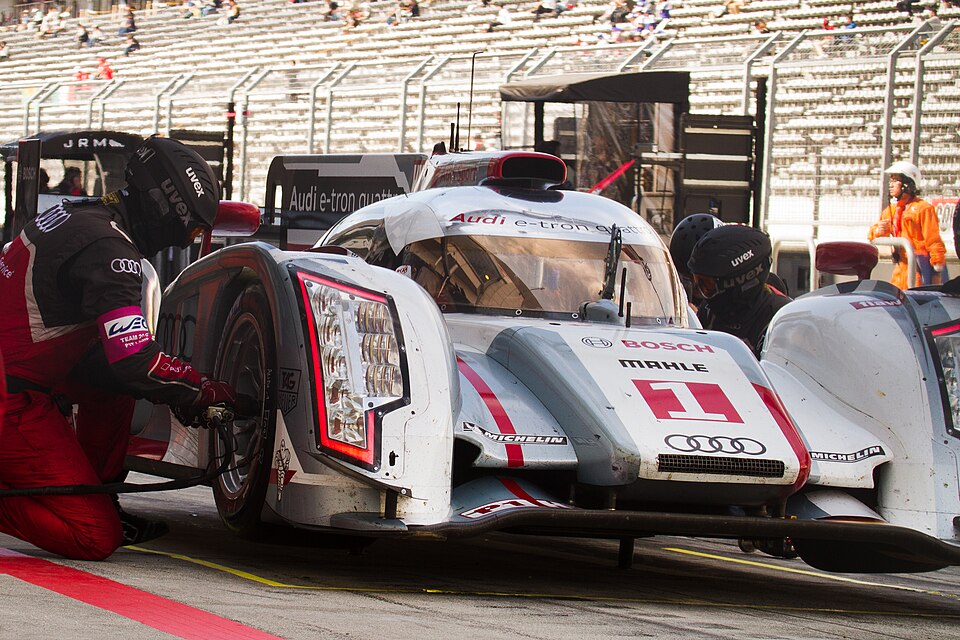
Optimizing fuel loads is not a pre-race-only activity. Teams use a combination of tactical starting loads, driver technique, and real-time telemetry to adapt as the race unfolds.
The goal is to maintain the highest possible average speed while ensuring the car never runs out of fuel. This requires precise calculations, driver discipline, and constant communication between the cockpit and the pit wall.
Short-Fueling Strategy: Starting 5-15kg Light for Early Speed Gains
- Lighter car acceleration: Reduced mass improves acceleration out of corners and reduces lap times by 0.1-0.3 seconds per lap initially.
- Tire preservation: Lower vertical load decreases tire temperature and wear, allowing for longer stints on a single set of tires.
- Track position leverage: Early speed gains can help a driver gain positions before the first pit stop, offsetting the later time lost refueling.
Teams recover the fuel deficit by instructing drivers to employ fuel-saving modes later in the stint or by making a slightly longer but more efficient pit stop. The key is that the time gained early must exceed the time lost later.
This strategy is particularly effective on circuits with many slow corners where weight penalty is most pronounced. Red Bull Racing has popularized this approach in recent F1 seasons, often starting with fuel loads 5-10kg below the theoretical maximum to gain an early tactical advantage (Red Bull Racing, 2024).
Driver Techniques: Lift-and-Coast and Short-Shifting for 10-30% Fuel Savings
Drivers are critical actuators of fuel strategy. Two primary techniques are:
- Lift-and-coast: Instead of maintaining full throttle to the braking point, the driver lifts off earlier and coasts, reducing engine load and fuel injection. This can save 10-30% fuel in a lap (medium.com/formula1-tech, speedsecrets.com, 2025).
- Short-shifting: Shifting gears at lower RPMs before the power peak reduces fuel consumption per lap, though it sacrifices some acceleration.
These techniques are used strategically—often when a driver is managing a gap or during a safety car period. In NASCAR, throttle control is paramount; drivers modulate throttle application on superspeedways to save fuel while maintaining speed in the draft. The skill lies in minimizing time loss while maximizing fuel savings, a nuanced art that teams train extensively through simulation.
Telemetry Systems: Real-Time Monitoring and In-Race Adjustments
Modern racing relies on sophisticated telemetry, where data analytics in modern racing enable precise fuel flow monitoring and real-time adjustments. Sensors monitor fuel flow rate, total consumption, and tank levels in real-time, transmitting data to engineers in the pit lane. This allows for precise tracking of whether a driver is on target to finish without refueling or if they need to increase saving.
Engineers communicate via radio, instructing drivers to adjust engine mapping, increase lift-and-coast zones, or shift earlier. Tools like fuel flow sensors (mandatory in F1) and simulation software (e.g., ACC Fuel Calculator, coachdaveacademy.com) enable teams to model various scenarios and make data-driven decisions mid-race. The integration of this data transforms fuel strategy from a static plan into a dynamic, responsive system.
Pit Stop Integration and Series-Specific Approaches
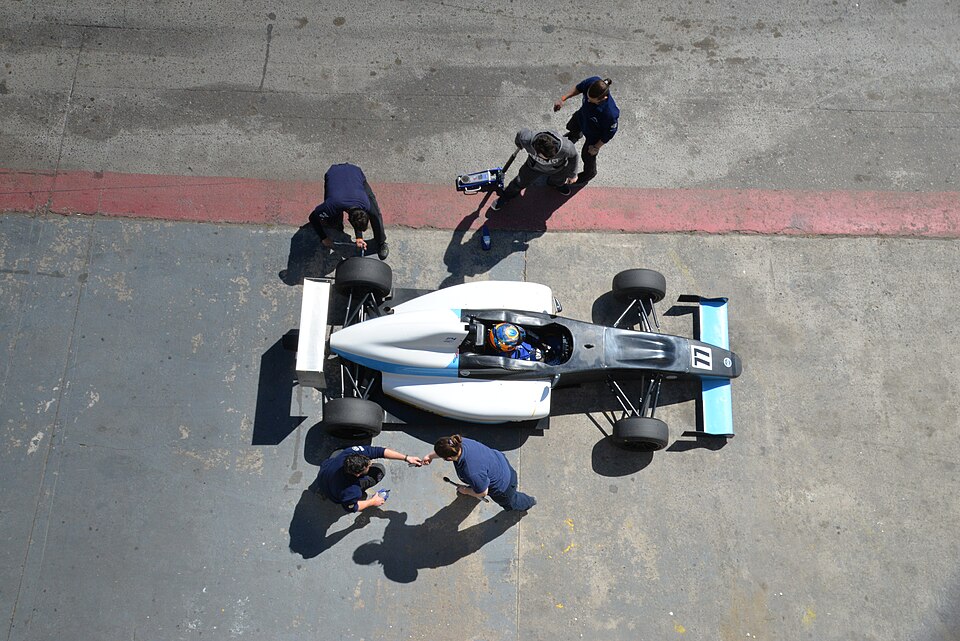
Fuel strategy is inseparable from pit stop planning. The number, timing, and duration of stops are determined by fuel loads, tire wear, and track position. Different racing series have evolved distinct strategic philosophies based on their regulations, race lengths, and car characteristics.
Calculating Optimal Pit Windows to Minimize Stops
Teams calculate fuel consumption per lap during practice and qualifying sessions. This data, combined with tire degradation rates, determines the maximum possible stint length. The optimal pit window is when the time lost by pitting (pit lane entry/exit, refueling time, tire changes) is less than the time gained on track by running a lighter car.
For example, if a car loses 25 seconds in the pits but gains 0.3 seconds per lap with 20kg less fuel, the break-even point is about 83 laps. Teams aim to pit just before this threshold, often adjusting for traffic and track position. Precise calculations minimize the total number of stops, as each stop carries a fixed time cost that must be recovered on track.
Safety Car and VSC: Unexpected Fuel-Saving Opportunities
Safety car and virtual safety car (VSC) periods dramatically reduce fuel consumption because all cars travel at reduced speeds (often 50-60% of race pace). This provides a hidden fuel-saving bonus:
- Extended stints: Drivers can complete more laps on a given fuel load during a safety car, potentially avoiding an extra pit stop.
- Strategic pitting: Teams often use these periods to make unscheduled stops with minimal time loss, as the entire field is circulating slowly.
- Fuel budget reset: The reduced consumption can allow a driver to extend their target stint by several laps, altering the race strategy mid-event.
Recent races in F1 and IndyCar have seen pivotal strategy shifts due to timely safety cars, where a driver who planned for two stops could complete the race on one, or vice versa. Teams have dedicated strategists who monitor the likelihood of a safety car and model its impact on fuel budgets in real-time.
F1 vs NASCAR vs Endurance: Different Strategic Philosophies
The following table compares core strategic elements across major series, a key focus of exploring international motorsports series:
| Series | Fuel Cap/Tracking | Typical Stint Length | Primary Strategy Focus |
|---|---|---|---|
| F1 | Fixed 100kg per race; precise fuel flow sensors | 20-40 laps (dependent on circuit) | Minimize stops via short-fueling and tire management; precision in fuel calculations |
| NASCAR | Throttle-based consumption tracking; no fixed cap | 50-100 laps (varies by track) | Fuel saving via throttle control and drafting; manage pit road competition and yellow flag timing |
| Endurance (e.g., Le Mans) | No fixed cap; driver style-based consumption | 1-4 hours per stint (multi-driver) | Balance speed with fuel conservation for fewer stops; reliability and driver stints |
Analysis: F1’s fixed fuel cap forces a focus on efficiency within a strict limit, making every kilogram critical. NASCAR’s longer stints and lack of a cap emphasize throttle discipline and the ability to save fuel while racing in traffic.
Endurance racing prioritizes fuel-saving driving styles to extend stints over many hours, with strategy heavily influenced by driver rotation and mechanical reliability. The approaches differ fundamentally because of race duration, car design, and refueling regulations.
