
Aerodynamics in race car design is fundamentally about balancing two opposing forces: downforce, which presses the car to the track for better cornering grip, and aerodynamic drag, which slows the car on straights. This balance determines lap time success.
Modern racing, particularly Formula 1, employs sophisticated underbody designs and airflow control systems to optimize this trade-off. Understanding how downforce is generated and how turbulent air is managed reveals the engineering secrets behind competitive race cars.
- Downforce is the downward force that increases tire grip, allowing higher cornering speeds, but it always increases drag.
- Ground effect uses shaped underbodies and Venturi tunnels to create a low-pressure zone under the car, generating efficient downforce with less drag than wings.
- Modern airflow management focuses on sealing the underbody with vortices and deflecting turbulent air from the front tires to maintain aerodynamic efficiency.
How Downforce and Ground Effect Shape Race Car Performance
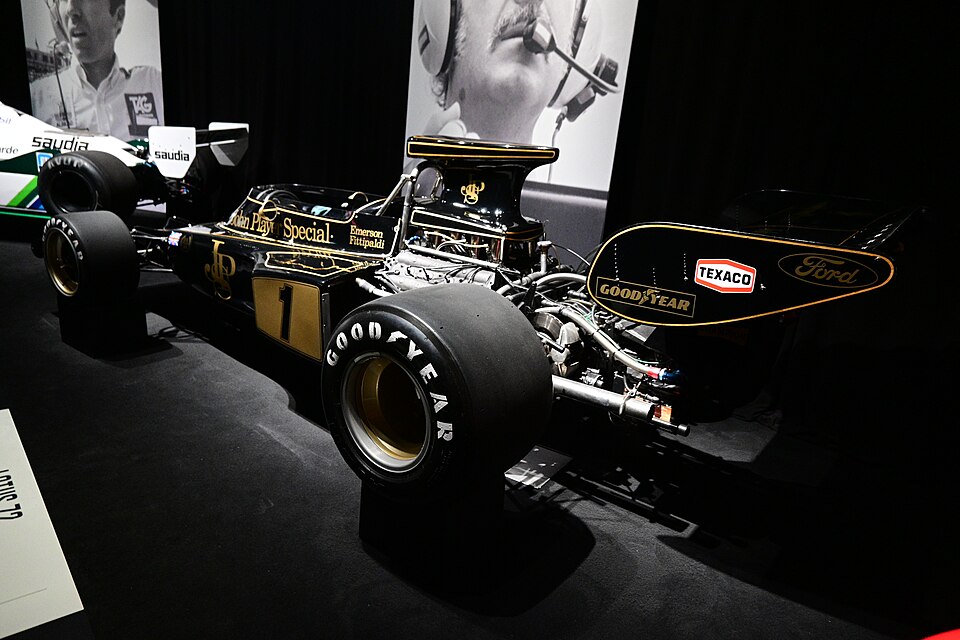
Creating Downforce: The Essential Force for Cornering Grip
Downforce is a downward lift force created by the aerodynamic features of a race car. Its purpose is to increase vertical force on the tires, creating more grip and enabling higher cornering speeds. This principle operates in reverse to airplane wings: instead of generating lift to rise, race cars generate downforce to stay planted.
Downforce increases with the square of the car’s speed, meaning its effect grows exponentially as velocity rises. At 100 mph, a car might generate 1,000 pounds of downforce; at 200 mph, that could exceed 4,000 pounds.
However, it requires a minimum speed—typically around 60 mph—to produce a significant effect. Below this threshold, downforce is minimal and handling relies primarily on mechanical grip.
The fundamental challenge is that generating downforce through passive devices (wings, spoilers, underbody designs) inevitably increases aerodynamic drag. Drag resists forward motion and reduces straight-line speed. This creates an inherent compromise: more downforce improves cornering but harms acceleration and top speed; less drag improves straight-line performance but reduces cornering grip.
The optimal setup depends on the specific track characteristics—high-downforce circuits like Monaco require different configurations than low-drag tracks like Monza. Teams often adjust wing angles, ride height, and other aero elements to find the perfect balance for each venue. For a deeper dive into how engineering principles shape vehicle performance, see the comprehensive guide on Formula 1 technical regulations, which covers how rules influence aerodynamic development.
Ground Effect: Using Underbody Design for Efficient Downforce
Ground effect represents a revolutionary approach to generating downforce through underbody aerodynamics. This principle exploits the aerodynamic effects created by shaped tunnels and floor designs beneath the car. A simple analogy illustrates the physics: hold a tarpaulin close to the ground on a windy day.
As the tarp nears the surface, the available cross-sectional area for air to pass between it and the ground shrinks. This causes air to accelerate and pressure to drop beneath the tarp, creating a suction that pulls it downward.
Race cars apply this same principle using Venturi tunnels—narrow passages under the chassis that accelerate airflow and create a low-pressure zone. This low pressure “sucks” the car toward the track surface, generating downforce without the drag penalty of traditional wings. The design typically features a flat floor with sealed edges and a diffuser at the rear that gradually expands, allowing pressure to recover smoothly.
Ground effect has become the successor to earlier streamlining approaches and now dominates Formula 1 and IndyCar designs. It is more efficient because it produces downforce with significantly less drag compared to upper-body aerodynamic devices.
The 2022 Formula 1 regulations ushered in a new ground effect era with dramatically redesigned underbodies, and the 2026 updates continue to refine this philosophy. Understanding ground effect is essential for anyone studying professional racing engineering, as it represents the most advanced application of aerodynamic principles in motorsport.
Formula 1’s Airflow Management: Vortex Control and Wake Deflection
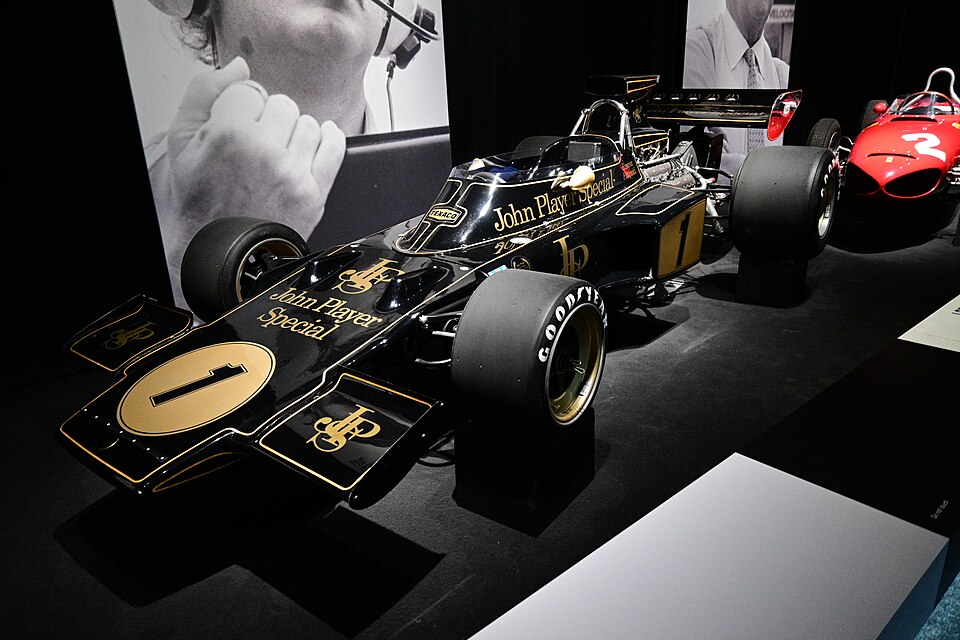
Vortex Generation: Sealing the Underbody’s Low-Pressure Zone
Modern Formula 1 cars rely on deliberate vortex generation to protect the critical low-pressure underbody suction. Engineers intentionally create swirling air masses (vortices) that act as an “air curtain” along the floor edges. This curtain seals the underbody, preventing high-pressure air from the sides from rushing in and destroying the ground effect’s low-pressure zone.
Key vortex generators on F1 cars include:
- Front wing endplates: shaped to spill air outward and create controlled vortices that travel along the car’s sides
- Bargeboard turning vanes: complex surfaces that direct airflow and generate rotational air patterns near the sidepod inlets
- Sidepod inlet designs: engineered to produce vortices that interact with the floor edges and help maintain flow attachment
- Rear diffuser elements: sometimes incorporate vortex generators to maintain the diffuser’s sealing performance
Without these sealing vortices, the ground effect downforce would be severely compromised. The vortices create a barrier that maintains the pressure differential between the high-pressure air outside and the low-pressure air under the car. This technique represents a sophisticated level of airflow management where what might appear as chaotic turbulence is actually a carefully controlled design feature.
The development race in F1 constantly focuses on optimizing vortex generation and positioning to maximize underbody efficiency while managing overall drag. The 2026 technical regulations, discussed in detail in the Formula 1 power unit technology article, further emphasize the importance of clean airflow management as power unit integration becomes more critical.
Managing Front Tire Wake: Deflecting Turbulent Air
The front tires present one of the greatest aerodynamic challenges in race car design. As the wheels rotate at high speed, they generate massive turbulent wakes—chaotic, high-energy airflows that severely degrade downstream aerodynamic performance.
This turbulent air can disrupt the carefully managed airflow over the car’s bodywork, damage the effectiveness of the underbody Venturi tunnels, and reduce cooling efficiency for brakes and engines. Studies show that poorly managed tire wake can reduce overall downforce by 20-30%.
The solution lies in proactive deflection strategies. Engineers design front wing elements, suspension components, and wheel arch geometries to redirect this turbulent air away from critical areas. The front wing’s complex multi-element designs not only generate downforce but also shape the airflow around the tires, lifting the worst of the turbulence upward and outward.
Suspension arms and brake ducts are aerodynamically profiled to slice through the air and minimize their own wake while steering tire-generated turbulence away from the car’s sensitive mid-section. Some teams even use wheel rims with specific spoke patterns to act as turbulent air managers.
This tire wake management is a constant area of development in Formula 1, especially as aerodynamic regulations evolve. When the 2022 regulations introduced a new ground effect era, teams had to completely rethink how to handle tire wake with the changed bodywork architecture.
The ability to effectively deflect front tire turbulence directly impacts the car’s overall aerodynamic efficiency and is often a key differentiator between championship contenders and midfield teams. The impact extends to race strategy as well, influencing tire compound choices and pit stop timing when following other cars in dirty air.
The most counter-intuitive insight from modern race car aerodynamics is that the car’s underside—not its iconic wings—has become the primary downforce generator in Formula 1. This represents a complete reversal from just a few decades ago when front and rear wings dominated downforce production. The critical lesson is that managing turbulent air from the tires is as important as generating clean downforce.
To see these principles in action, watch onboard footage from the 2025 Formula 1 season and observe how cars maintain cornering speeds; then study technical drawings of their flat bottoms and diffusers to connect the visual performance to the ground effect physics explained here. For those interested in how these aerodynamic principles translate to other racing series, the NASCAR pit stop strategies article explores how different aerodynamic philosophies affect race tactics in stock car racing.
