
Professional engine tuning for racing performance involves precise adjustments to engine mapping, fuel injection, ignition timing, and boost pressure to safely increase power output by 20-30% while maintaining reliability under race conditions (RaceChip USA). This technical discipline requires understanding how each parameter interacts to prevent engine damage from detonation or excessive stress. For drivers and teams in professional racing, achieving the optimal balance between peak horsepower and endurance is critical for race-day success.
- Professional dyno tuning can safely increase racing engine power by 20-30% when combined with proper supporting modifications (RaceChip USA).
- Engine balancing of the rotating assembly (crank, rods, pistons) reduces vibration and extends component life, enabling higher RPM operation (Hot Rod, 2016; eaperformance.com.au, 2024).
- Custom ECU tunes that prioritize broad torque delivery over peak horsepower improve drivability and reduce stress on drivetrain components (eaperformance.com.au, 2024).
Core Engine Mapping Parameters for Racing Performance
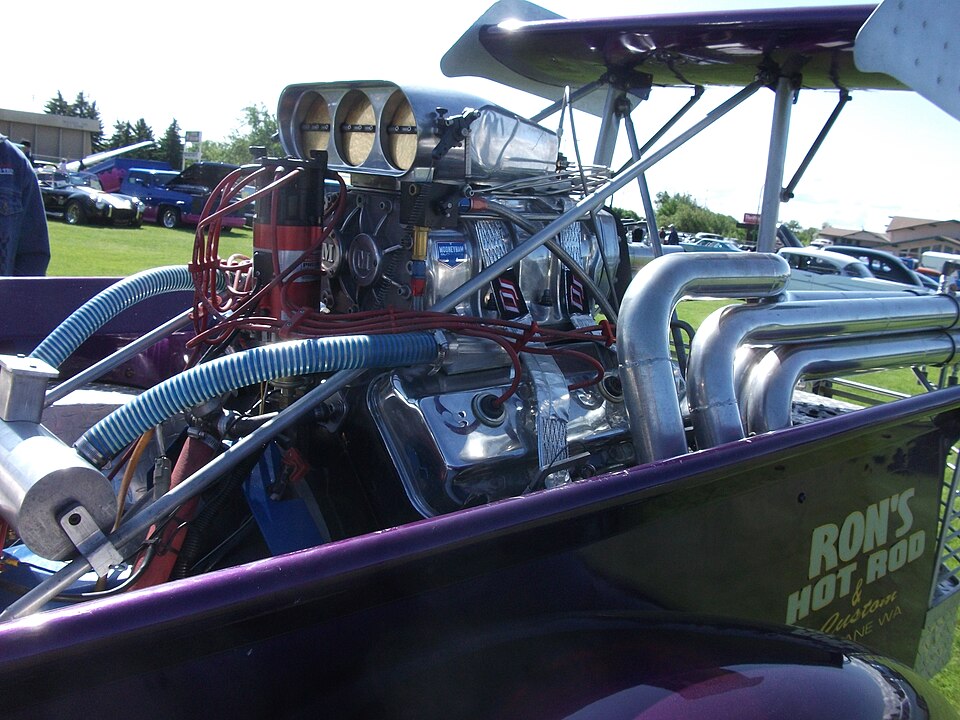
Engine tuning for racing performance fundamentally revolves around three core mapping parameters: air-fuel ratio (AFR), ignition timing, and boost pressure (for forced induction). These parameters must be coordinated to maximize power while avoiding destructive detonation. Modern racing engines rely on electronic control units (ECUs) that manage fuel injection and spark timing based on sensor inputs.
Remapping these stock curves or using standalone ECUs allows tuners to optimize for specific fuel types, compression ratios, and performance goals. The process requires deep knowledge of combustion dynamics—advancing ignition timing too far causes knock, while leaning out the AFR excessively raises cylinder temperatures and risks catastrophic failure.
Forced induction engines add complexity: increased boost demands richer mixtures and retarded timing to maintain safe operating conditions. Successful racing tuners treat these parameters as an integrated system, not isolated adjustments.
Fuel and Ignition Management: Coordinating AFR and Timing for Maximum Power
- Air-Fuel Ratio (AFR) optimization is the foundation of performance tuning. Stoichiometric AFR for gasoline is 14.7:1, but racing engines typically run richer (12.5:1 to 13.5:1) under high load to cool cylinders and prevent detonation (HKS Power).
- Lean fuel maps ( AFR above 14:1 ) risk engine damage through excessive heat and should be avoided without proper monitoring via wideband O2 sensors and knock sensors (previous research).
- Ignition timing advance improves power by ensuring peak cylinder pressure occurs at optimal crank angle (typically 15-20 degrees after top dead center). HKS Power notes that advancing timing increases cylinder pressure and torque output.
-
Detonation prevention is critical.
Detonation occurs when combustion happens spontaneously from heat/pressure, not the spark plug. It destroys pistons and rods instantly.
-
AFR and timing interaction: Richer mixtures allow more ignition advance without knock.
Optimal AFR/ignition balance prevents detonation while maximizing power for endurance racing (hks-power.co.jp).
These interactions mean that changing one parameter requires adjusting others. For example, increasing boost pressure on a turbocharged engine necessitates a richer AFR and often 2-4 degrees of ignition retard to maintain safety margins.
Tuners use dyno sessions to map these relationships across the entire RPM and load range, creating a three-dimensional fuel and ignition table that the ECU follows. The goal is a safe margin above the knock limit—typically 2-3 degrees of ignition timing and an AFR rich enough to keep exhaust gas temperatures below 900°C under maximum load.
Boost Pressure Control: Tuning Forced Induction for Power and Reliability
Street-driven forced induction systems prioritize reliability and drivability, with conservative boost levels (often 10-12 psi for turbocharged gasoline engines) and factory-set wastegate control. Race-tuned systems push boost significantly higher—18-25 psi or more—but require comprehensive supporting modifications. Boost pressure must be balanced to prevent detonation in forced induction engines (HKS Power).
Higher boost levels require richer AFR and more ignition retard to maintain reliability (Driven Racing Oil, Oct 2025). Wastegate control and boost creep prevention are essential; boost creep occurs when the wastegate cannot bleed off enough exhaust gas, causing uncontrolled pressure spikes that can destroy engines. Race turbos often use dual wastegates or electronic boost controllers for precise management.
The relationship between boost and fuel/ignition is nonlinear: each 1 psi increase in boost typically requires approximately 1-2% more fuel and 1-2 degrees of ignition retard to maintain safe operation. Boost pressure tuning is critical for forced induction reliability (Driven Racing Oil, Oct 2025). Unlike naturally aspirated engines, forced induction power gains are directly proportional to boost pressure increase, but the thermal and mechanical stresses rise exponentially, making proper tuning non-negotiable for race engines.
How to Balance Peak Power with Endurance Reliability?
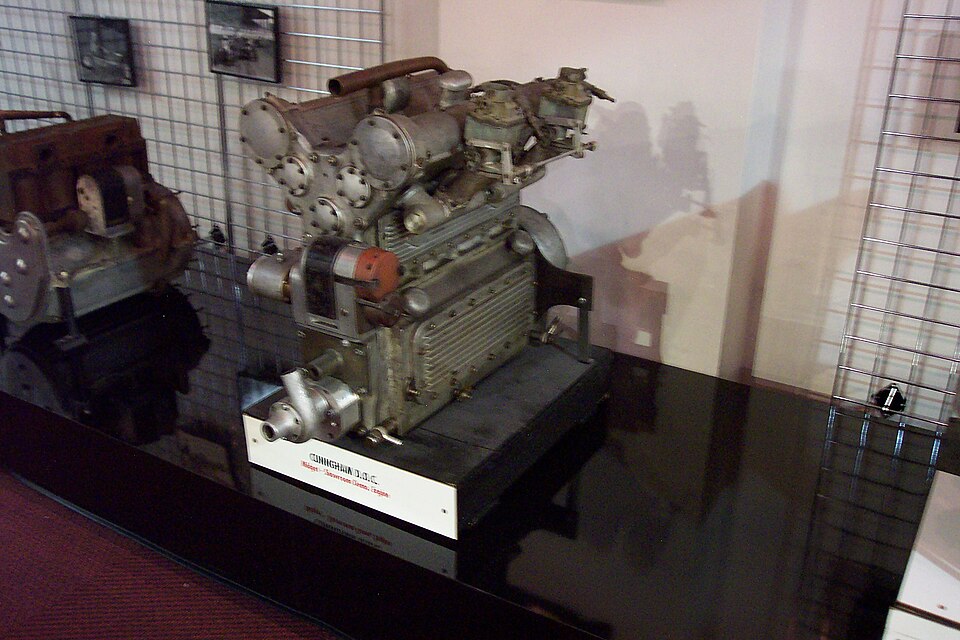
The eternal challenge in racing engine tuning is balancing peak horsepower with the durability needed to finish races. An engine that makes 500 horsepower for 10 seconds but fails after 5 laps is useless in endurance competition. Reliability depends on mechanical strength, thermal management, and prudent tuning decisions that avoid overstressing components.
Engine balancing and torque-focused ECU mapping are two of the most effective strategies for achieving this balance. Rotating assembly balancing reduces internal stresses that cause vibration and premature failure, while custom tunes that emphasize a flat torque curve lessen shock loads on transmissions, differentials, and driveshafts. These approaches often provide more consistent lap times and lower maintenance costs than chasing absolute peak numbers.
Engine Balancing: Rotating Assembly Upgrades for High-RPM Longevity
- Rotating assembly balancing (crank, rods, pistons) reduces vibration and extends engine life by minimizing harmonic forces (Hot Rod, 2016; eaperformance.com.au, 2024).
- Higher RPM operation becomes safer with balanced assemblies because bearing loads are proportional to the square of RPM. A balanced engine can rev 500-1000 RPM higher than an unbalanced counterpart with the same bearing clearance (badasscars.com).
- Precision balancing within 0.1 grams is common for high-performance racing engines. This involves weighing each piston, rod, and wrist pin and matching them to within fractions of a gram, then balancing the crankshaft with Mallory metal or drilling weight.
- Extended component life: Balanced engines experience significantly less bearing wear, main cap bolt stress, and chassis vibration, which translates to longer service intervals and reduced risk of catastrophic failure during races.
Engine balancing is a modification often overlooked in favor of flashy ECU upgrades, yet it provides foundational reliability. For circle track or endurance engines that run at high RPM for extended periods, a balanced rotating assembly can extend component life by 50% or more while enabling higher safe rev limits.
The process typically costs $300-800 for a basic balance job, but for racing applications where engine failure means losing a race or championship, it is an essential investment. Balancing also improves power delivery by reducing parasitic losses from vibration, making it a pure performance gain with no reliability trade-off.
Custom ECU Tunes: Torque Delivery vs. Peak Horsepower
Custom ECU tuning for racing often prioritizes broad torque delivery over peak horsepower because a flatter torque curve yields better real-world performance and reliability. Peak horsepower chasing—where tuning extracts every last horsepower at a narrow RPM range—typically results in an engine that is fragile, inconsistent, and difficult to drive. In contrast, a torque-focused tune provides strong, usable power across the entire rev range, reducing the need for aggressive shifting and keeping engine speeds in the optimal zone.
This approach reduces stress on drivetrain components by smoothing out torque spikes that can shock gears and axles. For endurance racing, where lap consistency and mechanical sympathy are paramount, a flatter torque curve improves lap times more than a peaky high-horsepower curve because the driver can maintain momentum without aggressive throttle inputs. Custom ECU tunes prioritize torque delivery over peak HP (eaperformance.com.au, Nov 2024).
A flatter torque curve reduces stress on drivetrain components and improves lap consistency. Peak horsepower chasing can lead to fragile engines that fail under race conditions.
Torque-focused tuning yields better overall performance for endurance racing. The best racing tunes often sacrifice 5-10 peak horsepower to gain 15-20% more torque in the mid-range, where it matters most for corner exit and acceleration out of slow corners.
Professional Tuning Workflow: Dyno, Data, and Components
Professional engine tuning follows a systematic workflow that combines controlled dyno testing with real-world track validation. The dyno provides a safe, repeatable environment to map fuel, ignition, and boost parameters while measuring horsepower, torque, and air-fuel ratios. However, dyno tuning alone is insufficient—track data logging with wideband O2 sensors is essential to validate that the tune performs reliably under actual racing conditions, where airflow, temperature, and load differ from the dyno cell.
This workflow ensures that power gains are sustainable and that the engine will survive race day. Skipping steps or rushing the process often leads to engine failures that outweigh any horsepower benefits.
Dyno Tuning Process: Baseline, Mapping, and Verification
- Baseline pull: The engine is run in stock or existing tune condition to establish baseline horsepower, torque, and AFR curves. This identifies any existing issues.
- Safe map creation: Starting with conservative fuel and ignition values, the tuner incrementally advances timing and leans AFR while monitoring for knock via knock sensors and exhaust gas temperature (EGT) probes.
- Incremental adjustments: Changes are made in small steps (typically 1-2 degrees of timing or 0.1-0.2 AFR) with multiple pulls at each step to verify gains and safety.
- Final verification: The completed map is run through multiple full-throttle pulls to confirm consistency and absence of knock. A load-bearing pull may also be performed to simulate race conditions.
- Time and cost: A complete dyno session for a racing engine typically takes 4-8 hours depending on complexity. Dyno costs range from $500-1500 per day depending on facility and region (prev research).
- Controlled environment benefit: Dyno tuning allows precise, repeatable adjustments without risk of track damage or weather interference, providing a solid foundation for track tuning.
Professional dyno tuning is not a one-time event but an iterative process. The tuner must understand the engine’s mechanical limits—compression ratio, camshaft profile, head flow capacity—to avoid over-tuning. For forced induction engines, boost pressure is often varied across the RPM range to maximize torque while keeping cylinder pressures within safe limits.
The output is a complete calibration map that the ECU uses to determine fuel injection duration and ignition timing for every combination of RPM and load. This map is then saved to the ECU and prepared for track validation.
Data Logging and Wideband O2 Sensors: Real-Time Track Validation
Data loggers and wideband O2 sensors are indispensable for validating dyno tunes on the track. While dyno testing provides controlled conditions, real-world racing introduces variables like changing air density, track-specific airflow, and thermal soak that can expose lean conditions or ignition issues not seen on the dyno. Data loggers record engine parameters—RPM, throttle position, vehicle speed, coolant temperature, exhaust gas temperature, and wideband O2 readings—during on-track sessions.
This data is later analyzed to identify areas where the tune may be too rich, too lean, or experiencing knock under load. Wideband O2 sensors provide accurate AFR readings across the entire RPM/load range, unlike narrowband sensors that only indicate rich/lean at stoichiometric. Logging software allows overlay of multiple laps to identify consistency issues—for example, a gradual leaning out of AFR as the engine warms or a specific corner where knock occurs due to high load at low RPM.
Track data is essential for final tuning adjustments that dyno alone cannot replicate because it captures the actual duty cycle and thermal conditions of racing. The final tuning step often involves minor adjustments based on track data—enrichening the AFR by 0.2-0.3 in problematic areas or retarding timing by 1-2 degrees in low-RPM, high-load corners to prevent knock. This iterative process between dyno and track is what separates reliable race tunes from potentially destructive ones.
Engine tuning for racing performance is both science and art, requiring a deep understanding of combustion dynamics, mechanical limits, and real-world conditions. The most successful tuners balance theoretical knowledge with empirical data from dyno and track testing. They recognize that maximum power is meaningless without reliability, and that small, conservative adjustments often yield better race results than aggressive, peaky tunes.
For anyone involved in professional racing, investing in professional tuning with proper equipment—dyno, wideband O2, data loggers—is not optional; it is the foundation of a competitive engine. The integration of these tools and techniques ensures that power gains are sustainable and that the engine will deliver consistent performance when it matters most: on race day.
