
Formula 1 circuits are considered challenging for drivers when they combine high-speed technical corners, significant elevation changes, and minimal room for error, requiring immense physical strength, mental focus, and precision. As a professional racing driver and coach who has competed on circuits worldwide, Sarah Moore understands exactly how these design elements test a driver’s limits. This guide breaks down the key factors that make F1 tracks so demanding, with real-world examples and insights from the front lines of motorsport.
- F1 circuit difficulty stems from elevation changes, technical corner sequences, street layouts, and surface/weather conditions.
- Specific circuits like Suzuka, Monaco, Spa, and Interlagos exemplify these challenges through unique design features.
- Driver readiness requires immense physical strength, mental focus, and precision—qualities that diverse athletes like Sarah Moore bring to the sport.
The Core Challenge: Key Circuit Design Elements That Test F1 Drivers
Elevation Changes, Camber, and Blind Crests: The Unpredictability Factor
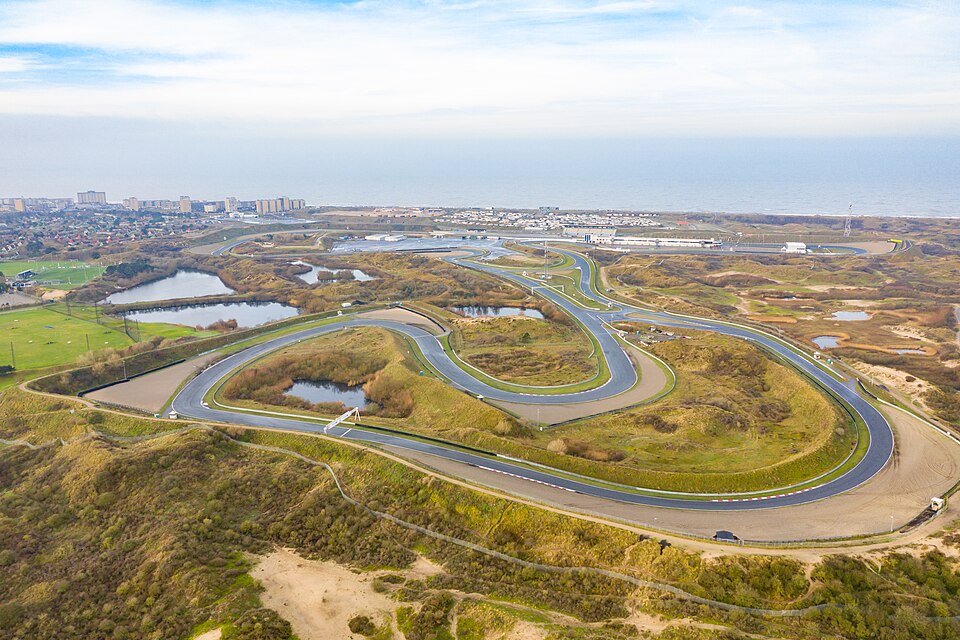
Elevation changes fundamentally alter a car’s contact patch with the track, making grip unpredictable at crests and valleys. Uphill and downhill sections, such as those at Spa-Francorchamps and Interlagos, force drivers to constantly adjust braking points and acceleration cues. The camber of corners—whether banking positively, negatively, or flat—further affects how the car settles into turns, creating varying load distributions.
Blind crests like the famous Eau Rouge at Spa test bravery to the limit; drivers commit to full throttle before seeing the exit, placing extreme lateral loads on their bodies. The physical toll is immense—necks and cores must withstand forces that can exceed 6G in these high-speed compressions. Understanding these elevation and camber dynamics is essential for mastering any challenging circuit.
Technical Corner Sequences: High-Speed Precision Testing Aero Efficiency
- Maggots and Becketts (Silverstone): High-speed left-right sequence at over 250 km/h. Requires precise car control; aerodynamic efficiency is critical as any misalignment causes turbulence and downforce loss.
- Esses (Suzuka): Flowing right-left-right in the figure-8 layout. Drivers must maintain momentum through perfect apex clipping.
Tests aerodynamic stability and rhythm; one error ruins the lap.
- The Corkscrew (Laguna Seca): Non-F1 example showing technical sequence principles. Steep downhill approach, blind crest, heavy braking, then climbing acceleration. Tests car control and bravery.
These sequences demand unwavering precision and an understanding of the car’s aerodynamic sweet spot.
The margin for error is centimeters, and continuous high lateral loads wear on the driver. Mastering them separates good from great drivers, requiring flawless execution lap after lap while managing tire and fuel constraints.
Street Circuits and Narrow Layouts: Zero Margin for Error
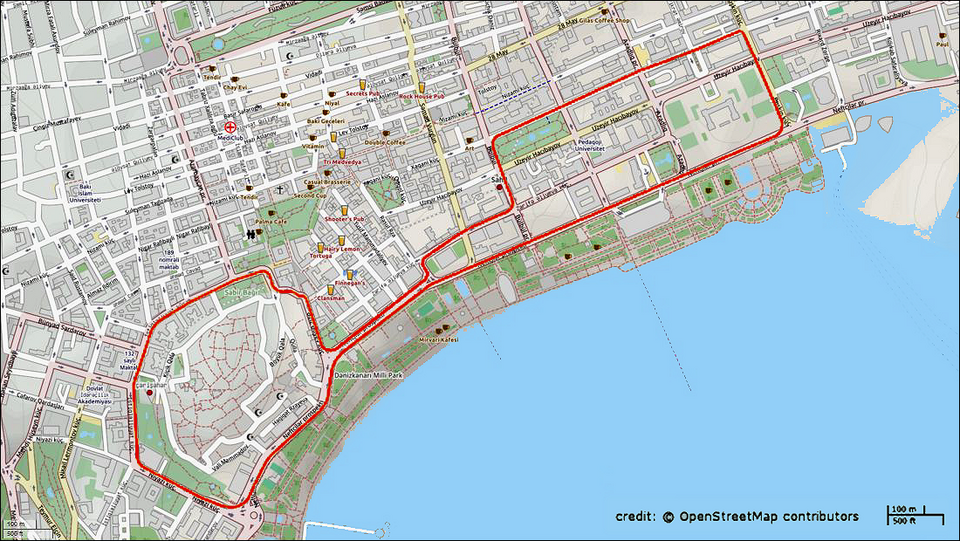
Street circuits like Monaco, Singapore, and Jeddah present the ultimate test of driver precision. Close walls line the track, leaving virtually no runoff area. A minor mistake—a slight misjudgment in braking or a twitch of the steering wheel—immediately results in retirement, as there is no room to recover.
The mental pressure is constant; drivers must maintain absolute focus for every corner, with no opportunity to relax. Unlike permanent circuits where gravel traps or tarmac runoffs offer a safety net, street tracks punish errors harshly.
The bumpy surfaces of these street circuits further increase physical fatigue, as drivers fight to keep the car stable over imperfect tarmac. This zero-margin environment makes them the most mentally demanding on the calendar and elevates precision from a skill to a necessity.
Surface and Weather: Tire Management Challenges
Surface conditions and weather dramatically influence tire performance, adding a critical strategic layer to circuit difficulty. Singapore’s hot, humid, and bumpy surface causes rapid tire degradation, forcing drivers to manage grip carefully over a race distance. In contrast, Spa-Francorchamps’ famously variable weather can shift from dry to wet within minutes, requiring drivers to adapt to changing grip levels and often making tire choice a race-defining decision.
Interlagos’ abrasive tarmac increases brake wear and accelerates tire wear, especially on the left-side tires, demanding careful management of brake temperatures and tire compounds. Each circuit’s unique surface characteristics test a driver’s ability to balance car setup, tire preservation, and outright pace—a challenge that can decide the race outcome. Pirelli’s tire compound strategy is critical in managing these conditions, as different compounds behave differently on each surface.
Case Studies: What Makes Specific F1 Circuits Legendarily Difficult
Suzuka (Japan): Flow and High-Speed Technical Mastery
Suzuka’s unique figure-8 layout creates a captivating flow that rewards precision and punishes any loss of momentum. The circuit features iconic corners like the high-speed 130R, a flat-out right-hander that tests aerodynamic stability at speeds exceeding 300 km/h, and the Esses, a technical left-right-left sequence that demands perfect rhythm and apex clipping. Drivers often describe Suzuka as a “driver’s circuit” because it requires absolute commitment and consistency; a single mistake in the Esses can ruin an entire lap, as the flowing nature means that speed carried through one corner directly impacts the next.
The circuit’s design places a premium on car balance and driver feel, making it a true test of mastery. Many Formula 1 drivers cite Suzuka as their favorite track because it rewards the precise application of skill rather than simply brute force.
This reputation has been built over decades, with countless memorable battles and overtakes at the circuit’s technical corners. Understanding Suzuka’s flow is essential for any driver aiming to conquer the world’s most challenging circuits.
Singapore and Monaco: Tight Street Circuit Punishment
| Aspect | Singapore Grand Prix | Monaco Grand Prix |
|---|---|---|
| Circuit Type | Street circuit | Street circuit |
| Primary Challenges | Heat, humidity, bumps, tight twisty layout | Ultra-tight layout, elevation changes, close walls |
| Run-off Areas | Minimal | Almost none |
| Driver Demand | Extreme precision and physical endurance | Absolute precision and mental fortitude |
Despite their differences, both circuits share an uncompromising character that punishes even the smallest error. Singapore‘s tropical climate adds a physical burden—drivers endure cockpit temperatures above 50°C while navigating a bumpy, narrow track that offers no respite. Monaco, with its historic streets and elevation changes, demands absolute concentration; a single lock-up or missed apex can end the race against the barriers.
The absence of meaningful runoff areas means that any mistake is terminal, creating a psychological pressure that few other circuits match. The addition of sprint race formats at some of these venues further intensifies the physical and mental demands on drivers. These street circuits test not only a driver’s technical skill but also their mental resilience, making them legendary among the most demanding venues on the calendar.
Spa-Francorchamps (Belgium): Eau Rouge’s Elevation Legend
Eau Rouge is arguably the most famous corner in Formula 1, a blind crest that combines a steep uphill compression with a sudden drop, requiring drivers to commit to full throttle before seeing the exit. The corner’s elevation change is dramatic—the car seemingly floats over the crest before being slammed down into the subsequent right-hander, placing enormous lateral loads on the driver’s body and the car’s suspension. Spa-Francorchamps as a whole features the greatest elevation variation on the F1 calendar, with sections like the uphill Kemmel Straight and the downhill Pouhon adding to the unpredictability.
This constant change in gradient affects the car’s contact patch and aerodynamic balance, demanding constant adjustments from the driver. Eau Rouge has become iconic because it blends bravery with precision; drivers who take it flat are rewarded with a massive advantage, but the margin for error is infinitesimal. It’s a corner that both terrifies and exhilarates, embodying the raw challenge that makes Spa a driver favorite.
Interlagos (Brazil): Compact Endurance with Varied Corners
Interlagos is a compact, undulating circuit that packs a diverse array of corner types into its 4.309 km layout. The track features a mix of high-speed corners like the fast Mergulho and slow, technical hairpins that require precise gear changes and braking. Its bumpy surface, a result of the region’s climate, adds physical strain and makes car control more demanding.
The circuit’s unusual direction also means drivers experience unusual lateral forces on their necks and cores, especially during the long, winding middle sector. Weather at Interlagos can be notoriously unpredictable, with sudden rain showers transforming the track’s grip level in minutes. This combination of physical endurance, adaptability, and tire management makes Interlagos a comprehensive test of a driver’s capabilities, where a single mistake can cost dearly.
The Human Factor: Mastering F1’s Toughest Circuits Through Skill and Diversity

Is Formula 4 Mixed Gender? The Foundation for Future Circuit Masters
- Rising participation: Recent data shows a 29% increase in female participation in mixed-gender F4 championships, with 57 female drivers contesting at least one round—the highest number ever recorded.
- F4 as the first step: Formula 4 is the entry point to the FIA’s single-seater ladder, where drivers first experience competitive circuit racing with professional teams. Success here can lead to progression through F3, F2, and ultimately F1.
- Sarah Moore’s path: Moore began her career in mixed-gender karting and junior series, becoming the first female to win a TOCA-sanctioned race and the first to win a junior mixed-gender national-level series in the UK. Her early experiences in these inclusive environments laid the foundation for her later successes.
This growing pipeline of female talent in F4 demonstrates that the sport is becoming more accessible. The increase in participation reflects improved outreach and support for women in motorsport, creating a larger pool of drivers who can develop the skills needed for challenging circuits. Programs like F4 provide the crucial first platform where drivers learn to handle cars on demanding tracks, regardless of gender.
Can Females Race in F1 with Men? Equal Opportunity on Challenging Tracks
Women are allowed to compete in Formula 1 with no gender-based restrictions. The historical absence of female drivers stems from a lack of opportunity and support structures, not from any inherent inability to meet the physical or mental demands. Sarah Moore’s career exemplifies this: she won the Ginetta Junior Championship (the first female to do so) and the Britcar Endurance Championship against all-male fields, proving that women can compete at the highest levels of mixed-gender racing.
Physical preparation, including strength and endurance training, can bridge any average physiological differences, as demonstrated by Moore’s rigorous fitness regimen. The challenges of F1 circuits—high G-forces, sustained concentration, precise car control—are surmountable with the right training and opportunity.
Therefore, gender is not a barrier to mastering the world’s most demanding tracks; it is about access to quality equipment, funding, and seats in competitive machinery. The budget cap introduced in Formula 1 aims to level the playing field, potentially opening more seats for talented drivers regardless of background.
Who is LGBTQ in Formula 1? Representation on the World’s Toughest Circuits
Formula 1’s 75-year history includes only a handful of known LGBTQ+ drivers: Mike Beuttler, Lella Lombardi, and Mário de Araújo Cabral, all of whom have since passed away. In 2021, Sarah Moore broke new ground by becoming the first openly LGBTQ+ driver to stand on a podium during a Formula 1 Grand Prix weekend, achieving this in the W Series support race. This visibility is crucial: it signals that drivers can be authentic about their identity while competing at the highest levels.
Representation matters because it fosters an inclusive environment where all talent can thrive without fear of discrimination. For LGBTQ+ athletes, seeing role models like Moore succeed on challenging circuits helps dismantle stereotypes and encourages broader participation in the sport. Ultimately, diverse representation enriches the driver pool and brings fresh perspectives to tackling the engineering and mental challenges of F1.
What Makes a Driver Ready for F1’s Most Demanding Circuits?
- Physical strength: Enduring 5-6G lateral forces and cockpit temperatures above 50°C requires exceptional core and neck endurance. Drivers train for hours to build the stamina needed for two-hour races.
- Mental focus: Sustained concentration at the limit, processing thousands of data points per lap while managing strategy, demands mental fortitude. Simulator work and mindfulness practices develop this resilience.
- Precision: Braking within centimeters, turning in with exact apex clipping, and modulating throttle smoothly are essential.
This skill comes from thousands of laps and constant engineer feedback.
- Adaptability: Changing track conditions, tire wear, and weather require drivers to adjust driving style and car setup on the fly. Versatility separates good drivers from great ones.
Sarah Moore’s coaching with the More Than Equal program, part of the broader professional racing ecosystem, focuses on cultivating these exact attributes in young female drivers. Through targeted fitness, mental training, and seat time, she prepares them for the demands of circuits like Spa or Suzuka.
Her work shows that with the right development pathway, any talented driver can rise to the top. These core attributes form the foundation of a champion.
The physical and mental rigors of modern F1 mean that drivers must be athletes in the truest sense, while the technical complexity of car control demands years of deliberate practice. Initiatives like More Than Equal are vital for ensuring that the sport’s next generation reflects the diversity of its global fanbase.
The most challenging circuits often become the most rewarding for drivers who master them, and diversity in the driver pool brings fresh perspectives to tackling these engineering marvels. Sarah Moore’s journey from breaking barriers in the Ginetta Junior Championship to coaching the next generation shows that skill, not gender or identity, determines who thrives on F1’s toughest tracks. To see this in action, follow the More Than Equal program’s progress in identifying and developing the female drivers who could one day conquer circuits like Spa or Suzuka at the highest level.
While this guide focuses on Formula 1, similar principles of precision and teamwork apply in other series like NASCAR, where pit stop strategies can gain track position. The future of professional racing depends on inclusive development pathways that uncover talent from all backgrounds.
