
DRS (Drag Reduction System) is an overtaking aid introduced in 2011 that allows drivers to reduce rear wing drag when within one second of the car ahead at the detection point. This system, which operates only in designated zones via a steering wheel button, was designed to make passing easier in Formula 1.
However, due to controversies over artificial overtaking and the creation of “DRS trains”, DRS will be completely replaced by active aerodynamics for the 2026 season. Understanding these rules is essential for following professional racing at the highest level.
- DRS (Drag Reduction System) was introduced in 2011 to make overtaking easier by allowing drivers to reduce rear wing drag when within 1 second of the car ahead.
- The system operates only in designated DRS zones and is activated via a steering wheel button, creating ‘DRS trains’ when multiple cars follow closely.
- Due to controversies over artificial overtaking, DRS will be completely replaced by active aerodynamics for the 2026 season.
What Are the DRS Activation Rules and Designated Zones?
2011 Introduction: The Year DRS Changed Overtaking
Before 2011, overtaking in Formula 1 was notoriously difficult. The aerodynamic turbulence created by leading cars made it nearly impossible for following vehicles to maintain enough downforce to get close enough for a pass. The FIA introduced the Drag Reduction System (DRS) at the start of the 2011 season as a direct solution to this problem.
Its primary goal was to increase the number of overtakes per race and make the sport more exciting for fans. The system represented a significant shift in how racing could be facilitated, moving from pure driver skill in turbulent air to a regulated speed advantage on straights.
The 1-Second Detection Point: How Timing Works
The core activation rule for DRS is a strict time gap. A pursuing driver must be within exactly one second of the car ahead when both vehicles cross the designated detection point. This detection point is a specific location on the track, usually just before a DRS zone, equipped with timing sensors.
The crucial detail is that the detection point and the DRS activation zone are separate; a driver may enter the DRS zone but only if they were within the one-second threshold at the detection point can they actually activate the system. This creates a strategic element where drivers fight to stay within that critical gap before the detection line.
Designated DRS Zones: Track-Specific Activation Areas
DRS cannot be used anywhere on the circuit. The FIA designates specific straight sections as DRS zones for each Grand Prix. These zones are carefully chosen based on track layout, safety considerations, and overtaking potential.
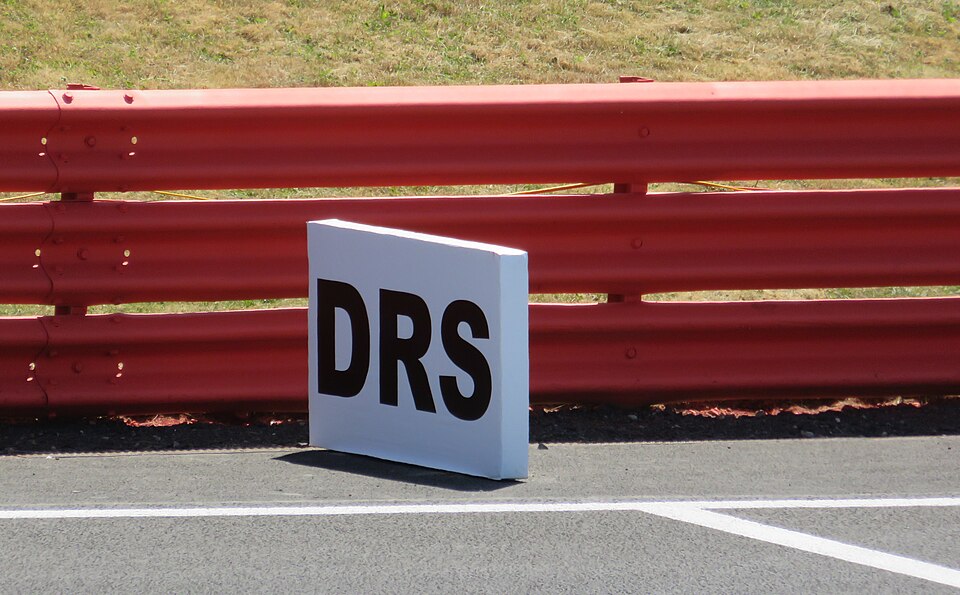
Most circuits feature between one and three DRS zones, with high-speed tracks like Monza having longer zones. The zones are marked on the track with signage and are visible to drivers through their steering wheel displays. This restriction prevents drivers from using DRS in corners or high-risk areas, maintaining a balance between racing excitement and safety.
Steering Wheel Control: Simple Button Activation
When a driver is within a DRS zone and has met the one-second requirement, they activate the system by pressing a button on their steering wheel. The mechanism is straightforward: the button sends a signal to the rear wing’s actuator, which opens the adjustable flap. This reduces drag and increases straight-line speed.
The driver can deactivate DRS by releasing the button, typically when they need to brake for a corner. The simplicity of the control allows drivers to focus on racing while managing DRS usage instinctively.
How Does DRS Work and How Do Drivers Use It?
Adjustable Rear Wing: The Physics of Drag Reduction
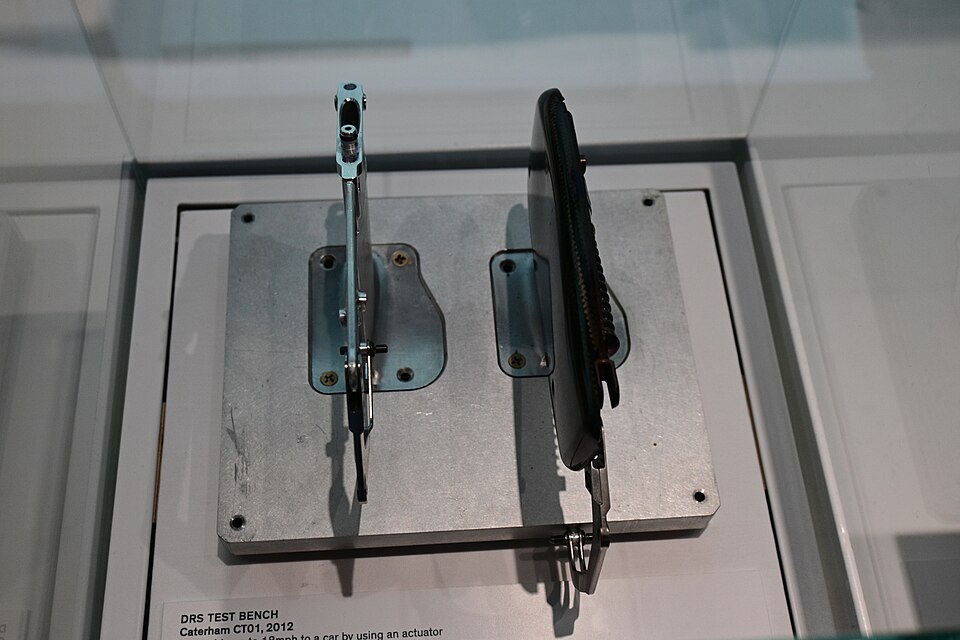
The DRS mechanism physically alters the rear wing’s main element. Normally, the rear wing’s flap is closed, creating downforce for cornering grip. When DRS is activated, the flap opens by a prescribed angle (typically around 10-15 degrees), which dramatically reduces drag.
This drag reduction translates to a significant speed increase on straights—usually in the range of 10-15 km/h (6-10 mph) depending on the car and track conditions. The system effectively gives the pursuing car a temporary power advantage without requiring extra engine output, making it a pure aerodynamic tool for overtaking.
DRS Trains: The Phenomenon of Multiple Cars Following with DRS
One unintended consequence of DRS has been the emergence of “DRS trains.” This occurs when multiple cars are lined up closely, each within one second of the car ahead at the detection point. As a result, all following cars can activate DRS on the same straight, creating a chain of vehicles with reduced drag.
While this can help the entire group close on the car in front, it also means that the lead car in the train often has DRS as well, making it harder for the trailing cars to pass. DRS trains can lead to processional racing where cars follow each other in a line without actual overtaking, ironically reducing the very spectacle DRS was meant to create.
Strategic Use: How Drivers Leverage DRS for Overtaking
Strategic DRS usage goes beyond simply pressing a button. Drivers must constantly monitor their gap to the car ahead, especially approaching detection points. They may sacrifice some speed in the corner before the detection zone to ensure they stay within the one-second threshold.
Once in the DRS zone, timing the activation is critical—activating too early or too late can waste the speed advantage. Additionally, DRS can be used defensively: if a car is within one second of the car behind at the detection point, the defender can also activate DRS, making it harder to be passed. Teams also plan race strategies around DRS, such as pitting under safety car to reset DRS eligibility or using fresh tires to gain a temporary speed edge that creates DRS opportunities later.
DRS Controversies, 2026 Future, and Other F1 FAQs
Debates and Criticisms: The Controversy Surrounding DRS Effectiveness
Since its introduction, DRS has been a polarizing topic. Critics argue that it creates “artificial” overtaking, diminishing the importance of pure driving skill and car handling in wheel-to-wheel battles. The system can sometimes make passes too easy, reducing the drama and tension of a genuine overtaking maneuver.
Furthermore, the DRS train phenomenon has been cited as a cause of boring, processional racing where cars follow each other without meaningful action. These controversies have sparked ongoing debates among fans, drivers, and officials about whether DRS has achieved its goals or inadvertently created new problems that harm the sport’s integrity.
2026 Active Aerodynamics: The Overtake Mode Replacement
In response to these criticisms and as part of a broader technical revolution that includes 2026 power unit technology, the FIA will completely replace DRS for the 2026 season. The new system, often referred to as “active aerodynamics” or “Overtake Mode,” will feature movable front and rear wings that drivers can manually adjust. Unlike DRS, which is restricted to specific zones, the active aero system will be available on any straight section of the track.
This gives drivers more flexibility and control over their aerodynamic setup, potentially leading to more dynamic and skill-based overtaking. The 2026 regulations aim to reduce overall downforce by 15-30% and drag by up to 55%, creating cars that can follow each other more closely without relying on a prescribed overtaking aid.
Do F1 Drivers Wear Diapers While Racing? Physical Demands in the DRS Era
A common question about F1 drivers is whether they wear diapers during races. The answer is no; they do not wear diapers. Drivers rely on fireproof undergarments and their fire suits, which are not designed for bathroom use.
During a race, which typically lasts 1.5 to 2 hours, drivers must manage their hydration and bathroom needs carefully. Most drivers use the bathroom before the race and limit fluid intake accordingly.
In extreme circumstances, some have admitted to relieving themselves in their suits, but this is rare and considered a last resort. The physical demands of racing—high G-forces, heat, and concentration—make any bathroom break impossible, so drivers train to endure these conditions.
Can Females Race in F1 with Men? Gender Inclusion in Modern DRS Racing
Yes, women are fully allowed to compete in Formula 1 alongside men. There is no gender-based restriction on participation; any driver who obtains a Super Licence can race. However, historically only five women have competed in a Grand Prix, and none have done so in recent years.
The landscape is changing with initiatives like F1 Academy, an all-female single-seater series launched in 2023 to develop female talent for higher levels of motorsport. Drivers like Sarah Moore, who has excelled in the W Series and advocates for LGBTQ+ inclusion through Racing Pride, demonstrate that women can compete at high levels in professional racing. While F1 itself remains male-dominated, the path is open, and the 2026 technical changes may create new opportunities for diverse talent to enter the sport.
For more insights into the world of professional racing, including career paths and driver development, visit professional racing resources.
The most surprising aspect of DRS is how its attempt to solve one problem—lack of overtaking—created another: the DRS train, which can actually reduce on-track action by making it easier for leaders to defend. This paradox highlights the complexity of engineering competition in motorsport. As we look ahead to 2026, the shift to active aerodynamics promises a more organic and driver-controlled approach to overtaking.
If you’re watching a race this season, pay close attention to the detection points and DRS zones on the track map; understanding these elements will deepen your appreciation of the strategic battles unfolding in real time. For a deeper dive into the technical evolution of the sport, explore the upcoming Formula 1 technical regulations for 2026, which detail how active aerodynamics will replace DRS and reshape racing dynamics.
Frequently Asked Questions About Formula 1 DRS Rules And Usage
Is Formula 4 mixed gender?
Global female participation in mixed-gender F4 championships in fact still rose by more than 29%, with 57 female drivers contesting at least one round in a mixed-gender F4 series, the highest number ever recorded. F1 Academy has also played an important role further down the pyramid.
What do Indy 500 drivers do if they have to use the bathroom?
“If you gotta go, you gotta go,” said Chaves, laughing. He proudly admitted to using his fire suit as a bathroom more than once. “I've been in that position before and I'm not afraid to say that,” he said. Race fans, be glad you can take a restroom break any time you want Sunday…
Where does the F1 driver pee?
How do F1 drivers use the bathroom during a race? F1 drivers drink a lot to stay hydrated because of all the sweating during a race. If an F1 driver has to go to the bathroom during a race, he simply has to pee in his suit.
What do Indy 500 drivers do if they have to use the bathroom?
“If you gotta go, you gotta go,” said Chaves, laughing. He proudly admitted to using his fire suit as a bathroom more than once. “I've been in that position before and I'm not afraid to say that,” he said. Race fans, be glad you can take a restroom break any time you want Sunday…
