
Formula 1 in 2026 features 10 teams and 20 drivers competing across 24+ Grand Prix races on circuits worldwide, making it the largest and most prestigious motorsport championship on the planet. The sport combines cutting-edge technology with world-class driving talent in a global series that attracts millions of fans.
- Formula 1 in 2026 features 10 teams and 20 drivers competing across 24+ Grand Prix races on circuits worldwide.
- Race weekends follow a three-day format: Friday practice, Saturday qualifying/sprint, Sunday Grand Prix (~305km).
- Points are awarded to the top 10 finishers (25 for 1st, 18 for 2nd, down to 1 for 10th) in both Drivers’ and Constructors’ Championships.
2026 Formula 1 Teams and Drivers: The Complete Lineup
The 2026 Formula 1 grid features 10 teams and 20 drivers competing across 24+ Grands Prix, representing the pinnacle of motorsport engineering and talent.
The 10 F1 Teams Competing in 2026
The ten constructor teams for the 2026 season are:
- Red Bull Racing (UK) – With Ford support returning to F1 for the first time since 2004, Red Bull Powertrains supplies power units to both Red Bull Racing and Racing Bulls.
- Ferrari (Italy) – The most successful team in F1 history, now with Lewis Hamilton joining Charles Leclerc.
- McLaren (UK) – Reigning Constructors’ Champions using Mercedes power units, with Lando Norris and Oscar Piastri.
- Mercedes-AMG (Germany) – The Silver Arrows supply engines to multiple teams including McLaren and themselves.
- Aston Martin (UK) – Honda returns as a works engine supplier in 2026 after ending its Red Bull partnership.
- Audi/Sauber (Switzerland) – Audi’s full factory entry after acquiring Sauber in 2024, using their own power unit for the first time.
- Williams (UK) – The legendary team with Atlassian as title sponsor, continuing with Mercedes engines.
- Alpine (France) – Switched from Renault to Mercedes power units in 2026.
- Haas (USA) – The American team continues its technical partnership with Ferrari.
- Cadillac/Racing Bulls (USA/Italy) – Cadillac makes its historic debut as an eleventh team (first since 2016) using Ferrari engines, while Racing Bulls uses Ford-supported Red Bull Powertrains.
The 2026 lineup reflects significant manufacturer involvement, with Cadillac entering as a new works team and Audi committing fully after their Sauber acquisition. These changes mark the first new team entry since 2016 and signal a shift toward greater factory support across the grid. The United Kingdom remains the hub of F1, with six of the ten teams based there, underscoring Britain’s dominance in motorsport engineering (Wikipedia, 2025).
Star Drivers to Watch in 2026
The grid includes several championship contenders and veteran icons who define the sport’s narrative.
- Max Verstappen (Red Bull Racing) – Defending World Drivers’ Champion from the Netherlands, seeking his fourth consecutive title in 2026.
- Lewis Hamilton (Ferrari) – The 7-time World Champion from the UK, making the high-profile move to Ferrari in 2026.
- Lando Norris (McLaren) – The 2025 World Champion, now carrying the number 1 plate as reigning titleholder.
- Fernando Alonso (Aston Martin) – The Spanish veteran at age 44, the oldest driver on the grid with 20+ years of F1 experience and two World Championships (2005, 2006).
- Charles Leclerc (Ferrari) – Monegasque star and proven race winner, now paired with Hamilton at Ferrari.
The championship battle centers on Verstappen’s dominance versus Hamilton’s quest for an eighth title with Ferrari, while Norris defends his crown and Alonso provides veteran cunning. The deep field includes former champions, race winners, and rising talents, ensuring competitive racing across all 20 seats.
Constructors’ vs Drivers’ Championships: How Teams and Drivers Compete
Formula 1 crowns two World Champions each season: the Drivers’ Champion and the Constructors’ Champion. Both titles use the identical points system—25-18-15-12-10-8-6-4-2-1 to the top 10 finishers, plus a fastest-lap bonus point if within the top 10.
The Drivers’ Championship tracks each driver’s cumulative points across all races. It is an individual title, and drivers compete solely for themselves, though team orders can influence outcomes.
The Constructors’ Championship sums the points earned by both drivers of each team. This team title determines prize money distribution and technical resource allocation, making it financially critical.
The dual structure creates strategic complexity. A team leading the Constructors’ Championship might instruct its drivers to hold position to secure maximum points, even if one driver could potentially win the race.
Conversely, if one driver is contending for the Drivers’ title while the other is out of contention, the team may favor the championship contender by giving them priority on strategy or asking the other driver to yield. These internal dynamics add a layer of intrigue beyond pure racing, as team principals balance individual glory against collective success.
How Do F1 Race Weekends Work? From Practice to Checkered Flag
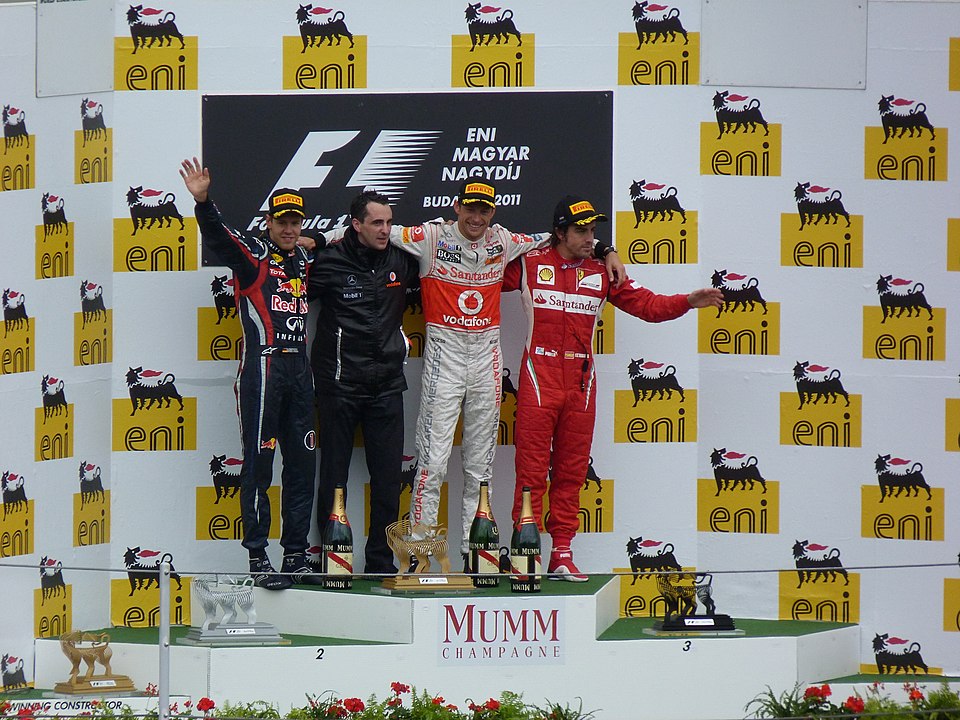
A Formula 1 weekend follows a structured three-day schedule that balances preparation with competition.
The Three-Day Race Weekend Schedule
Friday, Saturday, and Sunday each serve distinct purposes in the race weekend.
- Friday: Two free practice sessions (FP1 and FP2), each 90 minutes, allow teams to test car setups, gather tire data, and assess fuel loads. Drivers use this time to learn the circuit’s nuances, while engineers fine-tune aerodynamics and suspension. FP1 typically runs in the morning, FP2 in the afternoon, often replicating qualifying and race conditions to provide comprehensive data.
- Saturday: The final practice session (FP3, 60 minutes) offers a last chance to test adjustments before qualifying. Qualifying uses a three-stage knockout format: Q1 (18 minutes, eliminates slowest 5 cars), Q2 (15 minutes, eliminates next 5), and Q3 (12 minutes) to determine the top 10 grid positions. At sprint events, Saturday also features the 100km sprint race, which sets the Sunday grid and awards its own points.
- Sunday: The Grand Prix is the main event, with a formation lap followed by a rolling start. The race covers a minimum distance of 305km (except Monaco ~260km) and typically lasts 1.5-2 hours.
What Are Sprint Races? The Saturday Showdown
The sprint format, introduced in 2021, adds a Saturday race at selected venues to increase weekend excitement and strategy variety.
- Sprint distance: 100km (approximately one-third of a full Grand Prix distance)
- Pit stops: No mandatory stops, though teams may change tires if needed
- Points: Awarded to the top 8 finishers on a scale of 8-7-6-5-4-3-2-1
- Frequency: Held at about 6 events per season, including Miami, Austria, Brazil, and Qatar
- Impact: The sprint results directly determine the Sunday Grand Prix starting grid, adding an extra competitive session while maintaining traditional qualifying’s importance for non-sprint events
The sprint format has reshaped championship strategies; for a deeper analysis of its impact, see Formula 1 Sprint Race Format.
Grand Prix Day: The 305km Marathon
Sunday’s Grand Prix is the culmination of the weekend, a 305km test of speed, strategy, and endurance.
- Race distance: Minimum 305km (except Monaco ~260km due to its street circuit layout)
- Duration: Typically 1.5-2 hours, with a maximum 2-hour time limit if the full distance cannot be completed
- Start procedure: Formation lap to warm tires and brakes, followed by a rolling start from the grid after the five-light sequence
- Early termination: Races can end before the full distance due to extreme weather, safety car periods, or major incidents
F1 Scoring, Rules, and Technology: What Makes Formula 1 Unique
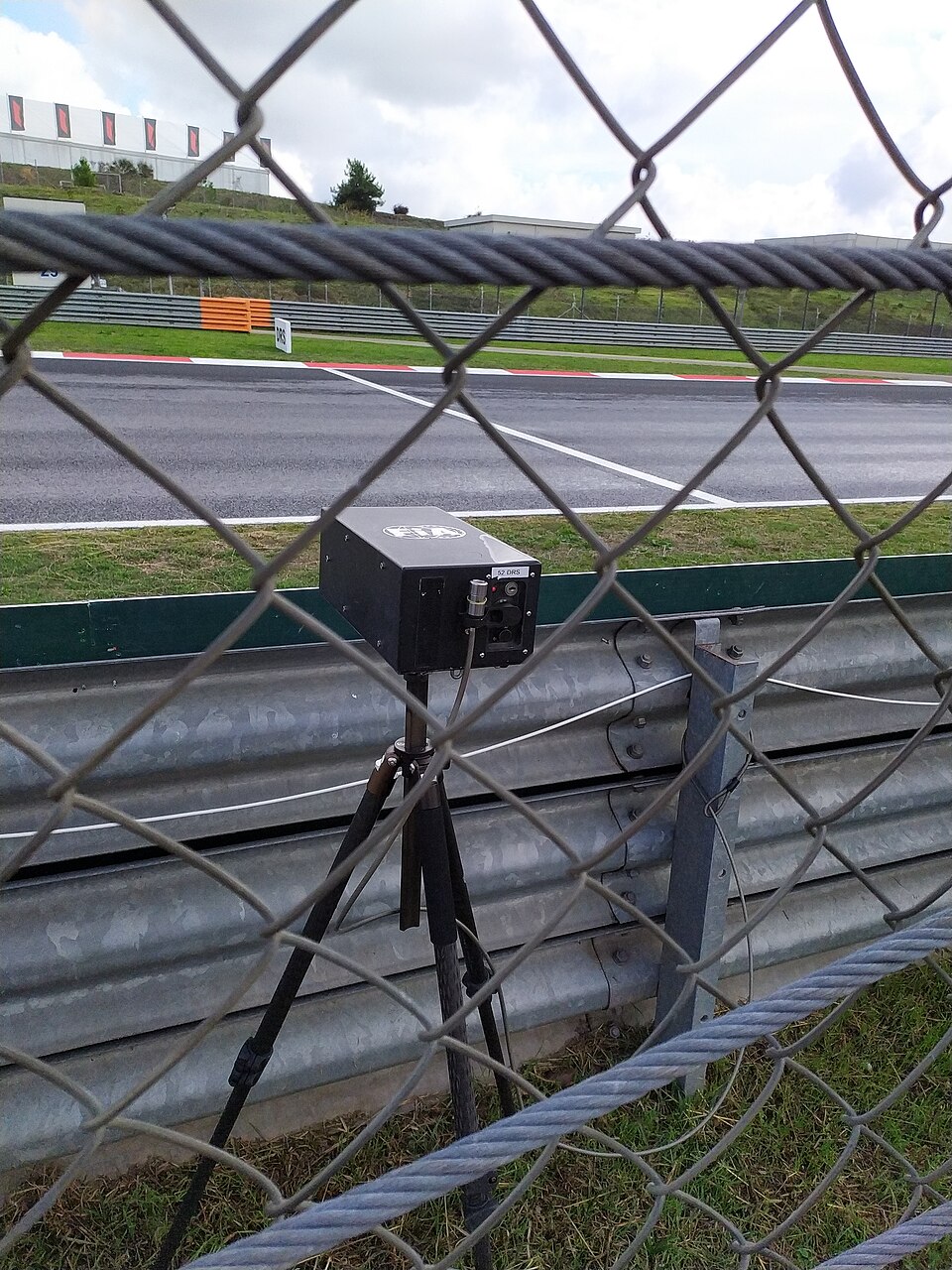
Formula 1’s unique appeal stems from its intricate points system, advanced technology, and strategic depth. The 2026 season introduces major technical regulation updates, including active aerodynamics and revised power units. For full details on these changes, refer to Formula 1 technical regulations 2026.
How F1 Points Work: The 25-18-15-12-10-8-6-4-2-1 System
The points system awards the top 10 finishers with a descending scale—25-18-15-12-10-8-6-4-2-1—plus a bonus point for the fastest lap, provided the driver finishes in the top 10. Both the Drivers’ and Constructors’ Championships use this identical scoring, meaning every point contributed by a driver counts toward both titles. Positions just outside the points (11th and below) score zero, making the battle for 10th place particularly intense in close races.
The gap between 1st and 2nd is 7 points, while the gap between 9th and 10th is only 1 point, creating strategic nuances throughout the field. Over a 24-race season, consistency often trumps outright speed, as a single poor result can be offset by strong finishes in other races. In the 2025 season, Lando Norris secured the Drivers’ Championship with consistent podium finishes and race wins under this points system, while McLaren-Mercedes captured the Constructors’ title.
| Position | Points |
|---|---|
| 1st | 25 |
| 2nd | 18 |
| 3rd | 15 |
| 4th | 12 |
| 5th | 10 |
| 6th | 8 |
| 7th | 6 |
| 8th | 4 |
| 9th | 2 |
| 10th | 1 |
Key Technical Features: DRS, Hybrid Power Units, and Ground Effect
Modern F1 cars rely on three core technologies that define performance and racing quality:
- DRS (Drag Reduction System): An adjustable rear wing that drivers can activate on designated straights when within 1 second of the car ahead. DRS reduces aerodynamic drag, providing a speed advantage of 10-20 km/h to facilitate overtaking. The system is deactivated under wet conditions or when track conditions warrant it. DRS zones are predetermined by the FIA on circuits where overtaking is historically difficult.
- Hybrid Power Units: Current F1 engines are 1.6-liter V6 turbocharged units combined with two energy recovery systems: MGU-K (Motor Generator Unit – Kinetic) harvests energy from braking, while MGU-H (Motor Generator Unit – Heat) captures exhaust heat. Together these systems produce approximately 950-1000 horsepower, with total fuel limited to 110kg per race. The hybrid technology, introduced in 2014, emphasizes efficiency alongside power, achieving over 30% thermal efficiency—remarkable for internal combustion engines.
- Ground Effect Aerodynamics: The 2022 regulation overhaul emphasized underfloor aerodynamics, creating a Venturi effect that sucks the car to the track surface. This generates downforce primarily from the floor rather than wings, reducing turbulent air behind the car and allowing closer racing. The 2026 season introduces active aerodynamics with “corner mode” (high downforce) and “straight mode” (low drag) that automatically adjust based on speed and track conditions, replacing the passive DRS system.
The evolution of hybrid power unit technology is a cornerstone of modern F1; explore the engineering in Formula 1 Power Unit Technology.
The Critical Role of Pit Stops and Tire Strategy
Pit stops are mandatory strategic events where teams change tires (and occasionally make minor adjustments) during the race. Since refueling was banned in 2010, stops are purely for tire management.
Pirelli supplies three dry compounds per race weekend—soft, medium, and hard—each with different degradation characteristics. Softer compounds offer more grip but wear faster; harder compounds last longer but are slower.
A typical race requires 1-2 pit stops, though some circuits with high tire degradation (like Monaco) may see only one stop, while high-speed tracks (like Monza) might require two. The strategy involves choosing the optimal lap to pit and which compound to use for each stint.
Factors include tire degradation rate, track temperature, safety car probability, and undercut/overcut tactics. An undercut involves pitting earlier than a rival to gain track position on fresh tires, while an overcut extends a stint to emerge ahead after the rival’s stop.
Pit stop efficiency is critical: top teams can change all four tires in 2-2.5 seconds, with each tenth of a second potentially deciding a position. The coordination between driver, pit crew, and race strategists makes pit stops one of the most visually dramatic and technically complex elements of F1.
Additionally, the fuel limit of 110kg per race restricts engine power output and forces teams to manage fuel consumption carefully, affecting race pace and strategy. The combination of tire wear, fuel management, and pit stop timing creates a multi-layered strategic puzzle that separates good teams from great ones.
Pirelli’s tire allocation strategy is critical to race weekend planning; learn how it works in Formula 1 tire compound strategy. The sport’s financial regulations, including the budget cap, aim to level the playing field; see Formula 1 budget cap financial fair play for an overview. While F1 pit stops are highly choreographed, other series like NASCAR employ different strategies; compare them in NASCAR Pit Stop Strategies.
Professional racing has seen significant progress in diversity and inclusion. Pioneers like Sarah Moore, the first woman to win the Ginetta Junior Championship and Britcar Endurance Championship, have broken gender barriers and now advocate for LGBTQ+ inclusion through Racing Pride. For more on her career and advocacy, visit Sarah Moore Racing.
The most surprising development for 2026 is the return of American manufacturer Cadillac as a works team—the first new entry since 2018—alongside Audi’s full factory commitment after acquiring Sauber. These moves signal a resurgence of manufacturer involvement that could reshape the sport’s competitive landscape for years to come. To experience Formula 1 firsthand, subscribe to F1 TV and watch the next race weekend in full, starting with Friday practice to observe how teams gather data, set up cars, and execute strategies from practice through the checkered flag on Sunday.
