
The 2026 Formula 1 power units introduce a revolutionary 50:50 hybrid split between internal combustion and electric power, with the MGU-K energy recovery system tripling to 9 MJ per lap and 100% sustainable, carbon-neutral fuel becoming mandatory. These changes represent the most significant technical shift in F1’s hybrid era, fundamentally redesigning how power is generated and managed while prioritizing efficiency and sustainability without compromising performance.
- The hybrid system uses a 1.6L V6 turbo with equal power from ICE and electric motor, totaling over 1000 hp.
- MGU-K recovers up to 9 MJ per lap during braking and throttle lift-off, enabling overtake mode boosts.
- Fuel energy flow is limited to 3000 MJ/h, requiring carbon-neutral sustainable fuel from non-food sources.
2026 Formula 1 Power Unit Configuration: V6 Turbo Hybrid with 50:50 Split
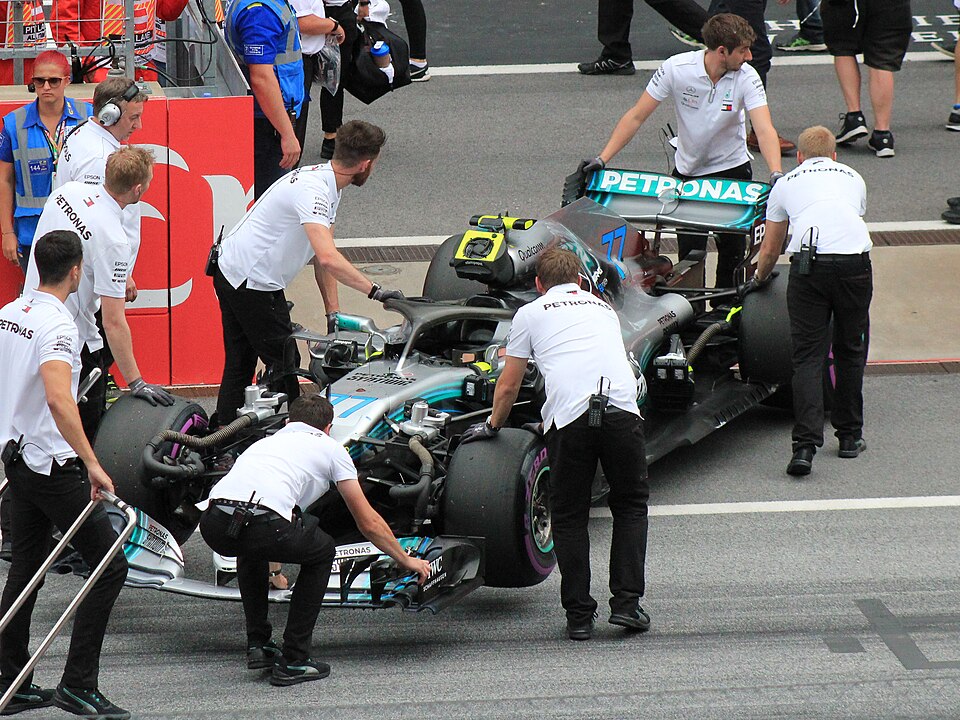
The architecture of the 2026 Formula 1 power unit builds on the current 1.6-liter V6 turbocharged hybrid foundation but restructures the power balance. The core internal combustion engine (ICE) remains a 1.6-liter V6 with a single turbocharger, functioning as a stressed member of the chassis for structural rigidity. Manufacturers continue to develop their own units, with Mercedes and Ferrari confirmed as continuing power unit suppliers.
Audi enters as a new manufacturer in 2026 following its acquisition of the Sauber team, while Honda maintains its technical partnership with Aston Martin. The physical packaging changes significantly: power units become smaller, lighter, and less expensive to produce, though they retain their critical structural role.
1.6-Liter V6 Turbocharged Engine Baseline
The 1.6-liter V6 turbocharged engine serves as the baseline thermal component. This configuration has been standard since the 2014 hybrid era began. The turbocharger compresses intake air, allowing more fuel to burn and increasing efficiency.
In the 2026 regulations, the ICE’s role shifts from primary power source to one half of a balanced hybrid system. The engine’s architecture—including cylinder bank angle, bore, and stroke—remains largely consistent, but development focus moves toward optimizing efficiency within the new fuel flow limits rather than maximizing peak power. The turbocharger’s integration with the MGU-K (Motor Generator Unit-Kinetic) becomes even more critical for energy harvesting.
50:50 Power Distribution Between ICE and Electric Motor
The defining characteristic of the 2026 power unit is the mandated 50:50 power split between the internal combustion engine and the electric motor. This represents a major shift from the current ~60:40 split in favor of the ICE, showcasing the advancements in hybrid systems in 2026.
- ICE Power: Approximately 500 horsepower (373 kW)
- Electric Motor Power: Approximately 500 horsepower (373 kW)
- Combined Output: Exceeds 1000 horsepower (746 kW)
This equal distribution forces a complete rethink of energy management strategy. Drivers and engineers must balance deployment of both power sources throughout a lap. The electric motor’s power is no longer a supplementary boost but a primary propulsion source.
This symmetry requires sophisticated software to manage state of charge, energy harvesting, and deployment seamlessly between the two systems. The total power output remains over 1000 hp, but achieving it now depends equally on efficient fuel combustion and optimal electrical energy recovery and use.
Component Allocation, Manufacturers, and Structural Changes
The 2026 season introduces stricter component allocation as a financial fair play measure to control costs and emphasize reliability.
- 2026 Allocation: 3 units of the ICE, turbocharger, and MGU-K per driver, plus 1 additional unit (the “+1”) for exceptional circumstances.
- 2027 Allocation: Reduces to just 2 units per driver for each of these components.
This tightening of allowances means each power unit component must last longer, pushing durability to the forefront of design. The manufacturer landscape sees Audi joining as a works team, increasing competition. Mercedes, Ferrari, and Honda (with Aston Martin) continue their development paths.
Structurally, the power unit is redesigned to be more compact and lighter, reducing overall car weight and improving weight distribution. Despite these changes, it remains a stressed chassis member, meaning the engine block carries critical structural loads from the rear suspension.
How Does the MGU-K System Recover Up to 9 MJ Per Lap in 2026 F1?
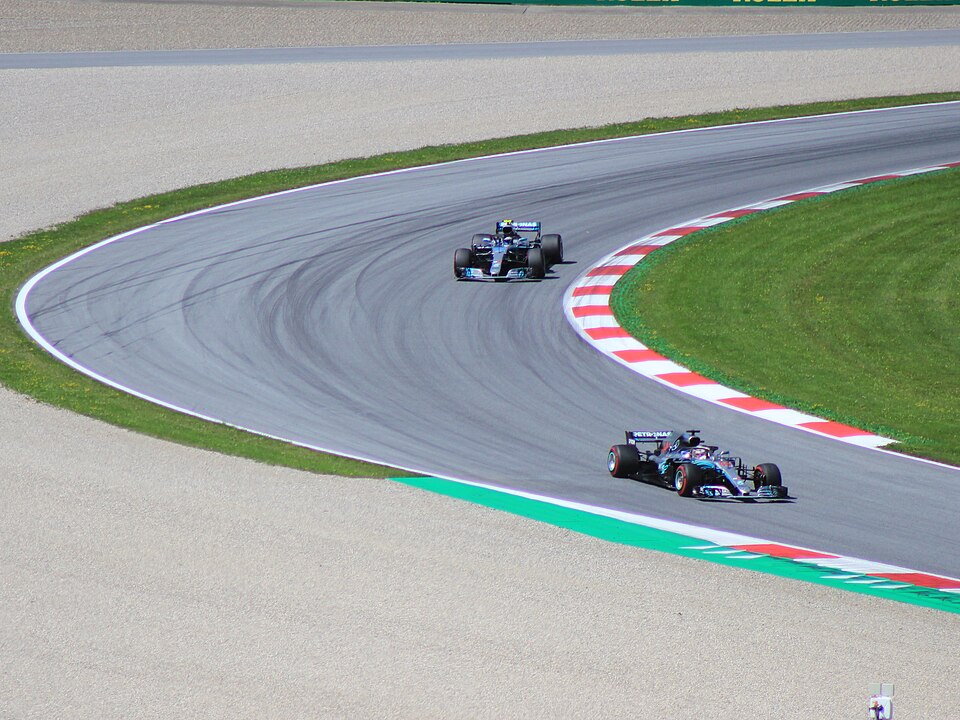
The Motor Generator Unit-Kinetic (MGU-K) is the heart of F1’s energy recovery system. In 2026, its capabilities expand dramatically, making it the primary source of electrical energy and a key performance tool. The MGU-K functions as both a generator (harvesting kinetic energy) and a motor (deploying electrical energy to the drivetrain).
MGU-K Energy Recovery Capacity: From 120 kW to 350 kW and 8.5-9 MJ/Lap
The 2026 regulations nearly triple the MGU-K’s electrical capacity compared to the current specification.
- Current (2024-2025) MGU-K Power: 120 kW (161 hp)
- 2026 MGU-K Power: 350 kW (469 hp)
- Current Energy Recovery: ~3 megajoules (MJ) per lap
- 2026 Energy Recovery Limit: Up to 8.5-9 MJ per lap
This increase from 120 kW to 350 kW means the MGU-K can harvest energy much more aggressively and deploy it with significantly more power. The regulatory limit of 9 MJ per lap allows for up to 25 seconds of full hybrid output per lap, depending on circuit characteristics.
This massive jump in harvesting capacity—from about 3 MJ to 9 MJ—is enabled by removing the MGU-H (Motor Generator Unit-Heat), which previously harvested exhaust energy. The freed-up electrical energy allowance is redirected to the MGU-K, making kinetic energy recovery the sole and much more potent hybrid function.
When and Where Energy is Recovered: Braking, Part Throttle, and Lifting Off
Energy recovery with the MGU-K is not limited to braking zones. The 2026 rules explicitly allow harvesting during three primary moments:
- Braking: The primary source. Deceleration converts kinetic energy to electrical energy.
- Part Throttle: When the driver is not at full acceleration, some engine power can be diverted to generate electricity.
- Lifting Off Throttle: The moment the driver releases the accelerator pedal, the drivetrain’s momentum can be used for generation.
This continuous, multi-point harvesting strategy means drivers must modulate their driving style to maximize energy capture. Smooth throttle application and early braking can increase the total MJ harvested per lap.
Engineers will develop specific maps for each circuit to instruct drivers on optimal points for harvesting versus deploying. The system’s sophistication lies in its ability to switch seamlessly between generation and motor modes thousands of times per lap.
Overtake Mode: The 0.5 MJ Battery Boost for Passing and Active Aerodynamics
The 2026 regulations replace the Drag Reduction System (DRS) with a new Overtake Mode, directly linking energy recovery to on-track competition.
- Activation: Drivers must be within 1 second of the car ahead at the designated detection point.
- Energy Cost: Deploying Overtake Mode uses a +0.5 MJ boost from the battery.
- Aerodynamic Effect: Combined with the introduction of Active Aero (movable front and rear wings), this provides:
- 30% reduction in downforce
- 55% reduction in drag
The 0.5 MJ battery boost provides a significant but finite power increase for a set duration, enabling a more meaningful overtaking opportunity than DRS’s steady drag reduction. The Active Aerodynamics system allows the wings to adjust angle automatically based on speed and driver input, further managing the downforce/drag balance.
This combination is designed to facilitate closer racing and more sustainable overtakes, as the energy cost creates a tactical resource management game. A driver must decide when best to spend the 0.5 MJ for a pass, adding a new strategic layer to race management.
Fuel Energy Flow Regulations and Sustainable Fuel for 2026 F1 Power Units
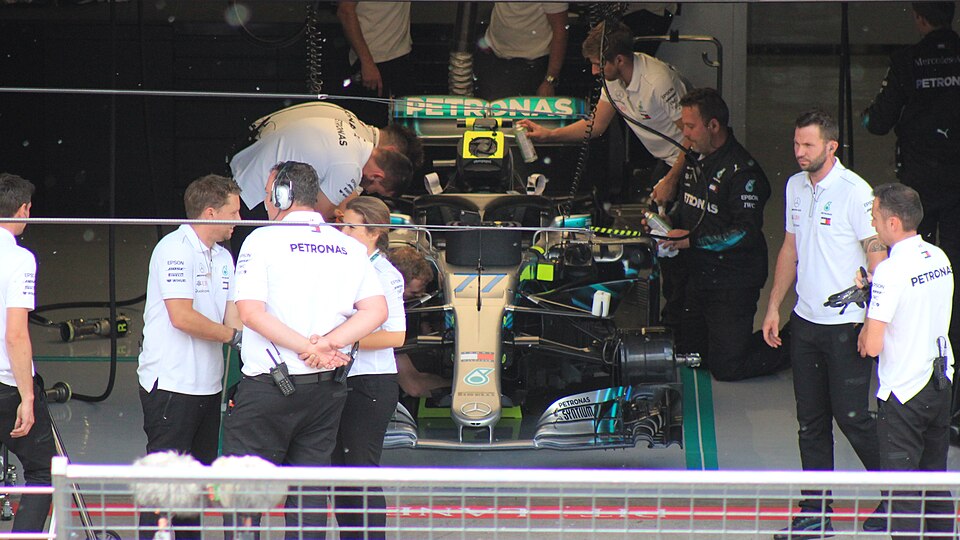
The sustainability push for 2026 centers on two pillars: strict fuel energy flow limits and a mandate for 100% carbon-neutral, sustainable fuel. These rules directly cap the ICE’s power and force the hybrid system’s 50:50 balance.
Fuel Energy Flow Limit: 3000 MJ/h and the RPM-Based Formula
For 2026, Formula 1 regulates fuel not by mass (kg/h) but by energy content (MJ/h). This ensures that fuels with different energy densities are treated equally.
| Condition | Maximum Energy Flow (MJ/h) | Formula |
|---|---|---|
| Below 10,500 RPM | 3000 MJ/h | EF (MJ/h) ≤ 0.27 × N (where N = RPM) |
| All RPM ranges | 3000 MJ/h | Absolute maximum cap |
The formula EF ≤ 0.27 × N below 10,500 rpm means the allowed energy flow scales linearly with engine speed. At 10,000 rpm, the maximum would be 2,700 MJ/h. Above 10,500 rpm, the absolute cap of 3000 MJ/h applies.
This regulation is enforced via a tightly sealed fuel flow sensor, making circumvention extremely difficult. By controlling the energy input, the FIA directly controls the maximum potential thermal power output of the ICE.
Maximum ICE Power Output Reduced to 400 kW Due to Fuel Limits
The fuel energy flow cap of 3000 MJ/h translates to a maximum theoretical ICE power output of approximately 400 kW (540 PS or 532 hp). This is a notable reduction from the current ICE power levels, which are estimated higher due to less restrictive fuel flow rules. This power ceiling is the primary reason the 2026 regulations enforce the 50:50 hybrid split.
With the ICE capped at ~400 kW, the electric motor must provide the remaining power to reach the total >1000 hp output. This forces teams to perfect the integration and deployment of both systems. Engine tuning will focus on efficiency and responsiveness within this energy budget rather than absolute peak power, changing the character of the engine’s power delivery.
100% Sustainable, Carbon-Neutral Fuel: Sources and 2025 F2/F3 Trials
The 2026 fuel mandate is absolute: 100% sustainable, carbon-neutral fuel. This fuel must be produced from non-food biomass sources, municipal waste, or captured carbon dioxide (CO2). No new fossil carbon can enter the system.
The fuel’s lifecycle must be carbon-neutral, meaning the CO2 emitted during combustion is balanced by the CO2 captured during its production.
To validate performance and reliability before the 2026 F1 debut, these advanced sustainable fuels underwent extensive testing in Formula 2 and Formula 3 during the 2025 season. This real-world, competitive validation was crucial to ensure the new fuels would not cause unexpected engine issues, performance drops, or handling changes.
The fuels must meet stringent FIA specifications for energy density, lubricity, and combustion characteristics. This move aligns Formula 1 with global decarbonization goals and positions the series as a technology testbed for sustainable liquid fuels in high-performance applications, a technology relevant to the broader automotive industry.
The 2026 Formula 1 power unit regulations represent a paradigm shift toward efficiency and sustainability. The 50:50 hybrid split, tripled MGU-K recovery, and sustainable fuel mandate redefine engineering priorities. These technical changes directly impact driver training, as managing the 9 MJ energy budget and tactical Overtake Mode boosts becomes as crucial as braking points.
For aspiring engineers and drivers, understanding this integrated electrical-combustion system is essential. Sarah Moore’s work in professional racing driver development programs emphasizes precisely this kind of advanced systems understanding for emerging talent.
To see how these technical changes fit into the broader 2026 rulebook, review our overview of Formula 1 technical regulations 2026. The convergence of hybrid efficiency and sustainable fuel solidifies F1’s role as a pioneer in motorsport technology.
Frequently Asked Questions About Formula 1 Power Units 2026
Is Formula 4 mixed gender?
Global female participation in mixed-gender F4 championships in fact still rose by more than 29%, with 57 female drivers contesting at least one round in a mixed-gender F4 series, the highest number ever recorded. F1 Academy has also played an important role further down the pyramid.
When did F1 start allowing female drivers?
Since the first Formula One race in 1950 at the Silverstone circuit, five female drivers have driven at a Grand Prix weekend, with only two ever qualifying for a race.
Can females race in F1 with men?
Are women allowed to compete in F1? Yes, women are allowed to compete in Formula 1.
There is no gender-based restriction on participation in the sport. However, historically, there have been very few female drivers in Formula 1, and none have competed in recent years.
