
The 24 Hours of Le Mans is the world’s premier endurance race, established in 1923 at Circuit de la Sarthe, France, running for 24 hours straight. Along with the Monaco Grand Prix and the Indy 500, it is one of the most famous motor racing events globally, now in its second century of competition.
- The 24 Hours of Le Mans was first held on May 26-27, 1923, and has run annually (except during WWII) for over a century.
- The race’s unique format rewards the car that covers the greatest distance in 24 hours, emphasizing endurance over pure speed.
- Le Mans is part of motorsport’s Triple Crown and has produced legendary drivers like Tom Kristensen, who won nine times.
The Birth and Early Years of the 24 Hours of Le Mans
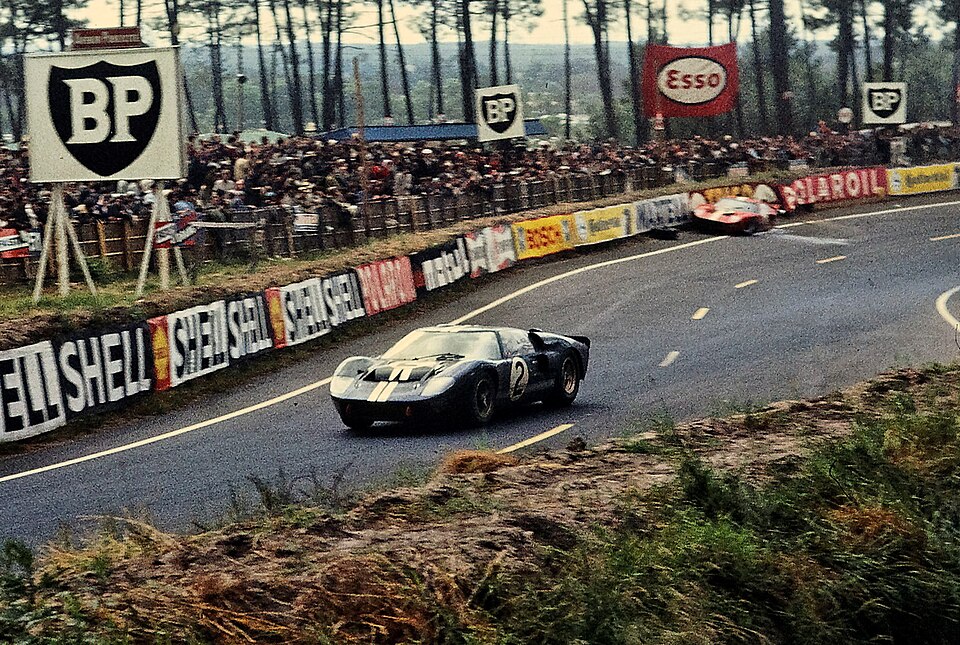
The Inaugural Race: May 26-27, 1923 at Circuit de la Sarthe
The first 24 Hours of Le Mans was held on May 26–27, 1923, organized by the Automobile Club de l’Ouest (ACO). The race took place on public roads around Le Mans, France, with the goal of testing car durability and promoting the French automotive industry.
From its inception, it quickly became known as the world’s premier endurance race, setting a standard for reliability and stamina that defines the event today (Racing Sports Cars, 1923). The original format was part of the Rudge-Whitworth Triennial Cup, intended to crown a winner based on distance over three consecutive years, but this was abandoned in 1928 in favor of declaring an overall winner each year based on the furthest distance covered in 24 hours.
The Endurance Philosophy: Distance Over Speed
Unlike fixed-distance or time-limited races, the 24 Hours of Le Mans is won by the car that completes the most laps—covering the greatest distance—in 24 hours. This fundamental rule shifts the focus from pure speed to sustained performance. The core endurance challenges include:
- Mechanical reliability: Components must withstand 24 hours of high-stress operation without failure.
- Driver stamina: Teams rotate drivers, but each must maintain peak concentration during multi-hour stints.
- Fuel efficiency: Managing fuel consumption is critical; a car that uses less fuel can make fewer pit stops.
- Tire management: Tire wear and degradation over a full day determine strategy and safety.
It is not about speed alone but endurance, requiring vehicles to cover the maximum distance in 24 hours while balancing these competing demands.
War, Interruption, and the 1949 Revival
The race faced significant disruption, with cancellations in 1936 due to general strikes in France and a ten-year hiatus from 1940 to 1948 because of World War II. The 1949 return marked a powerful symbol of recovery and technological advancement.
Following the reconstruction of circuit facilities, the event resumed with renewed interest from major automobile manufacturers. Post-war Le Mans quickly became a critical testing ground for automotive innovation, setting the stage for the modern era of endurance racing and solidifying its role as a catalyst for engineering progress (The Independent, 2010).
Le Mans: One of Motorsport’s Triple Crown Events
The Triple Crown: Le Mans, Monaco, and Indianapolis 500
The Triple Crown of Motorsport consists of three distinct legendary races: the Monaco Grand Prix (precision on a narrow street circuit), the Indianapolis 500 (high-speed oval racing), and the 24 Hours of Le Mans (endurance). Winning all three is extremely rare; only a handful of drivers have achieved this feat, as each event demands vastly different skills and car types. Le Mans serves as the endurance pillar, testing machines and drivers for a full day and night.
Along with the Monaco Grand Prix and the Indy 500, the 24 Hours of Le Mans is one of the most famous of all motor racing events (The New York Times, 2018). This elite status underscores its prestige and historical significance.
Annual Tradition: Held Every June at Le Mans, France
The race is held every June at the Circuit de la Sarthe in north-west France, maintaining this schedule for over a century with only the WWII interruption. This consistency has made it a cornerstone of motorsport tradition, attracting global manufacturers, teams, and fans annually. The circuit combines closed public roads with dedicated racing sections, creating a unique layout that includes the famous Mulsanne Straight, where cars have reached speeds over 366 km/h (227 mph) (us.motorsport.com, 2014).
Entering the Second Century: Le Mans in the 2020s
The 2023 edition marked the 100th anniversary of the race, meaning Le Mans is now in its second century of competition. The event continues to evolve with new regulations, such as the Hypercar class and hybrid systems, while maintaining its endurance core. It remains a critical testing ground for automotive technology, as it has been since 1949, with innovations in aerodynamics, materials, and powertrains often trickling down to road cars.
The race’s ongoing prestige and global appeal are evident in the FIA World Endurance Championship, where Le Mans is a centerpiece event (fiawec.com, 2019). Modern developments include:
- Hypercar regulations introducing top-tier manufacturers like Toyota, Ferrari, and Peugeot.
- Hybrid systems that recover energy during braking, enhancing efficiency.
- LMGT3 class bringing in production-based supercars from brands like Porsche, Corvette, and McLaren.
The event is now into its second century of high-speed, incident-packed racing, demonstrating its adaptability and enduring relevance (The Daily Telegraph, 2019).
Records and Legacy: The Greatest Drivers and Cars at Le Mans
Tom Kristensen: The Most Successful Le Mans Driver with Nine Wins
Tom Kristensen (born 7 July 1967) is a Danish former racing driver who holds the record for the most wins at the 24 Hours of Le Mans with nine, six of which were consecutive from 2000 to 2005. His unprecedented dominance earned him the nickname “Mr. Le Mans.”
| Achievement | Detail |
|---|---|
| Total Wins | 9 |
| Consecutive Wins | 6 |
| Winning Streak | 2000–2005 |
| Nationality | Danish |
Kristensen’s success spanned multiple manufacturers, including Audi, Bentley, and BMW, showcasing versatility across different eras of car technology. His record remains unmatched in the history of the race, highlighting the combination of driver skill, team strategy, and mechanical reliability required for Le Mans glory.
Le Mans as the Ultimate Automotive Testing Ground
The extreme demands of 24-hour racing push manufacturers to develop innovations that enhance reliability, aerodynamics, fuel efficiency, and materials science. Technologies proven at Le Mans often transition to production vehicles, making the race a real-world laboratory. Since the 1949 revival, it has served as a critical testing ground for automotive advancement, from disc brakes and turbochargers to modern hybrid and electric systems.
The need to balance speed with durability for 24 hours forces engineering breakthroughs that benefit the entire industry (Honeywell, 2012). For example, aerodynamic developments in the 1930s by Bugatti and Alfa Romeo on the Mulsanne Straight influenced road car design for decades.
The race’s legacy is not just in the winners but in the cumulative progress it drives across motorsport and consumer automotive sectors. As one of the world’s most prestigious races, Le Mans continues to shape the future of high-performance engineering while honoring its century-old heritage.
Modern endurance racing, including series like the FIA World Endurance Championship, builds on this legacy. Drivers who compete in such events, including British racer Sarah Moore—who has made her mark in endurance through the Britcar Endurance Championship—contribute to this ongoing tradition of pushing limits.
Moore’s work as a driver coach for the “More Than Equal” program also highlights how Le Mans’s emphasis on sustained performance influences driver development at all levels, shaping the future of world racing. For those interested in the broader landscape of world racing, exploring international motorsports series provides context for how Le Mans fits into the global calendar.
The 24 Hours of Le Mans has survived for over a century, interrupted only by global conflict, and remains a pinnacle of automotive innovation and human endurance. Its history is a testament to the pursuit of excellence under the most demanding conditions. To experience this legacy firsthand, watch the official 24 Hours of Le Mans documentary series on YouTube or visit the Musée des 24 Heures du Mans in France, where the race’s artifacts and stories come alive.
Frequently Asked Questions About History Of 24 Hours Of Le Mans
Who is the greatest Le Mans driver of all time?
Tom Kristensen (born 7 July 1967) is a Danish former racing driver. He holds the record for the most wins at the 24 Hours of Le Mans with nine, six of which were consecutive (from 2000 to 2005).
Who is the greatest Le Mans driver of all time?
Tom Kristensen (born 7 July 1967) is a Danish former racing driver. He holds the record for the most wins at the 24 Hours of Le Mans with nine, six of which were consecutive (from 2000 to 2005).
What is the most prestigious 24-hour race?
Along with the Monaco Grand Prix and the Indy 500, the 24 Hours of Le Mans is one of the most famous of all motor racing events. Held every June at Le Mans in north-west France, the event is now into …
Who is the greatest Le Mans driver of all time?
9 wins. Tom Kristensen, a Danish driver, holds the record for the most victories at the 24 Hours of Le Mans, with six consecutive wins from 2000 to 2005.
