The 2026 NTT IndyCar Series marks the 115th season of American open-wheel racing, featuring an 18-race schedule balanced between ovals, street circuits, and road courses, culminating in the 110th Indianapolis 500 on May 24, 2026. However, the grid will not include Sarah Moore, the British driver who has made history as the first female winner in multiple championships.
Moore’s career, spanning from karting at age 4 to becoming a trailblazer in series like Ginetta Junior and Britcar Endurance, now focuses on developing the next generation through coaching and team ownership. This overview examines the 2026 IndyCar season’s structure and new venues while contextualizing Moore’s absence and lasting impact on motorsport.
- The 2026 IndyCar Series features 18 races: 6 ovals, 6 street circuits, 6 road courses, with new venues in Mexico City and Washington D.C.
- Sarah Moore is not competing in the 2026 IndyCar season; she serves as a driver coach for the More Than Equal program since 2024.
- Moore’s historic achievements include being the first female winner of the Ginetta Junior Championship (2009) and the overall Britcar Endurance Championship (2018).
- She made history in 2021 as the first openly LGBTQ+ driver to stand on a podium at a Formula One Grand Prix weekend.
- The 2026 season includes major driver changes: Will Power joins Andretti, Colton Herta moves to F1 testing, and Marco Andretti retires.
The 2026 IndyCar Season: Structure and New Directions
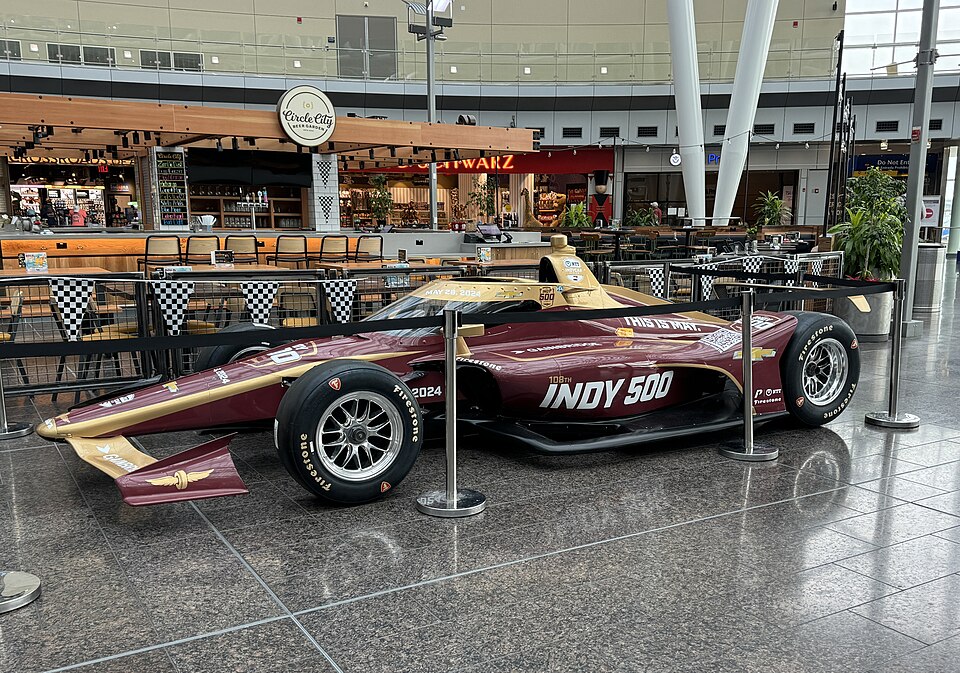
“The 2026 NTT IndyCar Series is the 115th official championship season of American open-wheel racing, featuring an 18-race schedule balanced across six ovals, six street circuits, and six permanent road courses, with the 110th Indianapolis 500 set for May 24, 2026.” — IndyCar (2024)
The season’s balanced format ensures diversity in racing challenges, from high-speed superspeedways to tight street circuits. All teams compete with a Dallara DW12 chassis using a 2018 universal aero kit and Firestone tires, a specification that will remain until the series switches to 2.4-liter twin-turbo hybrid V6 engines in 2028. According to Racer (2026), Chevrolet and Honda have signed multi-year extensions to remain as engine manufacturers, each receiving a single charter entry under the new agreement.
18-Race Schedule: Balanced Mix of Oval, Street, and Road Courses
The 18-race calendar is deliberately split evenly among three circuit types. Six oval races include iconic speedways like Indianapolis Motor Speedway and Texas Motor Speedway. Six street circuit events take place in cities such as St.
Petersburg, Long Beach, and Detroit, while six permanent road courses feature venues like Road America, Laguna Seca, and Toronto. This balance tests driver adaptability across vastly different track conditions.
Firestone’s role as sole tire supplier has been extended through 2030, as announced by IndyCar in September 2024. The consistency in tire compounds helps control costs and allows teams to focus on setup optimization rather than adapting to new suppliers annually.
The 110th Indianapolis 500: May 24, 2026
The Indianapolis 500 remains the series’ pinnacle event. The 110th running occurs on May 24, 2026, with Álex Palou entering as the defending race winner and a four-time series champion. This historic race attracts over 300,000 spectators annually and carries a significant prize purse, though exact figures for 2026 have not yet been released.
New Venues: Mexico City, Arlington, and Washington D.C.
The 2026 calendar introduces four new locations, expanding IndyCar’s reach beyond traditional markets. Mexico City returns to the schedule after a previous stint, bringing international flavor.
Arlington, Texas, hosts a new street circuit event, while Washington D.C. debuts with a road course layout around the nation’s capital. These additions reflect IndyCar’s growth strategy under Fox Corporation’s ownership, which acquired a one-third stake in Penske Entertainment in July 2025, extending broadcast rights to 2030.
Key Driver Changes: Power, Herta, Malukas, and Retirements
The 2026 season features significant driver movements. After 16 seasons with Team Penske, Will Power departed and joined Andretti Global to drive the No. 26 entry vacated by Colton Herta, who moved to Cadillac Formula 1 Team as a test driver.
David Malukas replaced Power at Penske, driving the No. 12 entry. Dale Coyne Racing signed 2025 Indy NXT champion Dennis Hauger, while Juncos Hollinger Racing added Rinus VeeKay as lead driver.
A. J.
Foyt Enterprises signed Caio Collet, replacing Malukas. Marco Andretti announced his retirement from both IndyCar and the Indianapolis 500 on October 29, 2025, ending a career that spanned 15 starts in the iconic race.
Sarah Moore’s 2026 Status: Coaching and Team Development
Despite the IndyCar season’s prominence, Sarah Moore does not appear on the 2026 entry list. Her racing focus has shifted entirely to developing young talent through coaching and team ownership.
Since 2024, Moore has served as a driver coach for the “More Than Equal” program, an initiative aimed at discovering and nurturing the first female Formula 1 World Champion. This role leverages her 25 years of racing experience, from karting to professional championships.
Moore’s absence from the IndyCar grid underscores a broader trend: women remain severely underrepresented in top-tier open-wheel racing. While the series has seen occasional female drivers like Pippa Mann and Simona de Silvestro, no woman has competed full-time in IndyCar since 2021. Moore’s decision to prioritize development work reflects a strategic choice to impact the sport from behind the scenes.
Not Competing in IndyCar: Focus on Driver Development Since 2024
Moore’s transition from active competition to coaching became official in 2024. Her curriculum vitae from the Association of Racing Driver Schools (ARDS) lists coaching roles for multiple young drivers in BritCar Endurance Championship and GT4 South European Series since 2019, but her full-time dedication to the More Than Equal program marks a new chapter. The program, launched in 2023, provides specialized training, mental preparation, and technical education for female drivers aged 12–22.
More Than Equal Program: Coaching Young Female Talent
The More Than Equal program operates on the principle that structured development pathways are essential for women to reach Formula 1. Moore works alongside other former drivers and performance coaches to deliver a curriculum covering race craft, fitness, nutrition, and media training. According to Sarah Moore Racing (2025), the program has already supported over 30 drivers across its first two cohorts, with several progressing to higher formula levels.
Moore’s involvement brings credibility as a proven winner in mixed-gender competition. Her coaching methods emphasize data-driven analysis and simulator training, concepts explored in depth on racing knowledge and technology integration. She stresses that female drivers need the same access to high-quality equipment and engineering support as their male counterparts to close the performance gap.
AJ Racing: UK’s First All-Female Owner-Driver Kart Team
Beyond coaching, Moore co-founded AJ Racing, described on the team’s Facebook page as “the UK’s first all-female openly recruiting owner-driver kart team.” The team provides kart hire and preparation services for customer karts, creating a supportive environment for women and girls entering motorsport. AJ Racing also fields entries in various karting championships, giving young drivers their first competitive experiences.
This entrepreneurial effort addresses a critical barrier: the lack of female role models in team management and engineering. Moore’s hands-on approach ensures that drivers learn not only how to race but also how to maintain equipment and understand setup changes—skills directly transferable to higher categories. For junior drivers seeking a structured foundation, racing knowledge for junior drivers outlines similar principles.
Sarah Moore’s Historic Achievements: A Legacy of Firsts
Sarah Moore’s career is defined by a series of groundbreaking firsts. She became the first female driver to win a TOCA-sanctioned race and the first to win a junior mixed-gender, national-level series in the UK. These accomplishments occurred in an era when female drivers were rare in competitive motorsport, making her victories significant milestones.
Her success stems from an early start: she began karting at age 4 and raced competitively from age 8. After progressing through the Ginetta Junior Winter Series in 2007, she claimed the full championship in 2009—a feat that had never been achieved by a woman. Over the next decade, she competed in various series, including the W Series and Britcar Endurance, consistently demonstrating that gender does not determine racing ability.
2009 Ginetta Junior Championship: First Female Champion
The Ginetta Junior Championship is a highly competitive series for drivers aged 14–17, serving as a key stepping stone to higher formula racing. In 2009, Moore won the championship with multiple race victories, becoming the first and only female champion in the series’ history as of 2026. According to the National Motor Museum (2025), her victory “shattered the perception that young female drivers could not compete at the highest levels in mixed-gender junior categories.”
Moore’s success in Ginetta opened doors to further opportunities, including a drive in the InterSteps Championship in 2011 and eventually the Britcar Endurance Championship. Her technical understanding of car setup and race strategy developed during these years formed the basis of her later coaching philosophy.
2018 Britcar Endurance Championship: Overall Victory
In 2018, Moore partnered with Matt Greenwood for a full season in the Britcar Endurance Championship. The series features multi-class racing with both GT and touring cars, demanding consistency over long races.
Moore and Greenwood secured the overall championship, making Moore the first woman to win the title. This achievement was particularly notable because endurance racing tests both driver skill and mechanical reliability over extended periods.
Her performance in Britcar demonstrated her ability to adapt to different car types and race formats, a versatility that few drivers possess. The championship win also validated her decision to move from single-seaters to sportscars, showing that her talents were not limited to one discipline.
2021 W Series Podium: LGBTQ+ Milestone at F1 Weekend
The W Series, launched in 2019, aimed to provide a high-profile platform for female drivers. Moore competed in the inaugural season and continued through 2022.
In 2021, she stood on the podium at the Formula One British Grand Prix weekend, finishing third in the W Series support race. This made her the first openly LGBTQ+ driver to achieve a podium at any Formula One Grand Prix weekend, a milestone highlighted by the National Motor Museum (2025) and celebrated widely on social media.
Moore’s openness about her sexuality has contributed to greater LGBTQ+ visibility in motorsport, a traditionally conservative environment. She has since become an ambassador for Racing Pride, an organization promoting inclusion. Her podium at Silverstone symbolized progress on two fronts: gender equality and LGBTQ+ representation.
2023 Indian Racing League: Debut Win
In November 2023, Moore made a surprising debut in the Indian Racing League, a series based in Hyderabad. She won her first race, becoming the series’ first ever female race winner. According to Racers Behind the Helmet (2023), her victory came despite limited preparation time, showcasing her adaptability to new circuits and conditions.
This win extended her record of being first in multiple series and demonstrated her continued competitiveness at age 30. It also highlighted the global nature of her career, spanning Europe, North America, and Asia—a rarity among drivers who typically focus on one region, as showcased in exploring international motorsports series beyond traditional pathways.
Connecting the Dots: Moore’s Absence and the Future of Women in IndyCar
Sarah Moore’s absence from the 2026 IndyCar grid is notable given her accomplishments. While the series has no full-time female drivers in 2026, development programs like More Than Equal aim to change that. Moore’s work coaching young drivers, combined with her team ownership, creates a pipeline that could eventually produce an IndyCar-ready female talent.
For drivers aspiring to reach the highest levels, understanding international motorsports licensing requirements is essential. The FIA’s super license points system, for example, demands success in lower formula series. Moore’s path through Ginetta Junior, W Series, and endurance racing exemplifies one viable route, though the financial barriers remain substantial.
The 2026 IndyCar season itself promises exciting racing with close competition between Chevrolet and Honda-powered teams. The introduction of new venues and the extension of manufacturer commitments signal stability and growth. However, the lack of gender diversity at the top level remains a challenge that figures like Sarah Moore are addressing through grassroots efforts.
To fully appreciate the landscape Moore has navigated, exploring world racing series beyond the traditional European ladder provides valuable perspective. Her career illustrates that success can come through multiple pathways, and her current focus on coaching may ultimately prove more impactful than any single race win.
