
NASCAR qualifying tips from expert Sarah Moore reveal that securing the best starting position hinges on maximizing single-lap speed through precise braking, momentum maintenance, and optimal racing lines. Unlike race day, qualifying demands a ‘do-or-die’ approach where every millisecond counts.
Moore, a former Ginetta Junior champion and current driver coach, emphasizes that drivers must balance their car setup for peak qualifying performance rather than long-run consistency. This guide distills her top strategies for mastering NASCAR qualifying sessions.
- Focus practice sessions on single-lap speed, not race pace, to achieve the optimal car balance for qualifying.
- Identify and master the fastest track line, which often differs from the race line, and carry maximum speed into corner entries.
- Perfect braking points and accelerate early out of corners to minimize time loss, treating each qualifying lap as a high-pressure, do-or-die run.
- Use simulator training to refine lines and setup, as modern drivers coached by experts like Sarah Moore do.
Practice Efficiency: The Key to NASCAR Qualifying Success
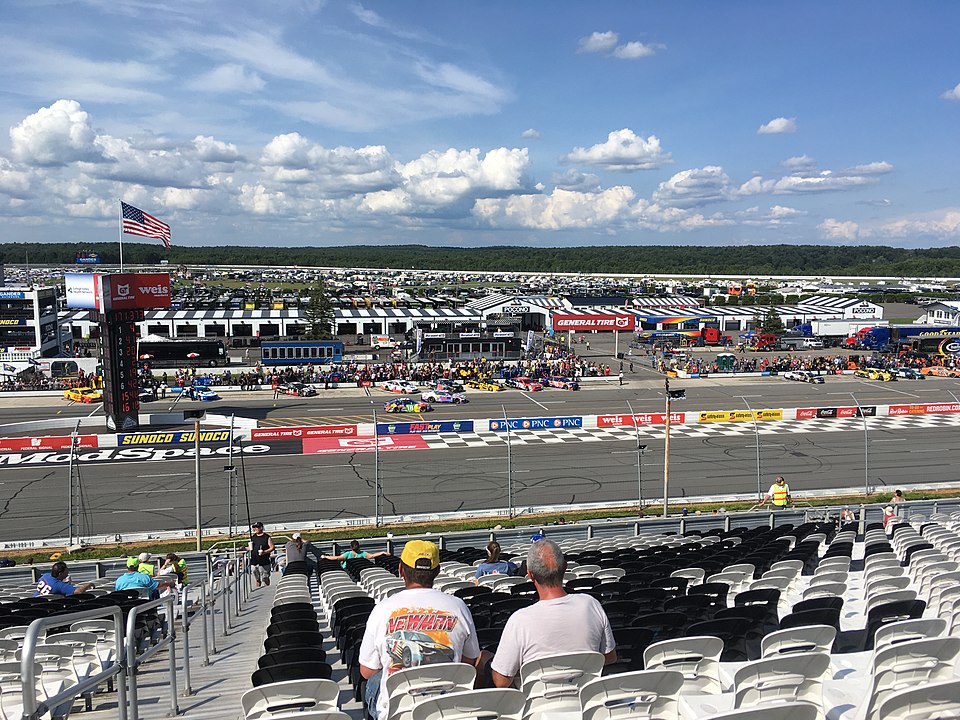
Prioritizing Single-Lap Speed in NASCAR Qualifying Practice
Qualifying is fundamentally different from racing. While a race requires a car that can maintain pace over many laps and manage tire wear, qualifying is about extracting the absolute maximum performance for one flying lap.
Therefore, practice sessions should focus on getting the car balanced for single-lap speed rather than long-run pace. This means making setup compromises that would be unacceptable on race day.
Key adjustments include increasing downforce to enhance cornering grip, even at the cost of higher drag on straights. Teams may add a few degrees to the rear wing angle or adjust the front splitter. Tire pressures are typically lowered by 1-2 psi to increase the contact patch and improve grip when the tires reach their optimal operating temperature during the short qualifying run.
Suspension settings are stiffened to reduce body roll and provide sharper turn-in response. Brake bias may be shifted more rearward to aid rotation under braking.
However, drivers must manage tire warm-up and degradation during the qualifying run. The car will be on the edge of adhesion, and small mistakes can ruin a lap.
The trade-off is worthwhile because a top qualifying position dramatically improves race outcomes, avoiding traffic and giving strategic flexibility. Sarah Moore, who coaches drivers through her programs, stresses that many drivers waste practice sessions trying to conserve tires for the race, but qualifying requires a singular focus on peak performance.
Tire management strategies vary across motorsports; for example, Formula 1’s tire compound allocation by Pirelli demonstrates how tire choices impact performance. In NASCAR, the focus is on optimizing a single set of tires for one hot lap, not managing multiple stints.
Unlike race day where pit stops play a crucial role in gaining positions, qualifying is purely about the driver’s ability to extract maximum performance in a single lap.
The ‘Do-or-Die’ NASCAR Qualifying Mindset
Adopting a do-or-die mindset transforms qualifying practice from routine to intense preparation. Drivers should treat each lap as a make-or-break attempt, ignoring previous results and focusing solely on the present run. Here are specific actions to simulate this mentality:
- Run full fuel and qualifying trim from the start: Begin the practice session with the exact car configuration and fuel load you’ll use in qualifying. This eliminates the need to adjust later and forces you to adapt to the car’s behavior under qualifying conditions immediately.
- Focus on one flying lap at a time: After each run, reset mentally. Do not carry over frustration from a missed corner; instead, visualize and execute the next lap as if it’s the only one that matters.
- Visualize the perfect lap before each run: Spend a few minutes mentally rehearsing the ideal line, braking points, and acceleration points. This mental preparation builds confidence and reduces hesitation.
- Accept higher risk for potential reward: Qualifying is about pushing the limit. Drivers must be willing to take calculated risks—such as later braking or earlier throttle—that they might avoid during a race to gain those crucial tenths of a second.
This high-pressure approach helps drivers perform when it counts most.
Car Setup Balance for Maximum Qualifying Speed
NASCAR car setup for qualifying differs significantly from race setup. The goal is to maximize single-lap speed, even if it sacrifices long-run consistency. Below is a comparison of typical adjustments:
Downforce: Race setups use a balanced downforce level to manage tire wear over many laps. Qualifying setups increase rear wing angle or front splitter to generate more cornering grip, accepting higher drag on straights. The extra downforce allows drivers to carry more speed through corners, which often outweighs the straight-line speed loss.
Tire Pressures: For races, pressures are set to manage heat buildup over long runs. In qualifying, pressures are lowered slightly (by 1-2 psi) to increase the contact patch and improve grip when tires are at their hottest. This also helps the tires reach optimal temperature faster.
Suspension: Race suspension is tuned for comfort and tire preservation. Qualifying suspension is stiffened for immediate response and reduced body roll, allowing sharper turn-in and more precise handling.
Brake Bias: During races, brake bias may be adjusted for fuel load changes. Qualifying uses a fixed, more rearward bias to aid rotation under braking, helping the car turn more aggressively.
Gear Ratios: Teams may shorten gear ratios for qualifying to keep the engine in its power band through corners, sacrificing some top speed on straights for better acceleration out of corners.
Drivers must balance these adjustments to achieve maximum downforce/speed while understanding tire wear and track conditions. The optimal setup is one that delivers the fastest possible lap without pushing the car beyond its adhesion limits.
NASCAR Qualifying: Mastering Track Lines and Corner Entry
Identifying the Fastest NASCAR Qualifying Line
The fastest qualifying line is not always the same as the optimal race-day line. In races, drivers consider tire management, overtaking opportunities, and traffic. In qualifying, it’s pure speed—the line that minimizes total lap time, regardless of how unconventional it looks.
For example, a driver might take a wider entry into a corner to carry more speed, even if it means a later apex. A later apex can enable earlier acceleration, which is crucial for lap time. Similarly, on certain tracks, drivers may use a “outside-inside” line that seems counterintuitive but reduces steering input and maintains momentum.
Identifying this line early in practice is essential. Drivers should experiment with different approaches, using reference points and data logging to compare lap times. Simulation tools are invaluable here; they allow drivers to test theoretical lines without risking the real car.
Sarah Moore incorporates this methodology in her coaching, teaching drivers that qualifying lines are about momentum and exit speed, not just safe entry. The key is to commit to the fastest line, even if it feels aggressive or different from what you’d use in a race.
Maximizing Corner Entry Speed for Better Qualifying Laps
Carrying maximum corner entry speed is a cornerstone of fast qualifying laps. The goal is to minimize speed loss before, during, and after the corner. Key techniques include:
- Braking points: Find the latest possible braking point while maintaining control. Use threshold braking to maximize deceleration without locking wheels. Reference points on track (markers, bumps) help consistency.
- Turn-in point: After braking, turn in smoothly at the correct point to set up the apex. A later turn-in can allow a wider entry and higher speed through the corner.
- Apex clipping: Aim to clip the apex precisely to set up the best exit. In qualifying, the apex may be later or earlier than the race line, depending on the chosen approach.
- Early throttle application: Begin accelerating just after the apex to get on power early, minimizing time spent off throttle and maximizing momentum down the following straight.
- Trail braking: Braking while turning into the corner helps maintain momentum and rotate the car, reducing the need to slow down as much before the apex.
Mastering these techniques allows drivers to carry more speed through corners, shaving crucial tenths off the lap time.
Using Simulation Tools to Optimize NASCAR Qualifying Lines
Modern drivers leverage simulation tools to understand theoretical fastest lines and refine car setup from home. Simulators replicate track conditions, tire behavior, and car dynamics, allowing drivers to experiment with different lines and setups without risking real cars. This is especially valuable for drivers with limited track time.
Simulation sessions can test various cornering approaches, gear ratios, and aerodynamic configurations. Data from sim runs can be shared with engineers to fine-tune the real car’s setup before arriving at the track. The iterative process of trying a line, analyzing lap times, and adjusting leads to a deeper understanding of what constitutes the fastest lap.
Sarah Moore incorporates sim training in her coaching programs, emphasizing that the mental rehearsal and technical feedback from simulators complement on-track practice. Drivers who treat sim sessions with the same seriousness as real practice gain a significant advantage. They can arrive at the track with a preconceived notion of the optimal line and setup, allowing them to focus on fine-tuning rather than starting from scratch.
In today’s competitive environment, simulator training is not a luxury but a necessity for anyone serious about mastering NASCAR qualifying. Simulators also help drivers understand complex aerodynamic interactions, similar to those studied in Formula 1 power unit technology, which pushes the boundaries of vehicle dynamics.
Precision Driving Techniques for NASCAR Qualifying Perfection
Braking Perfection for NASCAR Qualifying Success
Precision in braking is critical; small variations can cost tenths of a second. In NASCAR, where cars do not have anti-lock brakes (ABS), drivers must master threshold braking—applying maximum brake pressure without locking the wheels. This requires a keen feel for the pedal and the car’s weight transfer.
Key aspects include:
- Finding the braking point: Use consistent reference points on track (e.g., a sign, a bump, a shadow) to locate the exact spot to begin braking. This point may shift slightly with fuel load and tire wear, but in qualifying, conditions are more consistent.
- Modulating brake pressure: Apply the brakes firmly but smoothly to avoid lock-ups. In the final moments before turn-in, ease off slightly to transfer weight to the front tires and improve turn-in.
- Brake bias: A more rearward bias helps the car rotate under braking, but drivers must adjust based on track conditions and car setup.
- Consistency: The ability to hit the same braking point lap after lap is essential for building confidence and setting fast times.
Practice drills, such as focusing on a single corner repeatedly, help develop muscle memory. Sarah Moore often works with drivers on braking accuracy, using video analysis to pinpoint improvements. Remember, in qualifying, every millisecond counts, and perfect braking is the foundation of a fast lap.
Early Acceleration to Shave Qualifying Lap Times
Accelerating early out of corners is a key technique to minimize time loss. The goal is to get on the throttle as soon as possible after the apex, maximizing the time spent at full power. Steps to achieve this:
- Begin throttle just after the apex: As soon as the car passes the apex point, start applying the throttle smoothly. This initiates acceleration earlier, reducing the coasting time.
- Get to full throttle quickly: Once the car is stable and pointing straight, press the accelerator to full to maximize acceleration down the straight. Avoid lingering at partial throttle.
- Use the engine’s power band: Shift at the optimal RPM to keep the engine in its strongest range, ensuring maximum acceleration. This may require adjusting shift points based on track layout.
- Avoid wheel spin: Apply throttle progressively to prevent rear tire spin, especially on corner exit where the car is light. Smooth application maintains traction and momentum.
Early acceleration not only improves straight-line speed but also helps carry momentum into the next corner, creating a ripple effect of time savings throughout the lap.
Smooth Driving Inputs for Consistent Qualifying Performance
Smoothness is often overlooked but is critical for consistent fast laps. Jerky inputs—abrupt steering, braking, or throttle—disrupt the car’s balance and cause time loss through weight transfer and tire slip. Compare the two approaches:
Smooth inputs:
- Steering: Gradual, progressive turns keep tires in the optimal slip angle, maintaining grip.
- Braking: Progressive application prevents lock-ups and keeps the car stable.
- Throttle: Gradual increase avoids wheel spin and maintains balance.
Jerky inputs:
- Steering: Sudden movements cause weight transfer, leading to understeer or oversteer.
- Braking: Abrupt application shifts weight forward, causing the rear to become light and potentially unstable.
- Throttle: Sudden changes can break rear traction, especially on corner exit.
Smooth inputs reduce the chance of mistakes under pressure and help achieve consistent lap times. In qualifying, where drivers are pushing the limit, it’s easy to overdrive and become jerky. However, the fastest drivers maintain smoothness even at the limit.
They understand that precision beats aggression. Sarah Moore’s coaching emphasizes that smoothness is not about being slow; it’s about being efficient.
Every unnecessary movement costs time. By practicing smooth techniques, drivers can extract more speed without increasing risk.
Precision driving is not unique to NASCAR; Formula 1 drivers also emphasize smooth inputs to manage tire degradation, especially with the 2026 technical regulations that continue to evolve vehicle dynamics. While NASCAR and F1 differ in car specifications, the underlying principles of smooth, precise driving remain universal.
Interestingly, qualifying is often more about mental approach than raw speed; the ability to execute flawlessly under pressure separates the good from the great. In summary, NASCAR qualifying success comes down to three pillars: efficient practice that focuses on single-lap speed, mastering the fastest track lines with maximum corner entry speed, and executing precise braking and acceleration. Sarah Moore’s coaching experience shows that drivers who treat qualifying as a ‘do-or-die’ event and use technology like simulators to refine their approach can significantly improve their starting positions.
Remember, every tenth counts. Start by analyzing your next practice session with these tips, and consider exploring professional racing coaching programs to fine-tune your technique. The grid is waiting — make every lap count.
