
NASCAR restart procedures, specifically the green-white-checkered finish now called NASCAR Overtime, determine how races conclude under caution in professional racing. This critical rule ensures a green-flag finish, impacting championship outcomes and driver strategies.
Understanding the two-lap shootout format, restart zones, and the three-attempt limit is essential for any motorsport enthusiast following the 2026 season. The procedures balance competitive fairness with the need for dramatic finishes that fans expect in top-tier stock car competition.
- NASCAR’s green-white-checkered finish is now officially called NASCAR Overtime.
- A two-lap shootout is attempted, with up to three restart attempts if cautions occur before the white flag.
- The restart must begin at the designated restart zone, and the race is frozen if a caution comes out after the leader takes the white flag.
What is NASCAR’s Green-White-Checkered Finish (NASCAR Overtime)?
The Official Name: NASCAR Overtime
NASCAR Green-White-Checkered procedures (now officially “NASCAR Overtime”)
The term “NASCAR Overtime” officially replaced the colloquial “green-white-checkered” in the 2026 rulebook to provide clarity and consistency. This rebranding reflects the procedure’s structured nature: it is not merely a flag sequence but a defined overtime format with specific parameters. NASCAR’s competition department standardized the terminology to avoid confusion among fans, drivers, and broadcasters.
The official name appears in all rule documents and is used by race control during events. Understanding this nomenclature is crucial for interpreting race conclusions, especially in high-stakes playoff races where the difference between winning and elimination can hinge on a single overtime attempt. The change also aligns NASCAR with other sports that use “overtime” to denote extended competition beyond the scheduled duration.
Purpose: Ensuring Races Finish Under Green Flag
The primary purpose of NASCAR Overtime is to ensure races finish under green flag conditions. This rule addresses a fundamental desire in professional racing: that the winner be determined by actual racing, not by a caution flag freezing the field. A green-flag finish means cars are racing at full speed for the checkered flag, creating maximum drama and fair competition.
The rule prevents scenarios where a late caution could arbitrarily decide the winner based on pit strategy rather than on-track performance. For decades, NASCAR fans and drivers criticized finishes that ended under yellow, as they felt it robbed the sport of its climax.
NASCAR Overtime operationalizes the principle that races should conclude with cars battling side-by-side, not coasting to the finish under caution. This emphasis on green-flag finishes has become a hallmark of the sport’s entertainment value, producing iconic last-lap passes that are replayed for years.
How It Works: The Two-Lap Shootout
The two-lap shootout is the core mechanism of NASCAR Overtime. The process follows a precise sequence:
- The field completes a pace lap behind the safety car after a caution flag is displayed.
- Cars line up in the designated restart zone, typically marked on the track surface just before the start/finish line.
- The official displays the green flag, signaling the start of the two-lap dash.
- Drivers race for two laps, with the white flag appearing on the final lap and the checkered flag at the finish.
This structured approach ensures all competitors have an equal opportunity to restart and contest the final laps. The two-lap distance provides enough time for drafting and passing while maintaining urgency. The shootout format transforms what could be an anti-climactic caution finish into a high-stakes sprint, often producing dramatic last-lap passes and photo finishes that define NASCAR’s most memorable moments.
The procedure is identical across all three national series (Cup, Xfinity, Truck) and applies to both oval and road courses, though restart zone locations may vary by track. For more insights into professional racing careers and strategies, see our comprehensive professional racing guide.
Maximum Attempts: Up to Three Restarts
NASCAR allows up to three attempts at a green-white-checkered finish to balance competitive fairness with practical race duration limits. The attempt rules are:
- First attempt: The initial two-lap shootout begins from the restart zone.
- If a caution occurs before the leader takes the white flag on the first attempt, a second attempt is initiated.
- If another caution occurs before the white flag on the second attempt, a third and final attempt is made.
- If a caution occurs on the third attempt before the white flag, the race is frozen and ends under caution with positions determined at that moment.
This tiered system ensures that if an early incident spoils the first restart, there are backup opportunities to produce a green-flag finish. However, the three-attempt limit prevents indefinite delays and ensures the race eventually concludes.
The rule has been tested in numerous high-stakes situations, including playoff races and championship-deciding events, where it has consistently delivered exciting finishes while maintaining order. Notably, if a caution flies after the leader takes the white flag on any attempt, the race ends under caution with no further attempts, as the results are frozen at that point.
NASCAR Restart Procedures and Rules
Trigger Conditions: When a Restart is Needed
A caution flag within the final few laps, or after the white flag, necessitates a restart.
Specific scenarios that trigger NASCAR Overtime include:
- A caution flag is displayed during the final scheduled lap or while the leader is on the white flag lap.
- An incident occurs after the white flag has been shown but before the checkered flag, causing the race to end under caution.
- The scheduled race distance is completed while a caution is still active, requiring an overtime finish to determine the winner.
These trigger conditions are evaluated by race control in real-time, with officials monitoring lap counts and caution periods. The “final few laps” typically refers to the last two laps of the scheduled distance, though exact timing depends on track specifics and race length. The rule ensures that any late-race disruption that could affect the outcome is addressed through a controlled restart rather than leaving results to chance.
While Formula 1 technical regulations focus on car performance, NASCAR’s restart procedures focus on race conclusion dynamics. In practice, NASCAR officials make the call to initiate Overtime based on whether the caution period would extend the race beyond its scheduled distance, ensuring fairness while avoiding unnecessary extensions.
The Restart Process: Pace Lap and Formation
The restart process follows a meticulously choreographed sequence:
- Caution flag is displayed, and the pace car enters the track.
- The field cycles behind the pace car, maintaining order and speed.
- Cars line up in the designated restart zone, which is clearly marked on the track surface.
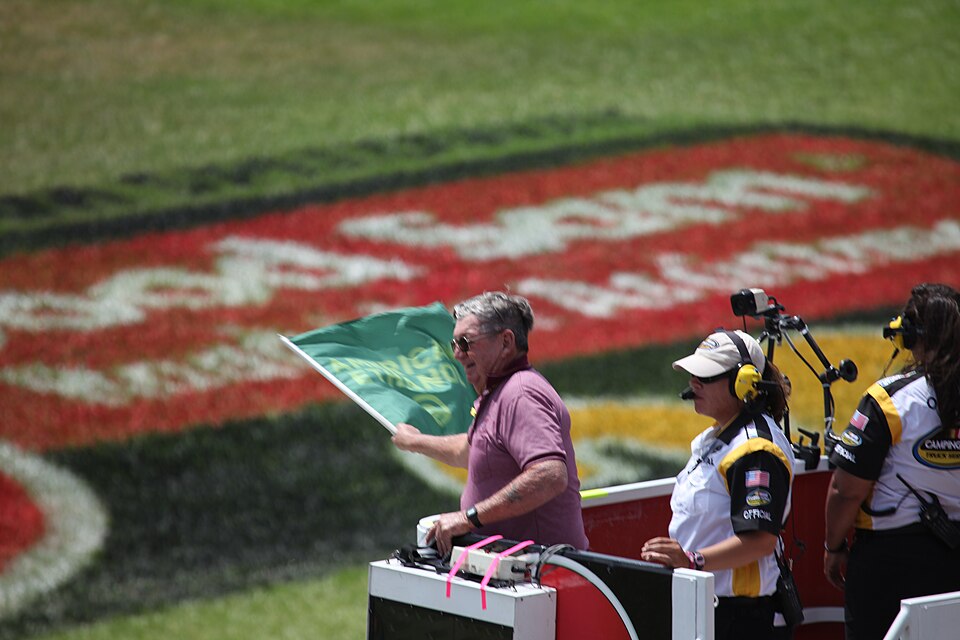
- The official waves the green flag (or green and white flags together for the first lap) to signal the start.
- The two-lap dash begins, with drivers racing for position under green flag conditions.
The field completes a pace lap and restarts for a two-lap dash, ensuring all cars are properly positioned and the restart is executed safely. The formation phase is critical: drivers must maintain their positions and not pass before the restart zone, with penalties for infractions. This structured approach minimizes chaos while maximizing the opportunity for clean racing.
The process is identical for all overtime attempts, though on the final attempt drivers may take additional risks knowing it’s their last chance. NASCAR’s restart procedures are designed to be transparent and consistent, with officials using hand signals and radio communications to coordinate the field. Success often depends on pit stop strategies, which are covered in detail in our NASCAR pit stop strategies article.
The Restart Zone: Where the Action Begins
The restart must be initiated at the designated restart zone, a specific area on the track marked by cones or painted lines. This zone is typically located just before the start/finish line and varies by track configuration. The requirement ensures consistency and fairness: all cars must restart from the same designated area, preventing drivers from gaining an advantage by restarting in an unconventional location.
The zone’s placement is strategic—it allows officials to monitor restart formations clearly and gives drivers a clear reference point for when to accelerate. In professional racing, adherence to the restart zone is strictly enforced; violations result in penalties that can dramatically affect race outcomes.
The zone is a critical component of NASCAR’s overtime procedure, as it standardizes the restart location across all tracks in the Cup Series, Xfinity Series, and Truck Series. Drivers and crew chiefs study restart zone locations extensively during race prep, as knowing the exact acceleration point can provide a competitive edge in the initial moments of the shootout.
The White Flag Rule: Race Freeze Conditions
The white flag rule creates a critical threshold in NASCAR Overtime. If the leader takes the white flag (signaling one lap to go) and a caution comes out, the race is frozen, and the results are determined by the order at that moment. This “race freeze” means that once the leader crosses the start/finish line with the white flag displayed, the field’s positions are locked regardless of subsequent incidents.
The rule prevents a late crash from altering the results after the race is effectively over. It creates a clear moment when the race concludes—either the leader completes the final lap under green, or if caution flies after the white flag, the running order at that instant becomes final. This provision has major strategic implications: drivers know they must be in position by the white flag, as any incident after that point won’t change the outcome.
The white flag rule ensures that NASCAR Overtime produces a definitive result within the three-attempt limit, avoiding endless restarts while preserving the integrity of the finish. It also adds a layer of tension: fans know that once the white flag waves, the race is essentially over unless a caution comes out immediately, which would freeze the field.
Closing:
The most surprising aspect of NASCAR Overtime is how the three-attempt limit creates a strategic layer where teams must weigh aggression against survival, especially on superspeedways where “big one” crashes are common.
Drivers often adopt different approaches on each attempt, with some playing it safe on the first two to ensure they make it to the final lap. For anyone studying professional racing procedures, the key takeaway is that mastering restart positioning and understanding the exact moment the white flag appears can be the difference between winning and finishing second. Action step: Watch recent NASCAR Cup Series overtime finishes to see these rules in action and identify how drivers manage their attempts.
