
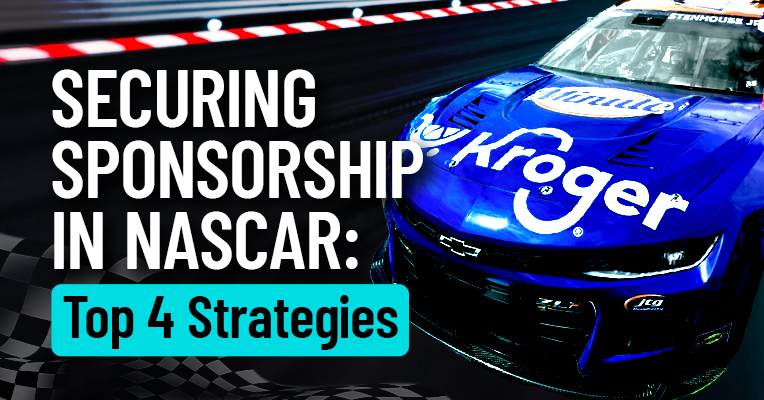
NASCAR sponsorship costs range from $15,000 per race for associate placement on smaller teams to $35 million per season for top-tier Cup Series sponsorship, creating opportunities at every level. Securing funding requires drivers to build a compelling personal brand, demonstrate consistent performance results, and present transparent budgets that align with sponsor expectations.
Sarah Moore Racing‘s founder, Sarah Moore, is an 18-year veteran with breakthrough wins in the 2009 Ginetta Junior Championship and 2018 BritCar Endurance Championship, exemplifying how a unique narrative can attract diversity-focused sponsors. This guide covers the three essential pillars of NASCAR sponsorship success: personal brand development, proof of performance, and detailed cost budgeting.
- Your personal brand is your first sponsorship asset: Sarah Moore’s 18-year career as a pioneering female and LGBTQ+ driver demonstrates how a unique narrative can attract diversity-focused sponsors. (Source: Business Context)
- Performance metrics are non-negotiable: Sponsors require documented proof of results, including podium finishes and championship standings, to justify investment.
- Sponsorship costs vary dramatically: From $15,000 per race for associate placement on smaller teams to $35 million per season for top-tier Cup Series sponsorship, budgeting must be transparent and detailed. (Source: Required Data)
Define Your Sponsor-Worthiness: Building a Personal Brand That Attracts Funding
Sarah Moore’s 18-year career in professional racing is defined by breaking barriers. She became the first woman to win the Ginetta Junior Championship in 2009, and later the first woman to win the BritCar Endurance Championship in 2018. As an openly LGBTQ+ driver, Moore represents diversity and inclusion in a traditionally male-dominated sport.
This unique combination of achievements and identity creates a powerful brand narrative that resonates with sponsors focused on diversity, equity, and inclusion. Her story differentiates her from other drivers and provides a compelling angle for sponsorship proposals.
Moore emphasizes that while her barrier-breaking status opens doors, it must be backed by consistent, high-level results to secure long-term sponsor support. Beyond on-track success, she serves as an ambassador for Racing Pride and works as an A-level driving instructor, further enhancing her appeal as a multifaceted partner.
Targeting the Right Sponsors: Aligning Your Brand with Corporate Values
To identify sponsors whose values match your personal brand, focus on these strategies:
- Research potential sponsors’ target demographics and marketing goals to ensure alignment with your audience and message.
- Examine existing partnerships to identify companies that already support diversity, inclusion, or motorsport initiatives.
- Craft proposals that position the sponsor as the “hero” of the experience, highlighting how their support drives meaningful change and reaches desired customers.
- Emphasize shared values, such as LGBTQ+ inclusion or women’s empowerment, to create emotional connections beyond the racetrack.
- Nurture relationships with sponsor marketing teams through regular updates, personalized communication, and exclusive access opportunities.
- Leverage social media to demonstrate your ability to engage fans and promote sponsor products authentically.
- Provide clear ROI metrics and activation ideas that show you understand the sponsor’s business objectives.
Familiarity with technical regulations across series, such as Formula 1 technical regulations, enhances credibility with engineering-focused sponsors.
The Five Entry Points: Mapping Your Path to Sponsorship
NASCAR sponsorship operates through five primary entry points, each with distinct opportunities and considerations.
| Entry Point | Typical Opportunities | Cost Range | Brand Alignment Considerations |
|---|---|---|---|
| League (NASCAR) | Official series partnerships, league-wide marketing campaigns | Varies; multi-million to tens of millions per season | Broad national reach, prestige, association with the sport’s governing body |
| Race Teams | Car decals, pit wall signage, driver uniforms, crew apparel | $15,000 per race (associate) to $35 million per season (primary) | Direct link to on-track performance, team reputation, fan loyalty |
| Drivers | Personal endorsements, social media promotions, public appearances | Varies widely based on driver profile and marketability | Personal connection with fans, authenticity, individual brand story |
| Race Tracks | Track signage, event sponsorships, fan experience packages | Varies by track size and event | Local market penetration, community engagement |
| Media | Broadcast mentions, digital content integrations | Varies by platform and campaign scope | Targeted audience reach, measurable impressions |
For up-and-coming drivers, the most accessible entry points are typically race team associate placements and driver endorsements. These require lower initial investment and allow drivers to build a track record of sponsor satisfaction. League-wide partnerships usually demand multi-million dollar commitments, while track and media sponsorships often depend on existing relationships and local market presence.
Proof of Performance: Racing Results That Convert to Sponsorship Dollars
Consistent High-Level Results: The Non-Negotiable Foundation
Sponsors prioritize these key performance metrics when evaluating drivers:
- Podium finishes: Finishing in the top 3 demonstrates the ability to compete at the front and attract media attention.
- Championship standings: A strong position in season-long points shows consistency and competitiveness over time.
- Race wins: Victory is the clearest indicator of success and provides powerful marketing material.
- Consistency: High finish percentages and low DNF rates indicate reliability and professionalism.
- Qualifying performance: Strong starting positions reflect speed and team capability, often correlating with race results.
Drivers should maintain detailed records of all results, including official timing sheets, championship standings, and video highlights. Creating a visual portfolio with statistics, photos, and race summaries makes it easy for sponsors to see your value.
Showcasing Achievements: From BritCar Endurance to W Series Podiums
When presenting your achievements, tailor the narrative to the sponsor’s interests. The following table helps map different series to sponsor value propositions.
| Series/Championship | Typical Audience | Prestige Level | What It Demonstrates |
|---|---|---|---|
| BritCar Endurance Championship (UK) | Motorsport enthusiasts, endurance racing fans | High in European endurance scene | Ability in long-distance racing, teamwork, reliability; notable achievement: Sarah Moore won in 2018 |
| W Series | Global audience interested in women’s sports, family-friendly | Premier women’s single-seater series | Competitiveness in high-profile series, gender barrier-breaking |
| Ginetta Junior Championship | Young drivers, UK racing fans | Respected entry-level series | Early talent development; Sarah Moore was the first female champion in 2009 |
| NASCAR Cup Series | Massive American audience, mainstream sports fans | Highest level of stock car racing | Peak performance in America’s most popular racing series; defending champion Kyle Larson (2026) exemplifies top value |
Understanding the technical demands of each series, such as Formula 1’s advanced power unit technology, helps drivers communicate with engineering-focused sponsors. A diversity-focused sponsor will value the W Series and barrier-breaking milestones, while a performance-oriented sponsor will focus on Cup Series wins and championship standings.
Leveraging Current Season Performance: The 2026 NASCAR Landscape
In the 2026 NASCAR season, current performance is a critical factor in sponsorship negotiations. Defending Cup Series champion Kyle Larson represents the pinnacle of sponsor value, with his on-track success driving massive brand exposure. For other drivers, real-time results from the current season can be leveraged to attract mid-season sponsors or renegotiate existing deals.
Sponsors want to see ongoing competitiveness, so drivers should maintain detailed performance dashboards that correlate race finishes with media impressions and fan engagement. Regular reporting—ideally after each race—keeps sponsors informed and reinforces the partnership’s value. Series that employ sprint formats, like Formula 1’s sprint races, change the points structure and offer additional marketing opportunities that can be highlighted to sponsors.
Tools like DIGIDECK can help drivers create dynamic proposals and track ROI metrics throughout the season. Building professional relationships and maintaining sponsor visibility are essential for long-term partnerships, as sponsors want to see consistent effort and results.
How Much Does NASCAR Sponsorship Cost in 2026?
Sponsorship Tiers and Cost Breakdown: Associate to Full-Season
NASCAR sponsorship costs vary widely based on series, team, and visibility level. The following table outlines common tiers.
| Tier Name | Approximate Cost Range | Typical Visibility | Example Teams/Drivers |
|---|---|---|---|
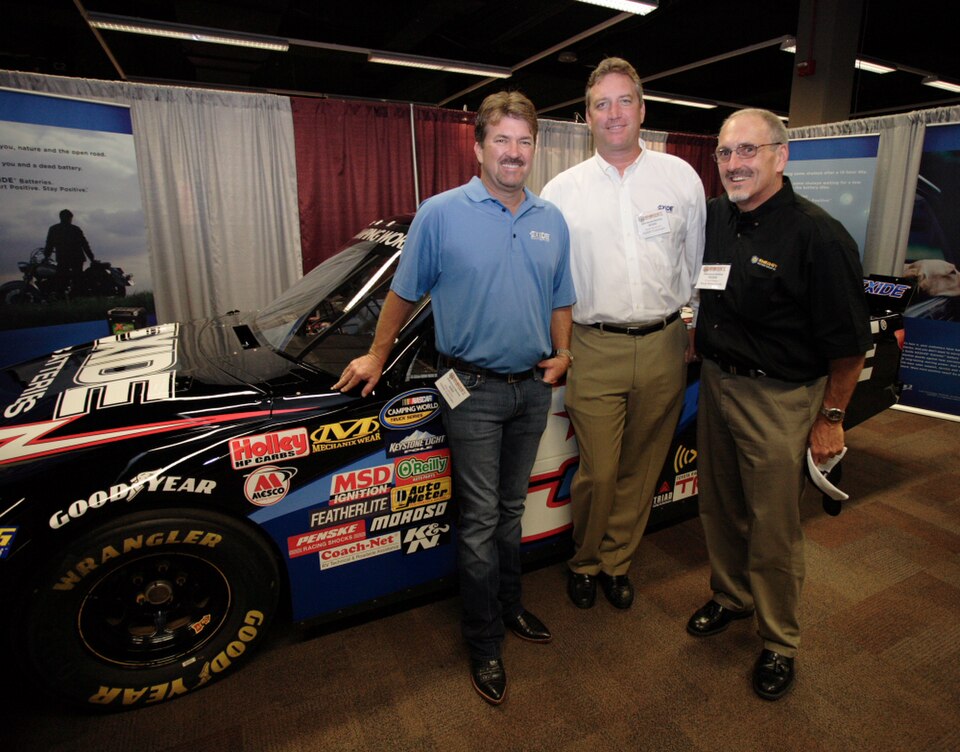
| Associate Placement (per race) | $15,000 | Small decals on car, pit wall, driver uniform | Smaller Xfinity or Truck Series teams |
| Partial Season (5-10 races) | Varies; contact teams for pricing | Increased decal size, more prominent placement | Mid-tier Xfinity teams, development drivers |
| Full-Season Primary (Cup Series) | $35 million | Full car wrap, primary sponsor on all materials, extensive marketing integrations | Top Cup teams: Hendrick Motorsports, Joe Gibbs Racing |
For up-and-coming drivers, associate placement offers the lowest barrier to entry at $15,000 per race. This allows drivers to gain sponsor experience and build a portfolio of satisfied partners.
As performance improves, they can scale into partial season deals and eventually full-season primary sponsorships. The $35 million Cup Series primary sponsorship is typically reserved for established champions with massive fan bases.
Budgeting Your Sponsorship Investment: Where the Money Goes
A transparent budget breakdown is essential for building sponsor trust. Major expense categories include:
- Travel: Airfare, lodging, meals for driver and crew; costs depend on race locations and team size.
- Equipment: Car components, tires, fuel, safety gear; varies by series and team specifications.
- Entry fees: Race registration fees imposed by NASCAR and track operators; can range from hundreds to thousands per event.
- Crew salaries: Compensation for mechanics, engineers, and support staff; often a significant fixed cost.
- Marketing activations: Costs for sponsor hospitality, fan giveaways, social media content creation; these directly deliver sponsor value.
Effective budget management, similar to the principles in Formula 1’s budget cap, demonstrates financial responsibility to sponsors. Sponsors need to see exactly how their funding will be used, and a clear itemized budget builds trust and justifies the investment.
ROI and Performance Tracking: Proving Value to Sponsors
Demonstrating return on investment (ROI) is critical for retaining sponsors. Key metrics include media impressions from car decals and pit visibility, social media engagement rates on sponsor-related posts, fan interactions at events (e.g., autograph sessions), and correlation between on-track performance and sponsor sales spikes. Tools like DIGIDECK help drivers create professional proposals and track these metrics throughout the season.
Regular reporting—ideally after each race—keeps sponsors informed and reinforces the partnership’s value. Understanding operational efficiencies, such as pit stop strategies, helps demonstrate how sponsor funding improves team performance. Drivers should also gather qualitative feedback from fans and track how sponsor branding is perceived.
This holistic approach shows sponsors that you understand their business objectives and are committed to maximizing their investment.
The most surprising insight is the vast sponsorship cost spectrum—from $15,000 per race to $35 million per season—which means there’s an entry point for every budget, from local businesses to multinational corporations. This democratization of sponsorship opportunities allows drivers at all levels to attract funding with the right strategy.
Your immediate action step: Draft a personal brand statement that combines your unique story (like Sarah Moore’s barrier-breaking journey) with your racing achievements. This statement becomes the foundation of every sponsor proposal, ensuring you communicate value clearly and consistently. Focus on what makes you different and how your performance can drive sponsor success.
