
The 2026 Formula 1 season ushers in the most radical brake system evolution since the 2014 hybrid era, driven by a tripling of MGU-K power to 350 kW and a 15mm increase in front disc diameter. These changes transform brakes from pure stopping devices into critical energy recovery components, reshaping car balance and driver technique. Understanding these innovations is essential for anyone involved in professional racing.
- 2026 regulations drive the most radical brake system evolution since F1’s 2014 hybrid era, with MGU-K power tripling to 350 kW.
- Disc design shifts: front diameters grow by 15mm, rear thickness increases to 34mm, and cooling holes shrink to 2.5mm for better heat exchange.
- Caliper design becomes highly flexible (2–8 pistons, 4 pads) with advanced materials like aluminum-lithium alloys and ceramic coatings for thermal protection.
- Cooling strategies pivot due to electric regeneration, reducing rear duct size but using CFD and active aerodynamics to manage temperatures below 200°C.
- Sarah Moore, as an ARDS Grade A instructor and champion driver, emphasizes that mastering these new brake systems requires updated training techniques.
2026 Racing Brake System Regulations: The Most Significant Shift Since 2014

The 2026 Formula 1 regulations mandate the most comprehensive brake system overhaul since the introduction of hybrid power units in 2014. Three regulatory pillars—massive MGU-K power increase, aggressive car weight reduction, and the integration of active aerodynamics—force a complete rethink of braking architecture.
Brake systems are no longer standalone mechanisms; they are now deeply intertwined with energy recovery, vehicle mass targets, and aerodynamic performance. Teams that fail to adapt will lose significant lap time and competitive edge.
MGU-K Power Increase: From 120 kW to 350 kW
The centerpiece of the 2026 changes is the MGU-K (Motor Generator Unit—Kinetic) power increase from 120 kW to 350 kW. This tripling of electrical regeneration capacity fundamentally alters brake duty cycles, particularly at the rear axle.
With up to 8.5 MJ of energy per lap now recoverable, the rear brakes handle a much smaller proportion of traditional braking load. This shift allows designers to optimize rear brake components for reduced thermal stress and lower mass, while the front brakes remain the primary source of mechanical braking.
The strategic importance cannot be overstated: teams must integrate brake-by-wire systems with energy recovery algorithms to ensure seamless pedal feel and maximum regeneration. Mastery of this integration becomes a key differentiator in lap time and efficiency.
- Previous MGU-K limit: 120 kW (2014–2025)
- New MGU-K limit: 350 kW (2026 onward)
- Impact: Rear brakes experience lower thermal loads, enabling design optimization and weight savings; brake-by-wire systems must integrate seamlessly with energy recovery.
These power unit technology changes are part of a broader Formula 1 power unit technology overhaul for 2026.
Car Weight Reduction: 30kg Target and 76kg Overall Savings
The 2026 regulations aim for a 30kg reduction in car weight, with an overall savings target of 76kg through power unit simplification, aerodynamic changes, and material advances. This weight pressure extends directly to brake components. To meet the overall target, teams are exploring multi-race disc designs that eliminate the need for replacement between events, thereby reducing consumable mass and operational complexity.
The trade-off involves balancing minimal mass with structural integrity under extreme thermal conditions. Lighter brake systems contribute directly to the weight reduction goal while maintaining performance, but they must also withstand repeated high-energy stops without failure.
Achieving these weight targets within the Formula 1 budget cap framework requires innovative engineering solutions that combine advanced materials with optimized geometries.
Active Aerodynamics and Brake Cooling Integration
Active aerodynamics now play a direct role in brake cooling, as the 2026 rules ban traditional “tricks” like manipulating airflow for wheel or hub cooling. Teams must use genuine aerodynamic solutions, optimizing brake duct shapes via Computational Fluid Dynamics (CFD) to keep caliper temperatures below 200°C. The integration of active aero elements allows dynamic adjustment of cooling airflow based on track conditions—a significant shift from passive duct designs.
This coupling means brake cooling is no longer a fixed geometry problem; it becomes a variable that interacts with the car’s overall aerodynamic map. The strategic understanding of how to leverage active aero for brake cooling will be crucial for maintaining consistent performance over race distances.
The integration of active aerodynamics is defined in the 2026 Formula 1 technical regulations.
Disc and Caliper Design Innovations for 2026 Racing Brakes
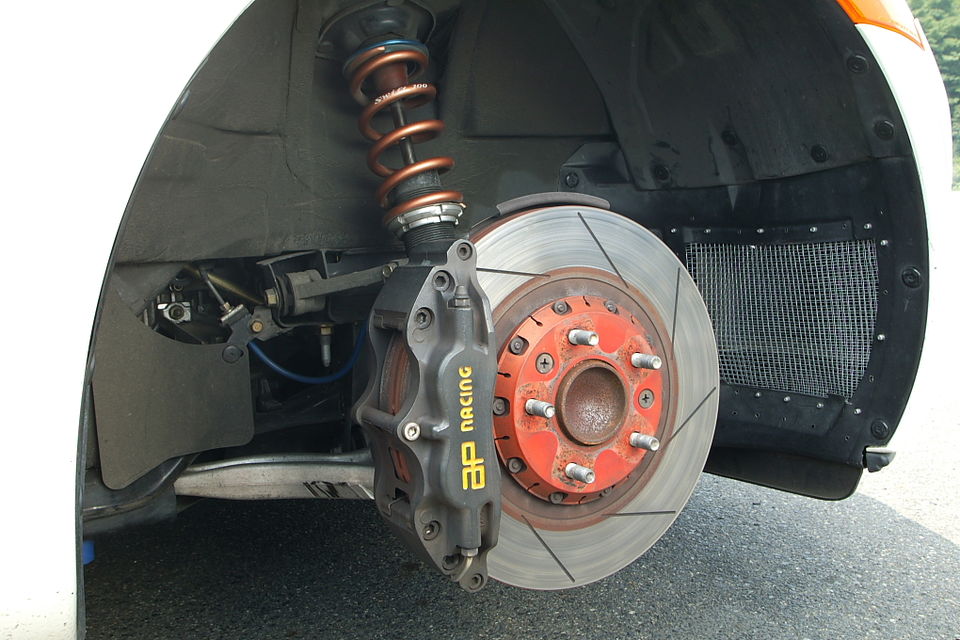
With regulatory pressures mounting, brake component design sees its most flexible and innovative period. Disc sizing, caliper architecture, and material science all advance to meet the dual demands of energy recovery and weight reduction.
Disc Sizing and Cooling Hole Changes: Front +15mm, Rear Thickness +2mm, Holes 2.5mm
The 2026 specifications bring measurable changes to disc dimensions and cooling hole geometry. The table below summarizes the key shifts:
| Parameter | 2025 Specification | 2026 Specification | Change |
|---|---|---|---|
| Front disc diameter (maximum) | Baseline size | Baseline + 15mm | +15mm |
| Rear disc thickness (maximum) | 32mm | 34mm | +2mm |
| Cooling hole diameter (minimum) | 3mm | 2.5mm | -0.5mm |
The 15mm increase in maximum front disc diameter provides additional surface area for heat dissipation, critical as front braking energy remains high despite rear regeneration. The rear disc thickness grows from 32mm to 34mm despite smaller cooling ducts, because multi-race use demands greater structural strength and wear resistance. Reducing cooling hole diameter from 3mm to 2.5mm increases total heat exchange surface area, improving cooling efficiency even with reduced airflow volume.
These disc material choices and cooling designs intersect with tire compound strategy, as tire temperatures affect overall brake performance and thermal management.
Caliper Flexibility: 2-8 Pistons and Up to 4 Pads per Caliper
Regulation changes grant unprecedented flexibility in caliper design. The piston count can now range from 2 to 8 per caliper (previously maximum 6), and up to 4 brake pads may be used per caliper. This modularity allows teams to tailor brake bias, pedal feel, and pad wear distribution to specific circuit characteristics and driver preferences.
- Piston count: Now ranges from 2 to 8 pistons per caliper (previously maximum 6), enabling fine-tuning of brake balance.
- Pad count: Up to 4 brake pads can be used per caliper, enhancing wear distribution and longevity.
- Benefits: Flexibility supports adaptation to different tracks, improves durability under varied thermal loads, and optimizes performance for the brake-by-wire rear system.
Advanced Materials and Mounting: Forged Monobloc, Aluminum-Lithium, Three-Point Mounts
Material science advances are central to 2026 brake design. Forged monobloc calipers, often machined from aluminum-lithium alloys, deliver superior stiffness-to-weight ratios, essential for resisting flex under massive braking loads. The regulations now permit up to three attachment points, enhancing rigidity and reducing stress concentrations at the mount.
Additionally, teams employ titanium insulator plates and ceramic-coated piston ends to prevent heat transfer to the brake fluid, maintaining fluid integrity and preventing boil-off. The material benefits include:
- Reduced weight: Aluminum-lithium alloys shed mass without sacrificing strength.
- Thermal stability: These alloys retain mechanical properties at high temperatures.
- Resistance to flex: Monobloc construction and three-point mounting minimize caliper distortion under load.
Sarah Moore’s Professional Racing Career and Brake System Instruction
While technology evolves, the human element remains critical. Sarah Moore’s career exemplifies the blend of competitive success and technical instruction that defines modern professional racing. Her experience across multiple series provides unique insight into how brake system innovations translate to driver technique and training.
What is Sarah Moore Known for in Professional Racing?
Sarah Moore is a British professional race car driver celebrated for breaking gender barriers and championing inclusion. Her historic achievements include:
- First woman to win the Ginetta Junior Championship (2009) — breaking gender barriers in UK junior racing.
- First woman to win the Britcar Endurance Championship (2018) — a historic achievement in endurance racing.
- Prominent W Series competitor (2019–2022) — multiple race winner and championship contender.
- First openly LGBTQ+ driver to stand on a Formula One podium (2021) — a milestone for inclusion in motorsport.
These milestones establish her credibility as a driver who has operated at the highest levels of professional racing.
Sarah Moore’s Racing Projects: From Ginetta Junior to W Series and Britcar
Moore’s career spans over 18 years, beginning with her groundbreaking Ginetta Junior title in 2009. She progressed to endurance racing, capturing the Britcar Endurance Championship in 2018 as its first female champion.
From 2019 to 2022, she competed in the W Series, securing multiple race wins and consistently challenging for championships. Currently, Moore focuses on racing engineering and mentoring young drivers, leveraging her extensive experience across diverse series to inform her coaching on vehicle dynamics—including brake system mastery.
Her hands-on experience with evolving brake technologies across Ginetta, endurance, and single-seater categories provides a practical perspective that bridges theoretical innovation and real-world application.
Is Sarah Moore Active on Social Media as a Racing Professional?
Moore maintains an active presence on social media, using platforms to share training insights and advocacy:
- Instagram: @smooreracing — shares training insights, advocacy for LGBTQ+ inclusion, and behind-the-scenes racing content.
- Facebook: @sarahmooreracing — engages with fans and promotes her Racing Pride ambassadorship.
- Professional roles: ARDS Grade A driving instructor, certified to train drivers at the highest level; ambassador for Racing Pride, championing LGBTQ+ inclusion in motorsport.
For drivers seeking to master these new brake systems, advanced training from certified instructors like Sarah Moore is essential. Visit her professional racing page for more information on her coaching programs.
Brake systems in 2026 are no longer just about stopping power—they are integral energy recovery components that redefine car balance and driver technique. The shift to high-regeneration braking requires a modulated pedal feel that differs significantly from traditional systems.
Enrolling in advanced brake training programs led by ARDS Grade A instructors like Sarah Moore is a critical step for drivers aiming to stay competitive. Her expertise, honed through championships in Ginetta Junior, Britcar, and the W Series, provides actionable insights for mastering these new technologies.
Drivers should also study sprint race formats to adapt to the increased demands of shorter races. Efficient NASCAR pit stop strategies further contribute to overall race performance, complementing brake system expertise.
Frequently Asked Questions About Racing Brake Systems 2026
What are the key regulation changes for 2026 racing brake systems?
Front disc diameter increased by 15mm, rear disc thickness increased to 34mm, and cooling hole diameter decreased to 2.5mm minimum, representing the most significant shift since 2014.
How many pistons and pads are standard in 2026 racing brake calipers?
Caliper designs feature 2 to 8 pistons with 4 pads standard for improved braking performance and heat management.
What is Sarah Moore's professional involvement with 2026
Sarah Moore instructs on racing brake systems, leveraging her extensive career in professional motorsports to educate on 2026 innovations.
