
In 2026, professional racing suspension tuning focuses on maximizing tire contact patches through aggressive alignment settings, increased caster for dynamic camber gain, and optimized spring rates to manage high cornering loads. For a deeper dive into the world of professional racing, visit professional racing. This guide provides exact parameters for camber, caster, toe, and spring rates, and explains how adjustments affect handling on different tracks.
- Optimal front camber ranges from -2.0° to -3.5° for track days, tightening to -2.5° to -3.2° for high-grip competition, with outside shoulder tire temperatures slightly higher than inside.
- Set caster over 6 degrees positive to improve turn-in, increase straight-line stability, and gain dynamic camber during cornering.
- Use front toe-out (0° to 1/8″) for quick steering response and rear toe-in (1/16″ to 1/8″) for stability, while adjusting spring rates to correct understeer or oversteer.
Camber, Caster, and Toe: The Alignment Triangle
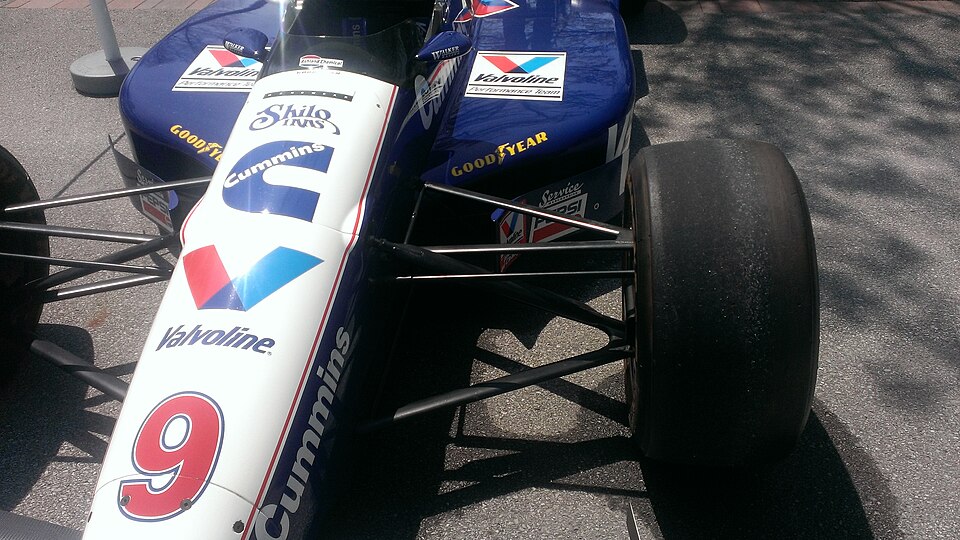
The foundation of suspension tuning lies in the alignment triangle: camber, caster, and toe. These three settings determine how the tires contact the road and directly influence handling balance, tire wear, and driver feedback. Getting these parameters right is essential before moving to spring rates or damping.
Camber: Optimal Angles for Tire Contact Patch
Camber is the vertical angle of the wheel relative to the road surface when viewed from the front or rear. Negative camber (top of wheel tilted inward) is used in racing to keep the tire’s contact patch optimal during hard cornering.
| Setting | Track Days | Higher-Grip Racing |
|---|---|---|
| Front Camber | -2.0° to -3.5° | -2.5° to -3.2° |
| Rear Camber | -1.5° to -3.0° | -1.5° to -3.0° |
The tuning goal is to achieve outside shoulder tire temperatures slightly higher than inside temperatures after a run, indicating optimal contact patch utilization. Too much negative camber causes understeer on acceleration and poor braking, while too little leads to excessive outside tire wear. Start with the ranges above and adjust based on temperature readings.
Caster: Maximizing Turn-In and Stability
Caster is the angle of the steering axis when viewed from the side. High positive caster is generally recommended for racing, with settings over 6 degrees if clearance allows.
Set caster over 6 degrees positive if clearance allows. This adjustment affects multiple handling characteristics:
- Improves turn-in feel and steering response: High positive caster sharpens the front-end reaction, allowing the car to respond quickly to steering inputs.
- Increases steering effort for straight-line stability: The additional effort required helps keep the wheels straight on fast straights.
- Creates dynamic camber gain on outside wheel during cornering: As the steering turns, the outside wheel gains more negative camber, improving grip.
- Assists self-centering steering: After a turn, the steering wheel returns to center more reliably.
- Contributes to overall handling balance: Proper caster settings work with camber and toe to fine-tune the car’s character.
Toe Settings: Quick Response vs. Straight-Line Tracking
Toe is the angle of the wheels relative to the vehicle’s longitudinal axis when viewed from above. It fine-tunes stability versus responsiveness.
| Setting | Recommended Range | Purpose |
|---|---|---|
| Front Toe (standard) | 0° to 1/32″ toe-out | Quick turn-in |
| Front Toe (competitive) | Up to 1/8″ toe-out | Enhanced initial steering response |
| Rear Toe | 1/16″ to 1/8″ toe-in | Stability |
Excessive toe-out makes the car feel twitchy and unstable, while too much toe-in results in sluggish steering response and increased tire wear. Front toe-out encourages quick turn-in but can reduce high-speed stability; rear toe-in stabilizes the rear end but may cause understeer if overdone. Monitoring tire wear patterns helps identify improper toe settings.
What Are the Optimal Spring Rates and Suspension Frequencies?
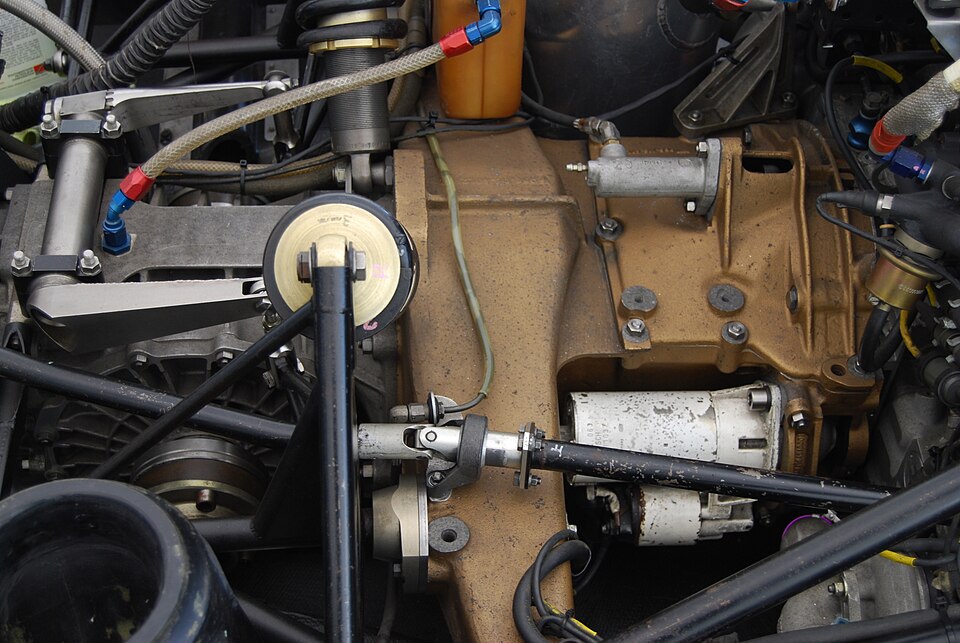
Spring rates determine how stiff the suspension is, affecting body roll, ride quality, and tire contact. Selecting the right rates is crucial for balancing understeer and oversteer.
Spring Rate Selection: Stiffness Targets for Racing
Selecting the right spring rates is fundamental to racing suspension tuning. Key targets include:
- Racing spring rates are typically 50% stiffer than stock: This increases the suspension’s resistance to compression, reducing body roll.
- Target suspension frequencies of 2.0–2.8 Hz: Suspension frequency is the natural oscillation rate of the spring/damper system. Higher frequencies improve response and reduce body movement, leading to more predictable handling.
- These are starting points for fine-tuning: Actual rates may vary based on car weight, track conditions, and driver preference.
Suspension frequency is calculated using the formula: frequency (Hz) = (1/2π) * √(spring rate / effective mass). Higher frequencies mean the suspension reacts faster to bumps, maintaining tire contact.
Balancing Understeer and Oversteer with Spring Rates
Understeer (push) and oversteer (loose) are common handling imbalances that can be corrected with spring rate adjustments.
| Handling Issue | Adjustments |
|---|---|
| Understeer (Push) | Reduce front spring rate, decrease front sway bar stiffness, or increase rear spring rate. |
| Oversteer (Loose) | Increase front spring rate, decrease rear spring rate, or reduce rear sway bar stiffness. |
Softer front springs or a softer front sway bar increases front-end grip, reducing understeer. Stiffer rear springs or a stiffer rear sway bar increases rear stability. For oversteer, the opposite adjustments apply.
Sway bar changes are often easier than swapping springs, making them a first step in balancing the car. Always make changes incrementally and test on track.
The Big Bar, Soft Spring (BBS) Approach
The “Big Bar, Soft Spring” (BBS) method challenges traditional stiff spring setups by using very soft springs for compliance, paired with large front sway bars to control body roll. Soft springs allow the tires to maintain better contact on uneven surfaces, improving traction. The large sway bar prevents excessive body roll that soft springs might allow.
This approach reduces unsprung mass effects and can yield faster lap times on bumpy tracks. However, it requires precise sway bar tuning and often specific damper settings, particularly in rebound, to avoid instability. BBS is popular in modern racing series where track surfaces vary, and it demonstrates how suspension tuning evolves with new engineering philosophies.
Track-Specific Tuning and Setup Interdependencies
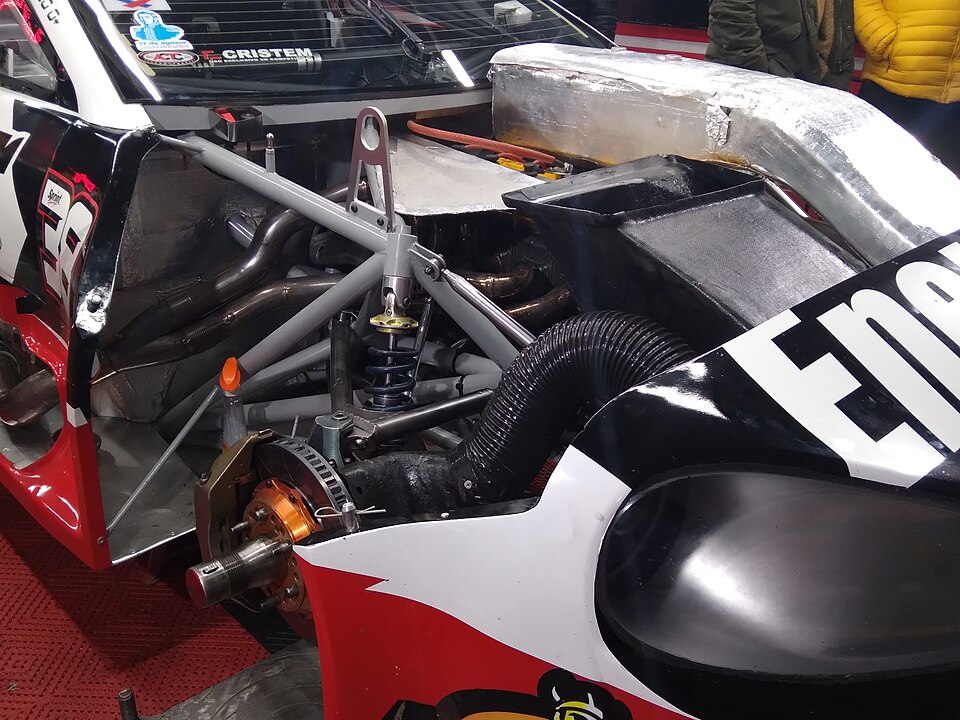
Suspension settings must be adapted to the specific track and racing conditions. Moreover, adjustments in one area often affect others, requiring a holistic approach.
Ride Height: The Critical First Step
Ride height is the critical first step in any suspension setup. All alignment adjustments must be performed at the car’s intended racing ride height, with simulated ballast or fuel weight. Ride height directly affects camber and toe curves; changing it after alignment will invalidate your settings.
The proper process: lower the car to its racing weight (including driver, fuel, and ballast), then measure and adjust camber, caster, and toe. Never set alignment at a different ride height than you will race, as this leads to poor handling and tire wear. This principle is emphasized by top engineering teams across Formula 1 and sports car racing.
How Suspension Adjustments Affect Each Other
Suspension parameters are deeply interconnected. For example, raising ride height typically adds toe-out and changes camber angles. Changing spring rates may require rebalancing front-to-rear stiffness to maintain handling balance.
Adjusting caster affects camber during cornering, potentially altering tire contact. Because of these interdependencies, suspension tuning is an iterative process: change one parameter, then remeasure and adjust others as needed.
Keeping a detailed setup log helps track changes and their effects, enabling methodical optimization. This systemic view separates amateur tweakers from professional racing engineers.
Adapting Settings for Track Day vs. Competition Racing
Track days and competition racing demand different suspension setups, primarily in aggressiveness.
| Aspect | Track Day Settings | Competition Racing Settings |
|---|---|---|
| Front Camber | -2.0° to -3.5° (less aggressive) | -2.5° to -3.2° (more aggressive) |
| Caster | Moderate (easier steering) | Maximize (>6° for performance) |
| Front Toe | 0° to 1/32″ toe-out (moderate) | Up to 1/8″ toe-out (maximum response) |
| Rear Toe | 1/16″ to 1/8″ toe-in (stable) | 1/16″ to 1/8″ toe-in (similar, but may adjust slightly) |
Track days prioritize tire longevity and driver comfort, so camber is less aggressive to reduce wear, and caster may be reduced for lighter steering. Competition settings push for maximum grip: more negative camber, maximum caster, and competitive toe-out for fastest turn-in. The trade-off is increased tire wear and higher steering effort.
Choose settings based on your event’s goals. For example, a sprint race format with frequent overtaking may benefit from quicker steering response, while a long endurance race requires tire conservation.
The most critical insight in suspension tuning is that it is a holistic system—adjusting one parameter cascades through others, requiring a methodical approach. Start by setting your ride height with full fuel and driver weight, then measure and record baseline tire temperatures after a 5-lap run to establish your camber reference. This data-driven process, combined with the specific settings outlined, will help you optimize your racing suspension for any track condition.
