
Threshold braking is a fundamental racing technique that involves applying the maximum possible brake pressure just short of locking up the tires. By maintaining this 99% grip threshold, drivers can achieve the shortest possible stopping distance while keeping the car stable.
This allows them to brake later and carry more speed into corners. British racing driver Sarah Moore, a Ginetta Junior champion, Britcar champion, and W Series competitor, has utilized advanced braking techniques over her 25 years of experience to win championships and break gender barriers in UK motorsport.
- Threshold braking maintains 99% tire grip to achieve shortest stopping distance while keeping tires rotating, not locked.
- The technique is dynamic, requiring constant pedal pressure adjustments based on speed, surface, and tire temperature—not a fixed percentage.
- 2026 F1 regulations have transformed braking with 350 kW MGU-K, 60% reduced rear hydraulic braking, and 20% longer braking zones for energy recovery.
The 99% Grip Threshold: Core Principles of Maximum Deceleration

Why Rolling Tires Outperform Locked Ones: The Physics of Grip
When a tire is rolling, it grips the road through static friction, which is significantly stronger than the kinetic friction that occurs when the tire slides. Threshold braking exploits this by keeping the tire right at the point where it’s about to slip but still rotating.
This optimal point is approximately 99% of the tire’s maximum grip capacity. At this threshold, the tire generates the highest possible braking force without losing traction.
If the brake pressure exceeds this threshold, the tire locks and starts to slide. A sliding tire has much less grip, which not only increases stopping distance but also eliminates the driver’s ability to steer.
Additionally, locked tires can develop flat spots—flat areas on the tire tread—that ruin handling and require costly replacements. Therefore, the goal of threshold braking is to maximize deceleration while maintaining tire rotation and control.
The 99% figure represents the sweet spot where the tire is working at its limit. It’s not a fixed number; it varies with track conditions, tire temperature, and surface grip.
But the principle remains: a rolling tire always outperforms a locked one. This is why threshold braking is a cornerstone of professional racing techniques, allowing drivers to extract every millimeter of performance from their tires.
The ‘Feel, Firm & Feather’ Dynamic Method
Threshold braking is often called the ‘Feel, Firm & Feather’ method because it relies on the driver’s sense of touch and continuous modulation. It is not a static technique where you apply a set percentage of brake pressure. Instead, it requires constant, microscopic adjustments based on changing conditions like speed, track surface, and tire temperature.
Many drivers make the mistake of braking too gently, using only 60-70% of the available braking capacity out of fear of locking up. This leaves performance on the table.
Others panic-brake at the last moment, stabbing the pedal hard and causing an immediate lock-up—the ‘kamikaze’ approach. Both are inefficient.
The braking threshold is a moving target. As the car slows down, weight transfers forward, increasing front tire grip but reducing rear grip.
The maximum brake pressure you can apply without locking changes continuously. A skilled driver must ‘feather’ the brake pedal—easing off slightly as the car decelerates to prevent the rear tires from locking, while maintaining as much pressure as possible.
This dynamic adjustment is what separates novice from expert racers. It’s a skill honed through practice and feedback, often using data loggers to analyze brake pressure and wheel speed sensors to identify lock-up moments.
Surface changes, like a damp patch or oil, can instantly lower the threshold, requiring immediate pedal modulation. That’s why threshold braking is as much about anticipation as it is about reaction.
Sarah Moore’s 25-Year Mastery: Threshold Braking in Championship Racing
From Ginetta Junior to W Series: A Career Built on Precision Braking
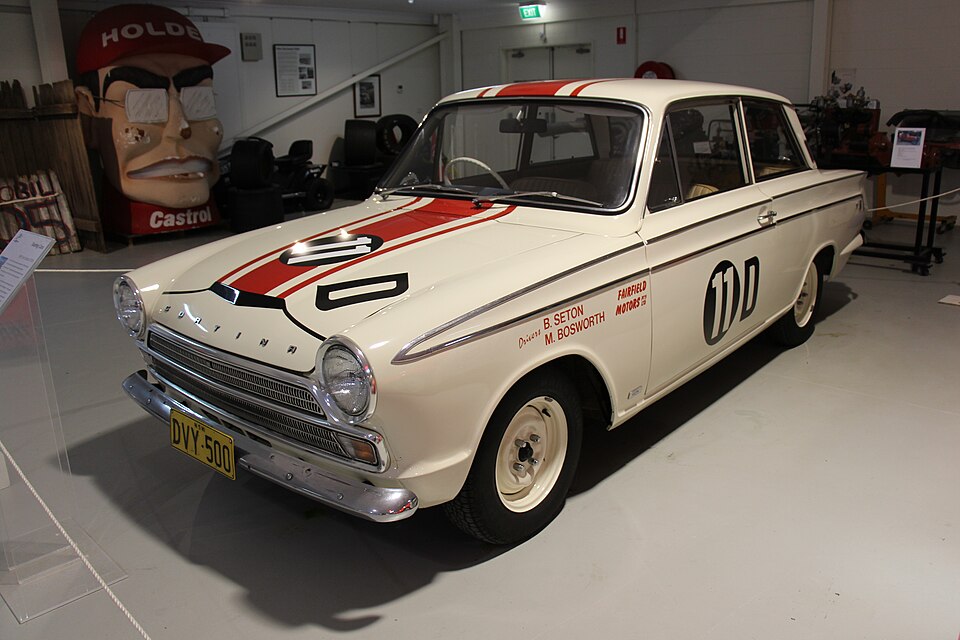
Sarah Moore’s racing career demonstrates the power of mastering threshold braking. Over 25 years, she has consistently used precise braking to win championships and break barriers.
• First TOCA-Sanctioned Race Win: Moore broke new ground as the first female driver to win a TOCA-sanctioned race, proving her skill in the highly competitive Touring Car series where braking precision is paramount.
• 2009 Ginetta Junior Championship: At just 15 years old, she became the first female to win this junior mixed-gender national series. Her threshold braking allowed her to carry more speed into corners, often gaining positions on the first lap.
• 2018 Britcar Endurance Championship: In this grueling endurance format, consistent braking over long stints is essential. Moore used her refined technique to preserve tires and maintain lap time consistency, helping her secure the championship as the first female winner.
• W Series (2019-2022): Competing against the world’s best female drivers, Moore’s braking expertise enabled strong qualifying and race performances.
She achieved multiple podiums and a best championship finish of 5th in 2021.
• 25 Years of Experience: Starting in karting at age 4, Moore has accumulated over two decades across karting, single-seaters, and endurance racing. This breadth makes her threshold braking adaptable to any condition.
These achievements underscore how threshold braking is not just a skill but a competitive weapon at the highest levels of motorsport. Moore’s ability to brake at the limit consistently gave her an edge in qualifying and race starts, where gaining positions early is critical.
Coaching the Next Generation: ARDS Instructor and More Than Equal Coach
Beyond her driving career, Sarah Moore dedicates significant effort to coaching the next generation of racers, where she imparts her threshold braking expertise.
• ARDS Grade A Driving Instructor: With the highest ARDS grading, Moore is certified to train drivers at all levels. She designs bespoke exercises that isolate brake pressure modulation, using simulators and track sessions to help students feel the 99% grip threshold. Her teaching emphasizes smooth, progressive pedal work over aggressive stabs.
• More Than Equal Programme: As a coach for this initiative supporting underrepresented drivers, Moore focuses on technical skills like threshold braking to build confidence and competence.
She believes that mastering braking early allows drivers to focus on other areas like race craft, giving them a competitive edge.
• AJ Racing All-Female Kart Team: Through this kart team, Moore provides an entry point for women and girls into motorsport. She teaches threshold braking from the first lap, using karts to develop the tactile feedback needed for car racing. Many of her students have progressed to higher series, citing her braking coaching as pivotal.
• LGBTQ+ Advocacy: Moore’s visibility as the first openly LGBTQ+ driver on an F1 podium (2021) inspires inclusion.
She integrates this ethos into her coaching, creating supportive environments where all drivers can learn and thrive. Her coaching philosophy is available on the Sarah Moore Racing website.
Moore’s coaching emphasizes that threshold braking is the foundation of speed. By teaching drivers to brake at the limit, she helps them carry more momentum through corners, ultimately reducing lap times. Her work with the More Than Equal programme and AJ Racing ensures these skills reach diverse talent pools.
Advanced Applications: 2026 Evolution and Technique Comparisons
Threshold Braking vs ABS: When Human Modulation Beats Technology
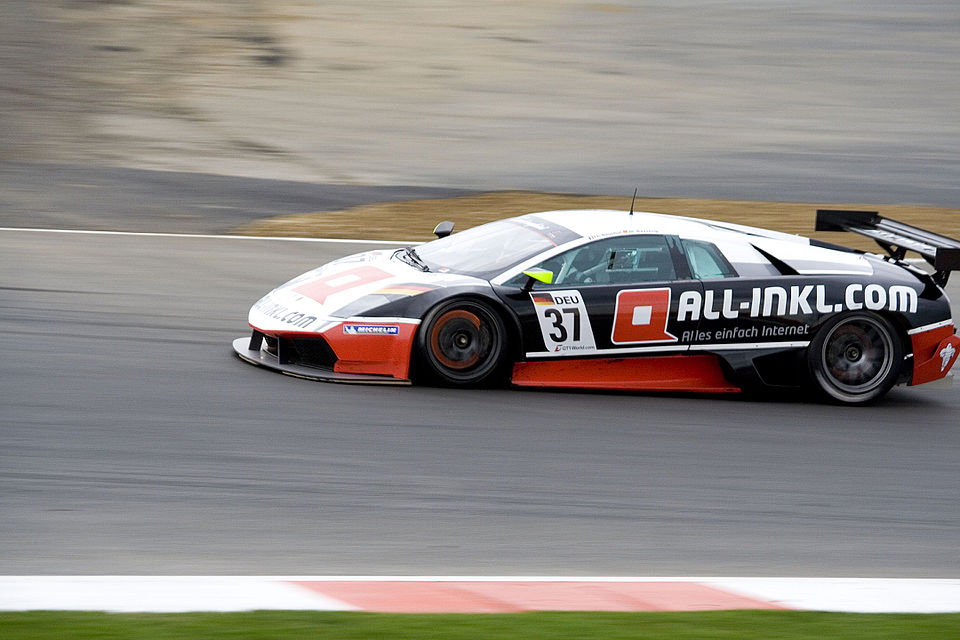
Anti-lock Braking Systems (ABS) are standard in modern road cars and some racing series, but they are not a replacement for skilled threshold braking. ABS works by rapidly pulsing brake pressure to prevent lock-up, which is an excellent safety net. However, in ideal track conditions, a driver executing perfect threshold braking can often achieve a shorter stopping distance than ABS.
The reason is that ABS reduces pressure as soon as it detects wheel lock-up, which can interrupt the maximum braking force for a fraction of a second. A human driver, by contrast, can maintain a continuous, finely-tuned pressure right at the edge of adhesion without the interruptions that ABS introduces. This continuous modulation keeps the tires at their peak friction point more consistently.
That said, ABS is invaluable for consistency and safety, especially for less experienced drivers or in variable conditions. But at the elite level, where every millisecond counts, the ability to threshold brake manually remains a critical skill.
It allows drivers to brake later into corners while maintaining stability, something ABS can sometimes feel less natural in high-speed racing scenarios. Understanding this distinction is key for drivers transitioning to high-performance machinery.
2026 F1 Braking Revolution: Technical Specifications and Driver Adaptation
The 2026 Formula 1 season introduces the most radical braking system changes since the hybrid era. These regulations fundamentally alter how drivers approach threshold braking.
| Parameter | Pre-2026 | 2026 |
|---|---|---|
| MGU-K power | 0 kW | 350 kW |
| Rear hydraulic braking energy | 100% | 40% (60% reduction) |
| Front braking energy | Baseline | +10-20% |
| Braking zone duration | Baseline | +20% |
| Power unit split | Mostly ICE | 50% ICE / 50% electric |
| Minimum car weight | Not specified | 768 kg |
The 350 kW MGU-K means braking energy is now massively harvested, so drivers must modulate brake pedal to balance hydraulic and regenerative braking. Brake-by-wire systems interpret pedal input and distribute braking force between hydraulic and electric, adding a layer of complexity: the pedal feel is not directly linked to hydraulic pressure. Drivers must adapt to a different feel and trust the system to manage energy recovery while maintaining braking performance.
Longer braking zones (+20%) give drivers more time to brake, but also require careful brake temperature management over extended periods. The increased front braking energy (+10-20%) puts more heat on the front brakes, necessitating smoother modulation to avoid fade. Combined with 15-20% less downforce, mechanical grip from tires becomes even more critical.
The 350 kW MGU-K means braking energy is now massively harvested under the 2026 Formula 1 technical regulations, so drivers must modulate brake pedal to balance hydraulic and regenerative braking. Brake-by-wire systems interpret pedal input and distribute braking force between hydraulic and electric, adding a layer of complexity: the pedal feel is not directly linked to hydraulic pressure. Drivers must adapt to a different feel and trust the system to manage energy recovery while maintaining braking performance.
Longer braking zones (+20%) give drivers more time to brake, but also require careful brake temperature management over extended periods. The increased front braking energy (+10-20%) puts more heat on the front brakes, necessitating smoother modulation to avoid fade. Combined with 15-20% less downforce, mechanical grip from tires becomes even more critical.
Drivers must be smoother with threshold braking to avoid locking wheels, especially as the car slows and downforce decreases. The integration of energy recovery means threshold braking is no longer just about tire grip but also about optimizing battery charge and managing power unit temperatures. The 2026 Formula 1 technical regulations and 2026 F1 power unit technology changes force a complete rethink of braking technique.
Surface and Downforce Adaptation: Managing the Moving Threshold
The braking threshold is never static; it shifts with every change in conditions. Surface variations—such as a damp patch, oil, or changing tarmac grip—require immediate pedal adjustments. Tire temperature also plays a role: colder tires have less grip, so the threshold is lower, while overheated tires can lose grip suddenly.
As the car decelerates, aerodynamic downforce decreases because downforce is proportional to the square of speed. With 2026 cars having 15-20% less downforce overall, this effect is more pronounced.
Less downforce means less vertical load on the tires, reducing their grip. Therefore, drivers must progressively lighten brake pressure as they slow to prevent the tires from exceeding their reduced grip level and locking.
Active aerodynamics in 2026 further complicate this. On straights, the wings adjust to reduce drag, increasing arrival speed at corners. This higher speed means the initial braking force must be greater, but as downforce builds with the wing’s active adjustment, the threshold rises.
Drivers must anticipate these changes and modulate the brake pedal smoothly to stay at the limit throughout the braking zone. This moving target is why threshold braking is a dynamic skill, not a set-and-forget technique. Tire compound strategy, as detailed in F1 tire compound strategy, also influences the available grip, making adaptation even more crucial.
Closing
The most surprising insight is that threshold braking in 2026 is no longer just a mechanical skill—it’s integrated energy management. With hybrid systems and brake-by-wire, drivers must balance tire grip with energy recovery, making braking a holistic performance factor. This shift means that even the most talented drivers must relearn how to modulate the brake pedal to account for regenerative braking interference and changing weight distribution.
Action step: Practice smooth pressure modulation, not peak force. Use data loggers to spot lock-ups and analyze brake pressure curves. Focus on consistency at the 99% threshold across conditions.
Study how 2026’s longer braking zones and reduced downforce affect your trail braking technique. For a broader view of how these technical changes impact racing, explore F1 sprint race format impact and F1 budget cap and financial fair play, which shape team development priorities. The principles of threshold braking also apply in stock car racing, where NASCAR pit stop strategies rely on precise braking during pit entries.
