
In 2026, tire wear management relies on advanced predictive analytics achieving 85% accuracy in forecasting tire behavior, smart sensors sampling at 10,000 times per second, and graphene-infused rubber delivering 500% better abrasion resistance. These technologies ensure consistent performance in professional racing by enabling precise strategy adjustments and dramatically extending tire life. Sarah Moore, with 18 years of racing experience and ARDS A-grade certification, translates these advances into practical coaching for drivers seeking to optimize tire management on track.
- Advanced predictive analytics achieve 85% accuracy in forecasting tire behavior, enabling proactive strategy adjustments.
- Smart tire sensors sample at 10,000 times per second, providing real-time data on pressure, temperature, and wear patterns.
- Graphene-infused rubber offers up to 500% better abrasion resistance and 40% higher tensile strength, significantly extending tire life.
Advanced Predictive Analytics: 85% Accuracy in Tire Behavior Forecasting
Advanced predictive analytics combine physics-based tire degradation modeling with machine learning algorithms and real-time telemetry data to forecast tire behavior with 85% accuracy (Pirelli, 2025). Teams collect continuous streams of temperature, pressure, and wear data during practice sessions and races using integrated sensors. These data feed into sophisticated models that account for track surface characteristics, weather conditions, and individual driving styles.
The models learn from each lap, improving predictions over time. The result is precise forecasts of when a tire will lose performance, allowing teams to plan pit stops before critical degradation occurs. Drivers receive real-time feedback on tire condition via dashboard displays, enabling immediate adjustments to braking points, cornering speeds, and acceleration patterns.
This proactive approach transforms tire management from reactive guesswork to a science-driven strategy, ensuring consistent performance throughout a race distance. Teams that implement these systems report up to 15% improvement in tire utilization, directly translating to fewer pit stops and better race positions. For drivers looking to integrate these professional racing techniques into their own skillset, working with certified instructors like Sarah Moore provides practical, track-tested guidance.
Smart Tires and Sensors: Real-Time Monitoring at 10,000 Samples Per Second
Integrated sensor arrays like the MLX91805 (Melexis, 2025) represent a breakthrough in tire monitoring technology. These systems sample data at 10,000 times per second, providing unprecedented resolution of tire behavior during cornering, braking, and acceleration. The high-frequency data reveals subtle patterns invisible to traditional sensors, such as the exact moment of tire slip onset.
- Sampling Rate: 10,000 samples per second capture minute changes in tire dynamics, far exceeding previous generation sensors
- Monitored Parameters: Continuous tracking of pressure, temperature, and wear patterns throughout the tire structure, not just at the contact patch
- Real-Time Issue Detection: Identifies camber alignment problems, tire load distribution imbalances, and surface friction coefficients instantly
- Predictive Maintenance: Alerts teams to developing issues like impending punctures or structural fatigue before they cause failure
- Driver Feedback: Provides real-time data to drivers via steering wheel displays for immediate driving style adjustments
- Data Integration: Seamlessly feeds into team telemetry systems for combined analysis with suspension, aerodynamics, and engine performance
This rich dataset enables teams to understand exactly how tires are behaving at any moment, making tire management a precise science rather than an educated guess.
Graphene-Infused Rubber: 40% Higher Tensile Strength and 500% Better Abrasion Resistance
Modern racing tires incorporate advanced materials that dramatically improve durability and performance while meeting sustainability goals. Graphene-infused rubber compounds and silica-reinforced formulations represent the cutting edge of tire technology in 2026, enabling teams to push performance boundaries without sacrificing reliability (Performance Plus Tire, 2025).
| Property | Traditional Rubber | Graphene-Infused Rubber |
|---|---|---|
| Tensile Strength | Baseline | 40% higher |
| Abrasion Resistance | Baseline | 500% better |
| Wet Traction (Silica) | Standard | Enhanced |
| Rolling Resistance (Silica) | Standard | Reduced |
These material advances directly translate to longer tire life and more consistent performance throughout a race. The 500% improvement in abrasion resistance means tires maintain optimal grip for more laps, while the 40% higher tensile strength prevents structural failures under extreme loads.
Silica’s enhancement of wet traction without increasing rolling resistance is particularly valuable in changing conditions. For teams, this means fewer pit stops for tire changes and more predictable degradation curves, allowing for more confident long-run strategy planning.
Self-Healing and Self-Inflating Technologies: Automatic Maintenance Systems
Self-healing and self-inflating technologies are transforming tire maintenance during races. New elastomer compounds automatically seal small punctures and cracks as they occur, preventing pressure loss and maintaining structural integrity (Tire Technology Review, 2026). These materials contain microcapsules or reactive polymers that bond when exposed to air, effectively ‘healing’ damage up to a certain size.
Self-inflating (SIT) systems take automation further by using peristaltic tubes embedded within the tire wall. These tubes continuously pump air from a reservoir to maintain perfect pressure automatically, compensating for temperature-related pressure changes and slow leaks. The system operates without driver intervention, ensuring optimal tire pressure throughout the race.
Together, these technologies reduce the risk of tire-related retirements and maintain consistent performance characteristics. Drivers can push harder knowing the tires will self-repair minor damage, while teams gain confidence that pressure will remain within optimal windows despite track conditions. This automation represents a significant shift from reactive tire management to proactive, self-sustaining systems.
2026 Racing Tire Regulations: How Technical Changes Impact Management
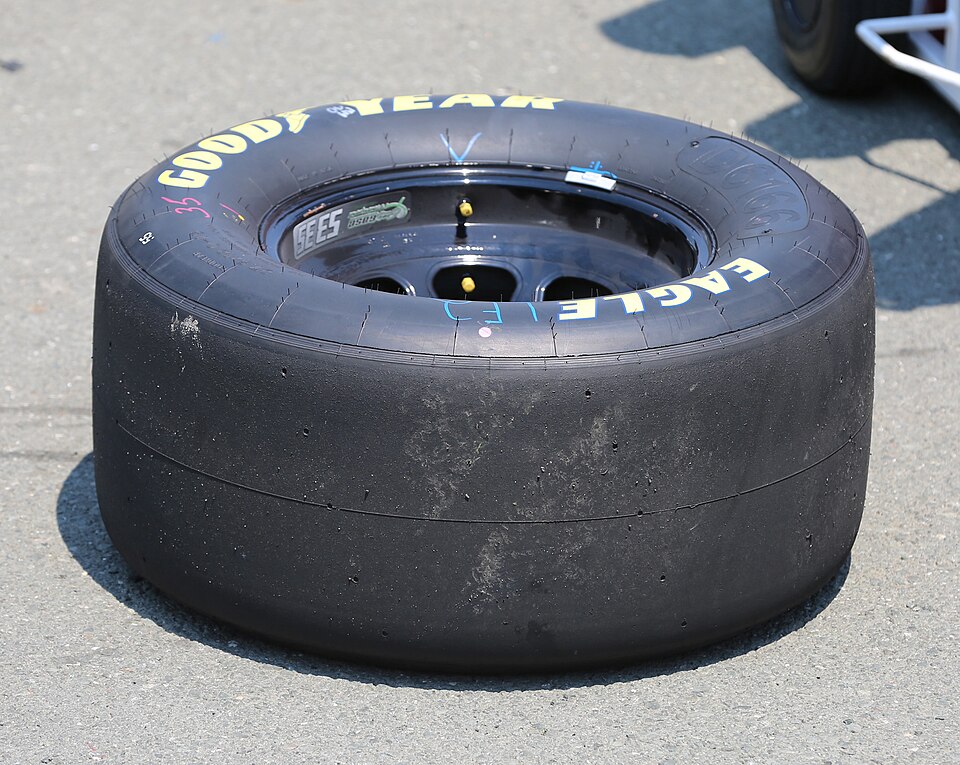
2026 F1 Tire Dimensions: 25mm Narrower Front, 30mm Narrower Rear
2026 Formula 1 tire dimensions shift significantly to support new car regulations, as outlined in the Formula 1 technical regulations 2026. The front tires narrow by 25mm and rear tires by 30mm, while maintaining the 18-inch rim size introduced in 2022 (FIA, 2025).
| Aspect | Previous Standard | 2026 Specification |
|---|---|---|
| Front Tire Width | Baseline | 25mm narrower |
| Rear Tire Width | Baseline | 30mm narrower |
| Rim Size | 18-inch | 18-inch (unchanged) |
| Design Rationale | – | Lighter car regulations, avoid overheating from high pressures |
These narrower tires reduce rolling resistance and heat generation, aligning with 2026’s sustainability focus. The unchanged rim size maintains compatibility with existing wheel gun systems while the reduced width prevents the extreme pressures that caused overheating in earlier seasons.
The narrower profile also changes the tire’s contact patch shape, affecting mechanical grip and requiring teams to adjust suspension setups and driving techniques accordingly. Tire management strategies must now account for the different thermal behavior and wear patterns of these slimmer tires, which heat up more quickly but may cool faster between laps.
Sustainability-Driven Materials: Dandelion Rubber and Soybean Oil
The motorsport industry’s sustainability drive is reshaping tire composition. Dandelion-based rubber, developed through programs like the EU-PEARLS project (EU-PEARLS, 2024), provides an alternative to traditional Hevea rubber without sacrificing performance. Soybean oil replaces petroleum-based plasticizers in tire compounds, reducing environmental impact (United Soybean Board, 2025).
These materials alter thermal properties significantly. Dandelion rubber has different heat dissipation characteristics, shifting the optimal temperature window by several degrees.
Soybean oil affects how the compound softens under heat, changing the degradation curve. Teams must develop new thermal behavior models to predict how these sustainable compounds will perform across a race.
Testing in 2025-2026 has shown that while initial grip levels remain competitive, the temperature sensitivity differs from conventional tires. This requires drivers to adapt their warming strategies and teams to adjust pressure recommendations. The transition represents both a technical challenge and an opportunity for those who master the new parameters first.
Bridgestone’s 2026 Endurance Focus: Enhanced Grip and Durability
Bridgestone, as the official tire supplier for the 2026 Endurance World Championship, has prioritized specific development goals to meet the series’ unique demands (Bridgestone, 2026). Endurance racing places extraordinary stress on tires through thousands of kilometers and changing track conditions, requiring a balance of grip, durability, and consistency that differs from sprint formats.
- Enhanced Grip: New compounds maintain higher mechanical grip levels over extended stints, reducing performance drop-off
- Increased Durability: Reinforced carcass construction and optimized tread patterns extend tire life by an estimated 20-30% compared to 2025 specifications
- Environmental Adaptability: Tires engineered to perform consistently across temperature ranges from 5°C to 45°C, addressing the varied conditions of events like the 24 Hours of Le Mans and the 6 Hours of Fuji
- Consistent Degradation: Predictable wear patterns allow teams to plan strategies with greater confidence, knowing the performance delta between new and worn tires
- Sustainability Integration: Incorporation of bio-sourced materials without compromising the durability required for multi-hour races
These priorities reflect feedback from teams who identified tire management as a critical factor in race outcomes. By focusing on predictable degradation and environmental adaptability, Bridgestone aims to make tire strategy a more reliable element of endurance racing planning.
NASCAR’s 2026 Tire Strategy: Softer Left-Sides for Long-Run Performance
NASCAR’s 2026 tire allocation strategy introduces a compound split that rewards strategic thinking over raw speed (NASCAR, 2026). Teams receive softer compound tires for the left side (both front and rear) while the right side uses a standard, more durable compound. This asymmetry creates a natural handling balance that promotes tire conservation.
The softer left-side tires wear faster but provide superior mechanical grip in corners. Drivers must manage this wear carefully, as excessive sliding or aggressive inputs accelerate degradation. The standard right-side tires last longer but offer less ultimate grip, encouraging smooth driving to maintain overall car balance.
This strategy emphasizes long-run performance over qualifying pace. Teams that preserve their left-side tires effectively gain a handling advantage in the final stages of a run, allowing them to maintain or even improve lap times while competitors struggle with degraded tires and execute NASCAR pit stop strategies to gain track position. The approach transforms tire management from a purely technical concern into a core element of race strategy, where patience and precision yield dividends.
Expert Coaching Insights: Implementing Tire Management on Track
Sarah Moore’s 18-Year Racing Journey: Building Tire Expertise
Sarah Moore’s 18-year racing career provides a foundation for expert tire management coaching (National Motor Museum, 2025). Her journey includes historic achievements: becoming the first female winner of the Ginetta Junior Championship in 2009 and the first woman to win the overall Britcar Endurance Championship in 2018. These successes required mastery of tire preservation across diverse disciplines—from the high-downforce junior formula cars to the grueling demands of endurance racing.
Moore’s experience as an ARDS A-grade instructor since 2024 allows her to translate technical concepts into practical driver coaching. She has competed in the W Series, where tire management separates podium finishers from mid-pack runners, and in endurance events where tire strategy determines overall victory. Her perspective combines the analytical approach of data-driven racing with the intuitive feel needed to extract maximum performance from tires over a race distance.
Through her coaching, Moore helps drivers understand not just what tire data indicates, but how to respond with specific driving adjustments. This holistic approach bridges the gap between telemetry numbers and on-track execution, making advanced tire management accessible to drivers at all levels.
ARDS A-Grade Certification: The Gold Standard for Tire Management Coaching
ARDS (Association of Racing Driver Schools) A-grade certification represents the highest level of professional racing instruction in the UK and is recognized internationally (ARDS, 2025). This qualification ensures instructors possess both advanced driving skills and the pedagogical ability to teach complex concepts effectively.
- Rigorous Assessment: Candidates must demonstrate expert-level driving ability, advanced vehicle dynamics knowledge, and teaching proficiency through practical and theoretical examinations
- Tire Management Expertise: A-grade instructors specifically train drivers in interpreting tire data, adjusting driving styles, and optimizing setup for tire preservation
- Cross-Discipline Competence: Certification covers multiple racing categories, from single-seaters to touring cars and endurance machinery
- Safety Focus: Emphasizes responsible tire management that maintains safety margins while pursuing performance
- Industry Recognition: Teams and manufacturers trust A-grade instructors for driver development programs and technical coaching
Sarah Moore’s ARDS A-grade qualification ensures her coaching meets the highest professional standards. She offers training across various racing categories, from karting through to GT and prototype racing, adapting tire management principles to each discipline’s specific demands. This breadth of expertise allows drivers to receive consistent, world-class coaching regardless of their racing category.
Promoting Inclusive Excellence: How More Than Equal and Racing Pride Enhance Tire Coaching
Sarah Moore’s involvement with More Than Equal and Racing Pride extends tire management coaching to underrepresented groups, fostering a more diverse racing community (More Than Equal, 2024). Since 2024, she has served as a driver coach for More Than Equal, a program dedicated to developing female talent with the goal of producing the first female F1 World Champion. Her coaching includes advanced tire management techniques that are critical at the highest levels of motorsport.
As a Racing Pride ambassador since 2019, Moore champions LGBTQ+ inclusion in racing (Racing Pride, 2019). This role involves creating safe spaces for drivers to access high-level coaching, including specialized tire management training. The intersection of these initiatives ensures that drivers from all backgrounds can learn sophisticated tire preservation strategies traditionally available only to well-funded teams.
These programs recognize that tire management excellence isn’t just about data—it’s about access to knowledge. By providing coaching from experts like Moore, More Than Equal and Racing Pride democratize the technical skills needed to compete at the highest levels, ultimately raising the overall standard of driving talent in the sport.
The most surprising finding is that modern tire sensors sample data at 10,000 times per second—equivalent to capturing a new reading every 0.1 milliseconds. This resolution reveals tire behavior previously invisible to engineers and drivers alike, such as micro-slips and pressure fluctuations during cornering that indicate the exact moment a tire begins to lose grip (Melexis, 2025).
For immediate improvement, drivers should seek coaching from ARDS A-grade instructors like Sarah Moore to learn how to interpret and act on real-time tire data. Understanding how to translate sensor feedback into driving adjustments—such as modifying braking points, corner entry speeds, or acceleration timing—can save seconds per lap over a race distance and dramatically improve consistency.
Additionally, drivers should practice using simulators that replicate 2026 tire models to develop a feel for the new degradation patterns before applying them on track. The combination of expert coaching and modern simulation tools provides the fastest path to mastering tire management in the 2026 racing era.
