
The DTM (Deutsche Tourenwagen Masters) is Germany’s premier touring car championship, currently featuring high-performance GT3-specification cars in a sprint format. This prestigious series combines cutting-edge technology with door-to-door racing action, attracting top manufacturers and drivers from around the world.
With a rich history dating back to 1984, DTM has evolved through several technical regulations while maintaining its reputation as one of the most competitive touring car championships globally. Fans flock to circuits across Europe to witness intense wheel-to-wheel battles, strategic pit stops, and the distinctive roar of high-performance GT3 machines, making it a cornerstone of world racing.
- DTM is Germany’s top touring car series, now using GT3 cars with 24 drivers from 9 manufacturers in the 2025 season.
- The championship features a sprint format with two 55-minute races per weekend and mandatory pit stops, including a new two-stop rule for Sunday races.
- Since 2021, DTM has evolved from extreme Class 1 prototypes to cost-controlled GT3 regulations, while pushing sustainability with synthetic fuel and eco-friendly tires.
What is the DTM German Touring Car Championship?
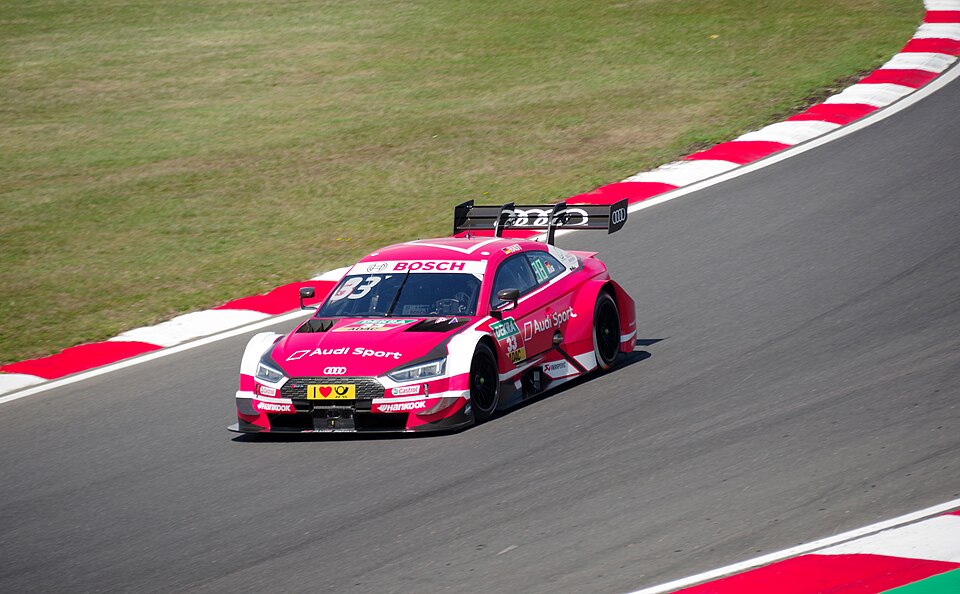
Current Format: Two 55-Minute Sprint Races with Mandatory Pit Stops
Each DTM race weekend features two separate sprint races, one on Saturday and one on Sunday. Both races last 55 minutes plus one additional lap, creating intense, action-packed events without the complexity of endurance racing. This sprint format distinguishes DTM from other German motorsport championships and has become a hallmark of the series.
The mandatory pit stop rules are a key strategic element: on Saturday, each car must complete exactly one tire change during the race. Sunday races require two separate tire changes, with specific time windows—the first between the 10th and 20th minute, and the second between the 39th and 45th minute. Refueling is completely prohibited during both races, ensuring that fuel strategy remains straightforward.
Importantly, tire changes performed during full-course yellow or safety car periods do not count toward the mandatory stop requirement, adding another layer of tactical decision-making for teams. According to GT Report, this format emphasizes driver skill and team strategy over complex endurance management.
GT3 Cars: The Technical Foundation of Modern DTM
Since 2021, DTM has operated under GT3 regulations, marking a significant shift from the expensive Class 1 prototype era. GT3 cars are based on production grand touring models, modified for racing but maintaining a strong connection to road-going vehicles. This approach, managed by ADAC, focuses on customer racing, making the series accessible to private teams alongside factory efforts.
The GT3 platform uses performance balancing (BoP) to ensure close competition, where adjustments to weight, power, and aerodynamics level the playing field. The ADAC’s management ensures that the series remains focused on customer racing, where private teams can compete on equal footing with factory squads through the rigorous BoP system. This philosophy has attracted manufacturers who might otherwise find the prototype era prohibitively expensive.
For the 2025 season, nine manufacturers compete with their respective GT3 machines: Aston Martin, Audi, BMW, Ferrari, Ford, Lamborghini, McLaren, Mercedes-AMG, and Porsche. This diversity provides fans with a visually varied grid while maintaining technical parity through strict BoP regulations, solidifying DTM’s position as a premier GT3 racing series. The official DTM website confirms that this GT3 era has revitalized the series with increased manufacturer participation and more affordable competition.
2025 Season: 9 Manufacturers, 24 Drivers, 8 Race Weekends
The 2025 DTM season represents the championship’s most diverse manufacturer lineup in the GT3 era, with nine brands competing across eight race weekends. The series maintains its commitment to sprint racing while expanding its geographical reach to include circuits in Germany, the Netherlands, Austria, and beyond.
| 2025 DTM Season Overview | |
|---|---|
| Manufacturers | Aston Martin, Audi, BMW, Ferrari, Ford, Lamborghini, McLaren, Mercedes-AMG, Porsche |
| Drivers | 24 professional drivers from across Europe and beyond |
| Reigning Champion | Mirko Bortolotti (Lamborghini) – 2024 titleholder |
| 2025 Race Calendar | |
| Round 1 | Oschersleben, Germany (April 25-27) |
| Round 2 | Lausitzring, Germany (May 23-25) |
| Round 3 | Zandvoort, Netherlands (June 6-8) |
| Round 4 | Norisring, Germany (July 4-6) |
| Round 5 | Nürburgring, Germany (August 8-10) |
| Round 6 | Sachsenring, Germany (August 22-24) |
| Round 7 | Red Bull Ring, Austria (September 12-14) |
| Round 8 | Hockenheim, Germany (October 3-5) |
The calendar includes iconic circuits like the Nürburgring and Hockenheim, both with deep motorsport heritage. According to the official DTM calendar published on dtm.com, the season concludes at Hockenheim in early October, traditionally one of the championship’s most popular events.
Technical Evolution: From Group A to GT3
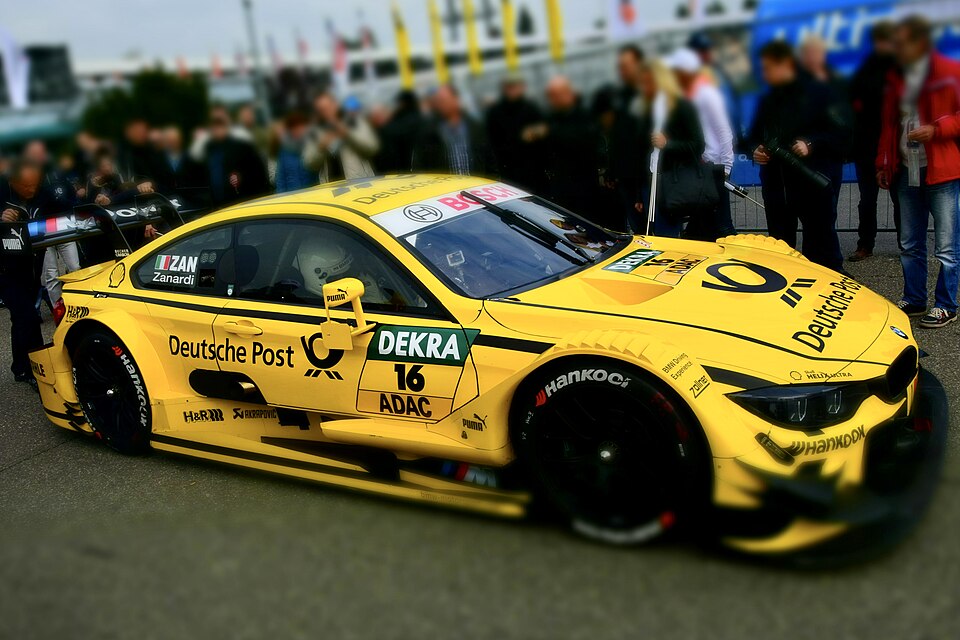
Group A Era (1984-1993): Production-Based Racing
DTM’s origins trace back to 1984 when it launched as the Deutsche Tourenwagen Meisterschaft under FIA Group A regulations. This era emphasized production-based racing, where cars were essentially showroom models with only limited modifications allowed. The formula created relatable racing, as fans could see the same models competing on track that they could purchase from dealerships.
Notable manufacturers during this period included Mercedes-Benz with their 190E, BMW with the M3, and Audi with the Quattro, each bringing distinct engineering approaches to the series. The close performance parity between these models made for unpredictable and exciting racing that captured the imagination of European motorsport fans. The production-based nature of Group A cars made DTM an accessible entry point for drivers aspiring to compete in international motorsports licensing requirements, as the skills transferred well to other touring car and GT categories.
This period established DTM’s reputation for tough, close racing where driver skill mattered more than technological superiority. The Group A era lasted until 1993, after which the series transitioned to more liberal Class 1 regulations, eventually culminating in the high-cost prototype era that would lead to the championship’s temporary demise in 1996. Wikipedia’s comprehensive history of DTM documents this foundational period in detail.
Class 1 Prototypes (1994-1996, 2000-2011): High-Tech Silhouettes
The shift to FIA Class 1 regulations in 1994 transformed DTM into a high-tech spectacle. While the cars still resembled production models in silhouette, they were actually custom-built prototypes with extensive aerodynamic development permitted. This era saw the introduction of advanced aerodynamic packages, sophisticated suspension systems, and significant power increases.
The more relaxed rules allowed manufacturers to push technological boundaries, creating some of the most visually striking touring cars ever built. After the series collapsed in 1996 due to escalating costs, DTM remained on hiatus until 2000 when it was revived under the name Deutsche Tourenwagen Masters. The Class 1 era continued through 2011, maintaining the prototype approach but with ever-increasing performance and complexity, setting the stage for the even more extreme regulations that would follow.
According to Motorsport Wiki, this period represented the peak of technical development in DTM before the cost crisis forced another reset. For context on how DTM compares to other international touring car championships, see exploring international motorsports series. Motorsport Wiki documents that this period represented the peak of technical development in DTM before the cost crisis forced another reset.
V8 Silhouette Cars (2012-2018): 500 HP Naturally Aspirated Era
The V8 era from 2012 to 2018 represented a middle ground between the extreme prototypes and the current GT3 formula. These cars featured standardized components to ensure close competition while still delivering impressive performance. Key specifications included:
- Engine: 4.0-litre naturally aspirated V8 producing approximately 500 horsepower
- Chassis: Universal carbon-fiber monocoque with integrated safety cell
- Layout: Front-engine, rear-wheel drive configuration
- Aerodynamics: Extensive packages including adjustable rear wing (10-30 degree range) and complex undertray diffuser
- Transmission: Hewland six-speed semi-automatic sequential gearbox with paddle shifters
- Brakes: AP Racing carbon-fiber braking system
- Era: 2012-2018
These specifications, documented by GT Report, created a distinctive sound and driving character that fans remember fondly. The V8 naturally aspirated engines produced a signature roar that became synonymous with DTM during this period.
Class 1 Turbo Era (2019-2020): 600 HP Prototypes with DRS
The final prototype era before the GT3 transition featured turbocharged engines and advanced aerodynamics. This short but intense two-season period saw DTM at its most technologically extreme:
- Engine Partnership: Alliance with Super GT (Japan) created unified Class 1 regulations
- Powertrain: 2.0-litre turbocharged inline-four engines replacing V8s
- Power: Initially over 600 hp, reduced to 580 hp in 2020 to manage speeds
- Performance: Top speeds approaching 300 km/h with DRS (Drag Reduction System)
- Overtaking Aid: Push-to-pass system providing an additional 60 hp
- Safety: High Yaw Lift-Off (HYLO) system to prevent cars from flipping
- Electronics: Standardized Bosch ECU for all competitors
- Duration: 2019-2020 (only two seasons before GT3 transition)
The turbo era demonstrated DTM’s willingness to innovate, though the extreme costs ultimately contributed to the decision to adopt GT3 regulations. Wikipedia’s entry on DTM notes that the Class 1 turbo era was the most technologically sophisticated period in the championship’s history.
2025 Rules and Innovations: Sustainability Meets Sprint Racing
Saturday vs Sunday: How Two-Stop Rule Changes Strategy
The strategic landscape of DTM differs dramatically between Saturday and Sunday races due to the mandatory pit stop requirements. Understanding these differences is key to appreciating the tactical depth of the championship.
Saturday Strategy: Single mandatory tire change creates a straightforward tactical approach. Teams typically plan one pit stop around the halfway point, balancing tire degradation with track position.
The lack of refueling simplifies fuel management, allowing drivers to push throughout the race without worrying about conservation. Tire changes during full-course yellow or safety car periods don’t count toward the mandatory stop, so teams may strategically delay their stop if a caution period occurs early in the race.
Sunday Strategy: Two mandatory stops introduce significantly more complexity. The first stop must occur between minutes 10-20, and the second between 39-45. This forces teams to split their tire strategy across two windows, often with different tire compounds or pressures for each stint.
The early window (10-20 min) means teams must commit to a strategy very quickly, while the late window (39-45 min) comes when fatigue and tire wear are at their peak. The two-stop format also creates more opportunities for overtaking during pit cycles and increases the importance of pit crew efficiency. Like Saturday, caution periods don’t count toward mandatory stops, adding another tactical layer where teams might use yellows to ‘reset’ their stop count.
The two-stop Sunday format also influences qualifying strategy, as a poor qualifying position can be mitigated through clever pit stop timing—a factor not present on Saturday. This creates a more dynamic weekend where Saturday’s results don’t necessarily predict Sunday’s outcome.
According to GT Report, this two-stop rule for Sunday races was introduced in 2025 to add strategic variety and excitement to the weekend’s second race.
DTM Pro Climate: Synthetic Fuel and Sustainable Tires
DTM has embraced sustainability through its ‘DTM Pro Climate’ initiative, positioning itself as a leader in eco-conscious motorsport. The championship exclusively uses synthetic fuel developed by Coryton, a renewable fuel that significantly reduces carbon emissions compared to traditional fossil fuels. All GT3 race cars are mandated to run this synthetic fuel, demonstrating DTM’s commitment to environmental responsibility without compromising performance.
Complementing the fuel is Pirelli’s P Zero DHG tire, which contains 17% natural rubber—earning it the ‘green tire’ designation. These tires not only offer environmental benefits but also feature faster warm-up characteristics, eliminating the need for tire warmers (which are prohibited).
This combination of synthetic fuel and sustainable tires showcases how high-performance racing can align with environmental goals, setting an example for other series to follow. The Porsche Newsroom highlights that DTM’s early adoption of synthetic fuel makes it a pioneer in sustainable GT racing.
For fans interested in the technical aspects of racing technology, DTM’s sustainability innovations demonstrate how racing knowledge and technology integration can drive environmental progress in motorsport.
Technical Balance: Standardized Electronics and No Driver Aids
The technical regulations in DTM are designed to ensure close competition and emphasize driver skill over technological superiority. Key balance-of-performance measures include:
- Standardized Electronics: All cars use identical Bosch ECUs, preventing electronic tuning advantages
- Control Tires: Pirelli P Zero DHG tires are supplied to all teams, eliminating tire selection as a variable
- No Tire Warmers: Prohibition of tire heating devices ensures consistent cold-start performance and reduces energy consumption
- No Driver Aids: ABS and traction control systems are banned, placing full responsibility on driver skill for braking and acceleration
- GT3 Foundation: Production-based cars with limited modifications maintain road relevance while controlling costs
- Result: One of the world’s most competitive GT3 sprint series where driver talent and team strategy determine outcomes
These regulations, as explained by GT Report, create a level playing field where success depends on driver ability, team strategy, and pit crew performance rather than budget or technological advantages. The absence of driver aids like ABS and traction control places greater emphasis on driver skill, which directly relates to the role of racing knowledge in safety—a topic explored in depth on our site.
One of the most surprising aspects of modern DTM is its rapid transformation from the extreme 600+ horsepower Class 1 prototype era to the more accessible GT3 platform. This pivot, made in 2021, prioritized cost control and manufacturer diversity while maintaining exciting racing. For fans wanting to experience DTM firsthand, visit the official DTM website (dtm.com) to view the complete 2025 calendar and purchase tickets for events at iconic circuits like the Nürburgring or Hockenheim.
Following your favorite drivers—such as reigning champion Mirko Bortolotti or rising star Ayhancan Güven—on social media provides real-time updates and behind-the-scenes content throughout the season. Understanding these technical and strategic elements enhances the fan experience significantly.
Meta Description: Explore the DTM German Touring Car Championship: its sprint format, GT3 cars, 2025 season details, technical evolution, and sustainability innovations.
Slug: dtm-german-touring-car-championship
Tags: DTM, Deutsche Tourenwagen Masters, GT3, ADAC, Pirelli, Mirko Bortolotti, Class 1
Keywords: DTM German Touring Car Championship, Deutsche Tourenwagen Masters, German touring cars, GT3 sprint racing, touring car championship, DTM 2025, GT3 regulations, touring car racing, German motorsport, DTM technical evolution
