
Racing fuel has undergone a dramatic transformation from early 20th-century gasoline blends to advanced biofuels, with Formula 1 set to run on 100% sustainable fuel by 2026 and IMSA currently using a fuel containing 64% biofuel. This evolution reflects motorsport’s response to safety concerns, environmental pressures, and the pursuit of performance without compromising power.
Safety-Driven Transition: The Evolution of Racing Fuel from Gasoline to Ethanol (Pre-1960s–2006)

The earliest racing fuels were raw gasoline formulations that posed significant safety risks and performance limitations, highlighting the role of racing knowledge in safety and forcing the motorsport industry to seek safer, more stable alternatives over several decades. This period laid the groundwork for today’s advanced sustainable fuels by emphasizing the critical need for chemical stability and fire resistance.
Early Gasoline Blends: High Volatility and Additives
In the pre-1960s era, racing engines relied on straightforward gasoline distilled from crude oil, often enhanced with additives like benzene and toluene to boost octane ratings (U.S. Energy Information Administration, 2022). These early blends were highly volatile, with boiling points near 85°C, making them suitable for primitive carburetors but extremely flammable (Gary, James H., 2001).
The chemical instability led to frequent engine knocking—a destructive phenomenon where fuel auto-ignites under pressure—and created grave safety hazards during crashes. Drivers and teams accepted these risks as part of the sport, but the dangers became increasingly untenable as racing speeds rose.
Methanol Adoption: Reducing Fire Hazards
The turning point came in the 1960s when methanol (wood alcohol) was adopted as the standard fuel for IndyCar racing following several high-profile fires. Methanol burns with a nearly invisible flame and is less volatile than gasoline, significantly reducing the risk of post-crash fires (Performance Racing Industry).
However, methanol introduced new challenges: it is toxic to handle, corrosive to fuel systems, and produces less energy per unit volume than gasoline, requiring larger fuel tanks. This trade-off—safety at the cost of energy density—defined racing fuel strategy for nearly four decades.
The 2006 Ethanol Integration Turning Point
IndyCar’s 2006 decision to switch to ethanol blends marked the beginning of the modern biofuel era. By blending ethanol with methanol, the series achieved a crucial balance: ethanol’s higher octane rating suppressed knocking while its renewable origin addressed growing environmental concerns (Carbon Credits, 2024).
This move demonstrated that sustainability and performance could coexist, setting a precedent other series would follow. The 2006 transition proved that drop-in renewable fuels—those requiring no engine modifications—were viable in high-performance applications, a lesson that would shape the next decade of racing fuel development.
Biofuel Revolution: How Modern Racing Embraced E15 and E85 (2010s–Present)
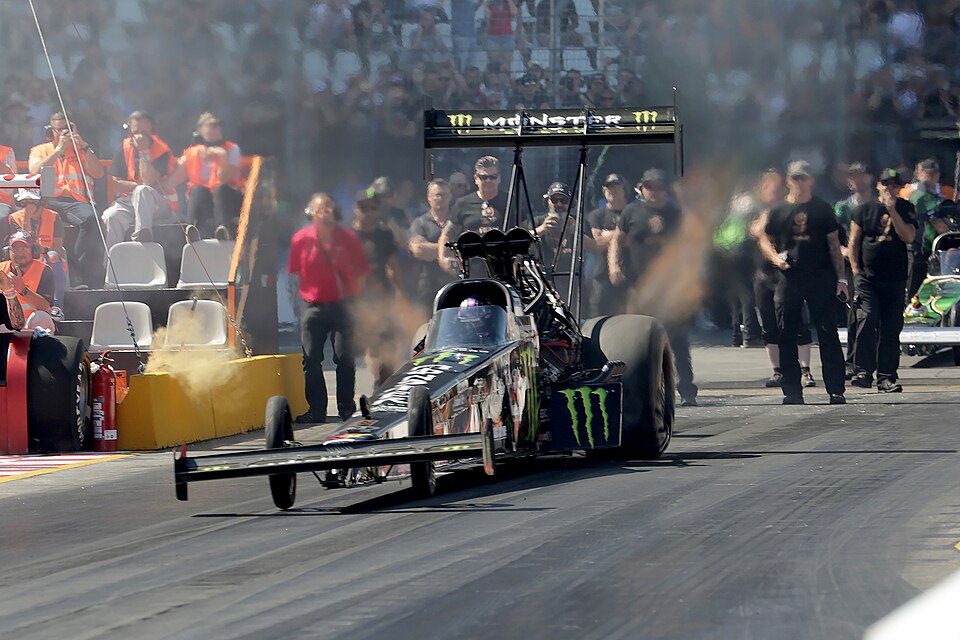
The 2010s saw a rapid acceleration in biofuel adoption across major racing series, driven by both regulatory pressure and genuine performance benefits. This revolution transformed the fuel landscape, with ethanol blends like E15 (15% ethanol) and E85 (85% ethanol) becoming commonplace in NASCAR and IndyCar. The shift delivered measurable environmental gains without sacrificing the horsepower that defines elite motorsport.
NASCAR and IndyCar’s Bioethanol Adoption
NASCAR introduced E15 across its national series in 2011, a move that reduced greenhouse gas emissions by approximately 15% compared to pure gasoline (Carbon Credits, 2024). IndyCar, already using ethanol blends, increased its ethanol content to E85 by 2012, leveraging ethanol’s superior cooling properties and high octane rating to allow higher compression ratios and more power.
These changes were not merely symbolic—they represented engineering optimizations where renewable content directly enhanced performance. Teams quickly adapted, recalibrating fuel injection systems to exploit ethanol’s oxygen content, which promotes more complete combustion and reduces particulate emissions.
IMSA’s R80: 64% Biofuel in Current Competition
The International Motor Sports Association (IMSA) currently uses R80, a fuel containing 64% biofuel derived from sustainable sources (Performance Racing Industry). This blend exemplifies the “drop-in” philosophy: teams can use R80 without modifying engines, ensuring parity while dramatically cutting carbon footprints.
The 64% biofuel content represents a midpoint between conventional gasoline and fully renewable formulations, offering a practical transition path for endurance racing where fuel consistency over long stints is critical. R80’s success has encouraged other series to explore similar high-blend ratios.
Sarah Moore: Racing in the Sustainable Fuel Era
Throughout this biofuel revolution, drivers like Sarah Moore have competed exclusively on ethanol-blended fuels. Moore’s career, which began in the 2009 Ginetta Junior Championship, exemplifies how racing knowledge for junior drivers builds a strong foundation, spanning the entire modern biofuel era as she progressed through Britcar Endurance and the W Series (National Motor Museum, 2025).
Her experience illustrates how renewable fuels have become the norm rather than the exception. Now an ambassador for Racing Pride and a coach for the More Than Equal program, Moore advocates for sustainability and inclusion, recognizing that environmental responsibility and diversity are both essential to motorsport’s future (Sports Illustrated, 2024).
Emissions Reduction Without Compromising Power
A common misconception is that biofuels sacrifice performance for environmental benefit. In reality, modern ethanol blends provide equal or greater power due to ethanol’s higher octane rating and cooling effect.
According to industry analyses, the biofuel revolution has reduced lifecycle greenhouse gas emissions by 20–50% across major series while maintaining lap times and engine reliability (Performance Racing Industry). This decoupling of emissions from performance is the cornerstone of motorsport’s sustainability strategy, proving that high-octane racing and environmental stewardship are not mutually exclusive.
The 2026 Milestone: Racing’s Shift to 100% Sustainable Fuels and Net-Zero Goals
By 2026, Formula 1 will complete the most ambitious fuel transition in motorsport history, switching to 100% advanced sustainable fuel while targeting net-zero carbon by 2030. This leap goes beyond ethanol, embracing second-generation biofuels derived from waste biomass and synthetic e-fuels produced with renewable energy. The move signals that racing is no longer just reducing emissions—it is eliminating them at the source.
Formula 1’s 2026 Advanced Sustainable Fuel Mandate
Formula 1’s 2026 engine regulations will mandate a 100% advanced sustainable fuel, a world-first for a global sporting series (Performance Racing Industry). Unlike first-generation ethanol (from corn or sugarcane), this “advanced” fuel uses non-food biomass—agricultural waste, algae, or captured carbon—avoiding competition with food supplies.
The fuel is chemically identical to conventional gasoline, a “drop-in” solution that requires no engine redesign, ensuring technical parity while slashing lifecycle emissions. This approach addresses the full carbon footprint, from production to combustion, setting a new standard for the industry.
Second-Generation Ethanol: Drop-In Ready Technology
The key to seamless adoption is drop-in readiness: the sustainable fuel must match the energy density, combustion characteristics, and storage stability of fossil gasoline. Second-generation ethanol, produced from lignocellulosic biomass (e.g., crop residues, wood chips), achieves this through advanced fermentation and refining processes (Performance Racing Industry).
These fuels contain no oxygenates that would corrode engine components, and their energy content matches or exceeds conventional gasoline. For teams, the transition is transparent—they simply fill the tank with a greener product that delivers identical performance.
The 2030 Net-Zero Carbon Target
Formula 1’s 2030 net-zero carbon target encompasses not just fuel but the entire ecosystem: logistics, manufacturing, and event operations (Performance Racing Industry). The 100% sustainable fuel addresses the largest emission source—the cars themselves—while other initiatives target travel and energy use. This holistic approach makes F1 a leader in sports sustainability, demonstrating that even the most technology-intensive sports can achieve carbon neutrality without sacrificing spectacle.
Implications for Drivers and Teams
For drivers and engineers, the sustainable fuel transition means adapting to new chemical behaviors. While drop-in fuels minimize changes, subtle differences in combustion speed and thermal properties require fine-tuning of engine maps and ignition timing. Teams must also secure reliable supply chains for advanced biofuels, which currently have limited production capacity.
However, the long-term benefits are clear: reduced environmental impact, enhanced public image, and alignment with global decarbonization trends. As Sarah Moore’s career shows, today’s racers must be as knowledgeable about fuel chemistry as they are about car control—a reality that will only intensify as sustainable fuels become universal.
The evolution of racing fuel—from hazardous gasoline to methanol, then to ethanol blends, and now to 100% advanced biofuels—mirrors broader societal shifts toward safety and sustainability.
The evolution of racing fuel—from hazardous gasoline to methanol, then to ethanol blends, and now to 100% advanced biofuels—mirrors broader societal shifts toward safety and sustainability. Each step was driven by necessity: fire safety in the 1960s, environmental pressure in the 2010s, and climate urgency today.
The data is unequivocal: modern racing fuels reduce emissions without power loss, with IMSA’s 64% biofuel blend and F1’s 2026 100% sustainable mandate leading the charge. For anyone passionate about world racing, understanding this evolution is essential—it explains why the sport thrives while embracing its environmental responsibilities.
To dive deeper into how racing knowledge shapes modern motorsport, explore racing knowledge and technology integration and exploring international motorsports series. The future of racing fuel is already here, and it runs on innovation.
