
The Australian Supercars Championship transformed from a domestic Ford versus Holden rivalry at Mount Panorama into a globally recognized motorsport series. This evolution began with the 1960 foundation of the Australian Touring Car Championship (ATCC) and the Bathurst 1000, which established the local racing tradition. The 1993 adoption of an exclusive 5.0-litre V8 formula and the 1997 formation of AVESCO professionalized the series.
Strategic expansion, including the 1999 Adelaide street race and 2001 New Zealand round, culminated in FIA international status in 2011 and the modern Supercars Championship. The series now stands as a global leader in touring car entertainment while retaining its distinctly Australian character. For a deeper look at the global motorsport landscape, explore world racing.
- The Australian Touring Car Championship (ATCC) and Bathurst 1000 were founded in 1960, establishing the local racing tradition that would define Australian motorsport for decades.
- The 1993 adoption of a 5.0-litre V8 formula and 1997 formation of AVESCO created the modern V8 Supercars era, standardizing Holden Commodore and Ford Falcon competition.
- International expansion began with the 1999 Adelaide street race and 2001 New Zealand round, culminating in FIA international status in 2011 and subsequent manufacturer diversification through Gen2 and Gen3 regulations.
Early Years (1960s–1980s): The Foundation of Australian Supercars
The Foundation: ATCC and Bathurst 1000 (1960-1963)
- 1960: The Australian Touring Car Championship (ATCC) begins, creating a national series that would become the championship backbone.
- 1960: The Bathurst 1000 is founded at Phillip Island, initially as a 500-mile race for production cars.
- 1963: The Bathurst 1000 moves to Mount Panorama, where it becomes “The Great Race” and the spiritual home of Australian motorsport.
- Significance: These events established both a championship structure and an iconic endurance race that captured the Australian public’s imagination, linking manufacturers to road-car performance.
The simultaneous creation of the ATCC and Bathurst 1000 in 1960 provided a dual foundation: a points-based championship and a premier endurance event. The Bathurst 1000’s relocation to Mount Panorama in 1963 proved transformative, as the circuit’s challenging layout and dramatic elevation changes created a uniquely Australian racing spectacle.
The early years featured production-based cars that were relatively close to showroom models, allowing manufacturers to demonstrate engineering prowess directly to consumers. This connection between racing and road cars became a cornerstone of the series’ identity and fan engagement for decades.
Regulatory Evolution: Group C and Group A (1973-1985)
Group C regulations introduced in 1973 represented a locally tailored set of rules that allowed creative engineering within specific boundaries, fostering innovation that sometimes diverged from international standards. These regulations enabled manufacturers to develop cars that were visually distinct and reflected Australian engineering approaches, though they also created performance disparities that could compromise close racing.
The transition to Group A regulations in 1985 aligned Australian touring cars with FIA international standards, creating a more uniform technical platform that facilitated international competition and manufacturer participation. This shift required cars to be based on production models with limited modifications, standardizing components and reducing the performance gaps that had emerged under Group C.
The evolution from Group C to Group A illustrates how technical regulations shape competitive dynamics and manufacturer involvement. Understanding these regulatory shifts is essential for appreciating the technical knowledge that underpins motorsport development, as detailed in racing knowledge and technology integration.
John Goss: The Only Driver to Win Both Australian Grand Prix and Bathurst 1000
John Goss OAM holds a unique place in Australian motorsport history as the only driver ever to win both the Australian Grand Prix and the Bathurst 1000. His Australian Grand Prix victory came at Sandown in 1976, where he triumphed by a mere 0.5 seconds over Australian International Vern Schuppan in one of the closest finishes in the event’s history. This demonstrated Goss’s versatility across different racing disciplines, from open-wheel grand prix cars to touring car endurance racing.
His Bathurst 1000 win further cemented his legacy, showcasing his ability to succeed in the demanding 1000-kilometer endurance format that tests both driver skill and mechanical reliability. Goss’s achievements span the technical transition period between Group C and Group A regulations, making his success across different regulatory environments particularly noteworthy. His dual victories represent the breadth of talent required to excel in Australia’s premier racing events during the 1970s and 1980s.
Mike Burgmann: The First Fatality at Bathurst 1000
Mike Burgmann’s death in 1986 marked a somber milestone as the first driver to lose his life while competing in the Bathurst 1000. Burgmann was pronounced dead on arrival at Bathurst Hospital following an accident during the race, a tragedy that reverberated throughout the Australian motorsport community.
This event forced a reckoning with safety standards that had not kept pace with increasing speeds and competition intensity. The loss prompted immediate and long-term changes in safety protocols, circuit modifications, and vehicle construction standards. Bathurst’s inherent risks—combined with the physical demands of 1000 kilometers on a challenging mountain circuit—required enhanced driver protection measures that would evolve over subsequent decades.
Burgmann’s legacy is reflected in the modern safety infrastructure that now protects drivers in the Supercars Championship, including improved roll cages, seat systems, and circuit runoff areas. The tragedy underscored that even Australia’s most celebrated racing event carried mortal risk, accelerating safety advancements that have since prevented similar fatalities. The role of racing knowledge in safety cannot be overstated; for a comprehensive look at how awareness prevents accidents, see the role of racing knowledge in safety.
The V8 Supercar Era (1990s): A New Formula Emerges
The 1990s introduced a radical transformation that defined modern Australian Supercars. In 1993, the series adopted an exclusive 5.0-litre V8 formula, standardizing competition around Holden Commodore and Ford Falcon models with identical engine specifications.
This technical decision, aimed at creating parity and maximizing fan appeal through manufacturer rivalry, was institutionalized in 1997 with the formation of the Australian Vee Eight Super Car Company (AVESCO) to manage and rebrand the series as V8 Supercars. The decade cemented the Ford versus Holden rivalry as the central narrative, with specific model iterations such as the Ford Falcon EB, EL, and AU competing against Holden Commodore VP, VR, and VS variants in battles that divided fan bases across the nation.
1993: Adoption of 5.0-Litre V8 Formula
The 1993 adoption of a 5.0-litre V8 formula represented a decisive break from previous regulations, standardizing all competitors around pushrod V8 engines displacing 5.0 litres (approximately 302 cubic inches). This formula applied exclusively to Holden Commodore and Ford Falcon models, eliminating other manufacturers and engine configurations that had previously competed under Group A rules.
The decision prioritized parity and cost control while leveraging the deep cultural resonance of these two Australian automotive brands. The 5.0-litre V8 specification created a level playing field where aerodynamic differences and mechanical setup became the primary performance variables, rather than engine power disparities. This standardization also simplified technical regulations for teams and enhanced the product for fans, who could more easily understand the competitive landscape when every car used fundamentally similar powerplants.
The formula’s emphasis on V8 thunder and manufacturer identity proved immensely popular, establishing the sonic and visual character that would define Supercars for the next three decades. The standardized approach also provided a clear technical pathway for developing drivers, as explored in racing knowledge for junior drivers.
1997: Formation of AVESCO and Rebranding to V8 Supercars
The 1997 formation of the Australian Vee Eight Super Car Company (AVESCO) marked the transition from a loosely organized championship to a professionally managed series with centralized control over sporting and commercial operations. AVESCO’s creation consolidated management responsibilities that had previously been distributed among various motorsport authorities, enabling strategic decision-making focused on the series’ growth and sustainability.
The immediate rebranding to “V8 Supercars” created a distinct product identity that separated the series from its touring car heritage while emphasizing its core technical specification and emotional appeal. This professionalization brought consistent marketing, improved television coverage, and enhanced sponsor relationships that generated revenue streams previously unavailable to Australian touring car racing.
AVESCO’s structure allowed for long-term planning in technical regulations, event scheduling, and commercial partnerships, transforming the series from a collection of individual races into a cohesive championship brand that could negotiate from a position of strength with circuits, broadcasters, and manufacturers.
The Ford vs. Holden Rivalry Intensifies
The Ford versus Holden rivalry became the defining narrative of the V8 Supercar era, with each manufacturer’s fan base displaying near-tribal loyalty that transcended motorsport to permeate Australian culture.
- Ford Falcon models: EB, EL, and AU series represented the blue oval’s commitment, with the Falcon becoming synonymous with V8 Supercar racing.
- Holden Commodore models: VP, VR, and VS variants carried the red lion’s heritage, evolving from the Kingswood to the iconic Commodore.
- Manufacturer support: Both brands provided technical resources, financial backing, and marketing muscle that elevated the series’ professionalism.
- On-track battles: The rivalry produced some of the closest and most competitive racing in Australian history, with victories often decided by fractions of a second over 500-kilometer distances.
- Cultural impact: The rivalry extended beyond the track into dealerships, media coverage, and everyday conversation, making Supercars a mainstream cultural phenomenon.
This manufacturer dichotomy simplified the championship narrative for casual fans while providing deep technical and strategic complexity for enthusiasts, creating a broad appeal that few other racing series could match. The intensity of the rivalry meant that each race was more than a competition—it was a cultural event that divided families and communities. Understanding this rivalry is key to appreciating how fan engagement drives motorsport popularity, a concept further examined in how racing knowledge enhances fan experience.
How Did Australian Supercars Expand Globally?
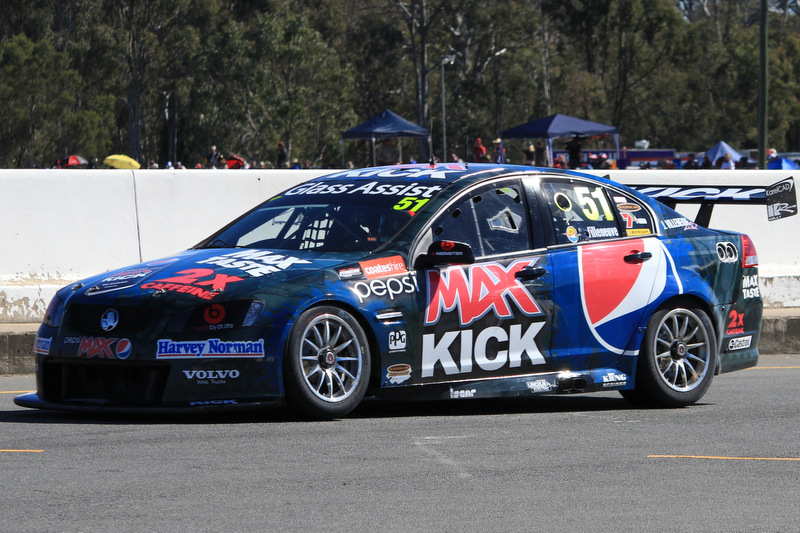
Global expansion began with the 1999 Adelaide street race, which introduced the series to urban environments and international media attention, followed by the 2001 first international round in New Zealand at Pukekohe Park Raceway. The 2003 introduction of “Project Blueprint” regulations standardized aerodynamic and mechanical components between Ford and Holden, enhancing competitive balance and making the series more attractive to potential international participants and broadcasters.
The November 2010 FIA grant of international status, effective from 2011, rebranded the championship as the “International V8 Supercars Championship” and formally recognized its standing within the global motorsport hierarchy. The 2013 “Car of the Future” regulations permitted additional manufacturers like Nissan, Mercedes-Benz, and Volvo to enter, while 2016’s rebrand to “Supercars Championship” and subsequent Gen2 (2017) and Gen3 (2023) regulations modernized the product with coupé body styles and increased road relevance, culminating in the current Repco Supercars Championship as a global touring car leader.
1999-2001: Street Races and International Expansion
The expansion beyond traditional circuits began with the 1999 Adelaide street race, which brought V8 Supercars to a temporary urban circuit through the heart of South Australia’s capital. This event demonstrated the series’ adaptability to non-traditional venues and introduced Australian touring car racing to international media markets through the city’s global profile.
The first international round in 2001 at Pukekohe Park Raceway in New Zealand marked the series’ first competitive event on foreign soil, testing operational logistics and proving that the championship could successfully export its product. These events served dual purposes: they attracted new fans in international markets while providing domestic audiences with exotic venues that reinforced the series’ growing prestige.
The street race format, with its temporary barriers, close proximity to spectators, and urban backdrop, created a spectacle that translated well to television and appealed to younger demographics. The New Zealand round established a pattern of international expansion that would continue with events in Bahrain, China, and the United States in subsequent years. For a broader perspective on international motorsport series and their development, see exploring international motorsports series.
2003: Project Blueprint Enhances Competitive Balance
Project Blueprint, introduced in 2003, represented a fundamental shift in technical philosophy by standardizing aerodynamic components, suspension geometry, and other critical elements between Ford and Holden models. The regulation aimed to minimize the performance differentials that had emerged as manufacturers exploited loopholes in previous rules, resulting in a series where driver skill and team execution became more decisive factors than technical advantage.
This parity enhancement produced more unpredictable race outcomes, with a greater variety of winners and championship contenders throughout seasons. The standardized components also reduced development costs for smaller teams, improving the championship’s competitive health and long-term sustainability.
Project Blueprint’s success in creating close, exciting racing became a model for other touring car series worldwide, demonstrating how carefully crafted technical regulations could balance manufacturer identity with competitive equality. The regulation maintained the visual distinction between Ford and Holden while ensuring that on-track performance differences stemmed primarily from setup and driver talent rather than aerodynamic superiority.
2011-2023: International Status and Gen2/Gen3 Evolution
The November 2010 FIA grant of international status, effective from the 2011 season, rebranded the series as the “International V8 Supercars Championship” and formally recognized its standing within the global motorsport hierarchy. This status facilitated international event licensing, simplified competitor licensing across borders, and enhanced the series’ credibility with global manufacturers and sponsors.
The 2013 “Car of the Future” regulations opened the door for new manufacturers by standardizing chassis and control components while allowing different body styles and engines, leading to entries from Nissan, Mercedes-Benz, and Volvo alongside the traditional Ford and Holden. The 2016 rebrand to “Supercars Championship” reflected the series’ evolution beyond its V8-exclusive origins. Gen2 regulations in 2017 permitted two-door coupé body styles, most notably the Ford Mustang, while Gen3 in 2023 introduced the Chevrolet Camaro and an updated Mustang with increased emphasis on road-relevant aerodynamics and even closer racing.
| Year | Milestone | Impact |
|---|---|---|
| 2011 | FIA grants international status; series renamed “International V8 Supercars Championship” | Formal global recognition; simplified international competition and licensing |
| 2013 | “Car of the Future” regulations introduced | New manufacturers (Nissan, Mercedes-Benz, Volvo) enter; standardized chassis and control components |
| 2016 | Rebranded to “Supercars Championship” | Dropped “V8” from name as technical regulations evolved beyond exclusive V8 formula |
| 2017 | Gen2 regulations permit two-door coupé bodies | Ford Mustang introduced; more road-relevant body styles; expanded manufacturer appeal |
| 2023 | Gen3 regulations with Chevrolet Camaro and updated Mustang | Increased aerodynamic efficiency; closer racing; enhanced road-car relevance |
The progression from international status to Gen3 regulations demonstrates how Supercars balanced global aspirations with Australian identity. Each regulatory generation preserved the core elements that made the series unique—the V8 power, manufacturer rivalry, and Bathurst’s spiritual significance—while adapting to changing technical and commercial landscapes. The introduction of new manufacturers under Car of the Future and Gen2/Gen3 frameworks expanded the championship’s technical diversity without sacrificing the parity that makes close racing possible.
The shift to coupé body styles in Gen2 aligned the race cars more closely with their road-going counterparts, enhancing marketing value for manufacturers who could now point to a direct visual connection between showroom and circuit. Gen3’s focus on aerodynamic efficiency and mechanical grip further improved race quality while maintaining the series’ signature high-speed, high-contact style that fans expect.
The series’ global integration accelerated through strategic event placement, with international rounds in New Zealand, Bahrain, and previously China and the United States exposing the championship to new markets. These international events required logistical adaptations but reinforced the series’ international status and demonstrated its operational capability to run successful overseas events. The FIA international designation from 2011 provided the regulatory framework for these expansions, allowing drivers and teams from other countries to compete under streamlined licensing arrangements.
The championship’s ability to attract international manufacturers like Nissan, Mercedes-Benz, and Volvo—albeit with varying commitment levels—validated its growing global standing, even as Ford and Holden remained the core participants. The current Repco Supercars Championship represents the culmination of this evolution: a series that retains its unmistakably Australian character through venues like Bathurst and its V8-powered thunder while operating as a recognized global touring car category with professional management and international manufacturer participation. For drivers aiming to compete internationally, understanding the licensing requirements is crucial; refer to international motorsports licensing requirements for the latest 2026 guidelines.
Despite the global expansion and technical evolution, Australian Supercars maintained its distinct identity through unwavering commitment to the Bathurst 1000 as its spiritual home, the retention of V8 powerplants (even as body styles evolved), and the preservation of the Ford versus Holden rivalry as the championship’s emotional core. The series demonstrated that global recognition need not come at the expense of local character—a lesson that other regional motorsport categories have sought to emulate.
The 2026 Repco Supercars Championship calendar features a mix of traditional Australian venues and international street circuits, continuing the expansion strategy initiated in 1999 while honoring the 1960 foundations. For anyone seeking to understand how a domestic racing series achieved global prominence without losing its soul, the Australian Supercars journey offers a masterclass in strategic evolution.
The most surprising insight is that Supercars achieved global recognition not by abandoning its Australian identity but by doubling down on the elements that made it unique—the Bathurst 1000, the V8 thunder, and the Ford-Holden rivalry—while modernizing its technical regulations and commercial operations. This paradox of global reach with local soul defines the series’ success.
For an immediate deep dive into the current championship, visit supercars.com to explore the 2026 Repco Supercars Championship calendar and plan your experience at Mount Panorama for the Bathurst 1000. To understand how this series fits into the broader landscape of world racing and how different series contribute to the global motorsport ecosystem, visit world racing.
Frequently Asked Questions About History Of Australian Supercars
When did the Australian Supercars series gain international recognition?
In 2011, the FIA granted international status, renaming it the 'International V8 Supercars Championship' for formal global recognition and simplified international competition.
What major regulatory change occurred in 2013?
In 2013, 'Car of the Future' regulations introduced standardized chassis and control components, enabling Nissan, Mercedes-Benz, and Volvo to enter the series.
Why was the series name changed from V8 Supercars to Supercars Championship?
In 2016, the series rebranded to 'Supercars Championship' because technical regulations evolved beyond the exclusive V8 formula, dropping 'V8' from the name.
What body styles were permitted with the Gen2 regulations in 2017?
In 2017, Gen2 regulations permitted two-door coupé bodies, leading to the introduction of the Ford Mustang and making the cars more road-relevant, which expanded manufacturer appeal.
What updates came with the Gen3 regulations in 2023?
In 2023, Gen3 regulations introduced the Chevrolet Camaro and an updated Mustang, with increased aerodynamics to enhance performance and relevance.
