
The Super GT series originated as the All-Japan GT Championship (JGTC) in 1994 and rebranded to Super GT in 2005, evolving into a world-class GT championship that dominates Asian motorsport. This comprehensive guide traces that evolution, from JGTC’s early days showcasing modified production cars to today’s high-tech, two-class competition featuring factory teams from Nissan, Toyota, and Honda.
Understanding this history reveals how Super GT maintained its Japanese identity while achieving global recognition, making it a cornerstone of modern world racing. For more insights into global motorsport initiatives, explore our comprehensive World Racing guide.
- Super GT began as the All-Japan GT Championship (JGTC) in 1994, introducing a two-class system (GT500/GT300) in 1996.
- The series rebranded to SUPER GT in 2005 to align with international standards and expand globally.
- Today, Super GT is Asia’s premier GT championship, featuring factory teams from Nissan, Toyota, and Honda in highly customized machinery.
The JGTC Era: Foundations of World-Class GT Racing (1994-2004)
1994: The Launch of All-Japan GT Championship
The All-Japan GT Championship (JGTC) was established in 1994 as Japan’s premier grand touring car series, created to showcase modified production sports cars and prototype vehicles in a fast, technical racing environment. The series was founded by the GT Association (GTA) with the vision of developing a domestically focused championship that could eventually compete on the world stage. Early JGTC races featured a mix of touring cars and prototype sports cars, allowing manufacturers to experiment with engineering solutions within relatively flexible regulations.
This approach attracted both major Japanese automakers—Nissan, Toyota, and Honda—and privateer teams. The inaugural season included iconic circuits such as Fuji Speedway and Suzuka, establishing a foundation for what would become a globally recognized series. According to GTR Magazine’s 30-year history, the JGTC’s early years were characterized by close competition and technical innovation.
The series operated under the sanctioning of the Japan Automobile Federation (JAF), ensuring adherence to international motorsport standards while maintaining a distinctly Japanese character. The JGTC’s success in developing a domestic GT series has since inspired similar championships across Asia, as explored in our guide to exploring international motorsports series.
1996: GT500 and GT300 Class System Established
In 1996, the JGTC formally adopted the GT500 and GT300 classification system, creating a two-class structure that would define the series’ competitive format for decades. The GT500 class represented the top tier, featuring highly modified vehicles with minimal production linkage, while GT300 focused on cars closer to their showroom counterparts. This separation allowed for clear performance differentials, ensuring close racing within each class while enabling overtaking between classes on track.
According to CarThrottle, the introduction of these classes was a strategic move to accommodate a wider range of competitors, from factory-backed giants to smaller privateer teams. The GT500 machines quickly became the stars of the series, with extreme performance and advanced aerodynamics. Meanwhile, GT300 offered a more accessible entry point, fostering diversity in the grid.
The two-class system generated the intense, high-performance racing that Super GT is known for, with multiple lead battles occurring simultaneously during each race. This structure also provided a clear progression path for teams and drivers aiming to reach the pinnacle of Japanese GT racing. The GT500/GT300 structure has influenced how licensing bodies categorize racing categories worldwide; for a detailed look at international motorsports licensing requirements, see our related guide.
How Did the 2005 Rebranding to Super GT Create a Global Championship?
2005: The Birth of SUPER GT and Its Global Ambitions
The 2005 rebranding from JGTC to SUPER GT marked a pivotal moment, aligning the series with international standards and signaling its ambition to expand beyond Japan’s borders. The name change was more than cosmetic; it reflected a strategic shift to embrace global motorsport conventions while retaining the series’ unique Japanese character. According to GTR Magazine, the rebrand aimed to “reflect its alignment with international standards and expanding global footprint.” This meant adopting clearer technical regulations that facilitated easier participation from overseas teams and manufacturers.
The GT Association (GTA) also revamped the series’ marketing and presentation, making it more accessible to international audiences. The rebrand included a new logo, enhanced television coverage, and a push to attract foreign drivers and teams. These efforts began to bear fruit as the series started to draw attention from international motorsport communities.
The transition also coincided with improvements in car safety and technology, further boosting the championship’s credibility. This alignment with global standards required extensive racing knowledge and technology integration to meet international expectations, a topic covered in depth elsewhere.
Manufacturer Powerhouse: Nissan, Toyota, and Honda Dominate
Super GT’s GT500 class is dominated by three Japanese manufacturers: Nissan, Toyota, and Honda. Each fields factory-backed teams with cars that, while based on road-going models, are transformed into highly specialized racing machines.
The current generation of GT500 cars represents the pinnacle of Japanese motorsport engineering, with advanced hybrid systems (until 2023), massive aerodynamic downforce, and power outputs approaching 700 horsepower from turbocharged engines. The rivalry among these three manufacturers is the cornerstone of the series, driving technological innovation and fan interest.
| Manufacturer | Current GT500 Model | Key Features |
|---|---|---|
| Nissan | Nissan Z (RZ34) | Based on the new RZ34 Z, features a VR30DDTT twin-turbo V6, extensive aerodynamic package, and a front-mid engine layout. |
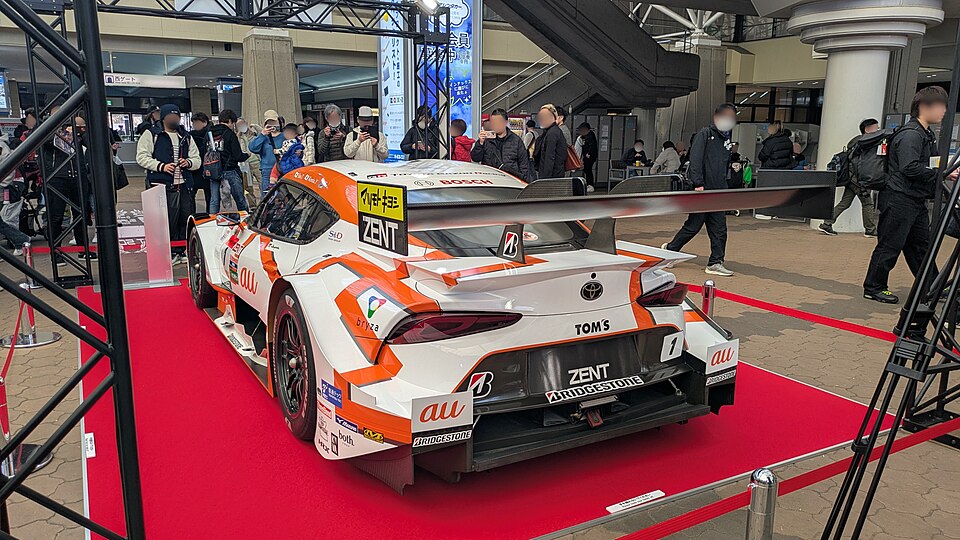
| Toyota | Toyota GR Supra | Uses the A90 Supra platform, powered by a Toyota Racing Development (TRD) tuned 2UR-GSE V8 (naturally aspirated until 2023, now turbocharged), with a focus on reliability and high-speed stability. |
| Honda | Honda Civic Type R-GT (FL5) | Honda transitioned from the NSX-GT to the Civic Type R-GT in 2024, employing a turbocharged 2.0L inline-4 and a unique front-wheel drive layout for GT500, emphasizing agility and mechanical grip. |
These machines are far removed from their street-legal counterparts, with carbon-fiber monocoques, sequential gearboxes, and sophisticated suspension systems. The manufacturer competition in GT500 is intense, with each brand bringing distinct engineering philosophies to the track.
This triad of Japanese automotive giants ensures that Super GT remains at the forefront of world racing technology and spectacle. The high-performance nature of these vehicles also underscores the role of racing knowledge in safety, as advanced protective systems are integral to their design.
Modern Super GT: A World-Class Championship in the 2020s
Current World-Class Championship Structure and Race Format
The modern Super GT championship features a two-class structure (GT500 and GT300) with a season typically comprising 8 races held at major Japanese circuits and select international venues, making it Asia’s premier GT series. The GT500 class is the headline category, featuring factory teams from Nissan, Toyota, and Honda piloting cars with approximately 700 horsepower and advanced aerodynamics. GT300 includes a mix of manufacturer-supported entries and privateer teams using cars closer to production specifications, with power around 300-400 horsepower.
Each race weekend includes practice sessions, qualifying, and a main race lasting 300 kilometers (about 2 hours) for GT500 and 200 kilometers for GT300, though distances vary. Points are awarded based on finishing position, with bonus points for pole position and fastest lap. The series employs a success ballast system to balance performance, ensuring close competition.
According to GTR Magazine, Super GT “remains the premier GT racing series in Japan and Asia,” attracting top drivers from around the world. The championship’s format, with its emphasis on manufacturer rivalry and technical diversity, has proven highly successful, drawing large crowds and strong television ratings. The series also features a qualifying shootout format where drivers compete individually for grid positions, adding an extra layer of excitement.
The combination of high-speed racing, technical variety, and professional presentation solidifies Super GT’s status as a world-class championship. The engaging race format and close competition significantly enhance how racing knowledge enhances fan experience, making Super GT a favorite among motorsport enthusiasts.
Diversity and International Participation: Sarah Moore’s Influence
Super GT has actively worked to increase diversity and international participation, recognizing that a global championship benefits from a wide range of perspectives and talents. Drivers like Sarah Moore exemplify this inclusive ethos, having competed in the series and using her platform to advocate for LGBTQ+ inclusion in motorsport. Key aspects include:
- International driver roster: Super GT attracts drivers from Europe, Asia, Oceania, and the Americas, with a significant number of foreign license holders in both GT500 and GT300, enhancing the series’ global competitiveness.
- Manufacturer global programs: Nissan, Toyota, and Honda often include international drivers from their global development programs in their factory lineups, fostering cross-cultural exchange.
- LGBTQ+ advocacy: The series partners with organizations like Racing Pride and features drivers such as Sarah Moore, who serves as an ambassador and driver coach for the More Than Equal program, according to Motorsport Week. Moore, a British driver, made history as the first openly LGBTQ+ driver to stand on a Formula One Grand Prix podium in 2021, as reported by the National Motor Museum.
- Women in GT: While female participation remains limited, Super GT has seen growing involvement of women in both classes, with some teams implementing diversity initiatives to encourage female drivers and engineers.
- Cultural bridge: Super GT operates as a meeting point between Japanese motorsport traditions and international standards, facilitating mutual learning and respect among participants from different backgrounds.
This commitment to diversity strengthens the series’ appeal and ensures it remains at the forefront of world racing. Super GT’s commitment to diversity extends to nurturing young talent through various programs; our guide to racing knowledge for junior drivers provides insights into these development pathways.
One of the most surprising aspects of Super GT’s history is how the series has preserved its distinct Japanese character while simultaneously embracing international standards and attracting global talent. Unlike many championships that become homogenized, Super GT retains unique elements like its two-class format, qualifying shootout, and manufacturer-driven technical regulations, making it a truly unique pillar of world racing. For readers wanting to experience this excitement firsthand, the most actionable step is to watch a Super GT race—either live at circuits like Fuji Speedway or via the official streaming platform—to witness the intense manufacturer battles and technical diversity that define the series.
Additionally, visiting the official Super GT website provides access to schedules, results, and behind-the-scenes content for fans eager to deepen their knowledge. For a broader perspective on global motorsport, see our world racing overview.
